
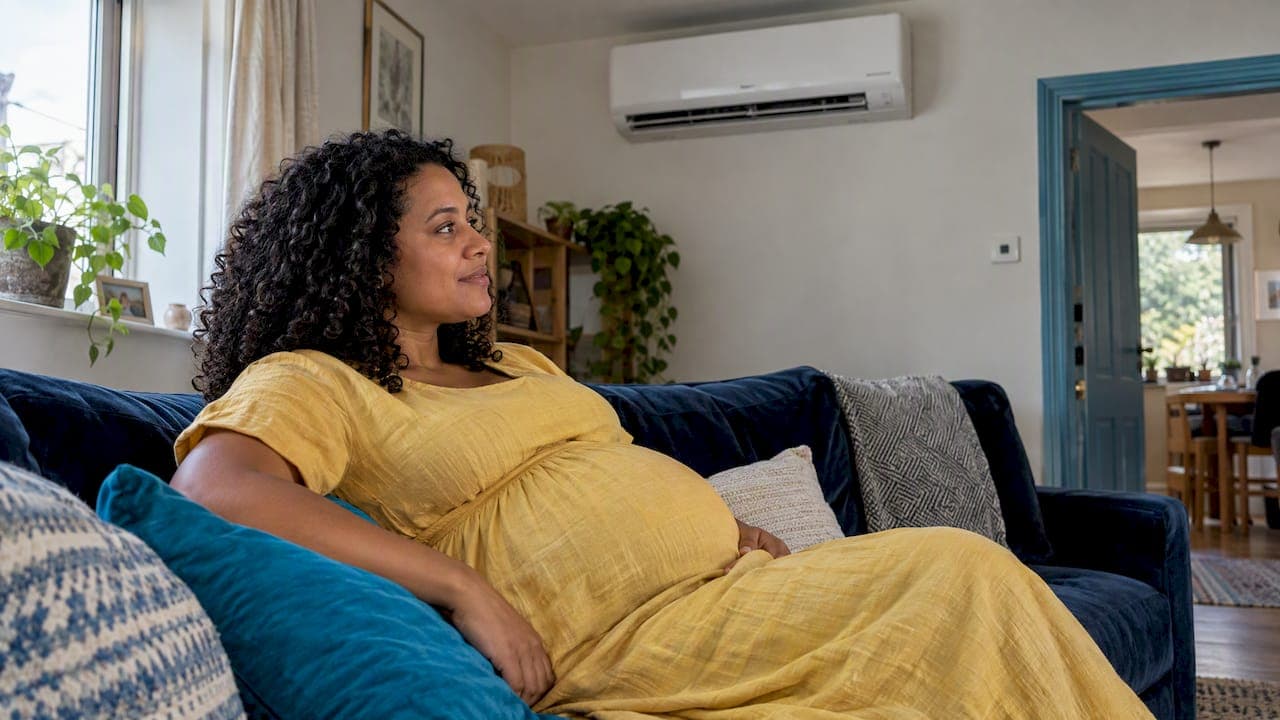
Yes, you can use air conditioning while pregnant, and in hot weather it is one of the more effective ways to stay safe. Health bodies in the UK, Europe and the US list air-conditioned spaces among the ways pregnant women can cope with heat. What matters is how you run it: a moderate temperature, clean filters, fresh air and plenty of water. This guide covers each of those, plus the warning signs that mean you should call a midwife or the NHS.
TL;DR
- Air conditioning is not a risk in itself. WHO Europe says air-conditioned spaces can help pregnant people cope with hot weather.
- Heat is the bigger concern. UK government guidance lists pregnant women as being at higher risk of ill health from overheating.
- Aim for a bedroom of roughly 20°C to 25°C, and avoid setting the unit very cold. Sleep research flags temperatures below 17°C as disruptive.
- Keep filters clean, ventilate the room and have the system serviced before summer.
- Dizziness, confusion, a very fast heart rate or heatstroke signs that last 30 minutes after cooling need medical advice.
Table of Contents
- Why heat matters more than aircon during pregnancy
- What health bodies say about air conditioning in pregnancy
- The right room temperature for sleep and comfort
- How to use aircon comfortably and safely
- Warning signs: when to get medical advice
- Perspective: what we see in Devon and Cornwall homes
- Choosing a system for a bedroom or nursery
- Get a cool bedroom before the next heatwave
- A simple routine for hot days
- FAQ
- Sources
Why heat matters more than aircon during pregnancy
Pregnancy changes how your body handles heat. You carry extra weight, your blood volume rises and your body works harder to stay cool. That is why the UK government's keep cool at home checklist names pregnant women among the people at higher risk when homes overheat.
The research on what extreme heat can do is fairly consistent. NCT lists dehydration, heat exhaustion, heat stroke and reduced blood flow between the placenta and baby. It also mentions an inflammatory response that may trigger pre-term birth. An expert group review says there is growing evidence that pregnant women can regulate their temperature. It also says extreme heat may set off processes that could harm the mother or the baby, including dehydration, reduced placental blood flow and inflammation.

None of that is an argument against cooling your home. It is an argument for it. The risk sits with a bedroom that stays at 28°C through a heatwave night, not with a unit that brings it down to something comfortable.
What health bodies say about air conditioning in pregnancy
The guidance points the same way across several countries:
- The American College of Obstetricians and Gynecologists (ACOG) lists using air conditioners or spending time in air-conditioned places as a way to protect yourself from extreme heat.
- The US EPA advises using air conditioning, if you have it, to keep the air in your home cool during hot weather.
- WHO Europe says time in air-conditioned spaces can help pregnant people cope, and tells them to listen to their body, use cooler spaces and stay hydrated.
That last point is worth holding on to. Cooling is one part of a routine. It sits alongside water, light clothing and rest.
The right room temperature for sleep and comfort
Most people searching for this are not wondering about a lunchtime visit to a cool shop. They are lying awake at 32 weeks in a stuffy bedroom. Sleep matters here: a 2022 review in the Journal of Sleep Research recommends paying particular attention to sleep during pregnancy and heatwaves.
The same review gives practical temperature figures for the bedroom:
| Bedroom temperature | What the review says |
|---|---|
| About 19°C, held constant | The preferred target |
| 20°C to 25°C | Acceptable, as close to 19°C as you can manage |
| Above 25°C | Can disrupt sleep |
| Below 17°C from air conditioning | Can also disrupt sleep |
In practice, you do not need to chase the lowest number on the remote. Set a steady, moderate temperature and let the unit hold it. A big gap between the temperature outside and the room can feel like a shock when you step out of the house, so a moderate setting is kinder to your body than a blast of cold.
Most modern units have a night or sleep mode that adjusts the temperature gradually through the night. We explain how it works in our guide to setting your UK aircon for better sleep.
How to use aircon comfortably and safely
Keep the air moving, not blowing on you
Direct cold air on your neck or legs for hours can leave you stiff or uncomfortable. Point the louvres up or along the ceiling rather than at the bed or sofa. Use the unit's auto fan setting so it does not run at full blast once the room has cooled.
Ventilate
A sealed room is not the aim. The National Institute for Health and Care Excellence (NICE) advises keeping rooms well ventilated during activities that may worsen indoor air quality, and following product instructions. Cook with the extractor on, dry washing in a ventilated space, and open a window for a short time on cooler mornings.
If you are redecorating a nursery while the weather is warm, keep air moving and read up on painting while pregnant before you pick up a brush.
Keep filters and units clean
NICE also recommends that heating and ventilation systems be accessible for regular maintenance. The US EPA likewise advises having air conditioning cleaned and serviced before the hot weather arrives. For a split system that means washing the indoor unit's filters regularly and booking an annual service. Our homeowner's guide to cleaning your air conditioner walks through the filter step by step, and our piece on why servicing matters covers what an engineer checks.
Drink more than you think you need
Air conditioning can make you feel cool without making you less dehydrated. WHO Europe names dehydration as the fundamental heat risk, and NCT advises staying hydrated, wearing loose-fitting clothing and avoiding strenuous activity in hot weather. Keep a water bottle by the bed.

Fans: useful, up to a point
A fan is a reasonable low-cost helper. NCT advises using an electric fan only when the indoor temperature is below 35°C, because above that, moving hot air increases dehydration. In a UK heatwave most homes stay below that, but a loft bedroom or south-facing flat can climb. If you are comparing the two, our guide to air conditioning versus fans sets out how they differ.
Warning signs: when to get medical advice
Cooling the room helps, but it does not replace medical care if you become unwell. NCT describes the signs of heat exhaustion as excessive sweating, cramps, weakness, dizziness, headache, nausea or vomiting. If you notice them, move somewhere cool, sip water and rest.
Seek medical attention if signs of heatstroke persist after 30 minutes of cooling. After hot weather, NCT advises urgent help from your GP or NHS 111 for any of these:
- a very fast heart rate
- confusion or disorientation
- unusual tiredness
- dizziness that does not quickly improve
If you are worried about your baby's movements or anything else, call your midwife or maternity unit directly. Do not wait for a heatwave to end.
Damp, mould or poor ventilation at home can also be a health concern in pregnancy. NICE says health and social care professionals should help a pregnant person request a housing assessment from the local authority when housing factors like these are a worry. Mention it to your midwife or GP if it applies to you.
Perspective: what we see in Devon and Cornwall homes
We install air conditioning across Exeter, Devon, Cornwall and the wider South West, and the calls we get in a hot spell often start the same way: "I'm pregnant and I can't sleep." Most of these homes were built for a climate that rarely needs cooling. Top-floor bedrooms, loft conversions and conservatories hold heat long after the sun goes down.
Our view is simple. A properly sized, properly installed system is one of the most dependable ways to bring a bedroom down to a steady, comfortable temperature without opening windows onto a noisy street or relying on a fan pushing warm air around. That is why we start with a free survey: we look at the room, the sun exposure and how you use the space, then design the system around it.
Installation done well matters here. Our engineers are F-Gas certified and REFCOM registered, and we do not use subcontractors, so the people who survey your home are the people who fit the unit. We work with Samsung, Mitsubishi, Toshiba and Daikin systems, and where timing matters, same day or next day installs may be available. Many expectant parents also want the work done before the baby arrives, and our installs are typically completed within one to two days.
Once it is in, look after it. A regular service keeps filters and coils clean, and an annual contract means you do not have to remember. If something does go wrong in a heatwave, our emergency breakdown service is there for exactly that.
James
Choosing a system for a bedroom or nursery
If you are thinking of installing air conditioning because of pregnancy, a few decisions are worth making early.
- Size it for the room. An undersized unit runs flat out and never settles. An oversized one cycles on and off. A survey gets this right.
- Think about the bedroom first. A single-room split system is usually the simplest answer for a bedroom, with more rooms added later if needed. Our guide to the best air conditioning for your home compares the options, and our list of home cooling solutions covers the wider picture.
- Look for a night mode. Gradual overnight adjustment helps you hold a steady temperature without waking up cold.
- Plan your timing. Installing before the baby arrives, and before the next hot spell, is easier than doing it with a newborn in the house.
- Plan for upkeep. Filters and servicing keep the air clean and the system efficient. If you are building or renovating, our piece on air conditioning in new builds shows how to plan for it from the start.
If summer has caught you out and the room is already uncomfortable, see our note on quick, same-day installation.
Get a cool bedroom before the next heatwave
We design and fit air conditioning for homes in Exeter and across Devon and Cornwall, with a free survey, 0% finance and engineers who are F-Gas certified. If you want the room sorted before your due date, see our domestic installation service, or look at our service plans if you already have a unit that needs looking after.

If you already have a system, our service and maintenance team can clean, check and prepare it before the next hot spell.
A simple routine for hot days
A few habits make the biggest difference, and none of them cost anything:
- Close curtains or blinds on sun-facing windows in the morning, before the room heats up.
- Switch the air conditioning on before the room gets hot. Pulling a warm room down takes longer than holding a cool one.
- Choose a steady setting in the comfortable range rather than the coldest number available.
- Wear loose, light clothing and keep water within reach.
- Avoid strenuous activity at the hottest times of day.
- Wash filters on the schedule in your manual, and book a service each year.
- Know the warning signs above, and keep your midwife's number somewhere easy to find.
FAQ
Is it safe to sleep with air conditioning on while pregnant?
Yes, for most people. Health bodies including WHO Europe and ACOG list air-conditioned spaces as a way to cope with hot weather in pregnancy. Choose a moderate, steady temperature, keep the airflow off your body and keep the filters clean. If you have a specific condition, ask your midwife or GP.
What temperature should I set my aircon to when pregnant?
Sleep research recommends a bedroom at about 19°C, or as close to the 20°C to 25°C range as you can manage. Above 25°C can disrupt sleep, and air-conditioning settings below 17°C can too. A moderate setting is the better choice than the coldest one.
Can air conditioning harm my baby?
The risks highlighted in UK and international guidance come from overheating, such as dehydration and reduced blood flow between the placenta and baby, rather than from air conditioning. Keeping a home cool is part of the advice. If you feel unwell, speak to your midwife, GP or NHS 111.
Do I need to clean the aircon more often when pregnant?
There is no special pregnancy schedule, but clean filters and regular servicing are part of good indoor air quality. Follow your manual for filter cleaning and have the system serviced before summer. Our engineers can do that for you.
Sources
- Beat the heat: keep cool at home checklist, GOV.UK
- Heat and Pregnancy, US EPA
- Physiological mechanisms of the impact of heat during pregnancy, PubMed
- Hot weather and high body temperature during pregnancy, NCT
- What should I know about extreme heat and pregnancy?, ACOG
- How does hot weather affect pregnancy?, WHO Europe
- How to deal with sleep problems during heatwaves, Journal of Sleep Research
- Indoor air quality at home recommendations, NICE
- Painting while pregnant: what's safe