
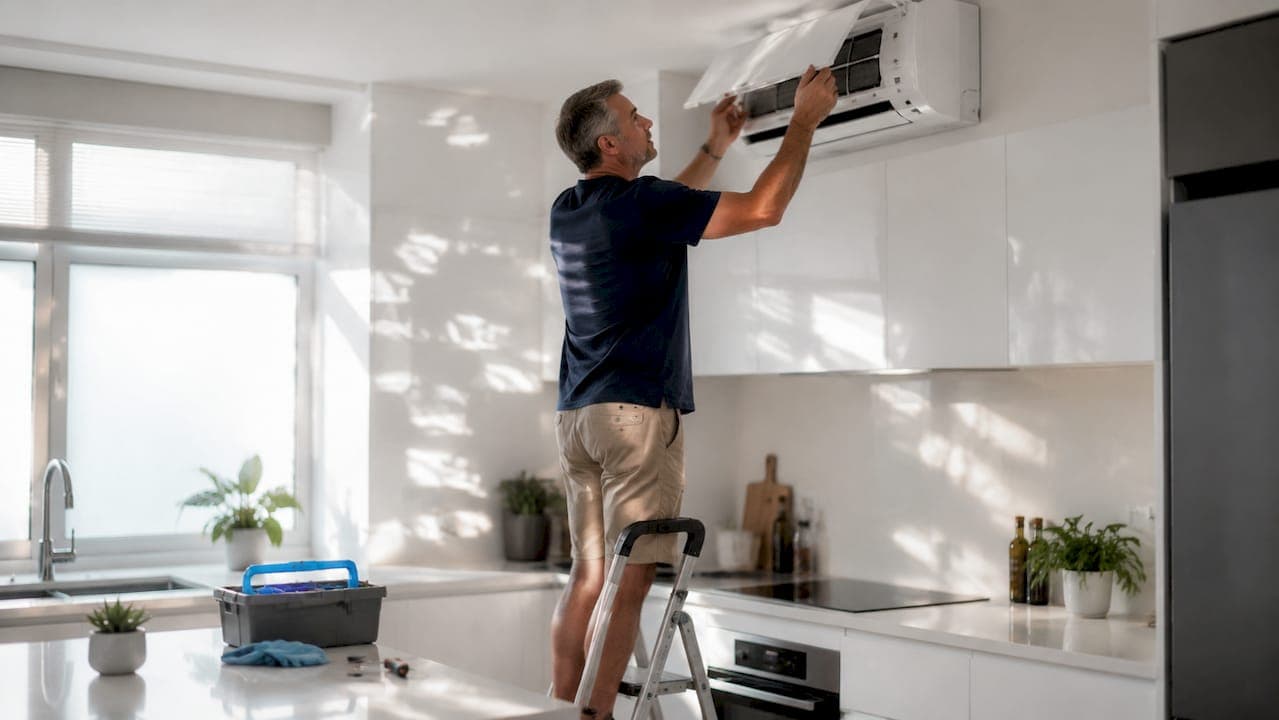
A dirty air conditioner circulates bacteria, dust mites, and airborne pathogens through your home, directly degrading the air your family breathes. Knowing how to clean your air conditioner properly is one of the most effective things you can do to protect indoor air quality and keep energy bills in check. Regular AC servicing is a primary defence against indoor air pollution, and the good news is that most of the work is straightforward enough to do yourself. Industry experts recommend cleaning twice a year, at the start and end of summer, with filter checks every 2–4 weeks during heavy use.
What tools do you need to clean your air conditioner?
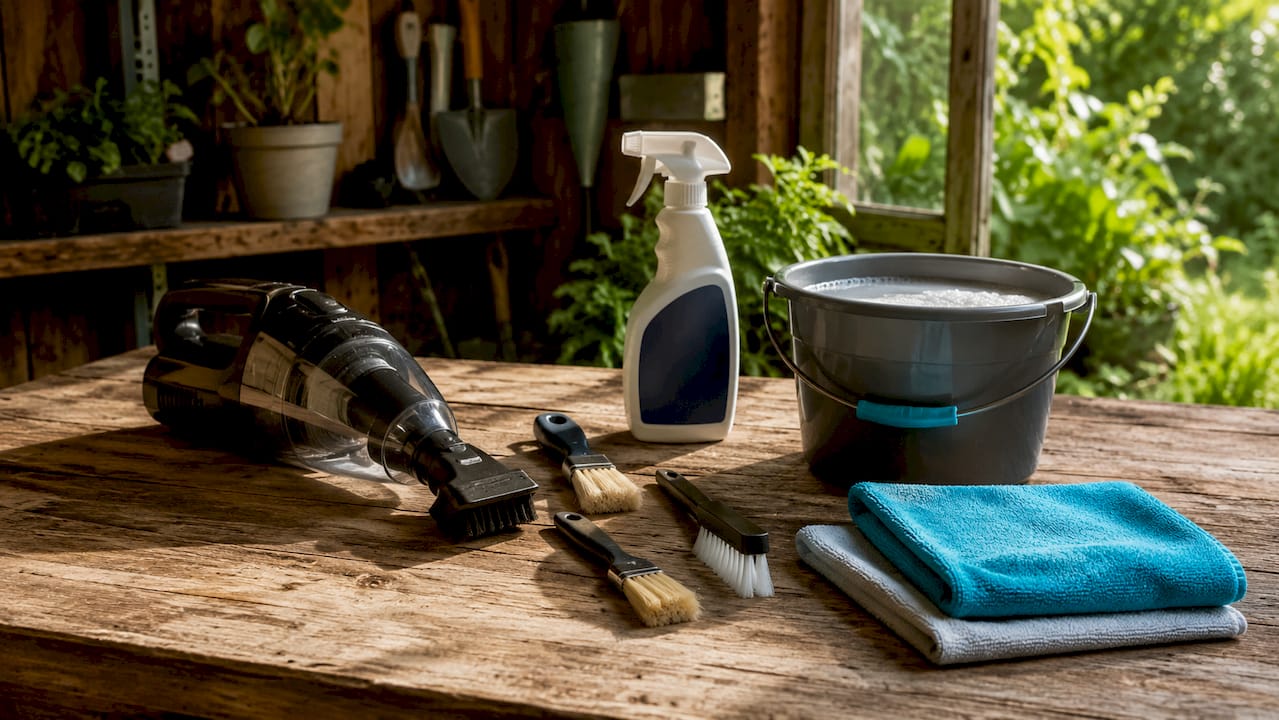
Getting the right equipment together before you start saves time and prevents damage. The list is shorter than most homeowners expect, and many items are already in the house.
Safety essentials:
- Rubber gloves and a dust mask (N95 or equivalent)
- Safety goggles for coil and drain work
- Access to the circuit breaker or isolator switch
Cleaning equipment:
- Vacuum cleaner with a soft brush attachment
- Soft-bristle brush or old toothbrush
- Microfibre cloths
- Fin comb (for straightening bent aluminium fins)
- Purpose-made coil cleaner spray
- Mild washing-up liquid
- Warm water in a spray bottle or bowl
- A shallow tray or towels to catch drips
The equipment you need varies slightly depending on your unit type. Portable and window units are largely self-contained, so a vacuum and mild detergent cover most tasks. Central and split systems have separate indoor and outdoor components, which means you will also need a coil cleaner and a garden hose for the external condenser.
| Tool | Purpose |
|---|---|
| Vacuum with brush attachment | Removes loose dust from filters and fins |
| Soft-bristle brush | Dislodges stubborn debris from coils and fins |
| Fin comb | Straightens bent aluminium fins to restore airflow |
| Coil cleaner spray | Breaks down grease and grime on evaporator and condenser coils |
| Microfibre cloth | Wipes down surfaces without scratching |
| Mild washing-up liquid | Safe detergent for filter washing |
How to clean aircon filters step by step
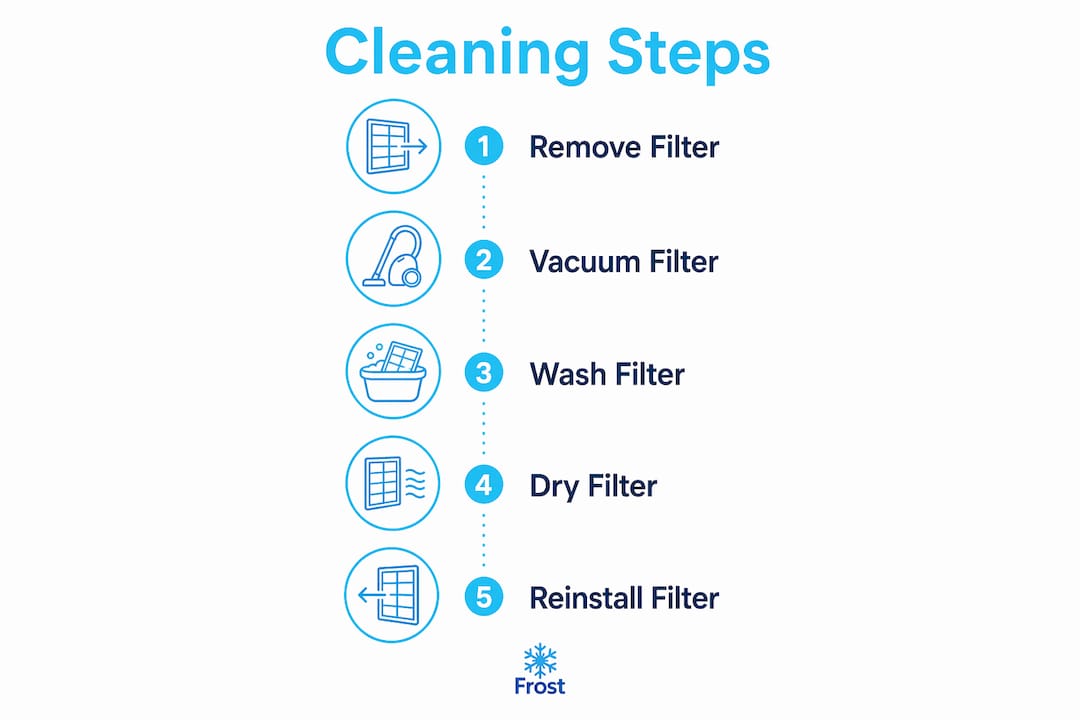
Filters are the most frequently neglected part of any air conditioning unit, and they have the biggest impact on performance. Cleaning filters every 2–4 weeks during peak use keeps airflow strong and prevents the unit from working harder than it needs to.
-
Turn off the power. Switch the unit off at the remote or control panel, then cut power at the circuit breaker or isolator. Never clean any component with the power live.
-
Remove the filter. Open the front panel of your indoor unit. Most filters slide or clip out without tools. Handle them gently to avoid shaking loose debris into the room.
-
Vacuum first. Hold the filter over a bin and vacuum from the clean side through to the dirty side. Vacuuming from clean to dirty pushes debris out rather than pressing it deeper into the mesh. This single technique makes a measurable difference to how much dust you actually remove.
-
Wash with lukewarm water. Fill a basin with lukewarm water and a small amount of mild washing-up liquid. Submerge the filter and gently agitate it. Do not scrub hard or use a stiff brush. Aggressive scrubbing damages filter fibres and shortens the filter's working life, which costs more in the long run.
-
Rinse thoroughly. Run clean lukewarm water through the filter until no soap remains. Avoid hot water entirely. Hot water warps mesh fibres and causes fitting problems when you try to reinstall the filter.
-
Dry completely. Lay the filter flat in a shaded spot and leave it for 30–60 minutes. Air-drying in shade prevents mould growth inside the unit. A damp filter reinstalled too soon creates the exact conditions that produce musty odours and health risks.
-
Reinstall and restore power. Slide the filter back into its housing, close the panel, and switch the power back on.
Reusable vs. disposable filters: Most split and portable units use washable mesh filters. Central systems often use disposable pleated filters, which should be replaced rather than washed. Check your unit's manual or look at the types of AC filters available to confirm which type you have before washing anything.
Pro Tip: Proper filter cleaning can restore up to 70% of filter performance, which directly reduces the strain on your system and cuts energy consumption. That is a significant return for twenty minutes of work.
How to clean AC coils, fins, and the drip tray
The evaporator coils and aluminium fins sit behind the filter and handle the actual heat exchange. Dust and grease build up on them over time, reducing efficiency and causing the unit to run longer to achieve the same temperature.
-
Access the coils. With the power off and filter removed, you will see the evaporator coil directly behind the filter slot. On outdoor units, remove the top grille to access the condenser coil.
-
Brush away loose debris. Use a soft-bristle brush to gently sweep dust from the coil surface. Work in the direction of the fins, never across them. Crossing the fin direction bends the thin aluminium strips and restricts airflow.
-
Apply coil cleaner. Spray a purpose-made coil cleaner evenly across the coil surface. Most no-rinse formulas foam up, lift grime, and drain away through the drip tray. Follow the product instructions for dwell time.
-
Straighten bent fins. Run a fin comb along any sections where fins are crushed or bent. Straightened fins restore the airflow the manufacturer designed the unit to deliver.
-
Clean the drip tray. The condensate tray sits beneath the evaporator coil and collects moisture. Remove standing water with a cloth, then wipe the tray with a mild detergent solution. A blocked or dirty tray is one of the most common causes of musty smells and water leaks.
Pro Tip: Avoid bleach and harsh chemicals on coils or trays. They corrode aluminium fins and degrade the coil coating, leading to refrigerant leaks that require a certified engineer to fix.
How to clean outdoor AC units and the condensate drain line
The outdoor condenser unit takes the most punishment from the environment. Leaves, grass cuttings, and general debris block the fins and reduce the system's ability to expel heat. Cleaning it once or twice a year, ideally in spring and autumn, keeps the system running at full capacity.
- Cut power at the isolator. The outdoor unit has its own isolator switch, usually mounted on the wall nearby. Turn it off before touching anything.
- Clear the surroundings. Remove leaves, twigs, and any plant growth within 600mm of the unit on all sides. Restricted airflow around the casing forces the compressor to work harder.
- Brush the outer fins. Use a soft brush to remove surface debris from the condenser fins. Work top to bottom and follow the fin direction.
- Apply coil cleaner and rinse. Spray coil cleaner onto the fins, allow it to dwell, then rinse gently with a garden hose on a low-pressure setting. Never use a pressure washer. High pressure bends fins and forces water into electrical components.
- Flush the condensate drain line. Locate the drain pipe, usually a white or grey plastic pipe exiting the indoor unit. Pour a solution of equal parts white vinegar and water into the drain access point. Leave it for 30 minutes, then flush with clean water. This dissolves algae and prevents blockages that cause water to back up into the unit.
- Check the drain pan. After flushing, confirm water flows freely from the outdoor drain outlet. A slow drip or no flow at all indicates a partial blockage that needs clearing before you run the system.
Air conditioning aftercare guidance recommends scheduling outdoor unit cleaning in spring before the cooling season begins, and again in autumn before the unit sits idle through winter.
What problems can occur after cleaning, and when should you call a professional?
Most DIY cleaning goes smoothly, but some issues only become apparent once you switch the unit back on. Knowing what to look for prevents minor problems from becoming expensive faults.
- Weak or warm airflow after cleaning usually means the filter was reinstalled damp or is not seated correctly. Switch off, remove the filter, and check both the fit and the dryness before running the unit again.
- Unusual noises such as rattling or grinding after reassembly suggest a panel is not fully closed or a component has been disturbed. Do not run the unit. Open it up and check that everything is properly secured.
- Persistent musty or chemical smells after cleaning indicate mould in the drain tray or coil cleaner residue that has not fully drained. Run the fan-only mode for 20–30 minutes with windows open to clear residual odours.
- Water leaking from the indoor unit points to a blocked condensate drain. Flush the drain line again as described above. If the leak continues, the drain pump may have failed.
Call a professional when you notice any of the following:
- Ice forming on the coils or refrigerant lines
- A hissing or bubbling sound from the refrigerant circuit
- The unit trips the circuit breaker when switched on
- Cooling performance does not improve after a full clean
Refrigerant handling is regulated under F-Gas legislation in the UK. Only a certified engineer can legally inspect, top up, or repair refrigerant circuits. Attempting this yourself is both illegal and dangerous. Professional servicing is the right call whenever the fault goes beyond filters, fins, and drainage.
Key takeaways
Regular, thorough cleaning of your air conditioner protects indoor air quality, cuts energy costs, and extends the life of the unit significantly.
| Point | Details |
|---|---|
| Clean twice a year minimum | Schedule cleaning at the start and end of summer for best results. |
| Always cut power first | Switch off at the isolator or circuit breaker before touching any component. |
| Dry filters fully before reinstalling | A damp filter causes mould growth and musty odours inside the unit. |
| Vacuum filters from clean to dirty side | This technique pushes debris out rather than embedding it deeper in the mesh. |
| Call a professional for refrigerant faults | F-Gas regulations mean only a certified engineer can legally handle refrigerant. |
What I have learned from years of seeing neglected AC units
The most common mistake I see is homeowners reinstalling a filter that is still damp. It feels dry to the touch after ten minutes, but the inner layers hold moisture for much longer. That moisture feeds mould inside the unit within days, and the smell that follows is genuinely difficult to shift without a full professional clean. The 30–60 minute drying rule is not cautious advice. It is the minimum.
The second pattern I notice is people skipping the outdoor unit entirely. They clean the filters, feel satisfied, and leave the condenser caked in a season's worth of debris. The indoor unit then works against a system that cannot expel heat properly, and the energy bills reflect it. Both halves of the system need attention.
My honest recommendation is to build cleaning into your calendar rather than waiting until performance drops. A twice-yearly deep clean, combined with a monthly filter check during summer, takes less than an hour and prevents the kind of neglect that leads to expensive repair calls. The health and air quality benefits alone make it worth the effort. A unit that circulates clean air through your home is doing its actual job. One clogged with dust and mould is doing the opposite.
— James
Frostairconditioning: professional support when you need it
DIY cleaning handles the routine maintenance that keeps your unit running well between services. For anything beyond filters and fins, or if you want the confidence of a professional inspection, Frostairconditioning covers homeowners across Exeter and the South West.

Frostairconditioning offers domestic installation services for homeowners upgrading to a new system, with same-day installs available and 0% finance options to spread the cost. The team is F-Gas certified, which means every refrigerant-related job is handled legally and safely. For ongoing peace of mind, service maintenance plans keep your unit professionally cleaned and inspected on a schedule that suits you. Request a quote to find out what a maintenance plan or new installation would cost for your home.
FAQ
How often should I clean my air conditioner?
Clean your unit at least twice a year, at the start and end of summer. During heavy use, check and clean the filters every 2–4 weeks.
Can I use bleach to clean AC filters?
No. Bleach damages filter fibres and corrodes aluminium components. Use mild washing-up liquid and lukewarm water instead.
Why does my AC smell musty after cleaning?
A musty smell after cleaning almost always means the filter was reinstalled before it was fully dry. Remove the filter, dry it for at least 30–60 minutes in a shaded spot, and reinstall it.
What is the best way to clean AC coils?
Apply a purpose-made coil cleaner spray, allow it to dwell as directed, then let it drain through the condensate tray. Use a soft brush to remove loose debris before applying the cleaner.
When should I stop cleaning myself and call a professional?
Call a professional if you notice ice on the coils, hear hissing from the refrigerant lines, or if the unit trips the circuit breaker. These faults require a certified F-Gas engineer and cannot be resolved through DIY cleaning.