
Many homeowners in Devon and Cornwall assume that switching on the air conditioning automatically means breathing cleaner, fresher air. It's an understandable assumption, but the reality is more layered than that. Air conditioning can genuinely improve indoor air quality, but it can also make things worse if the system is poorly maintained or misunderstood. This guide cuts through the confusion, explaining exactly how AC affects the air inside your home, what it can and cannot do, and the practical steps you can take to get real benefits from your system.
Table of Contents
- How air conditioning really affects air quality
- Filtration, ventilation and the reality of pollutant control
- Why maintenance and filter choice make all the difference
- Practical steps: Getting the best air quality from your AC
- Why the usual advice on aircon and air quality misses the mark
- Enhance your home's comfort and air quality with expert support
- Frequently asked questions
Key Takeaways
| Point | Details |
|---|---|
| AC helps with particles | Air conditioning can filter particles like dust and pollen but does not remove gases or odours. |
| Ventilation and filtration needed | Balancing filtration and ventilation is key for controlling both indoor and outdoor pollutants. |
| Maintenance is crucial | Regular cleaning and filter replacement are vital to prevent air quality problems and support mould prevention. |
| Custom solutions for best results | Selecting the right system, filter, and ventilation strategy provides the greatest indoor air quality benefits for your home. |
How air conditioning really affects air quality
Air conditioning works primarily by circulating the air already inside your home through a filter and then cooling it before sending it back into the room. That single sentence contains a crucial detail: recirculating indoor air. Most standard residential systems do not pull in fresh air from outside as part of their normal operation. What you get is cooler air, often with some particles removed, but not a genuine exchange with the outdoors.
As the US EPA confirms, air conditioning can improve indoor air quality mainly by filtering airborne particles and controlling humidity, but it does not automatically provide fresh outdoor air or remove gases and odours by itself. That last part surprises a lot of people. If someone has been cooking, if there are cleaning products in use, or if furniture is off-gassing volatile organic compounds (VOCs), your AC will cool the room without doing much about those pollutants.
Here is where the confusion often starts. A cool, comfortable home feels cleaner. Lower temperatures reduce the perception of stuffiness. But comfort and air quality are different things. You could have a perfectly cool room with poor air quality if pollutant sources remain unchecked and ventilation is absent.
"Cooling a room is not the same as cleaning it. Air conditioning is a tool, and like any tool, its effectiveness depends entirely on how it is used and maintained."
What AC does do well, when the system is working correctly:
- Filter airborne particles such as dust, pollen, pet dander, and some mould spores
- Control humidity, which reduces conditions that support mould and dust mites
- Keep windows closed during high outdoor pollution events, such as when pollen counts peak across Devon and Cornwall in late spring and summer
- Circulate air consistently, preventing hot, stagnant zones where pollutants can accumulate
Understanding the air conditioning pros and cons for your specific situation is the first step towards using your system wisely.
Filtration, ventilation and the reality of pollutant control
These two terms are often used interchangeably, but they describe completely different processes. Filtration means passing air through a medium that traps particles. Ventilation means exchanging stale indoor air with outdoor air. Both matter, but they address different problems.
A good air conditioning filter will capture particles down to a certain size, depending on the filter's rating. Standard filters catch larger particles like dust and hair. Higher-grade filters, such as HEPA-rated ones, capture much finer particles including certain bacteria and fine pollen. However, neither type will capture gases, odours, or VOCs. Those require source control, activated carbon filtration, or proper ventilation.
Research on indoor air exchange rates shows that ventilation through air exchange and dilution matters significantly for reducing indoor pollutants, but increasing ventilation can also increase some outdoor-origin pollutants indoors, creating real trade-offs. This is particularly relevant for homes near busy roads in Exeter or Truro, or during high pollen season across the South West.
The US EPA further clarifies that filtration and cleaning work better for particles like dust, pollen, and aerosols than for gaseous pollutants and odours. For gases and VOCs, you generally need source control, adequate ventilation, and appropriate building or duct design.
Here is a practical comparison to illustrate the difference:
| Pollutant type | Filtration effective? | Ventilation effective? | Notes |
|---|---|---|---|
| Dust and pet dander | Yes | Partially | Good filters handle this well |
| Pollen | Yes (HEPA grade best) | Avoid during high count | Keep windows closed at peak |
| Mould spores | Yes, partially | Can help or worsen | Humidity control is key |
| VOCs and gases | No | Yes (dilution) | Source control is priority |
| Cooking odours | No | Yes | Open window or extractor fan |
| Smoke particles | Yes (HEPA) | Avoid during events | Keep system running on recirculate |
| Carbon dioxide buildup | No | Yes (essential) | Regular air exchange needed |
For homes in Devon and Cornwall, the seasonal reality matters enormously. Coastal properties near Falmouth or Padstow deal with higher humidity year-round, which creates mould risk. Inland areas experience significant pollen events in spring. Urban areas around Exeter face vehicle pollution. Your strategy should be tailored accordingly.
How to prioritise your approach:
- Identify your primary concern (particles, humidity, odours, or gases)
- Match the solution to the problem (filtration for particles, ventilation for gases)
- Invest in the right filter grade for your needs before adding other measures
- Schedule regular maintenance to keep whichever system you choose working properly
- Combine AC with periodic ventilation during low-pollution periods for comprehensive coverage
Pro Tip: If you live near a main road or in a high-pollen area, look for AC systems that offer a recirculation mode. During a pollution event or peak pollen day, switch to full recirculate, seal the windows, and let your filter do the work. Save window-opening for early mornings when outdoor air quality is typically at its best in the South West.
For more detail on choosing the right setup, the domestic air conditioning advice and the Cornwall homeowner's AC guide are worth reading before you commit to a system.
Why maintenance and filter choice make all the difference
Here is an uncomfortable truth: a poorly maintained air conditioning system can actively worsen the air inside your home. Dirty filters become saturated and start releasing trapped particles back into the airflow. Blocked condensate drain pans become breeding grounds for bacteria and mould. Damp coils accumulate biofilm. None of this is theoretical; it is what happens inside neglected systems up and down the country.
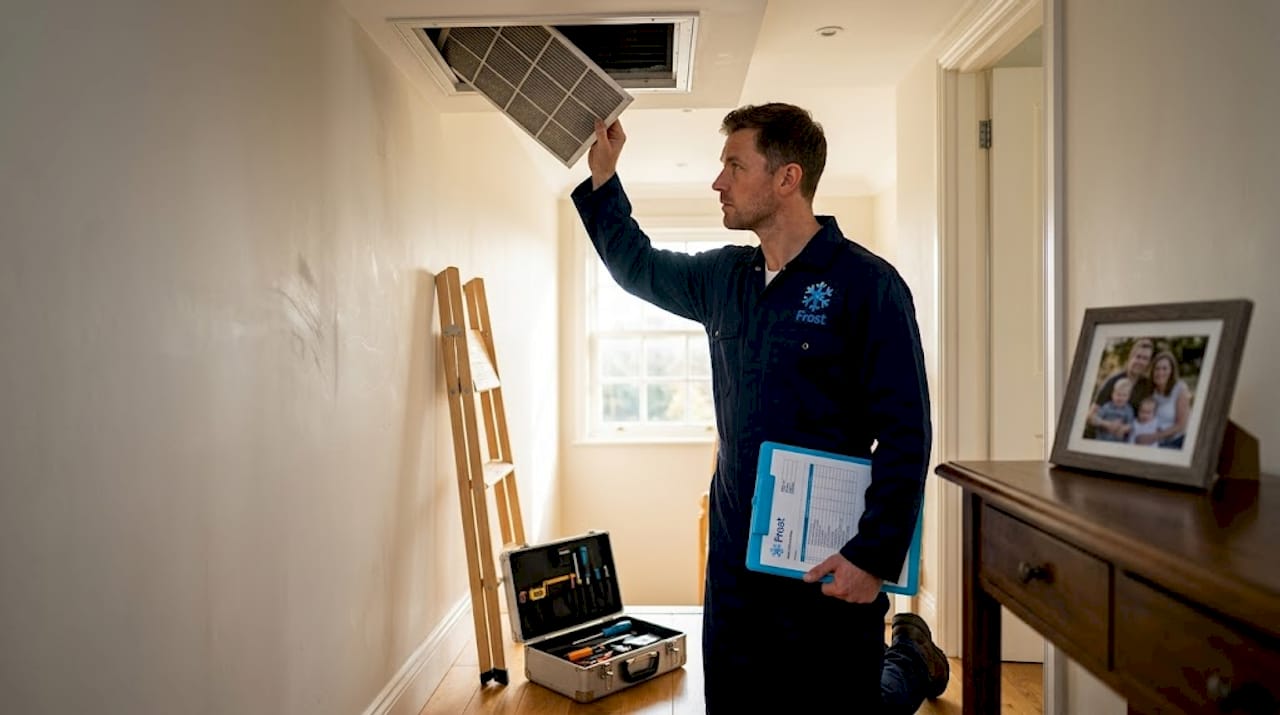
A 2025 review on HVAC systems and microbial contamination found that air cooling can lower dampness and condensation risk, which helps prevent mould-related indoor air quality problems, but the key is humidity control combined with adequate ventilation and maintenance. The same review confirmed that dirty condensate and drain pans, along with blocked filters, can worsen microbial air quality significantly.
The US EPA reinforces this point: the biggest air quality gains from AC come from correct filtration choice and frequent filter and coil maintenance, combined with ensuring you still meet ventilation needs. Running AC alone without ventilation can leave stale indoor air, VOC sources, and indoor pollutants essentially unchanged.
What to check and how often:
- Every month: Visually inspect the filter for visible dirt and debris
- Every three months: Clean or replace filters (more frequently during peak pollen season or if you have pets)
- Every six months: Check the condensate drain pan for standing water or slime
- Annually: Have a qualified engineer inspect coils, refrigerant levels, and overall system hygiene
- After any mould event: Deep clean the whole unit before running it again
Pro Tip: The filter grade you choose should reflect your household's needs. If anyone in the home has allergies or asthma, upgrading to a higher-rated filter makes a measurable difference to particle removal. Speak to your installer about what grades are compatible with your unit, as fitting too dense a filter on an underpowered system can restrict airflow and reduce overall performance.
The troubleshooting tips available for Devon and Cornwall homeowners cover many of the common maintenance warning signs in practical detail.
Practical steps: Getting the best air quality from your AC
Now that you understand the mechanics and the maintenance requirements, here is how to translate that knowledge into everyday decisions that genuinely improve the air in your home.
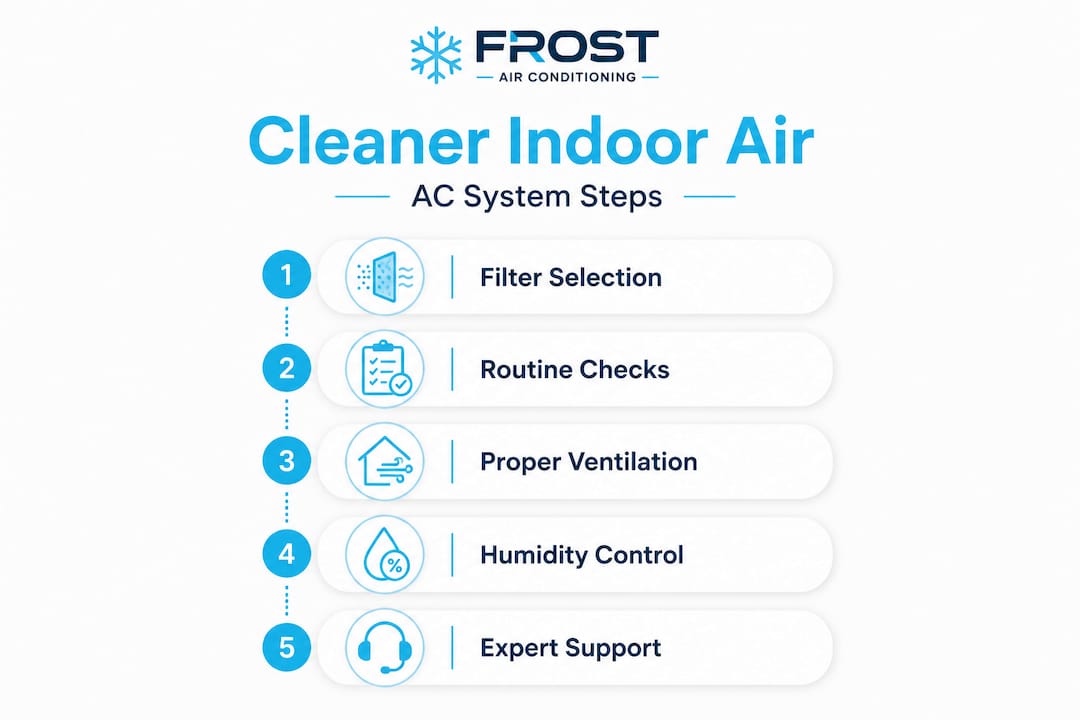
- Choose the right filter from the outset. Standard filters work for general dust control. If you have allergies, coastal humidity concerns, or pets, invest in a higher-rated filter compatible with your unit.
- Set a maintenance reminder. Put a recurring three-month reminder in your phone for filter checks. It takes five minutes and makes a significant difference over a season.
- Use your AC in coordination with ventilation. On low-pollution days, open windows for 15 to 20 minutes in the morning to flush out CO2 and VOCs before switching to AC for the rest of the day.
- Tailor your approach by room. Bedrooms benefit from tighter filtration and lower humidity overnight. Living areas may need more frequent air exchanges due to cooking and activity.
- Monitor humidity levels. Aim for 40 to 60 per cent relative humidity. Below 40 per cent can dry out airways; above 60 per cent encourages mould and dust mites. A cheap digital hygrometer gives you accurate readings.
- Close windows during high pollen or pollution events. This is where AC earns its keep for Devon and Cornwall homes. Sealed rooms with filtered recirculation keep particle counts low when outdoor air is at its worst.
A 2025 systematic review found that when air conditioning is integrated with effective filtration, including HEPA-grade options, it can accelerate the removal of airborne aerosols and particles, though results vary by setting and the specific outcome measured.
| Room | Primary air quality concern | Recommended approach |
|---|---|---|
| Bedroom | Dust mites, pollen overnight | Higher-grade filter, humidity below 55% |
| Living room | VOCs from furnishings, CO2 buildup | Regular ventilation + AC combination |
| Kitchen | Cooking odours, grease particles | Extractor fan primary, AC supplementary |
| Home office | CO2 buildup from occupancy | Short ventilation breaks, AC for particle control |
| Coastal property | Damp, mould risk | Dehumidification mode, frequent maintenance |
The benefits for Devon and Cornwall homes go well beyond simple cooling, particularly when you factor in the region's specific climate challenges. If you use a bedroom unit, the dedicated bedroom air conditioning advice covers overnight settings and filter choices in useful detail.
Why the usual advice on aircon and air quality misses the mark
Most guides on this subject treat air conditioning as a universal solution. Buy a good unit, change the filter occasionally, and your air will be clean. That advice ignores something fundamental: every home in Devon and Cornwall is different, and the local environment creates specific challenges that generic guidance simply does not address.
Coastal properties face persistent humidity that standard AC settings may not adequately control. A unit in a Newquay seafront flat faces a fundamentally different challenge than one in a Dartmoor farmhouse, where indoor combustion sources, older building stock, and different ventilation patterns create a different pollutant profile. Treating these homes identically is a mistake.
There is also a tendency to see buying a better unit as the primary solution. In reality, the relationship between AC and air quality is more about system design, correct sizing, and ongoing maintenance than it is about headline specifications. We have seen homes in Exeter where a well-maintained, mid-range split system delivered far better air quality outcomes than a neglected premium unit in a comparable property.
The other thing most guides miss is the risk of creating a sealed, stale environment. Some homeowners become so focused on keeping outdoor pollutants out that they run AC continuously without any fresh air exchange. Over time, CO2 builds up, indoor VOC levels rise, and the air quality actually deteriorates even as the particle count stays low. Integrated air conditioning that accounts for ventilation design alongside cooling is the approach that genuinely delivers results.
The honest takeaway from years of working with South West homeowners is this: air conditioning is one component of a healthy indoor environment, not the whole answer. Pair it with sensible ventilation habits, the right filter grade, and consistent maintenance, and it becomes a genuinely powerful tool.
Enhance your home's comfort and air quality with expert support
Understanding the theory is one thing; getting it right inside your specific home is another. Every Devon and Cornwall property has its own quirks, whether that is coastal damp, high ceilings, older construction, or a layout that makes ventilation tricky.

At Frost Air Conditioning, we work with homeowners across the South West to find the right system, sized and specified for their actual needs, not a generic solution. We are F-Gas certified, offer 0% finance to spread the cost, and can often complete installations on the same day. If you are ready to take the next step, get a quote and we will advise you on the best approach for your home and your air quality goals.
Frequently asked questions
Does running air conditioning always mean cleaner indoor air?
Not always; AC mainly filters particles and controls humidity, but regular maintenance and proper ventilation are essential for real air quality improvement.
Should I use air conditioning if there's outdoor air pollution or smoke?
Yes, but avoid bringing in outdoor air; use filtration and keep windows closed, since increasing ventilation during poor outdoor air quality events can raise indoor pollutant levels.
Which is more important for clean air: filtration or ventilation?
Both matter; filtration removes particles such as dust and pollen, while ventilation dilutes indoor gases and odours, and balanced use achieves the best results.
How often should I change or clean air conditioning filters?
Check filters at least every three months and clean or replace as your manufacturer recommends, since dirty filters and drain pans can worsen microbial air quality significantly.
Can air conditioning prevent mould growth indoors?
Yes, by reducing dampness and controlling humidity, but only if humidity is properly managed and the system is well maintained with regular cleaning of all components.