
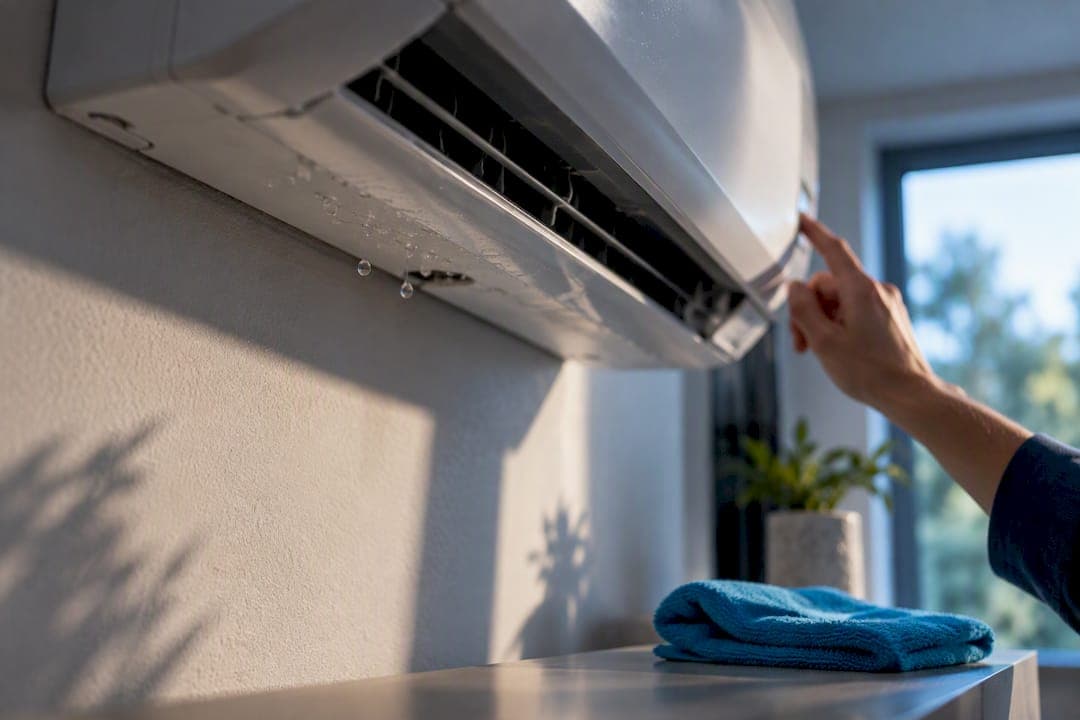
Mould in an aircon unit is common, almost always fixable, and worth taking seriously rather than ignoring. If you notice a musty smell or dark spotting on filters and grilles, switch the unit off before doing anything else, then check and clean the filters and drip tray yourself. If the odour or any symptoms persist once the unit is running again, stop using it and book a professional inspection rather than pushing through.
TL;DR:
- Regularly cleaning or replacing filters every few weeks and running fan-only drying cycles after cooling prevent moisture buildup that fosters mould growth.
- Persistent musty smells or visible mould on coils, drain lines, or ductwork indicate the need for professional inspection and sanitizing rather than continued DIY efforts.
- Avoid spraying household chemicals inside the unit, as they can damage components or push spores into the indoor air, making system servicing necessary.
- The most common early sign of mould is a musty odor followed by allergy-like symptoms that worsen when the unit is on, especially if symptoms improve when it’s off.
- Routine maintenance, including annual professional checkups, ensures deeper system cleaning and prevents mould from becoming a recurring problem.
Table of Contents
- Why mould grows inside air conditioners
- Health effects and who is most at risk
- How to spot mould in your aircon: a homeowner checklist
- Safe cleaning and remediation: DIY steps and where to stop
- Practical prevention routine: maintenance and daily habits to keep mould away
- When to call a professional and what to expect from a service visit
- Practitioner checklist and proof points from Frost Air Conditioning
- Author's perspective: routine maintenance beats panic
- Getting your system properly checked and maintained
- Sources
- FAQ
Why mould grows inside air conditioners
Every time an aircon cools a room, it pulls warm, humid air across a cold evaporator coil. Water condenses on that coil, exactly the way it beads on a cold glass on a summer afternoon, and that moisture has to go somewhere. Most of it drains away through a drip tray and condensate line, but a surprising amount lingers on the coil fins, in the fan barrel, and in the ductwork of larger systems. Add dust, which every filter traps and which builds up in warm, damp corners the airflow doesn't quite reach, and you have exactly what mould needs: moisture, warmth and organic matter.
A few parts are especially prone to trouble:
- Filters trap dust and moisture together, making them the first place mould appears.
- The evaporator coil stays wet for hours after each cooling cycle.
- The drip tray and drain line collect standing water if they're not draining freely.
- Ductwork in ducted systems can hide growth for months before anyone notices a smell.
A clogged filter makes all of this worse, since restricted airflow slows drying and lets condensation sit longer than it should.
Health effects and who is most at risk
Airborne mould spores from a contaminated unit mostly cause allergy-type symptoms: sneezing, itchy eyes, a scratchy throat, or a cough that seems to flare up whenever the aircon is running. People with asthma tend to notice it first, since indoor mould exposure is linked to worsened asthma symptoms and other respiratory irritation in people who are already sensitive.
The clearest warning sign isn't a smell. It's timing. If symptoms consistently show up or worsen within an hour of the unit switching on, and ease off once it's off, that correlation is one of the strongest practical clues you're dealing with mould rather than seasonal allergies or a cold.
Rarer but more serious reactions, including hypersensitivity pneumonitis or infections in people with weakened immune systems, are possible with heavier or prolonged exposure. These outcomes are uncommon, and they scale with how much mould is present and how long someone breathes it in, which is exactly why running a contaminated unit rather than switching it off is the wrong instinct.

How to spot mould in your aircon: a homeowner checklist
Most people find aircon mould with their nose before their eyes. Here's a quick, safe way to confirm it:
- Smell test. Switch the unit on and stand near the vent. A musty, damp-basement smell in the first few minutes is the single most common early sign.
- Check the filter. Pull it out and look for dark speckling, a greenish tinge, or a slimy texture, not just dust.
- Look at the drip tray and grille. Standing water, discolouration, or a fuzzy black film point to a drainage problem feeding the mould.
- Track symptoms. Note whether sneezing, coughing, or headaches line up with the unit running.
- Use a torch. Shine it into the grille and along the filter housing rather than reaching in blind.
Pro Tip: Wear disposable gloves and a mask for even this basic inspection. Disturbing mould, even briefly, can release spores into the air you're about to breathe.
Safe cleaning and remediation: DIY steps and where to stop
Cleaning what you can reach is straightforward, provided you follow the steps in order and don't rush the drying stage.
- Isolate the power at the wall or breaker before touching anything.
- Put on gloves and a mask. This matters even for a "quick wipe".
- Remove and wash filters in warm water with a mild detergent, or a dilute white vinegar solution for stubborn marks.
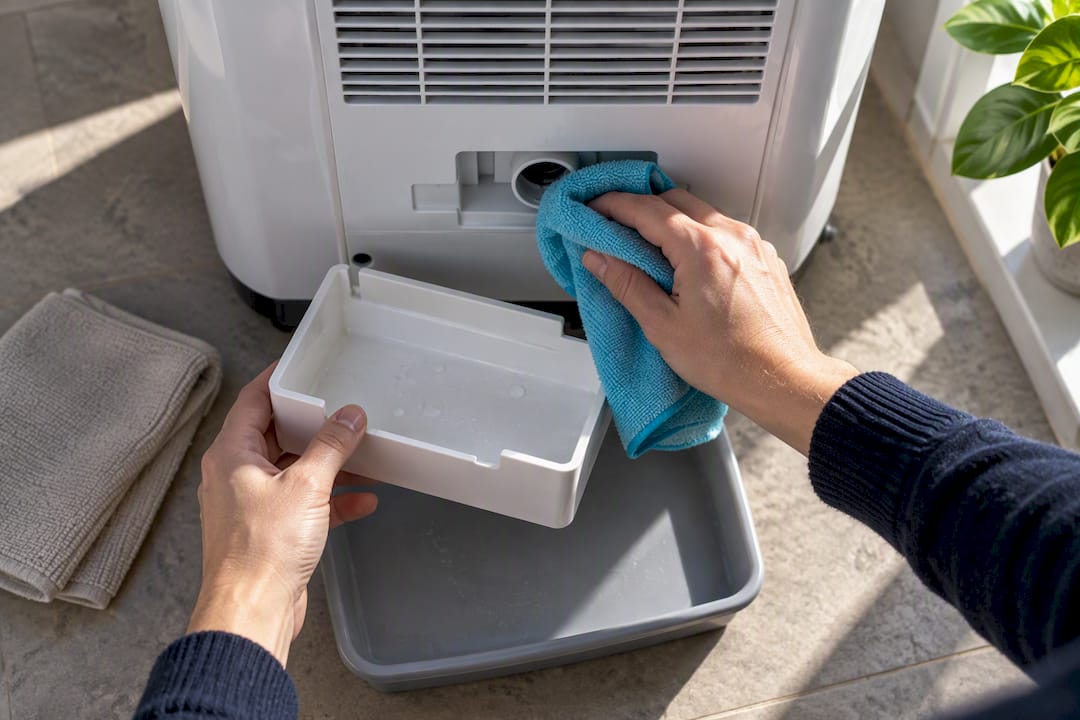
- Empty and clean the drip tray, checking that the drain line isn't blocked.
- Wipe covers and grilles with the same mild solution, avoiding anything abrasive that could scratch the plastic.
- Dry everything fully before reassembly. Damp parts going back in defeats the entire exercise.
That covers filters, covers, and the drip tray, all genuinely accessible parts. The evaporator coil, fan barrel, and any ductwork are a different matter.
Mould that has taken hold inside the coil or fan barrel usually needs a trained technician with the right sanitising products and tools to clear properly, rather than a spray bottle and a cloth.
Don't spray strong household chemicals into the unit's internals hoping to reach a coil you can't see. It rarely works, and it can damage components or push contaminated aerosol straight into the room. If the smell returns after you've cleaned every accessible part, that's your signal the source is deeper inside, and it's worth noting when the odour appeared and how it's changed before a technician arrives.
Practical prevention routine: maintenance and daily habits to keep mould away
Prevention is cheaper and far less unpleasant than remediation, and most of it comes down to a handful of habits repeated consistently.
- Clean or replace filters regularly every few weeks during heavy use during heavy use, drying them fully before refitting.
- Run fan-only or auto-dry mode for 15 to 20 minutes after a cooling session to dry the coil and fan barrel before moisture has a chance to settle.
- Check the drain line periodically for blockages, especially before the season's heaviest use.
- Keep indoor humidity between 30% and 50% where practical, since drier air gives mould less to work with.
- Book an annual professional service ahead of summer, when the system will be running hardest.
Pro Tip: That short fan-only cycle after cooling is one of the cheapest, most effective habits you can build. It costs nothing, takes minutes, and dries the coil before mould gets a foothold.
If you're storing a portable or window unit over winter, dry it out fully and check external drainage isn't blocked before covering it. Storing a unit while it's still damp is one of the more common causes of mould nobody notices until spring. Our condensation prevention guide and winter care guide go into more detail on both fronts.
When to call a professional and what to expect from a service visit
Some situations call for a technician rather than a weekend project, particularly if:
- The musty smell returns after you've cleaned every accessible part.
- You can see growth on the coil, fan barrel, or inside ductwork.
- Symptoms persist even after cleaning and airing the room.
- The system is ducted, since ductwork mould is rarely a DIY job.
A proper service visit typically involves shutting the system down, inspecting the coil and drain pan, clearing the drain line, sanitising affected components, and drying everything thoroughly before it's switched back on. Reputable technicians will document the work with before-and-after photos and a written report, which is worth asking for. It's also fair to ask whether the engineer holds F-Gas or REFCOM certification and whether the visit comes with any guarantee.
Practitioner checklist and proof points from Frost Air Conditioning
A workable routine boils down to four steps: survey the system, check filters and drainage, run a short drying cycle after use, and book an annual service before the busy season. Follow that and most mould problems never get the chance to start.
Frost Air Conditioning's engineers are qualified to install and maintain air conditioning systems, with installation services available across the South West region. For more detail on keeping a system clean between services, our guides on cleaning your air conditioner and aircon aftercare cover the accessible parts in more depth than space allows here.
Author's perspective: routine maintenance beats panic
Most of the aircon mould cases that end up needing a proper professional clean started as something small: a filter left unwashed for a season, a drain line nobody checked before summer. None of it is dramatic. What works is boring consistency, a filter wash every few weeks and a drying cycle after use, not a scramble once the smell shows up. If you're past that point, our air quality guide and our service team are the next sensible step.
— James
Getting your system properly checked and maintained
A DIY filter wash sorts the easy cases. Deeper coil or duct mould, or a system you simply don't trust anymore, calls for hands that do this daily. Frost Air Conditioning's engineers are qualified and serve Exeter and the wider South West, offering timely service response for air conditioning maintenance and repairs.

Our Service & Maintenance team provides inspections, cleaning, annual service contracts, and emergency breakdown response for air conditioning units. If mould keeps coming back or the system needs replacement, a domestic installation with a new unit from premium brands can address the issue, with flexible financing options available. A free survey costs nothing and tells you exactly which route makes sense, so get in touch and book one before the next heavy-use season starts.
Sources
- Health effects of indoor mould exposure — PMC
- How to prevent and clean mould in window air conditioners | TCL support
This article is general information, not a substitute for advice from a qualified doctor. Consult a qualified healthcare professional about your own circumstances before acting on anything here.
FAQ
Is it normal for an aircon to have mould?
It's a common maintenance issue rather than a fault with the machine itself, since cooling naturally creates the moisture and dust conditions mould needs. Regular filter cleaning and drying cycles usually stop it taking hold.
Should you run AC if you have mould?
No. Running a contaminated unit can circulate spores around the room and worsen indoor air quality, so switch it off until accessible parts are cleaned or a technician has checked it.
What are the first signs of mould sickness?
Early symptoms tend to look like allergies: sneezing, itchy or watery eyes, a scratchy throat, or a cough that flares soon after the aircon starts running. In people with asthma, these symptoms can worsen with repeated exposure.
Will mould in my AC unit make me sick?
It can, particularly for anyone with asthma or a weakened immune system, though the severity depends heavily on how much mould is present and how long the unit has been running contaminated. A musty smell combined with symptoms that line up with the unit switching on is a strong practical signal worth acting on rather than waiting out.
How do I stop mould coming back after cleaning?
Clean or replace filters regularly every few weeks during heavy use, and run fan-only mode for 15 to 20 minutes after cooling sessions to dry the coil properly. If the smell returns despite this, the source is likely inside the unit and needs a professional visit from an F-Gas certified engineer.