
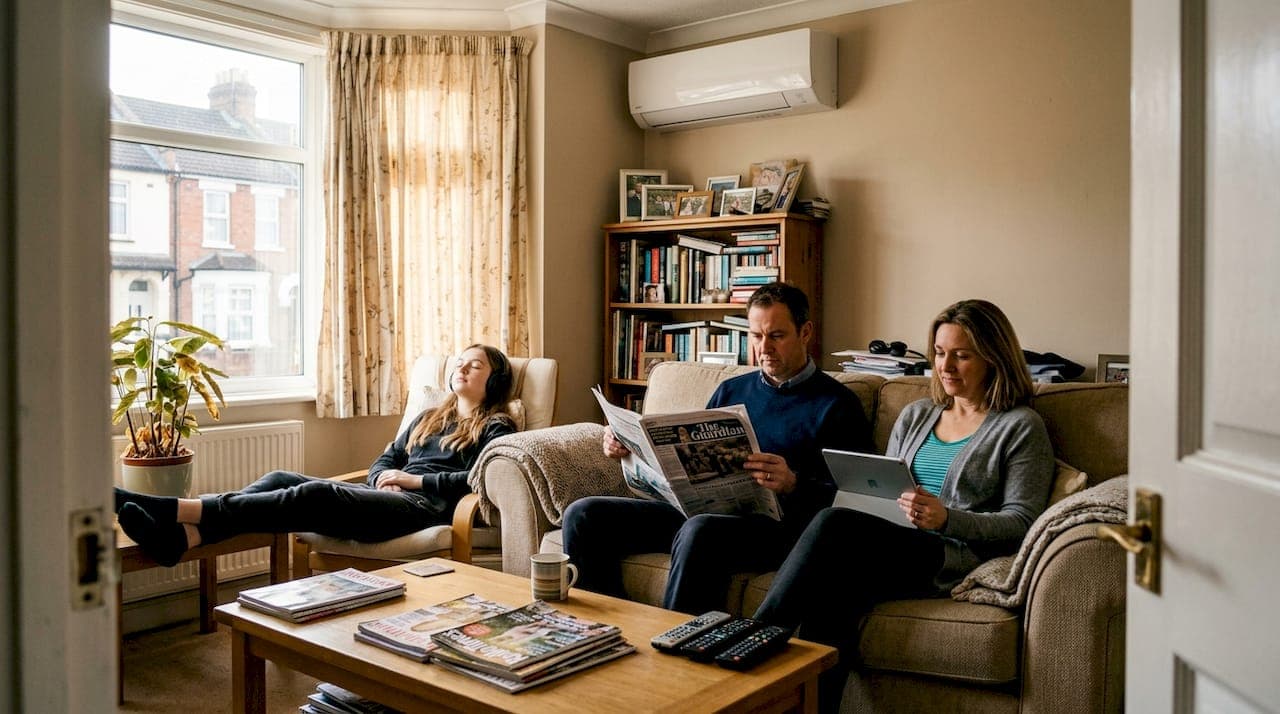
A sweltering Devon summer afternoon, the kind where the air sits heavy and even the dog has given up moving, is when most people finally decide they need proper air conditioning. But with so many systems on the market, from portable units you drag between rooms to sleek wall-mounted splits, it can feel overwhelming to know where to start. This guide walks you through everything: how to assess your home, compare your options, understand the costs, and get a system fitted quickly and correctly. Whether you're in a Victorian terrace in Exeter or a new build near Truro, there's a solution that fits your home and your budget.
Table of Contents
- Understanding your home's cooling needs
- Comparing air conditioning options for UK homes
- Financing your air conditioning investment
- What to expect during installation and operation
- Why long-term comfort always beats short-term fixes
- Book your installation with local experts
- Frequently asked questions
Key Takeaways
| Point | Details |
|---|---|
| Split systems outperform portables | Wall-mounted split units are quieter, more efficient, and better suited for British homes than portable options. |
| Proper sizing matters | Matching unit size to your room ensures optimal comfort and energy savings. |
| Modern units are quiet | High-quality air conditioners can operate at noise levels as low as 20dB, barely louder than a whisper. |
| Financing and service options available | Affordable monthly payment plans and same-day installation make home air conditioning accessible in Devon and Cornwall. |
Understanding your home's cooling needs
Before you buy anything, it's worth spending five minutes thinking about what your home actually needs. Not every room cools the same way, and not every system suits every property. Getting this right from the start means you avoid wasting money on a unit that's either too small to cope or too large and expensive to run.
The key factors that shape your choice are room size, insulation quality, and window placement. A south-facing living room with large glass doors will heat up far faster than a north-facing bedroom with small windows. Older homes in Devon and Cornwall, particularly stone-built cottages, often retain heat differently to modern builds, so the material your walls are made from matters too.
Devon and Cornwall enjoy some of the mildest climates in the UK, but summer temperatures have been climbing. Heatwaves that once felt exceptional are becoming more regular, and coastal humidity can make warm days feel significantly more uncomfortable than the thermometer suggests. That combination of heat and moisture is exactly why a well-sized system matters so much here.
To help you match your room to the right unit, use this as a starting guide:
| Room size | BTU requirement | Best fit unit type |
|---|---|---|
| Up to 15m² | 5,000 to 7,000 BTU | Small wall-mounted split |
| 15m² to 30m² | 7,000 to 12,000 BTU | Mid-range wall-mounted split |
| 30m² to 50m² | 12,000 to 18,000 BTU | Large split or multi-split |
| 50m²+ / open plan | 18,000 BTU+ | Multi-split or cassette system |
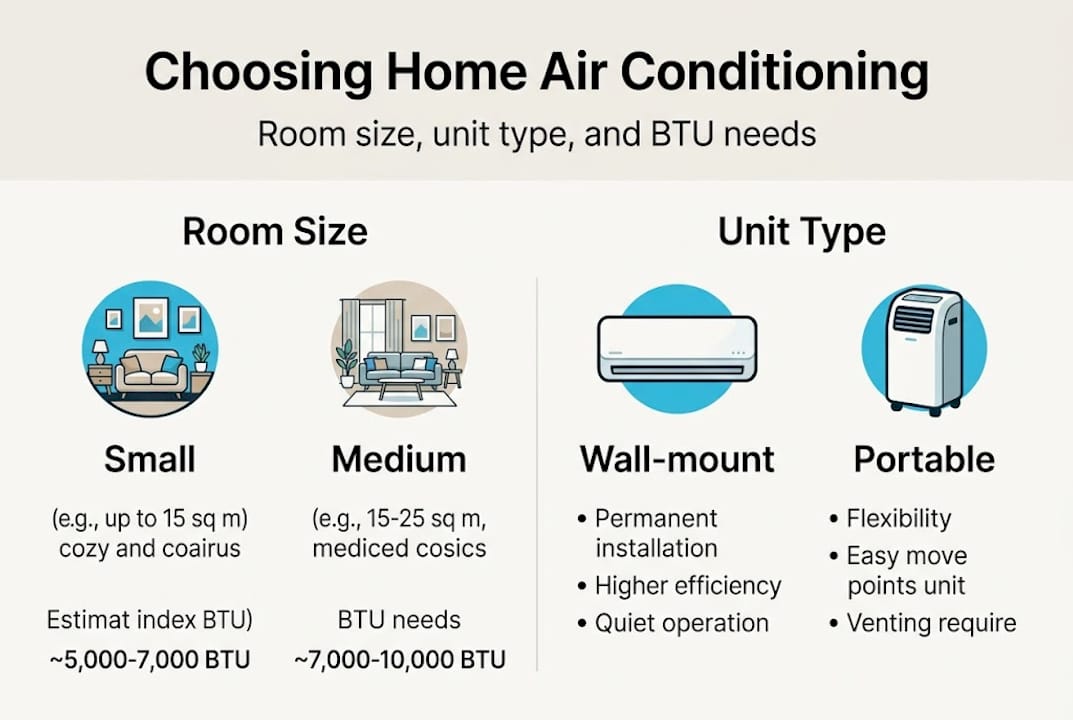
When it comes to choosing air conditioning capacity, the most common mistake is undersizing. A unit that's too small will run constantly, wear out faster, and still leave you uncomfortable. Wall-mounted split systems are the best for UK homes, outperforming portables in efficiency, noise, and power.
Aircon isn't just for those who feel the heat more acutely, though it does make a real difference for allergy sufferers, since most modern units filter the air as they cool it. Older homes with poor ventilation benefit enormously, and modern builds that are well-insulated (and therefore trap heat) are often the most in need of a proper cooling solution.
Pro Tip: Always size up slightly if you're unsure. A unit running at 70% capacity is quieter, more efficient, and will last longer than one constantly working at its limit.
Comparing air conditioning options for UK homes
Once you know your cooling needs, it's time to see which air conditioning type excels in UK homes. The three main options you'll encounter are wall-mounted split systems, portable units, and multi-split systems.
| Type | Pros | Cons | Best use case | Noise level | Typical running cost |
|---|---|---|---|---|---|
| Wall-mounted split | Efficient, quiet, permanent | Requires installation | Most UK homes | 20 to 40dB | Low to moderate |
| Portable unit | No install needed | Noisy, inefficient, bulky | Temporary/rental use | 50 to 60dB | Higher |
| Multi-split system | Cools multiple rooms | Higher upfront cost | Larger homes | 20 to 40dB | Low to moderate |
Choosing the right type doesn't need to be complicated. Follow this simple process:
- List your priorities. Is it quiet operation for a bedroom? Low running costs for a large lounge? Minimal visual impact on your walls?
- Match your priorities to rated products. Guidance for UK homes consistently points to split systems as the top performers across most criteria.
- Cross-check energy rating and BTUs. Look for A++ or A+++ ratings and confirm the BTU output matches your room size from the table above.
Top brands worth knowing include Daikin, rated 9.5/10 for reliability, Mitsubishi Electric (widely regarded as the quietest option for bedrooms), and the Worcester Bosch Climate series, which achieves A++ efficiency and operates at around 20dB across capacities from 2.6kW to 7kW.
"Portable air conditioners might seem like the easy option, but they're inefficient, noisy, and really only suit short-term needs. A properly fitted split system delivers genuine comfort and efficiency in the UK climate, and it's an investment that pays back quickly."
For most homeowners in Devon and Cornwall, a wall-mounted split system from one of these established brands will be the right answer. They're discreet, effective, and far quieter than anything portable.
Financing your air conditioning investment
With a sense of your options, let's get practical about paying for a modern, efficient home aircon. The upfront cost puts some people off, but when you break it down properly, the numbers often tell a different story.
A typical split system installation in a UK home includes three cost components: the equipment itself, the installation labour, and the ongoing running costs. Equipment for a quality mid-range unit generally sits between £700 and £1,500. Installation by an F-Gas certified engineer adds to that, but it's a one-time cost. Running costs are where the long-term savings really show up.
A Worcester Bosch Climate 3200i at A++ efficiency costs around £193 per year to run. That's less than most households spend on a month of electricity for other appliances. Compare that to a portable unit running inefficiently all summer, and the split system pays for itself surprisingly quickly.
Factors that influence your total cost include:
- Room size and system capacity — larger rooms need more powerful units
- Efficiency rating — A++ and above costs less to run year on year
- Installer rates — local, certified engineers in Devon and Cornwall vary in price
- Extras — additional pipework, electrical upgrades, or multi-room setups add to the bill
- Heating capability — many splits double as heat pumps, replacing or supplementing your boiler
Financing makes the upfront cost far more manageable. Interest-free options spread the cost over months without adding a penny in charges, meaning you can have a quality system fitted now and pay gradually. Some providers also offer staged payment plans that align with your budget cycle.
Pro Tip: Think about future-proofing when you choose your system. A unit that heats as well as cools adds genuine value to your home and could reduce your heating bills in winter, making it a smarter long-term investment than its price tag suggests.
What to expect during installation and operation
Having sorted costs and picked your system, here's what the install process and living with your aircon really look like. Knowing what happens on the day removes any anxiety and helps you prepare properly.
A typical installation follows these steps:
- Initial survey. Your installer assesses the room, checks the power supply, identifies the best position for the indoor and outdoor units, and confirms any permit requirements.
- Fitting day. The indoor wall unit is mounted, refrigerant pipework is run through the wall to the outdoor condenser unit, and electrical connections are made. For most homes, this takes half a day to a full day.
- System checks. The engineer pressure-tests the pipework, checks refrigerant levels, and runs the unit through its modes to confirm everything is working correctly.
- Controls setup. You'll be walked through the remote or smart controls so you know exactly how to get the most from your system from day one.
To prepare your home before the engineer arrives:
- Ensure there's a suitable power supply near the planned indoor unit location
- Clear the outdoor area where the condenser will sit, leaving at least half a metre of clearance
- Check whether your property requires any planning permissions (most domestic installs don't, but it's worth confirming)
Once your system is running, keeping it in good condition is straightforward. Clean the filters every four to six weeks during heavy use. Book a professional service once a year to check refrigerant levels and electrical connections. Modern split units like the Worcester Bosch Climate series operate at just around 20dB, which is quieter than a whisper, so you'll barely notice it's on.
Common mistakes to avoid: ignoring the filter cleaning schedule, storing the remote somewhere it gets lost or damaged, and not reviewing the control settings after installation. A quick read of the manual saves a lot of frustration later.
Why long-term comfort always beats short-term fixes
We've seen it many times. A homeowner buys a portable unit in a panic during a heatwave, spends the summer listening to it rattle, and then stores it in the garage come September. The following summer, the same discomfort returns, and the portable unit gets dragged out again. It's a cycle that costs more over time and delivers less comfort throughout.
Portable ACs are popular but inefficient, noisy, and only suit short-term needs, while split systems offer genuine comfort and efficiency in the mild UK climate. The upfront investment in a quality split system is real, but so is the return. Quieter nights, filtered air, lower running costs, and a home that's genuinely comfortable rather than merely tolerable.
There's also the resale angle. A properly fitted, certified air conditioning system adds perceived value to a property in Devon and Cornwall, where the holiday let and second home market means buyers and renters notice quality fixtures. Choosing well now isn't just about this summer.
Pro Tip: Invest for the future, not just for emergency comfort. The homeowners who are happiest with their aircon are the ones who chose a quality split system before the heatwave, not during it.
Book your installation with local experts
If this guide has helped you get clear on what your home needs, the next step is finding a team you can trust to fit it properly. Frost Air Conditioning covers Devon and Cornwall installation with F-Gas certified engineers who know the local housing stock and can advise on the right system for your specific property.
Same-day installation is available for most homes, and 0% finance options mean you don't have to wait until you've saved the full amount. Whether you want a single room cooled or a whole-home solution, the team can get a fast quote to you quickly so you can make a decision without pressure. Local knowledge, certified engineers, and flexible payment options make the difference between a stressful purchase and a straightforward one.
Frequently asked questions
Are split air conditioning systems worth the extra cost over portable units?
Yes. Wall-mounted splits outperform portables in efficiency, noise, and power, making them the better long-term investment for any UK home.
How noisy are modern home air conditioning units?
Very quiet. Worcester Bosch Climate series units operate at around 20dB, which is quieter than a whisper and unlikely to disturb sleep or conversation.
Can I get same-day installation for home air conditioning in Devon or Cornwall?
Yes. Local companies including Frost Air Conditioning offer rapid and same-day installation for most residential properties across Devon and Cornwall.
What's the average running cost for a high-efficiency split system?
A modern A++ split system costs around £193 per year to run, making it significantly cheaper to operate than a portable unit used regularly throughout summer.