
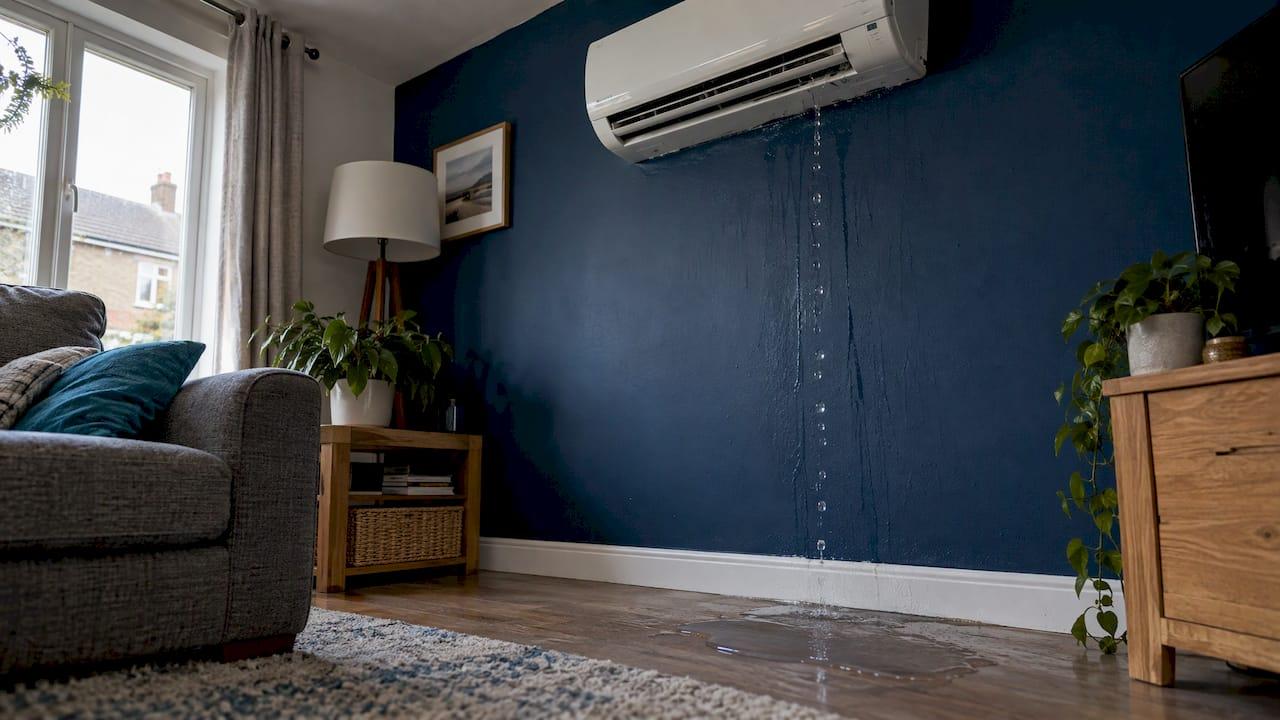
Some air conditioning faults are an emergency: a burning smell, water dripping near electrics, a unit that keeps tripping the breaker or a system that has stopped cooling in a heatwave. Switch the unit off at the isolator, leave it off and call an F-Gas certified engineer. Other signs, such as slower cooling or a higher bill, are early warnings that can be fixed in a booked visit. This guide sorts the two so you know which one you are looking at. If you are in Devon, Cornwall or elsewhere in the South West, we can send an engineer: our emergency breakdown response is part of our service and maintenance offer.
TL;DR
- Switch off and call straight away for a burning or electrical smell, sparks, water near sockets or wiring, a tripping breaker, or loud grinding or banging.
- Book a repair soon for weak cooling, ice on the unit, water leaks, bad smells, new noises or a bill that has jumped for no clear reason.
- Safe checks you can do yourself: remote batteries and settings, a clean filter, a clear outdoor unit and the power supply. Nothing involving refrigerant gas or the electrics inside the unit is a DIY job.
- In the UK, repairing, topping up or recharging refrigerant must be done by a certified engineer. Ask to see their F-Gas certification.
- If anyone in the room is confused, very hot and not sweating, treat it as a medical emergency and call 999 before you call an engineer.
Table of Contents
- Signs you should switch off and call now
- Signs that can wait for a booked visit
- Quick guide: switch off, or book soon?
- Safe checks before you call
- What not to do: gas, wiring and DIY repairs
- How often should a home system be serviced?
- What to expect from an emergency callout
- Our approach to breakdowns in Devon and Cornwall
- Our view: fix it early, and have it done properly
- FAQ
- Sources
Signs you should switch off and call now
These signs mean the unit could be a fire, shock or water-damage risk. Turn it off at the wall isolator or the consumer unit, keep children and pets away from it and arrange an urgent visit.
A burning, scorching or fishy electrical smell
A hot, acrid or burnt-plastic smell usually points to an overheating component, a failing fan motor or damaged wiring. Do not run the unit "just to see". Switch it off at the isolator and leave it off. If you can see smoke or smell it strongly, leave the room and call 999 first, then the engineer.
Sparks, buzzing or a breaker that keeps tripping
If the circuit breaker trips each time the unit starts, something is drawing more current than it should. Resetting it repeatedly can make the damage worse. Leave the breaker off and arrange a visit. Electrical connection of an air conditioner is not something to experiment with: one UK guide notes that it counts as notifiable electrical work, which is another reason repairs belong with a registered installer.
Water near sockets, wiring or ceilings
A little condensation is normal. Water running down a wall, dripping from the indoor unit onto furniture or pooling near a socket is not. Blocked condensate drains, a cracked tray or a frozen coil melting can all cause it. Switch off the unit, put a towel or bowl down and keep water away from anything electrical.
Grinding, screeching or loud banging
A squeal can be a worn belt or bearing. Banging or knocking can mean a loose or broken part in the fan or compressor. Running a unit like this can turn a small repair into a replacement of the outdoor unit. Switch it off and have it looked at.
A complete failure during hot weather
When the unit stops cooling in a heatwave, the question is who is in the room. The NHS advises that people over 65, children aged five or under and those with long-term health conditions are more likely to become ill in hot weather. Heatstroke is when the core temperature rises above 40°C even after resting somewhere cool and drinking fluids for 30 minutes or longer. Hot skin that is not sweating, confusion, a seizure or loss of consciousness are signs. In that case call 999. Then move the person somewhere cooler while you arrange the repair.
For a vulnerable household member, a same-day response matters more than the price of the visit. That is the situation our emergency breakdown service exists for.
Signs that can wait for a booked visit
These signs are not dangerous on their own, but they get worse and more expensive if you ignore them. Aim to book within days, not months.
Weaker cooling or longer running times
Homebuilding's UK maintenance guide lists longer running times, weaker cooling and a sudden jump in electricity bills among the signs that a system needs attention. Its example is a room that once cooled in about 20 minutes and now takes an hour. The usual causes are a clogged filter, a dirty coil, a failing fan or a refrigerant leak.
A simple test: set the unit to cool at 18°C to 20°C and hold your hand in front of the indoor unit after ten minutes. The air should feel clearly cool. If it is lukewarm and the filter is clean, the cause is likely inside the system.
Ice on the indoor or outdoor unit
Ice on the pipework or the casing means the refrigerant is not circulating or absorbing heat properly. Low airflow from a dirty filter is a common trigger, and so is a low refrigerant charge. Turn the unit to fan only or off to let it thaw, and do not chip the ice away. Our guide to triaging ice on an outdoor AC unit walks through what is safe to check first.

Water leaks from the indoor unit
A slow drip from the indoor unit is often a blocked condensate pipe, which is a quick fix. It can also come from a frozen coil or a poorly levelled unit. Either way it will not clear on its own, and water can damage walls, flooring and the unit's electronics.
Smells that do not go away
A musty or damp smell suggests mould or bacteria on the filter, coil or drain tray. Wash the filter first. If the smell returns within days, the coil or drain needs a proper clean by an engineer. For help pinning down what a smell from the vents might mean, see this guide to diagnosing smells from air vents.
New noises
Rattling, clicking or humming that was not there last summer is a prompt, not an emergency, unless it turns to grinding or banging. Loose panels and fan blades are cheap to fix when caught early.
A higher energy bill with no other change
A unit working harder to achieve the same result uses more electricity. If your bills have risen and your usage has not, the unit may be losing efficiency. Compare the same months year on year, so that you are not mistaking a hotter summer for a fault.
Quick guide: switch off, or book soon?
| What you notice | Likely cause | What to do |
|---|---|---|
| Burning or electrical smell | Overheating part or wiring fault | Switch off at the isolator, call urgently |
| Breaker trips repeatedly | Electrical fault or short | Leave breaker off, call urgently |
| Water near sockets or wiring | Drain failure, cracked tray | Switch off, call urgently |
| Grinding or banging | Fan or compressor damage | Switch off, call urgently |
| No cooling in a heatwave | Compressor, refrigerant or control failure | Call urgently, 999 if anyone is ill from heat |
| Weak cooling, longer run times | Dirty filter or coil, low refrigerant | Clean the filter, then book a visit |
| Ice on the unit | Poor airflow or low refrigerant | Switch off to thaw, book a visit |
| Slow drip from indoor unit | Blocked condensate drain | Book a visit soon |
| Musty smell | Mould on filter or coil | Wash the filter, book a clean if it returns |
| Bills up, no other change | Falling efficiency | Book a service |
Safe checks before you call
A few minutes of checking can save a callout, and it gives the engineer useful information. Stop at the first point where you would need to open a panel or touch a wire.
- Check the controls. Replace the remote's batteries, confirm the mode is cool (not fan or dry) and that the set temperature is below the room temperature. Check that no timer or schedule is overriding it.
- Check the power. Look at whether the consumer unit has tripped. Reset it once only. If it trips again, leave it off and call.
- Clean or replace the filter. Most indoor units have a washable mesh filter behind the front grille. Switch the unit off first, rinse it with lukewarm water, let it dry fully and refit it.
- Clear the outdoor unit. Leaves, a bin, a plant or a wall too close can choke airflow. Keep the area around it clear. Switch off before you reach near the fan.
- Look at the condensate drain. If you can see where the drain pipe ends outside, check it is not blocked by soil, algae or a spider's nest.
- Note what you see. A phone photo of the error code, the ice or the leak, plus when it started, helps the engineer arrive with the right parts. You can pass these details on through our fault report page.
For a longer seasonal routine, our service checklist lists what to look at before summer and what is covered by the F-Gas rules.
What not to do: gas, wiring and DIY repairs
The refrigerant inside an air conditioner is a fluorinated gas, and in the UK it is regulated. Since 1 January 2015, refrigerant suppliers may only sell to contractors who can show certification from a registration body such as Refcom or Quidos. That is why a "gas top-up kit" is not a sensible fix: recharging, repairing and installing are for certified engineers only, and releasing refrigerant is illegal.
A low charge also means there is a leak somewhere. Topping up without finding and fixing the leak just delays the next failure. Our guide to air conditioner gas for UK homeowners explains what refrigerant is and why it matters.
Do not open the casing of the indoor or outdoor unit, bypass a breaker or reset the same breaker over and over. These tasks sit with an engineer who is qualified in both refrigerant handling and electrical safety.
Checking who you are letting in
Before anyone works on your system, ask for their F-Gas certification and registration. Our guides on verifying F-Gas certification and the company register and five checks to make before you hire show how to do it in a couple of minutes.
How often should a home system be serviced?
Most faults that arrive as emergencies start as something a service would have caught: a dirty coil, a loose connection, a slow leak. Homebuilding's guide notes that a professional service typically includes cleaning internal components, checking airflow and electrical connections and inspecting for refrigerant leaks, which can spot small faults before they become bigger and more expensive ones.
For the legal side, leak-check frequency under the older EU F-Gas regulation, which UK rules grew out of, scales with the refrigerant charge: every 12 months above 3kg, every 6 months above 30kg and every 3 months above 300kg. The same guidance says systems of 12kW and above need a regular inspection programme. Many home split systems sit below those thresholds, but small commercial premises, such as a shop or an office, may not. Our guides to how often to service your aircon and the 12kW and F-Gas rules help you work out which applies to you.

If you want to know what the common faults look like side by side, our list of common AC problems is a useful companion to this page.
What to expect from an emergency callout
A good callout follows a clear order, and knowing it helps you judge whether the visit is going well.
- Triage by phone or form. You describe the symptoms, and the safe-to-run question is answered first. If it is a safety issue, you are told to keep the unit off.
- Arrival and isolation. The engineer isolates the power, then inspects the indoor unit, the outdoor unit, the pipework and the drain.
- Diagnosis. Pressure and electrical readings, error codes and visual checks narrow down the fault. If refrigerant is low, the engineer finds the leak before recharging.
- Repair or a clear quote. Small repairs such as a drain clear, a fan fix or a sensor swap are often done on the spot. If a major part has failed, you should get the options in plain terms.
- Record. The engineer should note what was done, including any refrigerant added or recovered, with their certification details.
On very old systems, a repair bill can approach the cost of a new unit. In that case a replacement can be the better value, and we can quote that alongside the repair.
Our approach to breakdowns in Devon and Cornwall
If your unit is showing one of the signs above, our service and maintenance team is based in Exeter and covers the South West. Our engineers are local, REFCOM registered and F-Gas certified, and we do not use subcontractors. We offer an emergency breakdown response, annual service contracts for homes and businesses and, where a unit is beyond repair, a free survey and installation of Samsung, Mitsubishi, Toshiba or Daikin systems, often completed within one to two days. Same-day and next-day installs are available, and 0% finance is on offer for new systems.
If you would rather avoid the next breakdown altogether, our service plans put the annual check on the calendar for you.

For a fault right now, use the fault report page. If you are thinking of replacing an unreliable unit, look at our domestic installation service, and for shops and offices see shop fitting and commercial.
Our view: fix it early, and have it done properly
Most of the emergency calls people dread started as a quiet sign weeks earlier: a unit that took a little longer, a faint smell, a drip they wiped up and forgot. By the time the breaker trips, the repair is bigger.
Our advice is simple. Treat anything electrical, any burning smell and any water near wiring as a switch-off-and-call situation. Treat everything else as a prompt to book. And whoever you call, make sure they are F-Gas certified, because the gas side of an air conditioner is not a place for guesswork.
This is why we offer emergency breakdown response and annual service contracts together. An engineer who knows your system, works for a local team and does not pass the job to a subcontractor can get you cooling again faster, and a yearly check means fewer of those calls in the first place.
James
FAQ
Is a broken air conditioner an emergency?
It depends on the sign. Burning smells, sparks, a repeatedly tripping breaker and water near electrics are safety emergencies: switch off and call straight away. A unit that stops cooling is urgent when someone vulnerable to heat is at home, and can otherwise be booked within a day or two. If someone shows signs of heatstroke, call 999.
How can I tell if my AC is broken?
Look for weaker cooling, longer running times, strange noises, smells, water leaks and a sudden rise in your electricity bill. These are the symptoms UK maintenance guidance lists. Clean the filter and check the settings first, then book an engineer if the problem persists.
Can I top up the gas in my air conditioner myself?
No. Refrigerant work must be done by a certified engineer, and gas suppliers in the UK can only sell to certified contractors. A low charge also points to a leak, which needs finding and repairing, not just topping up.
When should I call an engineer rather than keep troubleshooting?
Call once the simple checks are done and the fault remains, or at once if you notice anything electrical, any burning smell or water near wiring. Do not open the unit or reset the breaker more than once.
Sources
- A complete guide to air con maintenance | Homebuilding
- Staying well in hot weather | Berkshire Healthcare NHS
- Air Conditioning Installer Cost in Guildford | 2026 Guide
- Your F-gas questions answered | Cooling Post
- Servicing and maintenance guidance document
- Smell From Air Vents? A Homeowner's 20 Minute Diagnostic