
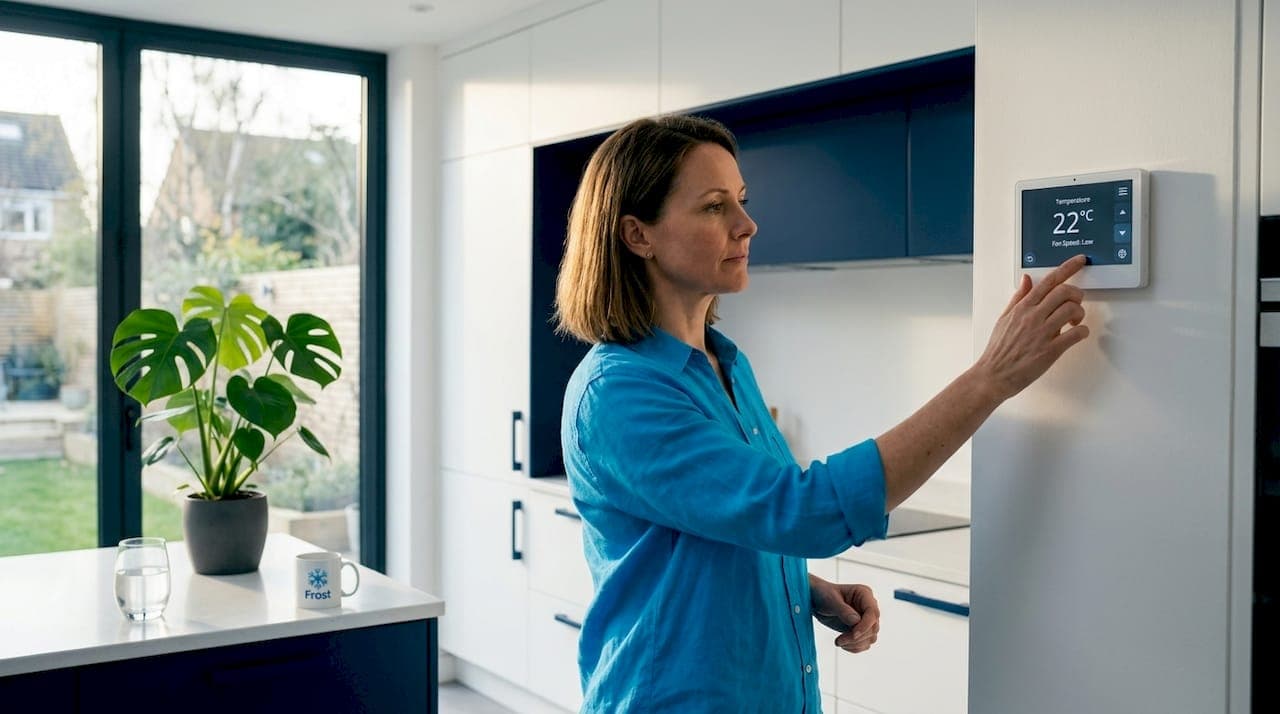
Your air conditioner has stopped working properly, the house is getting warmer by the minute, and you have no idea where to start. That feeling is genuinely awful, especially in the middle of a hot spell. The good news is that around 90% of common AC failures can be addressed by homeowners through simple diagnostic steps before needing to call anyone out. This guide walks you through how to quick fix air conditioner issues yourself, covering everything from preparation and step-by-step repairs to recognising when the problem is beyond a DIY solution.
Table of Contents
- Key takeaways
- Before you start: tools and safety
- Step-by-step guide to the most common quick fixes
- Recognising warning signs beyond quick fixes
- Checking your repair worked and preventing future faults
- My honest take on DIY versus calling it in
- When Frostairconditioning can help
- FAQ
Key takeaways
| Point | Details |
|---|---|
| Most faults are fixable at home | Around 90% of common AC failures respond to simple diagnostic checks before a professional is needed. |
| Safety comes first | Always switch off power at the mains before touching internal components or inspecting your unit. |
| Filters cause more problems than you think | A blocked filter is one of the most common reasons an AC stops cooling effectively. |
| Frozen coils need patience | Switch off cooling but leave the fan running to thaw a frozen evaporator coil safely without causing damage. |
| Know when to stop | Burning smells, refrigerant leaks, and repeated breaker trips are signs to call a certified engineer immediately. |
Before you start: tools and safety
Getting the right tools together before you begin is not just about convenience. It genuinely reduces the risk of making a small problem worse.
Here is what you will want to have to hand before attempting any quick HVAC repairs at home:
- A flathead and cross-head screwdriver
- A fresh replacement air filter (check your unit's manual for the correct size)
- A garden hose for cleaning the outdoor condenser unit
- A torch for inspecting dark areas around the unit
- A soft brush or fin comb for clearing condenser fins
- A bucket and cloth for any condensate overflow
- Your unit's user manual (or a downloaded copy from the manufacturer's website)
The safety side matters just as much as the tools. Switch the unit off at the thermostat and isolate the power at your consumer unit before opening any panels. Never attempt to recharge refrigerant yourself. DIY refrigerant handling is illegal and unsafe for homeowners without F-Gas certification and the correct equipment. This is not a grey area. If you suspect a refrigerant issue, that is a job for a certified engineer.
One more thing worth stressing: if the manual for your unit lists a fault code and the recommended action is "contact a service engineer", take that seriously. Quick fixes work well for straightforward problems, but not every issue is one.
Pro Tip: Photograph your unit's wiring and component layout on your phone before removing anything. If a wire comes loose, you will have a clear reference to restore it correctly.
Step-by-step guide to the most common quick fixes
This is where most homeowners find their answer. Work through these steps in order before assuming the worst.
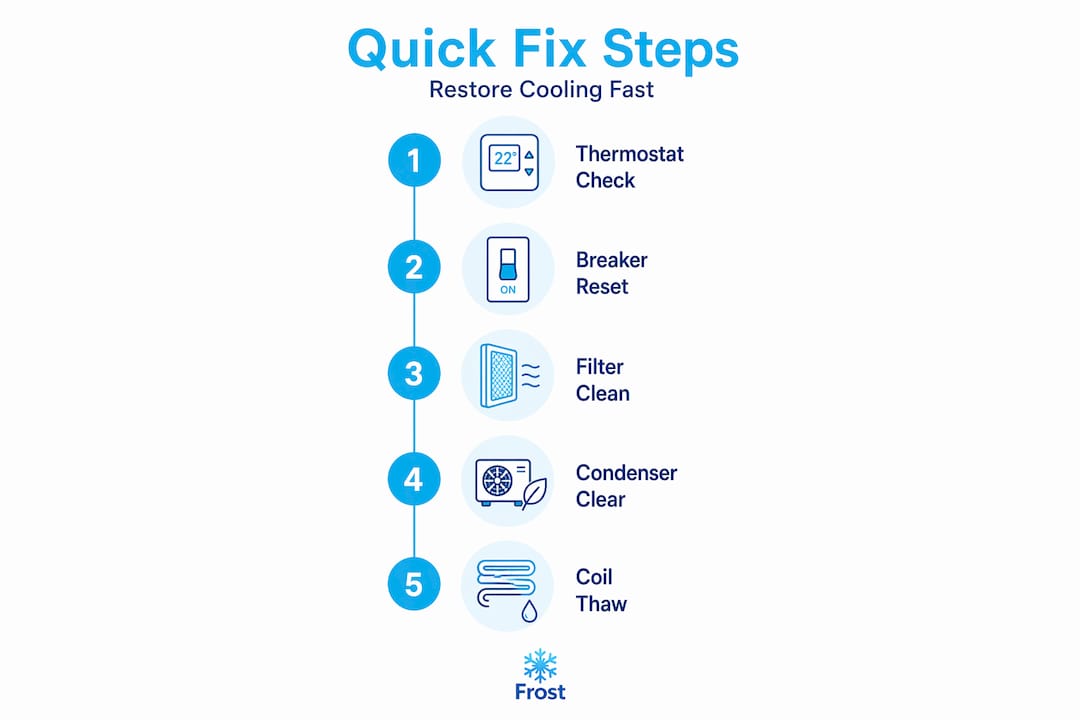
1. Check your thermostat first
It sounds obvious, but thermostat settings are behind a surprising number of service call-outs. Confirm the mode is set to "cool" and not "fan only" or "heat". Check the set temperature is actually lower than the current room temperature. If you have a battery-powered thermostat, replace the batteries even if you think they are fine.
If your thermostat has been recently replaced or has a programmable schedule, check that the programming has not reverted after a power cut.
2. Reset the circuit breaker and check the isolator
A tripped breaker is one of the most common reasons an AC unit goes completely silent. Head to your consumer unit and look for any switch that is not fully in the "on" position. Reset it firmly. If it trips again immediately, stop. A breaker that repeatedly trips is signalling an electrical fault that needs a professional.
Also check the isolator switch mounted on the wall near your outdoor unit. These are occasionally knocked off by accident, especially in garden areas.
3. Replace or clean the air filter
A clogged air filter is responsible for a huge number of AC performance complaints, from weak airflow to the unit freezing up entirely. Pull the filter out and hold it up to the light. If you cannot see light through it clearly, it needs replacing.
Most standard filters cost a few pounds and take under five minutes to swap out. Timely filter replacement improves energy efficiency and prevents the kind of knock-on damage that turns a simple fix into a costly repair.
4. Clean the outdoor condenser unit
Go outside and look at your condenser. Is it surrounded by overgrown shrubs, covered in leaves, or caked in debris? The condenser needs clear airflow on all sides to do its job. Remove any obvious blockages by hand first, then use a garden hose on a gentle setting to rinse the fins from the inside out. Never use a pressure washer; the fins are delicate aluminium and bend easily.
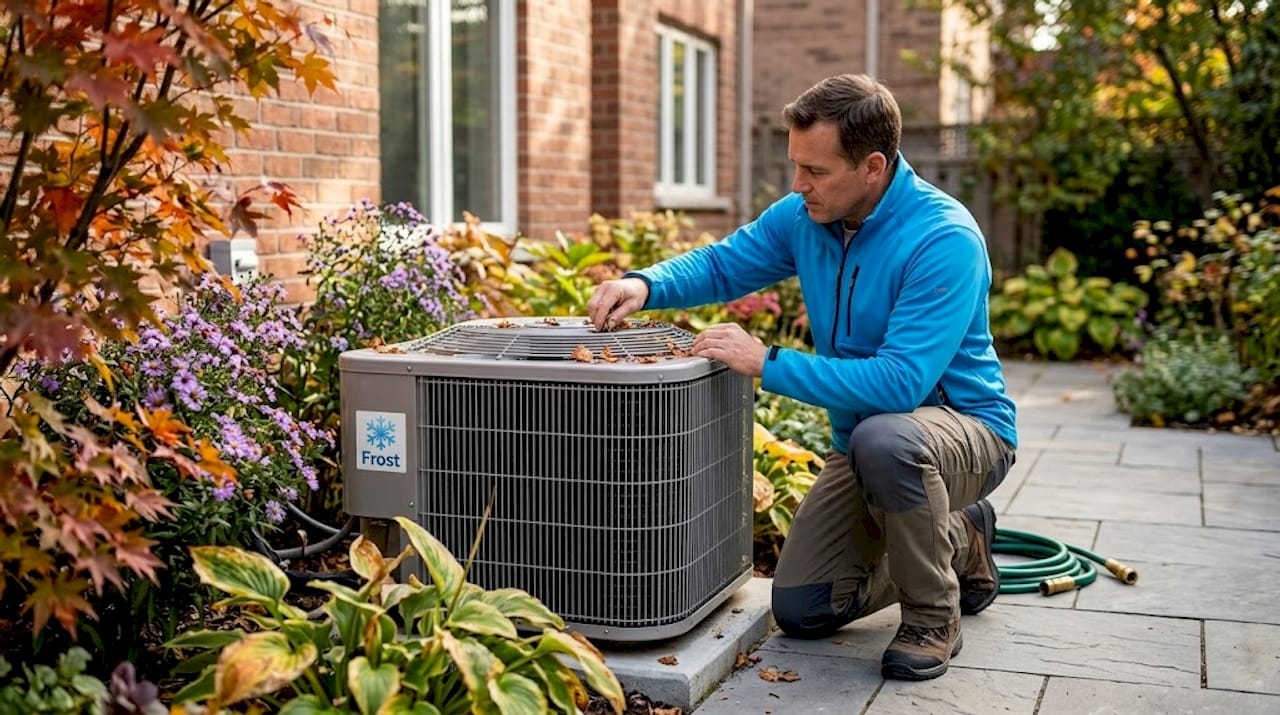
Pro Tip: Leave at least 50cm of clear space around all sides of your outdoor condenser unit. Growth from hedges and fences is the most overlooked cause of reduced cooling performance over summer.
5. Thaw a frozen evaporator coil
If you can see ice forming on the indoor unit or on the refrigerant lines running from it, you have a frozen coil. This is more common than people realise, and it is usually caused by a blocked filter or low airflow rather than a refrigerant fault.
The fix is straightforward but requires patience. Switch the unit to fan-only mode, which keeps air moving across the coil without running the compressor. Wait at least two hours, then check whether the ice has cleared. Once it has, replace the filter, restore normal settings, and monitor performance for the next hour.
Do not try to chip or scrape ice away. You risk damaging the coil fins or puncturing a refrigerant line.
Recognising warning signs beyond quick fixes
Some problems should stop your troubleshooting immediately. Knowing the difference between a fixable fault and a safety risk is what separates a useful DIY session from a dangerous one.
Sounds that need professional attention:
- A grinding or metal-on-metal screech usually points to a failing fan motor bearing
- A banging or clanking sound when the unit starts up suggests something loose inside the compressor housing
- Hissing or bubbling noises are consistent with a refrigerant leak
Leaks and residue:
Oil stains around refrigerant lines or on the ground beneath the outdoor unit are a strong indicator of a refrigerant leak. You may also notice a faint sweet or chemical smell near the unit. Warning signs like burning smells, loud metallic noise, and water leaks all require stopping DIY work immediately and calling a certified technician.
Condensate drainage issues:
A blocked condensate drain line causes water to back up and overflow from the indoor unit. You can try clearing a partial blockage by pouring a diluted white vinegar solution down the drain pipe access point, but if the overflow continues or the water is coming from an unexpected location, treat it as a professional job.
If you do call an engineer, give them as much detail as possible before they arrive. Note whether the outdoor unit is running, whether you spotted any ice, what the thermostat displayed, and whether the breaker tripped. Detailed symptom descriptions genuinely reduce diagnosis time and get your system back up faster.
Pro Tip: Never run your AC if you suspect a refrigerant leak. Continuing to operate the system can burn out the compressor, turning a repair job into a full replacement.
Checking your repair worked and preventing future faults
Once you have worked through the relevant fixes, give the system 15 to 20 minutes to run before drawing conclusions. Air conditioning systems do not cool a room instantly after a restart.
Here is what to look for when verifying the repair:
- Cool air is coming from the vents (hold your hand near the closest register)
- Airflow feels strong and consistent, not weak or intermittent
- The outdoor condenser fan is spinning freely
- The temperature is dropping measurably within 30 minutes
- No unusual sounds or smells are present after the restart
If all of those check out, you have done the job. Now keep it working with some simple habits:
| Maintenance task | How often |
|---|---|
| Replace or clean the air filter | Every 1 to 3 months depending on use |
| Clear debris from around the outdoor unit | Monthly during summer |
| Check condensate drain for blockages | Every 3 months |
| Book a professional service | Once a year, ideally before summer |
| Test thermostat accuracy | At the start of each cooling season |
Keeping up with AC maintenance pays off in lower energy bills, fewer surprise faults, and a longer lifespan for the system. Most units that receive regular attention last considerably longer than those that are only serviced when something breaks.
It is also worth understanding the longer-term picture. There is a useful rule of thumb in the trade: if your repair cost multiplied by the system's age in years exceeds £5,000, replacement is usually the smarter financial decision. Repeated fixes on an ageing system tend to cost more over time than a modern, efficient replacement.
My honest take on DIY versus calling it in
I have seen a lot of homeowners fall into two camps. The first group calls an engineer before even checking the thermostat, which costs them an £85 diagnostic fee for something that takes 30 seconds to sort. The second group keeps tinkering long after they should have stopped, and occasionally turns a £150 repair into a £600 one.
In my experience, the quick fixes covered in this guide genuinely work for the majority of common faults. Filters, breakers, thermostat settings, dirty condensers. These are not complicated, and getting comfortable with them puts you in a much stronger position than most homeowners.
What I have learned over time is that the real skill is not the fixing. It is the honest assessment of what you are looking at. When you hear a grinding sound from inside the unit, or you smell burning, or the breaker trips twice in one day, that is the system telling you something. The repair versus replacement decision is also worth thinking about clearly rather than defaulting to "fix it" every time.
Use quick fixes as your first line of action. They will solve most problems. But treat them as a starting point, not a replacement for professional care when the situation calls for it.
— James
When Frostairconditioning can help

If you have worked through these steps and your system still is not performing as it should, or if you have spotted any of the warning signs that call for a professional, Frostairconditioning is based in Exeter and covers the whole of the South West. The team is F-Gas certified, offers same-day appointments, and provides upfront pricing with no hidden charges. For homeowners who prefer to spread the cost, 0% finance is available on qualifying installations. You can get a quote online in minutes, or visit Frostairconditioning to find out more about repair and installation services available in your area.
FAQ
Why is my air conditioner running but not cooling?
The most common causes are a clogged air filter, a frozen evaporator coil, or a dirty condenser unit. Check and replace your filter first, then inspect the outdoor unit for debris before escalating.
How do I fix AC problems fast at home?
Start by checking thermostat settings, resetting any tripped circuit breakers, and replacing a dirty air filter. These three steps resolve the majority of faults without requiring any tools or specialist knowledge.
When should I stop DIY troubleshooting?
Stop immediately if you notice burning smells, hear loud metallic sounds, see oil residue around refrigerant lines, or if the circuit breaker trips more than once. These are signs that require a certified engineer.
Can I recharge refrigerant myself?
No. Refrigerant handling requires F-Gas certification and specialist equipment. Attempting it without certification is illegal under UK regulations and risks serious injury and compressor damage.
How often should I service my air conditioner?
A professional service once a year, ideally before the start of the cooling season, is the standard recommendation. Regular filter changes every one to three months keep the system running efficiently between services.