
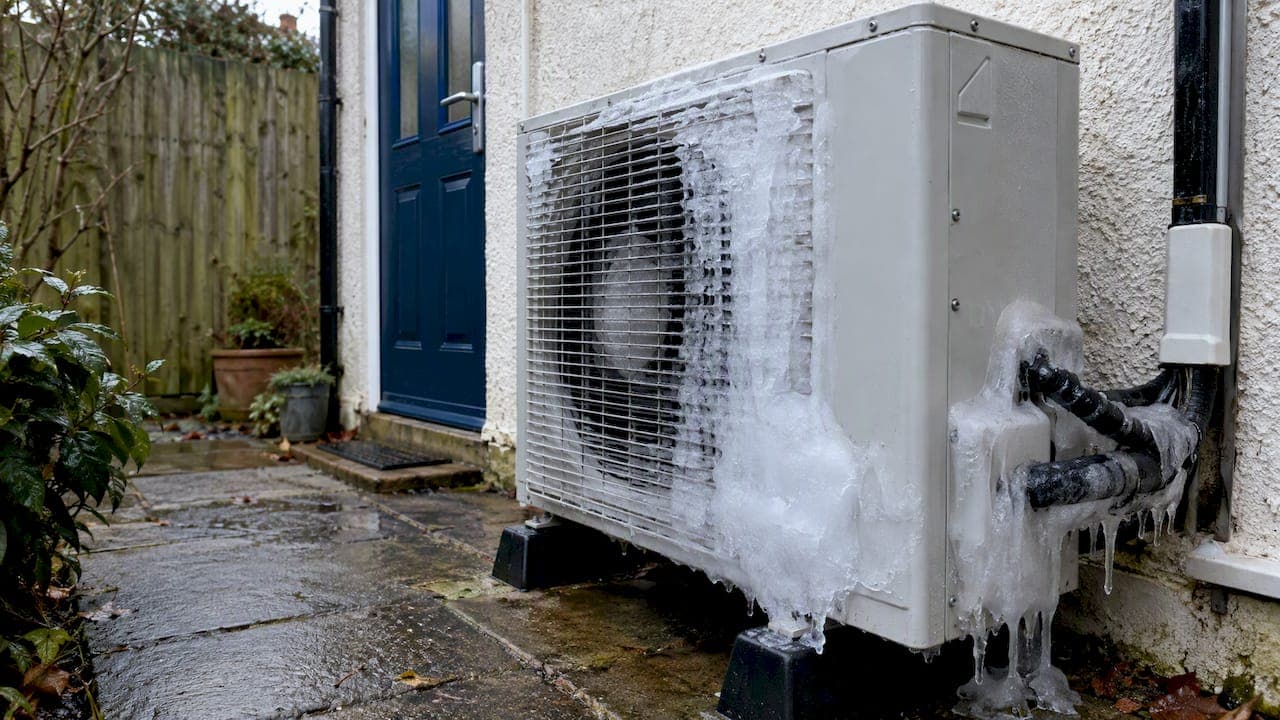
Ice on an outdoor AC unit can be normal or a sign of a fault. If your heat pump is running a heating cycle in cold weather, frost that clears itself within an hour or so is a designed defrost behaviour. If you see ice while the system is meant to be cooling, switch it off, let it thaw, and work through the checks below before calling an engineer.
TL;DR:
- Ice on the outdoor unit during normal heating cycles is expected and usually melts within an hour without intervention.
- If ice forms while cooling, turning off the system, letting it thaw, and checking filters, airflow, and debris is essential before calling a technician.
- Common causes of icing include restricted airflow from dirty filters or blocked grilles, contaminated coils, low refrigerant, or fan failure, all requiring specific inspections.
- Repeating ice after defrost cycles indicates control faults or airflow restrictions rather than normal frost, and warrants professional diagnosis.
- Proper siting, regular cleaning, and drainage maintenance can prevent most icing issues and extend the system's lifespan.
Table of Contents
- Quick checks and safe first steps once you spot ice
- Probable causes: airflow, coils, refrigerant and mechanical faults explained
- Heat pump defrost cycle versus problematic icing
- Prevention and routine maintenance to reduce ice risk
- When to call a qualified engineer and what to expect
- Authoritative guidance and homeowner resources worth bookmarking
- A practical view from the field
- Book a diagnostic visit or ongoing cover with us
- FAQ
- Sources
Quick checks and safe first steps once you spot ice
Before touching anything else, turn the unit off at the controller and isolate it if you can do so safely. Letting the ice thaw fully, rather than forcing it, protects the compressor from the liquid refrigerant slugging that can happen when a frozen system is restarted too soon.
Once the ice has melted, usually within a few hours, work through this sequence:
- Check the indoor filter and clean or replace it if it is clogged with dust.
- Look at indoor airflow: closed vents or blocked grilles restrict the air the system needs to work properly.
- Inspect the outdoor unit's grille and fan for leaves, debris or anything obstructing the casing.
- Clear any visible debris from around the base and sides of the unit.
- Check the condensate drain for blockages or standing water that could refreeze.
Avoid opening sealed refrigerant panels, attempting to regas the system yourself, or pouring hot water over the coil to speed up thawing, since rapid temperature changes can crack components and hot water can damage electrics.
Pro Tip: Photograph the ice pattern (base, coil, pipework) before it melts: it helps an engineer diagnose the cause faster if you do need a call-out.
Probable causes: airflow, coils, refrigerant and mechanical faults explained
Most icing traces back to one of four mechanisms, and matching your symptoms to the right one saves time when you describe the problem to an engineer.
- Restricted airflow: a dirty filter or blocked external grille starves the evaporator coil of air, dropping its surface temperature low enough that moisture freezes on contact.
- Contaminated coils: dust and grime on the coil reduce heat transfer, so the refrigerant inside runs colder than it should and frost builds where air still reaches the surface. Gentle coil cleaning restores normal heat exchange.
- Low refrigerant or a leak: a reduced charge means the remaining refrigerant expands too much, pulling the evaporator below freezing even with good airflow. This is a job for a certified engineer, not a DIY top-up, because handling refrigerant in the UK legally requires F-Gas certification, as Energy Saving Trust confirms.
- Fan or motor failure: a stopped or slow-running outdoor fan stops heat escaping the coil properly, and ice typically forms fastest and thickest around the fan blade and motor housing when this happens.
Manufacturer guidance is consistent on what reduces the airflow-related causes: Daikin and Samsung user guides note that outdoor units extract heat from air even below 0°C, and that obstructed inlet or outlet grilles reduce efficiency and can contribute to icing, which is why clearing debris and brushing grilles regularly matters.
Several signs point to an urgent call rather than a wait-and-see approach: ice returning within minutes of a defrost cycle, a hissing sound near the pipework (a possible refrigerant leak), or a sudden loss of cooling or heating output alongside the ice.
Heat pump defrost cycle versus problematic icing
A normal defrost cycle happens automatically when a heat pump is in heating mode and outdoor temperatures are low. The system briefly reverses, melts any frost that has built up on the coil, then switches back, usually within 5 to 15 minutes, several times a day in cold spells.

Ice appearing while your system is cooling in warm weather is a different matter entirely: that is never part of normal operation and should be treated as a fault from the start.
Defrost cycles can fail or run too infrequently when:
- A faulty defrost control board or sensor fails to trigger the cycle.
- The system lacks enough stored thermal energy or circuit volume to melt the frost fully.
- Airflow restrictions mean frost rebuilds faster than the cycle can clear it.
If defrost cycles are running but ice keeps returning, that points to a control fault rather than normal winter frost, and it is worth logging how often it happens before you call anyone out.
Prevention and routine maintenance to reduce ice risk
Most icing is preventable with a handful of habits built around siting, cleaning and drainage.
- Leave proper clearance around the unit. Manufacturer manuals typically call for clear space on all sides and recommend a slight backward tilt with raised legs so meltwater drains away instead of pooling and refreezing underneath, as detailed in Aira's outdoor unit installation manual. Never cover the unit with a tarpaulin or box, which traps moisture.
- Keep filters and coils clean on a schedule. A quarterly filter check and an annual coil clean head off most airflow-related freezing; our homeowner cleaning guide walks through the steps safely.
- Protect the drainage. Condensate drains need to stay frost-free, and Samsung's EHS user guide recommends draining exposed parts if the system loses power for a long period in cold weather, since standing water in the tray or trap can freeze solid and block the drain.
- Consider installer-level frost protection for monobloc systems. Antifreeze valves and glycol mixes are accepted frost-protection strategies, according to the Energy Saving Trust's system design toolkit, though a glycol mix at moderate concentration that protects effectively against freezing temperatures commonly encountered in UK winters also reduces peak heat transfer slightly, so it is a genuine trade-off rather than a free upgrade.
Pro Tip: If your outdoor unit sits on bare ground, a raised, level base reduces splashback freezing and keeps the drain outlet clear; firms such as EvoStruct handle base and groundwork jobs like this.
Our guide on outdoor unit placement covers clearance rules in more detail if you are planning a new install or repositioning an existing unit.
When to call a qualified engineer and what to expect
Refrigerant work is not a DIY job in the UK: anyone handling refrigerant legally needs F-Gas certification, so always ask for an engineer's F-Gas and REFCOM credentials before booking a repair involving the sealed system.
Common professional repairs for persistent icing include:
- Leak detection and sealing, followed by a refrigerant regas to the correct charge.
- Fan or motor replacement where the outdoor fan has failed or is running slowly.
- Defrost control board or sensor repair when cycles are not triggering correctly.
- Antifreeze valve installation on monobloc systems for ongoing frost protection.
Before the call-out, note when the ice first appeared, whether it is on the coil, base or pipework, and take a few photographs. Many engineers, including same-day services in some areas, can diagnose faster with this information to hand.
Authoritative guidance and homeowner resources worth bookmarking
We are F-Gas certified and provide homeowner guides on cleaning, siting and seasonal servicing updated alongside manufacturer and Energy Saving Trust guidance on drain heating and antifreeze valves. Our seasonal service checklist is a practical place to start.
A practical view from the field
Most summertime icing cases we see trace back to something simple: a clogged filter, a blocked grille, or debris nobody noticed. The triage is straightforward. Switch off, let it thaw, check filters and airflow, and only call an engineer if the ice comes back.
— James
Book a diagnostic visit or ongoing cover with us
If the checks above do not clear the problem, we offer a few straightforward routes rather than guesswork over the phone.
- A diagnostic visit to inspect refrigerant levels, drainage and the defrost control.
- Emergency breakdown response for units that have stopped cooling or heating altogether.
- Annual service contracts that catch airflow and drainage issues before they cause icing.
We are F-Gas certified and based locally across the South West, with same-day response available for many call-outs. You can check options or request a visit through our domestic installation and service page.

FAQ
Is it normal for my heat pump to have ice on it?
Yes, light frost during a heating-mode defrost cycle is normal and usually clears within 5 to 15 minutes. It becomes abnormal if the ice persists after the cycle ends, grows thicker over time, or appears while the system is cooling.
Will a frozen AC unit fix itself in summer?
Not reliably. Ice during cooling mode points to an underlying fault such as restricted airflow, a dirty coil or low refrigerant, and warmer weather alone will not fix the cause, so switch the system off and check filters and airflow first.
Is my AC ruined if it freezes up?
Not usually, provided you switch it off and let it thaw properly rather than forcing a restart. Continuous icing left unaddressed can strain the compressor over time, which is why a quick check after the first occurrence matters.
How do I melt ice in an air conditioner safely?
Turn the unit off and let the ice melt naturally at room or outdoor temperature rather than using hot water or tools to chip it away. Once it has thawed, check the filter, grille and drain before switching the system back on.
Sources
- Heat pumps | Energy Saving Trust
- System volume and frost protection · Energy Saving Trust toolkits
- Planning
- Bury
- Pkc