
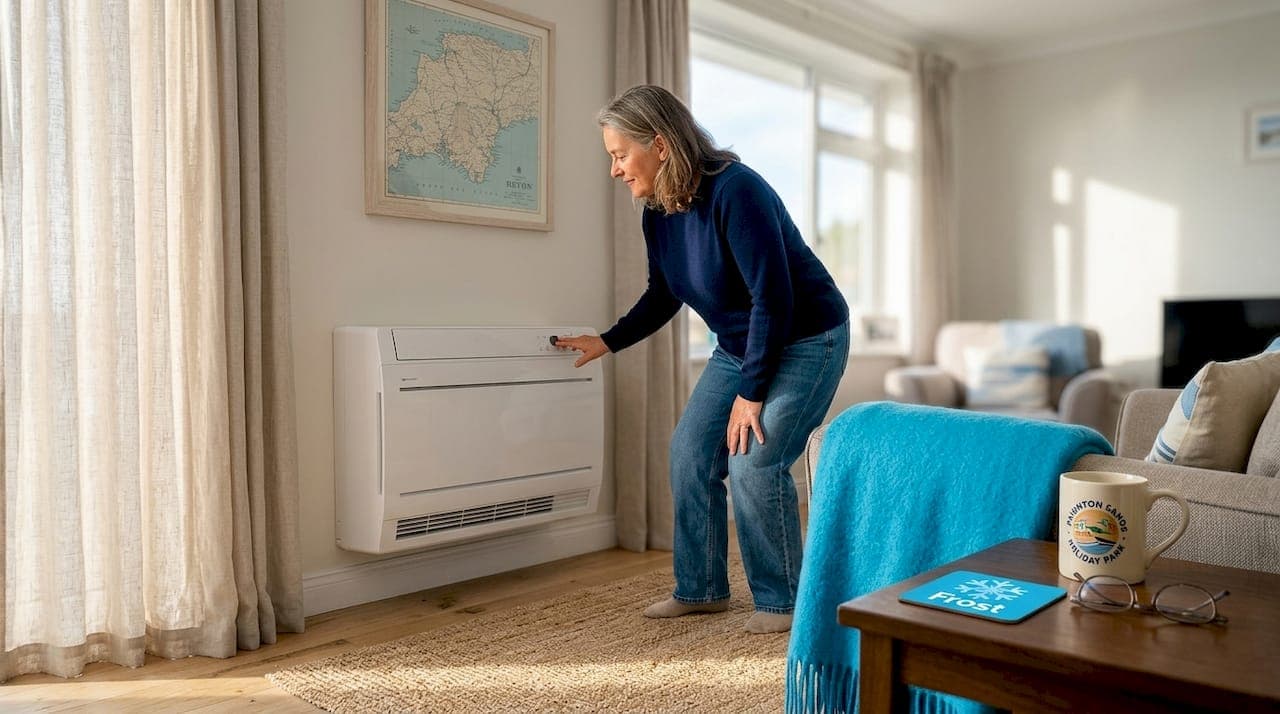
Your air conditioning picks the worst possible moment to stop working. It's a warm, humid afternoon on the South Devon coast, the windows are shut against the sea breeze, and suddenly the unit starts blowing warm air or making a noise you've never heard before. Before you reach for the phone to call an engineer, there are several checks you can carry out yourself in minutes. This guide walks you through the most practical troubleshooting steps for homeowners in Devon and Cornwall, covering everything from basic checks to recognising when a professional is the only safe option.
Table of Contents
- Start with the basics: thermostat, filters and power
- Investigate unusual noises, water leaks and smells
- Outdoor unit and coastal factors: keeping things clear
- When to seek professional help: refrigerant, electrics and servicing
- Why a Devon and Cornwall approach to air conditioning pays off
- Get expert help or book your air conditioning service today
- Frequently asked questions
Key Takeaways
| Point | Details |
|---|---|
| Check the basics first | Simple issues with the thermostat, filters, or power can often be resolved quickly without professional help. |
| Monitor for warning signs | Noises, leaks, and unusual smells can indicate deeper problems—know when to act and when to call an expert. |
| Care for your outdoor unit | Outdoor condenser units need regular clearing and extra attention in coastal environments like Devon and Cornwall. |
| Professional servicing saves money | Annual maintenance by qualified engineers prevents breakdowns and keeps your system efficient. |
Start with the basics: thermostat, filters and power
Most air conditioning call-outs involve a problem that could have been spotted and sorted at home. That's not a criticism. It's just that when something stops working, panic sets in quickly and it's easy to overlook the obvious. Start here before assuming anything serious.
Check the thermostat and remote first. It sounds too simple, but thermostat settings and mode are among the most frequently missed causes of a unit that won't cool. The system needs to be set to "cool" mode, not "fan only" or "heat." Remote batteries run flat more often than people realise, and a weak signal between the remote and the indoor unit can cause erratic behaviour. Double check the temperature is set below the room temperature too. If you've recently had a power cut, the unit may have reset to a default mode.
Filters are the single biggest culprit for poor performance. A clogged filter blocks airflow so significantly that your system works harder, costs more to run, and in severe cases causes the evaporator coil to ice up. Dirty filters cause poor airflow, reduced cooling, ice buildup, and noticeably higher energy bills. They should be cleaned or replaced every one to three months depending on how much the unit is used and how dusty or salty the local air is. In Cornwall especially, salt particles from the sea air get pulled through the intake and accumulate in the filter faster than in an inland home.
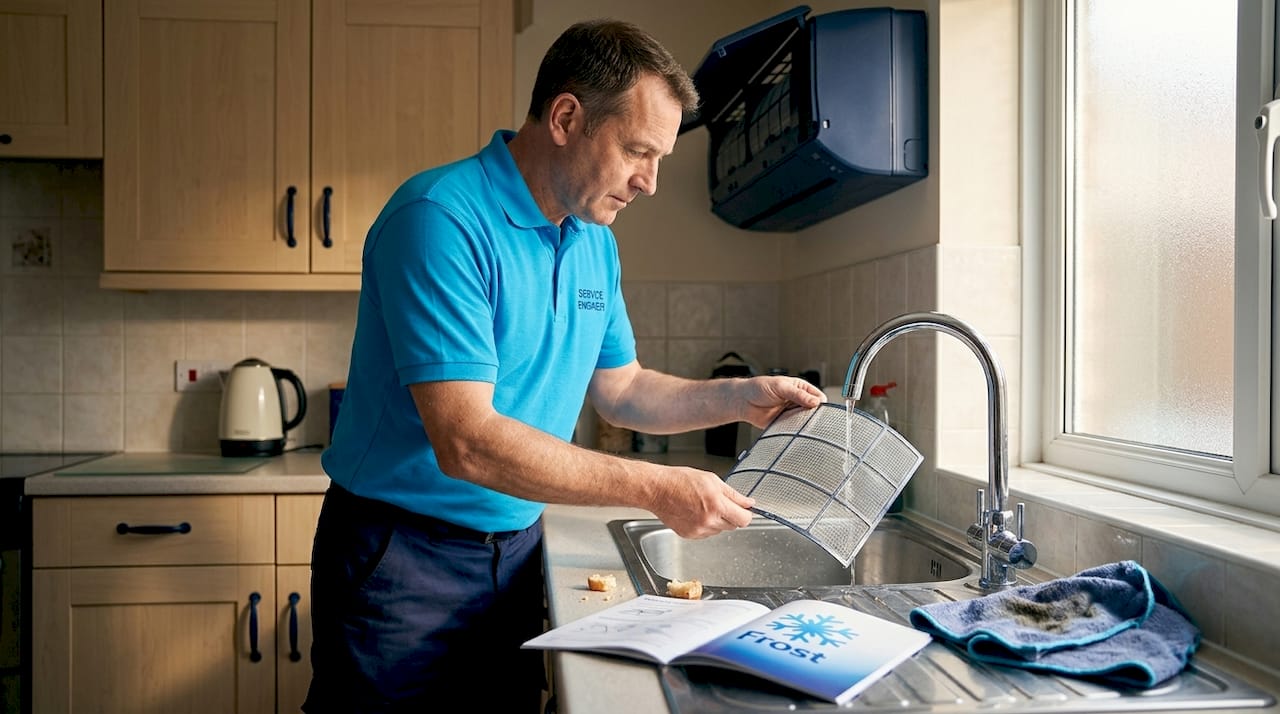
Cleaning a washable filter is straightforward. Remove it carefully, rinse under lukewarm water, allow it to dry fully before refitting, and check it for any damage or tears while it's out. Never refit a wet filter.
Power supply issues are easy to overlook. If the unit won't turn on at all, check the breakers and fuses before assuming a fault. A tripped breaker can be reset once, but if it trips repeatedly, stop resetting it and call a professional. Repeated trips are a sign of an underlying electrical fault that poses a real safety risk.
Here's a quick checklist of basic checks to carry out on a unit that isn't cooling:
- Confirm the thermostat is set to "cool" mode and the target temperature is lower than the room
- Replace the remote's batteries and test again
- Check the air filter and clean or replace if visibly dirty
- Inspect the consumer unit for a tripped breaker or blown fuse
- Make sure no vents or registers are blocked by furniture or curtains
- Confirm the outdoor unit is switched on at the isolator
Pro Tip: Set a seasonal reminder on your phone for the first of March, June, September and December. A two-minute filter check every three months can save you a costly breakdown call in the middle of summer. Routine maintenance like this is exactly what separates systems that run for 15 years from those that fail at five.
Investigate unusual noises, water leaks and smells
Once the basics are ruled out, unusual noises, smells or water pooling give you important clues about what's going wrong. None of these should be ignored, but not all of them require an emergency call.
Noises tell a story. A gentle hum during normal operation is fine. But specific noises point to specific problems. Rattling, buzzing, or hissing can indicate loose parts, debris inside the unit, electrical issues, or even a refrigerant leak. Rattling often means a panel or component has come loose, which can sometimes be spotted visually. Buzzing may relate to electrical components. Hissing is more serious and could mean refrigerant is escaping. If you hear a hissing or gurgling noise that persists, switch the unit off and call a professional. Do not keep running it.
Musty smells almost always mean mould. The indoor unit contains a coil that collects moisture as it cools the air. If that moisture doesn't drain away properly, it sits in the unit and creates the perfect environment for mould and mildew. Musty odours indicate dirty filters or mould growth inside the unit. The fix is to clean the filter, run the fan-only mode for 30 minutes to help dry out the coil, and check that the condensate drain isn't blocked. In Devon and Cornwall's damp coastal climate, this is a particularly common issue, especially towards the end of summer.
Water leaks from the indoor unit need quick attention. A small amount of condensation is normal. A steady drip or visible pooling is not. Blocked condensate drains and frozen coils are the two most common causes. A frozen coil usually means either a blocked filter or a refrigerant issue. If the filter looks clean and the coil is iced up, switch the unit off and leave it to thaw before restarting.
Follow these steps when investigating noise, smells or leaks:
- Note what type of noise or smell it is and when it occurs (start-up, during operation, or shut-down)
- Check the air filter and clean if needed
- Inspect the visible parts of the indoor unit for ice, mould, or debris
- Locate the condensate drain outlet (usually a small pipe exiting through a wall) and check it isn't blocked
- Run fan-only mode for 20 to 30 minutes to help dry the system out
- If the noise continues or water pooling persists, switch off and contact an engineer
When to act urgently: Switch off immediately and call a professional if you hear hissing, smell burning plastic or electrical odours, or see water dripping onto electrics. These are not situations to wait and watch.
Pro Tip: A small wet and dry vacuum can be used to clear a blocked condensate drain pipe from the outside. It takes about five minutes and can save a call-out charge if a simple blockage is the only issue.
Outdoor unit and coastal factors: keeping things clear
After clearing up indoor problems, your outdoor unit needs attention, especially by the coast. The outdoor condenser unit works hard in all weathers. In Devon and Cornwall, it faces challenges that most inland systems never deal with.
Debris is the most common outdoor problem. Leaves, garden cuttings, and even bird activity can clog the fins of the outdoor unit and reduce its ability to release heat efficiently. Clearing debris around the condenser and ensuring there is at least two feet of clear space around the unit prevents overheating and maintains performance. During autumn especially, coastal gardens generate a lot of leaf fall, and the unit should be checked every few weeks.
Salt air accelerates corrosion significantly. This is the reality for anyone living within a few miles of the Cornish or Devon coastline. Coastal salt air accelerates wear on outdoor units, making regular servicing far more important than the national average guidance would suggest. The aluminium fins on a condenser coil can corrode visibly within a few seasons without protection, reducing efficiency and shortening the lifespan of the unit. Even units installed just two or three years ago can show early corrosion if they haven't been properly maintained or treated with a coil protection coating.
Here are the key outdoor unit care tasks for coastal homes:
- Clear leaves, grass clippings, and debris from around and inside the unit regularly
- Never stack garden furniture or cover the unit with anything that restricts airflow
- Gently rinse the fins with a garden hose (on a low setting) annually to remove salt deposits
- Check that the unit is level. Vibration and settlement can cause it to tilt over time
- Inspect visible pipework and insulation for cracks or damage
| Outdoor task | Impact on performance | Estimated cost saving |
|---|---|---|
| Clearing debris | Prevents overheating and efficiency loss | Up to 10% on energy bills |
| Rinsing salt deposits | Slows corrosion and maintains airflow | Extends lifespan by several years |
| Annual professional service | Catches all faults early | Avoids breakdown costs of £300 or more |
| Checking clearance space | Maintains airflow for heat exchange | Prevents premature compressor failure |
The importance of AC servicing locally cannot be overstated in this region. Installers who work in Devon and Cornwall understand the specific challenges these environments create, and a local engineer will know exactly what signs of salt corrosion or coastal wear to look for.
When to seek professional help: refrigerant, electrics and servicing
Some issues are simply beyond DIY, and attempting to fix them yourself isn't just inadvisable, it can be illegal and dangerous.
Refrigerant faults are professionals-only territory. If your unit is cooling poorly, producing ice on the indoor coil, or you can hear hissing, you may have a refrigerant leak. Signs of a refrigerant leak include hissing sounds, oily residue near pipework, ice formation, and warm air from the vents. Handling refrigerants requires an F-Gas certification under UK law. It is illegal for an uncertified person to work on refrigerant circuits. Full stop.
Repeated electrical faults need professional diagnosis. If your breaker trips more than once, if you smell burning, or if the unit shuts itself off unexpectedly on a regular basis, these are warning signs of a serious electrical fault inside the unit. Don't reset and hope for the best.
| Issue type | Safe to DIY? | Notes |
|---|---|---|
| Dirty filter | Yes | Clean every 1 to 3 months |
| Thermostat settings | Yes | Check mode, temperature, batteries |
| Blocked condensate drain | Yes, with care | Use vacuum or flush gently |
| Loose panel or debris | Yes | Visual check and tighten |
| Refrigerant leak | No | Requires F-Gas certified engineer |
| Electrical fault | No | Risk of electrocution and fire |
| Compressor failure | No | Requires full professional assessment |
| Frozen coils with clean filter | No | May indicate refrigerant issue |
Annual servicing is not optional for long-term performance. Annual professional servicing by an F-Gas certified engineer typically costs between £80 and £300 and covers refrigerant pressure checks, electrical inspections, coil cleaning, and drain testing. It prevents the kind of breakdown that leaves you sweltering on a July afternoon with a two-week wait for a callout slot.
A well-maintained system uses measurably less electricity. Neglected systems can use up to 25% more energy than a properly serviced equivalent. Over a year of typical use in a Devon home, that adds up to a meaningful amount.
Older systems running on R22 refrigerant are worth a separate conversation. R22 has been banned in the UK and is no longer available for servicing. If your system was installed before 2010, it may not be worth repairing. Maintenance for Devon systems like these often reveals more cost-effective solutions through replacement.
Why a Devon and Cornwall approach to air conditioning pays off
Here's a perspective that many homeowners only reach after their first emergency call-out: the coastal climate in Devon and Cornwall doesn't just make air conditioning more useful, it makes it harder to maintain. The same salt air that makes this part of the country beautiful is genuinely corrosive to the metal components in your outdoor unit.
We see it regularly. Homeowners who followed standard national advice about annual servicing find their units showing advanced corrosion within a few years because the coastal environment demands more frequent attention. The coastal salt air accelerates wear in ways that simply don't apply to a unit installed in the Midlands.
The smarter approach is to treat maintenance as an investment in a piece of equipment that costs thousands of pounds to replace. Book your service at the end of summer when engineers have more availability rather than scrambling for a slot in June. Budget for it alongside your boiler service. And deal with small issues like blocked drains or dirty filters the moment you notice them, not after a week of hoping they'll resolve themselves.
Routine AC maintenance advice from local specialists who understand this region is worth far more than generic guidance written for the whole country. Your system, your climate, and your home all deserve that level of attention.
Get expert help or book your air conditioning service today
If you've worked through these checks and something still isn't right, or if you'd rather have a certified professional take a look before a small issue becomes expensive, we're here to help. Frost Air Conditioning is based in Exeter and covers Devon, Cornwall, and the wider South West.

We're F-Gas certified, offer same-day installations, and provide 0% finance options to make servicing and new systems genuinely accessible. Whether you need a straightforward service, a fault diagnosis, or a full new installation, Frost Air Conditioning has local engineers who know exactly what coastal homes need. Request a free AC service quote today and get your system performing the way it should, before the next warm spell arrives.
Frequently asked questions
How often should I clean my air conditioning filters?
Clean or replace your filters every one to three months; in coastal areas like Devon and Cornwall, lean towards the shorter interval due to salt and dust accumulation.
What should I do if my air conditioning makes a rattling or buzzing noise?
Switch the system off and check for loose panels or visible debris around the unit; if the noise continues after these checks, call a professional as it may indicate an electrical or refrigerant issue.
How can I improve my air conditioning's efficiency near the coast?
Keep the outdoor unit clear of debris, rinse the fins with a garden hose periodically, and schedule regular professional servicing to counteract the accelerated corrosion caused by salt air.
Is it safe to fix air conditioning electrics or refrigerant issues myself?
No. Refrigerant leaks require an F-Gas certified engineer under UK law, and electrical faults carry a serious risk of injury or fire if handled by anyone other than a qualified professional.