
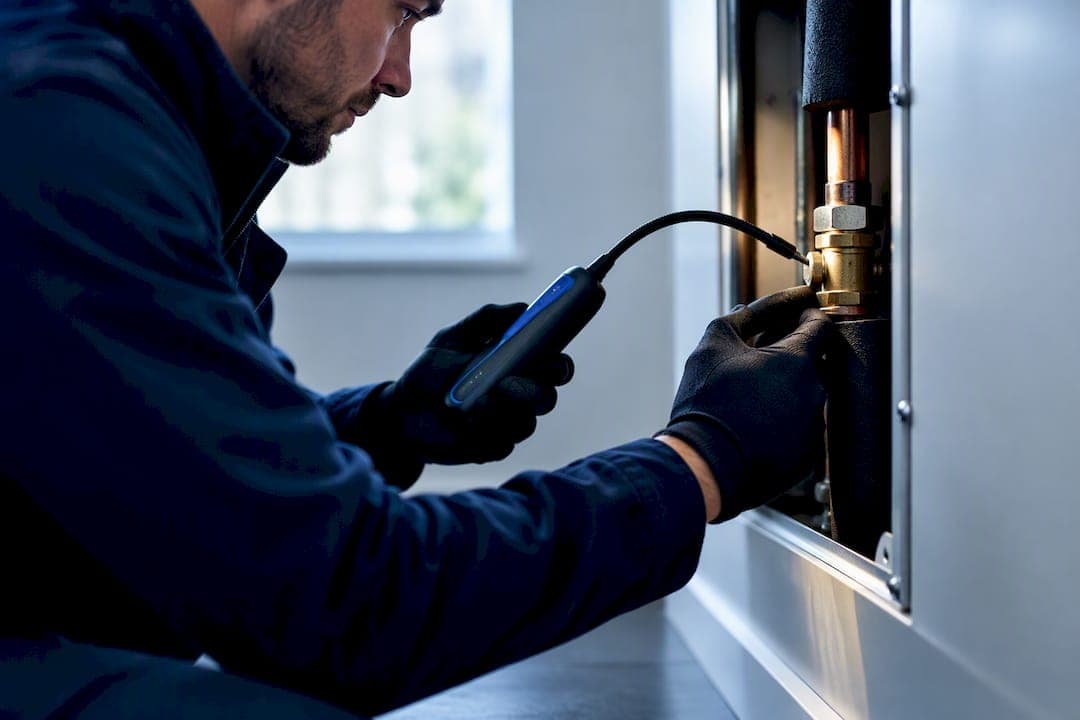
Service a domestic aircon unit at least once every 12 months, and check commercial systems every 6 to 12 months depending on use. Larger systems face separate statutory rules: TM44 energy inspections apply every five years to systems rated above 12kW, while F-Gas leak checks follow their own schedule. Any refrigerant work should go to a certified technician.
TL;DR:
- Commercial systems larger than 12kW must undergo TM44 energy inspections every five years, and refrigerant leak checks must follow the F-Gas schedule based on refrigerant volume.
- Systems exposed to harsh environments, such as coastal areas or heavy dust, should have service intervals shortened to six months to prevent corrosion and buildup.
- A proper service includes filter and coil cleaning, condensate checks, electrical inspections, and refrigerant leak testing by certified technicians holding recognized qualifications.
- Emergency signs like refrigerant leaks, water leaks, strange noises, or electrical faults require immediate professional attention, not routine scheduling.
- Booking annual or semi-annual maintenance contracts tailored to usage and statutory needs, and verifying providers' certifications and past reports, helps prevent costly breakdowns.
Table of Contents
- Recommended service intervals for domestic, commercial and statutory inspections
- What pushes your aircon towards more frequent servicing
- What a professional service includes and who is qualified to do it
- Warning signs that mean you shouldn't wait for the next scheduled visit
- Choosing a maintenance contract without getting caught out
- How Frost Air Conditioning schedules service intervals in practice
- What owners get wrong, and a scheduling habit worth adopting
- Book a certified service before your system tells you it needs one
- Sources
- FAQ
Recommended service intervals for domestic, commercial and statutory inspections
The right interval depends on what you own and how hard it works. A domestic split system used seasonally can usually get by with one visit a year. Push that to every 6 to 12 months if the unit runs constantly, sits in an older property, or has never had a proper inspection.
Commercial systems carry more risk if they fail, so the baseline moves tighter:
- Standard offices and retail units: every 6 to 12 months
- Hospitality, healthcare and food service sites: every 3 to 6 months, because hygiene and continuous operation demand closer attention
- Larger commercial or multi-unit systems: aligned with both mechanical servicing and statutory F-Gas checks
Two legal frameworks sit alongside routine servicing. TM44 inspections apply to any system with an effective rated output over 12kW and are required at least every five years. These are energy assessments, not mechanical services: they look at sizing and efficiency, not whether the unit is clean or leak-free, so passing a TM44 doesn't mean the mechanical side can be ignored.
F-Gas rules work differently, scaling with refrigerant volume rather than a fixed calendar date. Under GOV.UK's leak-check guidance, systems holding 5 to 50 tonnes of CO2 equivalent need checking annually, 50 to 500 tonnes every six months, and anything above 500 tonnes every three months. Most single split units in homes fall well under these thresholds, but larger commercial and multi-split systems often don't, which is why a commercial contract usually specifies leak checks as a separate line item from general servicing.

What pushes your aircon towards more frequent servicing
The baseline schedule assumes average conditions. Several factors can shorten the interval between inspections, such as continuous operation, exposure to corrosive or dirty environments, complex system designs, and high-hygiene requirements.
A coastal holiday let running air conditioning through summer might need a check every six months rather than twelve, purely because salt air corrodes coils faster than an inland property sees.

Pro Tip: If your unit sits within a few miles of the coast or near heavy road dust, book the second annual check before the season that causes the most strain, not after.
What a professional service includes and who is qualified to do it
A proper service visit isn't a quick look and a filter wipe. Expect the following, roughly in order:
- Filter inspection and cleaning or replacement
- Coil cleaning on both indoor and outdoor units
- Condensate drain check to prevent blockages and water damage
- Electrical connection checks for wear or corrosion can benefit from specialist leak detection services to identify issues without invasive methods
- Refrigerant pressure testing and a leak check where the system holds enough gas to require one
This is distinct from a TM44 inspection, which assesses energy performance rather than mechanical condition. You need both, not one instead of the other.
Refrigerant work isn't something any technician can legally do. GOV.UK's qualifications guidance sets out that anyone working on stationary systems holding 3kg or more of F-Gas must hold a recognised Category qualification, and the company itself must hold separate certification for the work. Our guide to F-Gas compliance checks covers what to ask before you hire. Using uncertified people isn't just a compliance risk: it can void your warranty and leave you liable if something goes wrong.
Warning signs that mean you shouldn't wait for the next scheduled visit
Some symptoms mean call someone now rather than at the next routine slot:
- Sudden loss of cooling or heating output
- Strange noises, especially grinding or clicking from the outdoor unit
- Musty smells that persist even after a filter clean, often a sign of biofilm building up in the coil or condensate pan
- Visible water leaks, or ice forming on refrigerant pipes
- Fuses tripping repeatedly, or an unexplained jump in your energy bill
Any sign involving water damage risk, electrical faults or a suspected refrigerant leak justifies an emergency call rather than waiting. A simple dirty filter can usually wait for the next booked slot; a leak or electrical fault cannot.
Choosing a maintenance contract without getting caught out
A good contract should match your actual usage, not a generic template. Work through these questions before signing anything:
- Does the frequency offered match your usage pattern and any statutory obligation your system falls under?
- What's included, specifically: filters, coils, condensate, electrical checks, and leak checks where relevant?
- What are response times for breakdowns, and is emergency call-out part of the package or billed separately?
- Can the provider carry out a TM44 inspection if your system needs one, or will you need a separate booking?
- Will you get a written service report after every visit?
Our piece on whether a maintenance contract is worth it goes into the cost side in more detail. Red flags are usually easy to spot: no certificates offered on request, vague descriptions of what a "service" actually covers, or reluctance to show you a sample report from a previous job.
Pro Tip: Ask to see a sample service report before you sign anything long-term. A provider with nothing to show usually has nothing to show.
How Frost Air Conditioning schedules service intervals in practice
The engineers are F-Gas certified, and the service and maintenance programme builds routine leak checks into planned contracts rather than treating them as an afterthought. Where a system crosses the 12kW threshold, we factor TM44 timing into the same schedule so nothing gets missed. For a small business running a commercial kitchen or a gym, we'd typically recommend doubling visit frequency against the standard 6 to 12 month baseline, since continuous operation and grease or moisture exposure wear components faster than a normal office environment.
What owners get wrong, and a scheduling habit worth adopting
The two mistakes I see most often: skipping a service because the unit "seems fine", and hiring whoever's cheapest without checking F-Gas certification. Both save money briefly and cost more later. Book your annual visit just before your heaviest-use season starts, not during it, and align commercial visits with occupancy cycles rather than a fixed calendar date. Staying on schedule is usually the cheaper option, and the compliant one.
— James
Book a certified service before your system tells you it needs one
Domestic and commercial service and maintenance, including annual contracts and emergency breakdown response, are delivered by F-Gas certified engineers without subcontracted labour.
A planned contract costs less over time than repeated emergency call-outs, largely because small faults get caught before they turn into compressor failures or refrigerant leaks. If you're planning a new installation alongside a maintenance plan, our domestic installation and shop fitting and commercial pages cover both routes, or get in touch directly through Frostairconditioning to check availability.
Sources
For statutory detail beyond this article: GOV.UK's TM44 guidance, F-Gas leak-check rules, and CIBSE's guidance on proactive maintenance, which explains why performance can degrade silently between statutory checks.
- Gov
- Guidance for Stationary Refrigeration & Air-Conditioning - GOV.UK (information sheet on qualifications and certificates)
FAQ
What is the three minute rule for aircon?
This usually refers to waiting around three minutes before restarting a unit after switching it off, giving internal pressures time to equalise and protecting the compressor. It's a usage habit rather than a servicing requirement, and doesn't affect how often you need a professional check.
How often do you need to get aircon serviced?
Domestic units generally need servicing at least once every 12 months, while commercial systems typically need checks every 6 to 12 months depending on use. Larger systems over 12kW also require a TM44 energy inspection at least every five years, separate from mechanical servicing.
Can I run my aircon for 24 hours continuously?
Most systems are designed to handle continuous running, but doing so shortens the gap before you need professional attention, since components wear faster under constant load. If you run a unit continuously, consider moving to the more frequent end of the 6 to 12 month servicing range rather than the annual minimum.
How often should air conditioning units be professionally serviced?
The general rule is annually for domestic systems and every 6 to 12 months for commercial ones, with high-hygiene or high-use commercial sites often needing checks every 3 to 6 months. Separately, F-Gas rules require leak checks as often as every 3 months for systems holding more than 500 tonnes CO2 equivalent of refrigerant, though most domestic and small commercial units fall well under that threshold.