

Most homeowners picture air conditioning as a bulky wall unit humming away in the corner, or a portable machine trailing a hose out of the window. That image is outdated. Integrated air conditioning systems are designed to disappear into your home's fabric, delivering precise, quiet comfort through discreet ceiling vents while remaining almost entirely invisible. For homeowners in Devon and Cornwall, where mild but humid conditions make year-round climate control genuinely worthwhile, understanding how integrated systems work could change the way you think about home comfort entirely. This guide covers everything you need to know.
Table of Contents
- What is integrated air conditioning?
- How does integrated air conditioning work?
- Integrated vs. other air conditioning systems
- Considerations for Devon and Cornwall homeowners
- Our take: what most homeowners miss about integrated air conditioning
- How Frost Air Conditioning can help
- Frequently asked questions
Key Takeaways
| Point | Details |
|---|---|
| Discreet comfort | Integrated air conditioning offers invisible temperature and humidity control throughout your home. |
| Best for modern homes | Installing integrated systems works best during new builds or major renovations. |
| Energy-saving technology | Inverter compressors and zoning deliver high efficiency and tailored comfort for each room. |
| Choose local installers | Selecting area experts ensures proper system design and ongoing support for Devon and Cornwall homeowners. |
What is integrated air conditioning?
Integrated air conditioning is a ducted system. Rather than a visible wall-mounted unit in each room, the core components sit hidden in your ceiling void or loft space, and conditioned air travels through a network of ducts to discreet grilles or vents. From inside your home, you see almost nothing. What you feel is consistent, even comfort.
At its heart, an integrated system has three main parts working together. The outdoor unit houses the compressor and heat exchanger. Refrigerant lines run from that outdoor unit to one or more indoor air handlers concealed in the loft or ceiling void. From there, a duct network distributes conditioned air throughout the home, with motorised dampers controlling exactly which rooms receive air at any given time.
One of the most important things integrated systems handle is humidity, not just temperature. In technical terms, this means managing both sensible load (temperature) and latent load (moisture in the air). Devon and Cornwall's climate, which tends towards mild dampness rather than extreme heat, makes this dual capability particularly valuable. A system that only cools air without removing humidity can leave rooms feeling clammy even at a comfortable temperature.
Modern integrated systems use inverter compressors and motorised dampers to optimise efficiency and deliver precise zoning across multiple rooms. Inverter technology means the compressor adjusts its speed continuously rather than switching on and off at full power, which cuts energy use significantly. Many systems now use R32 refrigerant, which has a lower global warming potential than older refrigerants.
Key features of integrated air conditioning at a glance:
- Hidden indoor air handler in loft or ceiling void
- Outdoor unit with inverter compressor
- Refrigerant lines connecting indoor and outdoor components
- Ductwork distributing air to each room
- Motorised dampers for zoning
- Smart thermostat or home automation compatibility
- Humidity control as standard
| Feature | Integrated system |
|---|---|
| Visibility | Almost none (discreet vents only) |
| Zoning | Yes, room by room |
| Humidity control | Yes |
| Noise level | Very low |
| Best suited for | New builds and major renovations |
Because ducting requires space within the building's structure, integrated systems are most practical during a new build or a substantial renovation. Retrofitting into a finished home is possible but more complex.
How does integrated air conditioning work?
With the basics defined, let's look more closely at how an integrated system delivers comfort around your home.
The process starts outside. The outdoor unit draws in air and uses its inverter compressor to either extract heat from the air (in heating mode) or expel heat from inside the home (in cooling mode). The inverter compressor is the key to efficiency here. Unlike older fixed-speed compressors that run at full power or not at all, an inverter unit ramps up and down to match the exact demand at any moment.
Refrigerant lines carry energy between the outdoor unit and the hidden indoor air handler. The air handler conditions the air, cooling or warming it and removing excess moisture, then pushes it into the duct network. That ductwork runs through ceiling voids or under floors, connecting to vents in each room.
Here is where zoning becomes genuinely useful. Motorised dampers control air delivery to each zone, so your bedroom can be kept cooler while the living room stays warmer, all from the same system. This is far more efficient than running separate units in every room.
How a typical integrated system operates, step by step:
- You set your preferred temperature and zones via a smart thermostat or app.
- The outdoor unit activates and the inverter compressor adjusts to meet demand.
- Refrigerant carries energy to the indoor air handler in the loft or ceiling void.
- The air handler conditions the air, including removing humidity.
- Conditioned air flows through ducts to the relevant zones.
- Motorised dampers open or close to direct airflow precisely.
- The system monitors conditions continuously and adjusts output in real time.
Pro Tip: If you are planning a renovation, speak to your installer before the ceilings go in. Routing ducts at that stage is straightforward. Doing it afterwards is significantly more disruptive and expensive.
Smart controls are a genuine upgrade here. Many integrated systems now connect to home automation platforms, letting you schedule zones, monitor energy use, and adjust settings remotely. For homeowners who want zoning and comfort benefits without visible hardware cluttering their interiors, this level of control is a strong selling point.
Integrated vs. other air conditioning systems
Understanding the alternatives helps clarify where integrated air conditioning stands out and which situations favour another approach.
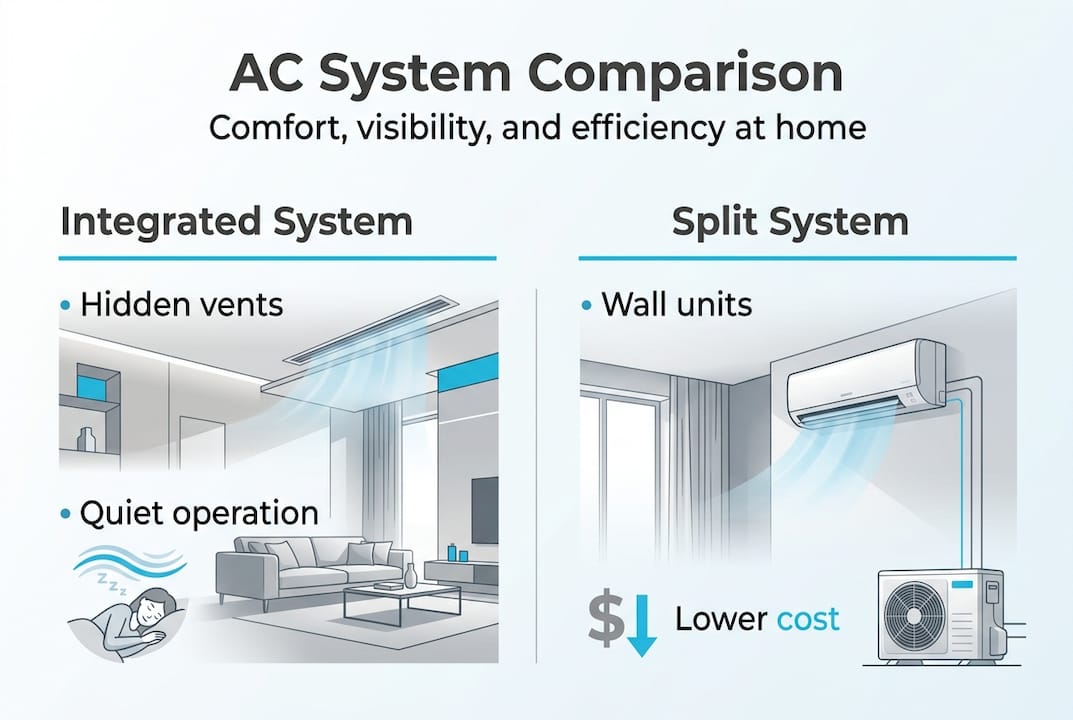
"Ducted systems offer invisible comfort but come with higher upfront cost and installation complexity. Wall-mounted splits are cheaper and easier to retrofit, while portable units are the least efficient option." Split vs ducted air conditioning
Comparison of air conditioning types:
| Type | Visibility | Cost | Best for | Noise |
|---|---|---|---|---|
| Integrated (ducted) | None | Higher | New builds, renovations | Very low |
| Wall-mounted split | Moderate | Medium | Single rooms, retrofits | Low to moderate |
| Portable unit | High | Low | Temporary use | High |
Wall-mounted split systems are the most common choice for UK homeowners. They are less expensive to purchase and install, and they work well for cooling or heating individual rooms. The trade-off is that the indoor unit is always visible, and running multiple units across a whole home adds up in cost and complexity. They are a sensible choice for a single room or for homes where a full renovation is not on the cards.
Portable air conditioners are the cheapest entry point, but they come with real drawbacks. They are noisy, they vent warm air through a hose that needs to exit through a window (which compromises security and insulation), and they struggle to cool larger spaces effectively. For most Devon and Cornwall homeowners looking for genuine comfort, portable units are a short-term fix at best.
When integrated air conditioning makes the most sense:
- You are building a new home or undertaking a major renovation
- You want a clean, uncluttered interior aesthetic
- You need consistent comfort across multiple rooms
- Humidity control is a priority (particularly relevant in the South West)
- You want a single, quietly operating system rather than multiple visible units
For premium homes where aesthetics and whole-house comfort matter, integrated systems are the clear front-runner. For a single room or a tight budget, a wall-mounted split is more practical.
Considerations for Devon and Cornwall homeowners
With the main options compared, homeowners in Devon and Cornwall have unique factors to weigh before choosing integrated AC.
The region's climate is genuinely well suited to integrated air conditioning. Mild winters and humid summers mean a system that handles both heating and humidity removal delivers real value across the whole year, not just a few hot weeks. Heat pump based integrated systems can provide efficient heating in winter too, making them a year-round investment rather than a seasonal one.
Integrated systems suit new builds and renovations in Devon and Cornwall particularly well, where local installers offer leading brands and full warranty support. If you are planning a self-build or a substantial refurbishment in Truro, Falmouth, Plymouth, or anywhere across the South West, now is the time to factor integrated AC into your plans.
Pro Tip: Ask your installer to carry out a full heat load calculation before specifying the system. Undersized systems struggle on warmer days; oversized ones cycle inefficiently and fail to remove humidity properly.
Retrofitting requires ceiling or loft space for ducting and can be disruptive in finished homes, which is why integrated systems suit larger properties and major renovations best. If your home does not have accessible ceiling voids, a wall-mounted split system may be the more practical route.
What to check before committing to integrated AC:
- Does your home have (or can it create) ceiling void or loft space for ducting?
- Is a renovation or new build planned where installation can be integrated early?
- Have you received a heat load calculation from your installer?
- Does the installer offer long warranties and an aftercare plan?
- Is 0% finance available to spread the upfront cost?
Routine maintenance matters too. Ducts should be cleaned periodically and the system serviced annually to keep efficiency high and air quality healthy. A reputable local installer will offer a service plan as part of their aftercare.
Our take: what most homeowners miss about integrated air conditioning
After working with homeowners across Devon and Cornwall, the pattern we see most often is this: people underestimate how much zoning actually changes daily life. It is not just a technical feature. It means your teenager's room can be cool while the kitchen stays warmer, without anyone compromising. That kind of flexibility is hard to put a number on, but once you have lived with it, going back feels like a step backwards.
The other thing most people miss is the importance of smart controls and regular duct maintenance. A well-designed system that is never serviced will underperform within a few years. The homeowners who get the best long-term results treat their integrated system like a car: they service it, they use the controls properly, and they call a professional when something changes.
The most common regret we hear? "I wish we had planned for future-ready home comfort during the renovation." Integrated AC is almost always easier and less expensive to install during a build than to retrofit later. If you are renovating now, this is the conversation to have before the ceilings go in.
How Frost Air Conditioning can help
If integrated air conditioning sounds like the right fit for your home, Frost Air Conditioning is ready to help you move from questions to answers.

We design and install tailored integrated AC systems for homes across Devon and Cornwall, working with leading brands and backing every installation with full aftercare support. Our team is F-Gas certified, and we offer 0% finance to make the upfront investment more manageable. Same-day installs are available for certain system types. Whether you are at the planning stage or ready for a quote, explore our integrated air conditioning solutions or get a free quote today and let us put together a system designed around your home.
Frequently asked questions
Is integrated air conditioning worth the investment for UK homes?
Integrated systems cost more upfront but deliver better comfort, energy efficiency, and improved property value, making them particularly worthwhile for larger or newly built homes.
Can integrated air conditioning be retrofitted in older homes?
Retrofitting is possible but can be disruptive, as ceiling or loft space is needed for ducting; wall-mounted split systems are often a more practical choice for existing homes without accessible voids.
What kind of maintenance does integrated air conditioning require?
Ducted systems need annual professional servicing and periodic duct cleaning to maintain efficiency and keep indoor air quality at its best.