
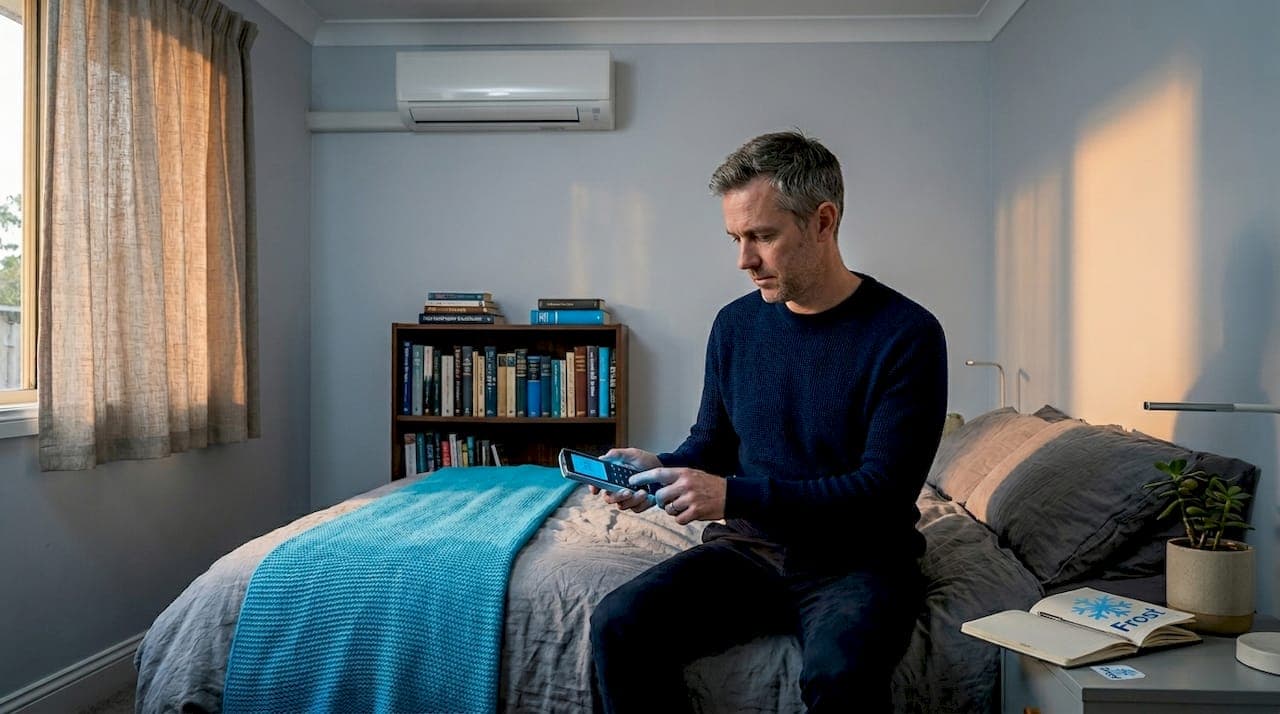
A surprising number of homeowners across Devon and Cornwall assume that installing air conditioning in the bedroom automatically means a steep energy bill at the end of the month. That assumption is wrong. The WHO shares AC and fan cooling formula showing that setting your unit to 27°C and running a ceiling or pedestal fan alongside it can reduce electricity costs by up to 70%, which completely reframes what bedroom cooling actually costs. This guide walks you through choosing the right unit, dialling in the best settings, and getting the installation done properly so your bedroom stays cool and comfortable without overspending.
Table of Contents
- Why air conditioning matters in bedrooms
- Understanding the right air conditioning options for bedrooms
- Choosing energy-efficient and comfortable settings
- Professional installation and maintenance: avoiding common pitfalls
- Why passive cooling methods still have a place in Devon and Cornwall
- Get expert bedroom air conditioning in Devon and Cornwall
- Frequently asked questions
Key Takeaways
| Point | Details |
|---|---|
| Set your room efficiently | Maintaining 27°C with a fan can save up to 70% on energy bills. |
| Choose AC type wisely | Split systems are generally quieter and more efficient for bedrooms than portable units. |
| Don’t overlook dehumidification | Dehumidifying is essential for comfort during humid summers and prevents a clammy feel. |
| Professional advice matters | A heat load survey by experts ensures your AC is correctly sized for maximum comfort and efficiency. |
| Passive methods complement AC | Curtains and ventilation support comfort in temperate weather and save costs when temperatures allow. |
Why air conditioning matters in bedrooms
The bedroom is the one room where temperature genuinely affects your health, not just your comfort. Sleep quality drops sharply when room temperatures climb above 24°C, and during a Devon or Cornwall heatwave, bedrooms can easily hit 28°C or higher by 10 pm. That is simply too warm for restful sleep, and poor sleep night after night has real consequences for concentration, mood, and physical health.
Humidity is another piece of the puzzle that often gets overlooked. South west England summers tend to be humid rather than dry, which means bedrooms feel stickier and more uncomfortable than the thermometer alone suggests. A good air conditioning unit reduces moisture in the air at the same time as cooling it, and that combination transforms how the room feels. You stop waking up damp and groggy.
There are several specific ways that the right bedroom air conditioning system makes a meaningful difference:
- Sleep quality: Cooler, drier air helps your body reach the lower core temperature needed for deep, restorative sleep.
- Allergen reduction: Modern units filter pollen, dust mites, and mould spores from the air, which is a significant benefit for anyone with hay fever or asthma.
- Humidity control: Dehumidification removes that clammy, muggy feeling that makes warm nights in Cornwall feel far worse than they actually are.
- Quieter operation: Quality split systems installed by professionals run at noise levels well below 30 decibels, meaning you will barely notice them running.
- Running costs: Energy-saving features built into modern systems keep bills manageable when the unit is used correctly.
"Features like sleep mode, timers, smart thermostats, and dehumidification enhance comfort and save energy."
Working with expert AC installation in bedrooms means all of those features are set up correctly from day one. Getting the installation right is what turns a decent unit into one that genuinely performs well for years.
Understanding the right air conditioning options for bedrooms
Not every air conditioning unit is suited to a bedroom environment. The market offers a wide range of products, and the differences between them matter considerably when your priority is quiet, efficient, overnight cooling.
Split systems are the gold standard for bedrooms. They consist of an indoor unit mounted high on the wall and a compact outdoor unit fitted outside the house. The compressor, which is the noisiest part of any AC system, sits outside where it cannot disturb your sleep. Modern split systems from brands like Daikin, Mitsubishi, and Fujitsu operate as quietly as 19 decibels indoors. That is quieter than a whisper.
Portable air conditioners are often the first thing people consider because they look simple to set up. The reality is less appealing. Portable units are noisier and less efficient than split systems, and the hot air exhaust hose creates a gap in the window that lets warm outside air back in. They also struggle with dehumidification compared to a properly sized split unit.
Here is a clear comparison to help you decide:
| Feature | Split system | Portable unit |
|---|---|---|
| Noise level (indoor) | 19 to 30 dB | 50 to 60 dB |
| Energy efficiency | High (inverter technology) | Low to moderate |
| Dehumidification | Excellent | Limited |
| Installation required | Yes, by a qualified engineer | No (self-setup) |
| Long-term value | Very high | Moderate |
| Disruption to sleep | Minimal | Noticeable |
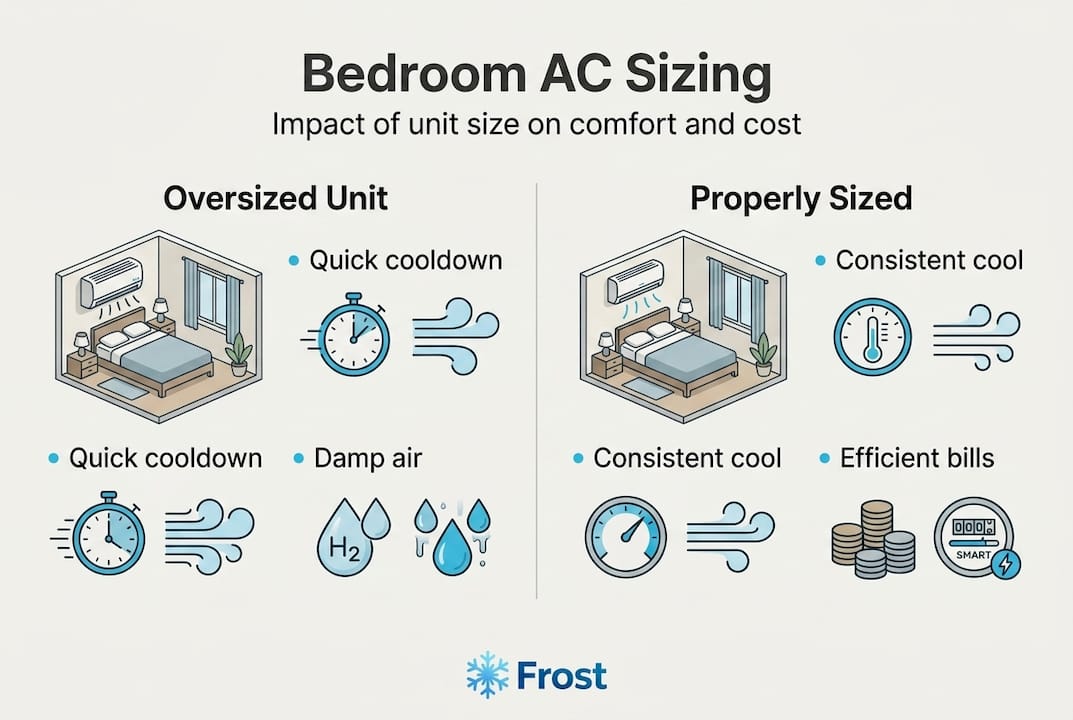
Sizing is equally important. An oversized unit cools the room too quickly, cycles off before it has had time to remove humidity, and leaves the air feeling clammy and uncomfortable. An undersized unit runs continuously without ever reaching your target temperature, driving up energy use. Getting the size right is a precise calculation based on room dimensions, window area, insulation quality, and how the room is oriented to the sun.
Pro Tip: Avoid relying solely on online sizing calculators. They use rough estimates that rarely account for the specific layout of south west English homes. A proper heat load survey carried out during a site visit gives you an accurate figure and saves money in the long run.
A good split system, correctly sized and installed, also feeds into your home's long-term value. Buyers increasingly look for homes with fitted cooling in bedrooms, particularly in the south west where summer temperatures are rising year on year. The heat load survey for AC sizing is the first step to making a well-informed decision.
Choosing energy-efficient and comfortable settings
Having the right unit is only half the story. How you use it matters just as much for both comfort and running costs. Many people install air conditioning, set it as cold as possible, and then wonder why their electricity bill climbs. There is a far better approach.
The WHO suggests setting AC at 27°C and combining it with a fan circulating the air around the room. At that temperature, with moving air, the room feels noticeably cooler than the thermometer reading suggests. This is the wind-chill effect working in your favour indoors. Running a fan costs roughly 1p to 2p per hour compared to several pence per hour for an AC unit. The combination keeps you comfortable and brings bills down significantly.
Here is a practical guide to getting your bedroom settings right:
- Set the temperature to 27°C. This is the sweet spot for comfort and efficiency. Going lower costs more and rarely makes you sleep better.
- Activate sleep mode. This feature gradually raises the temperature by 1°C every hour through the night, matching the natural drop in your body's temperature need as you sleep more deeply.
- Use the timer. Programme the unit to switch off two to three hours after you fall asleep and, if needed, come back on before you wake. You will not notice the gap and your bill will.
- Run the fan alongside the AC. A ceiling fan or standing fan circulates the cooled air and lets you raise the AC set point without sacrificing comfort.
- Switch to dehumidify mode on humid nights. On sticky nights when the temperature is bearable but the air feels damp and muggy, the dehumidify setting removes moisture without aggressively cooling. It uses significantly less energy than full cooling mode.
- Use a smart thermostat or app control. Many modern split systems connect to your home Wi-Fi, letting you adjust settings remotely. You can cool the room down thirty minutes before bed without leaving the unit running all evening.
Here is a summary of the key settings and their benefits:
| Setting | Main benefit | Typical energy saving vs. max cool |
|---|---|---|
| 27°C with fan | Comfort plus efficiency | Up to 70% saving |
| Sleep mode | Maintains deep sleep | 15 to 25% saving |
| Timer | Avoids overnight running | 20 to 30% saving |
| Dehumidify mode | Tackles clamminess | Up to 60% saving |
| Smart thermostat | Precision control | Variable |
Pro Tip: Check whether your unit has an Economy or Eco mode. This setting limits the compressor's maximum power draw and is ideal for nights when it is warm but not extreme. It keeps the room comfortable without the unit working flat out all night.
Professional installation and maintenance: avoiding common pitfalls
Even the best air conditioning unit on the market will underperform if it is installed poorly or maintained infrequently. This is an area where cutting corners costs considerably more in the long run.
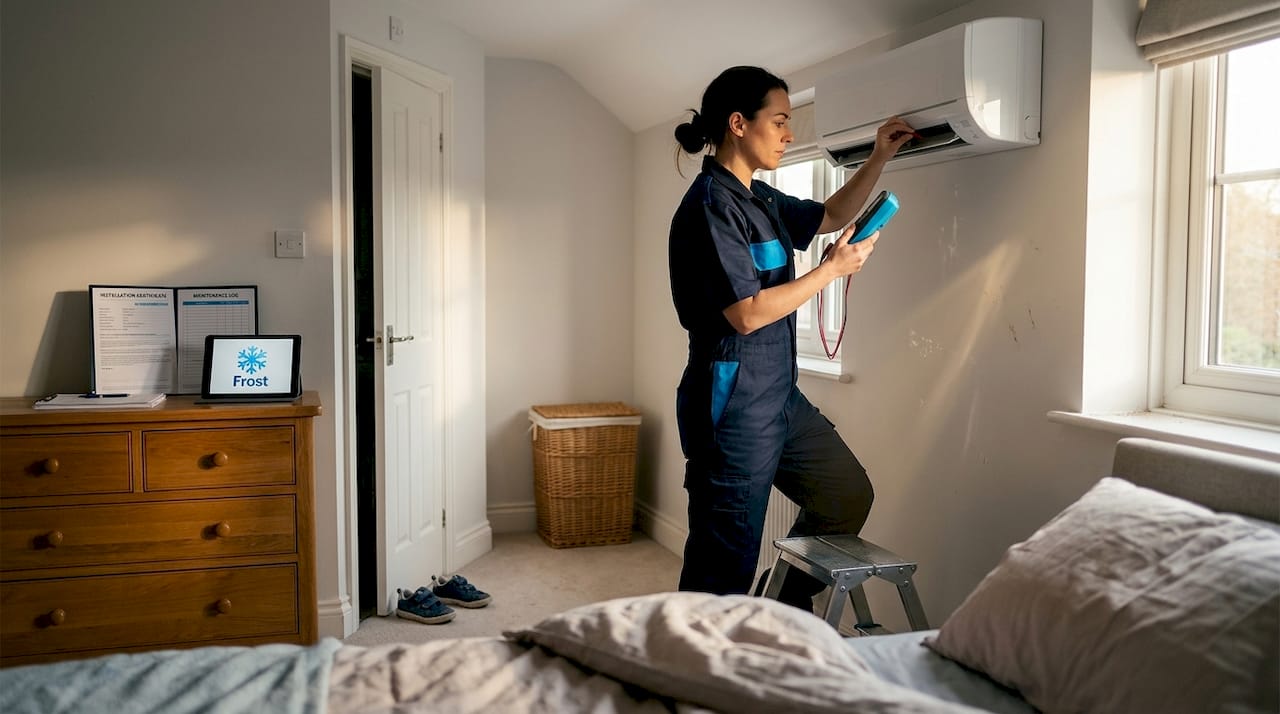
The most common pitfall is relying on an online sizing calculator rather than a professional heat load survey. Online tools ask for basic room dimensions and produce a kilowatt figure, but they do not account for the direction your bedroom faces, the quality of your insulation, the number and size of windows, or whether the room sits directly under a sun-baked roof. A professional engineer assesses all of those factors during a site visit and recommends a unit that is genuinely matched to your bedroom.
Here are the key things a professional installation covers that a DIY approach or unqualified trader cannot:
- F-Gas certification: Any engineer working with refrigerant gases in the UK must hold an F-Gas qualification. This is a legal requirement, not an optional extra. Using an uncertified installer voids manufacturer warranties and may create insurance issues.
- Correct refrigerant charge: Too little or too much refrigerant reduces efficiency and can damage the compressor. Getting this right requires specialist equipment.
- Pipe run quality: Poorly insulated or excessively long refrigerant pipe runs reduce system efficiency significantly.
- Drainage: The indoor unit produces condensate that must drain correctly. A blocked or poorly routed drain causes water damage and mould growth inside the wall or ceiling.
- Electrical connections: AC units require a dedicated circuit in most cases. An electrician must sign off on this work to comply with Part P of the Building Regulations.
Pro Tip: Book an annual service every spring before the hotter months arrive. A service takes around an hour, costs a fraction of a repair bill, and keeps the unit running at peak efficiency. The engineer will clean the filters, check refrigerant pressure, inspect the drainage, and confirm that all electrical connections are sound.
Maintenance is also where many homeowners slip up after installation. Filters should be cleaned every four to six weeks during the summer months. A clogged filter forces the unit to work harder, uses more energy, and pushes allergens back into the air rather than trapping them. It takes five minutes and makes a real difference.
Our specialist AC installation service is F-Gas certified, and we offer same-day installs across Devon and Cornwall. If you want to get sorted before the next heatwave, you can request an AC quote and have someone out to you quickly.
Why passive cooling methods still have a place in Devon and Cornwall
Here is something we do not often say as an air conditioning company: passive cooling genuinely works, and for many nights across Devon and Cornwall, it is all you need.
The south west has a maritime climate. That means summers are generally mild and breezy rather than relentlessly hot. Most years, there are perhaps ten to twenty nights where bedroom temperatures become truly uncomfortable without mechanical cooling. During those nights, passive methods alone such as blackout curtains, cross ventilation through opposite windows, and a good fan may fall short and leave you lying awake in sticky discomfort. That is when air conditioning earns its place.
But the other 340-odd nights? Keeping south-facing curtains closed during the day prevents solar heat gain before it begins. Opening windows at opposite ends of the house creates a through-draught that moves heat out naturally. Lightweight bedding, cooling pillow covers, and a fan positioned to draw air across the room rather than just circulate it can make an enormous difference.
Our honest view is that the best approach blends both methods. Use passive cooling as your first line of defence on mild evenings. Reserve the air conditioning for the genuinely hot and humid nights when nothing else is going to give you a decent night's sleep. That approach gives you real comfort when you need it most and keeps running costs very low across the season. It also means your AC unit works fewer hours, lasts longer, and needs servicing less frequently.
What we push back on is the idea that air conditioning is an all-or-nothing choice. Homeowners who install a quality split system and then use it thoughtfully, combining it with curtains, fans, and smart timers, end up spending far less on running costs than people who assumed they would never need it and then panic-buy a portable unit during a heatwave.
Get expert bedroom air conditioning in Devon and Cornwall
If you are ready to get genuinely comfortable sleep this summer without spending more than you need to, we can help. At Frost Air Conditioning, we cover the whole of Devon and Cornwall from our base in Exeter, and we offer same-day installations for homeowners who cannot afford to wait. All of our engineers are F-Gas certified, and we offer 0% finance so the cost of installation does not have to come all at once.

Whether you want advice on the right unit for your bedroom, a professional heat load survey, or a straightforward quote, it all starts with a conversation. Our AC installation and advice page gives you a full picture of what we offer across the south west, and you can get your AC quote quickly online. We will have someone out to you fast, so you are sorted long before the next heatwave arrives.
Frequently asked questions
What is the ideal temperature for bedroom air conditioning?
The WHO recommends 27°C with a fan for bedroom comfort, which can reduce energy bills by up to 70% compared to running the unit at maximum cooling.
Why is dehumidification important in bedroom air conditioning?
High humidity makes warm nights feel far worse than the temperature alone suggests, and an oversized unit that short-cycles fails to remove moisture properly, leaving the air clammy and uncomfortable.
Are portable air conditioners suitable for bedrooms?
Portable units are significantly noisier than split systems and less efficient, making split systems the far better choice for bedrooms where quiet, overnight operation matters.
Can passive cooling methods replace air conditioning?
Passive methods like blackout curtains and ventilation work well on temperate nights but are unlikely to provide sufficient cooling during a Devon or Cornwall heatwave.
How can I ensure my air conditioning is energy-efficient?
Using sleep mode, timers, and smart thermostats alongside professional sizing and installation gives you the best combination of comfort and low running costs from day one.