
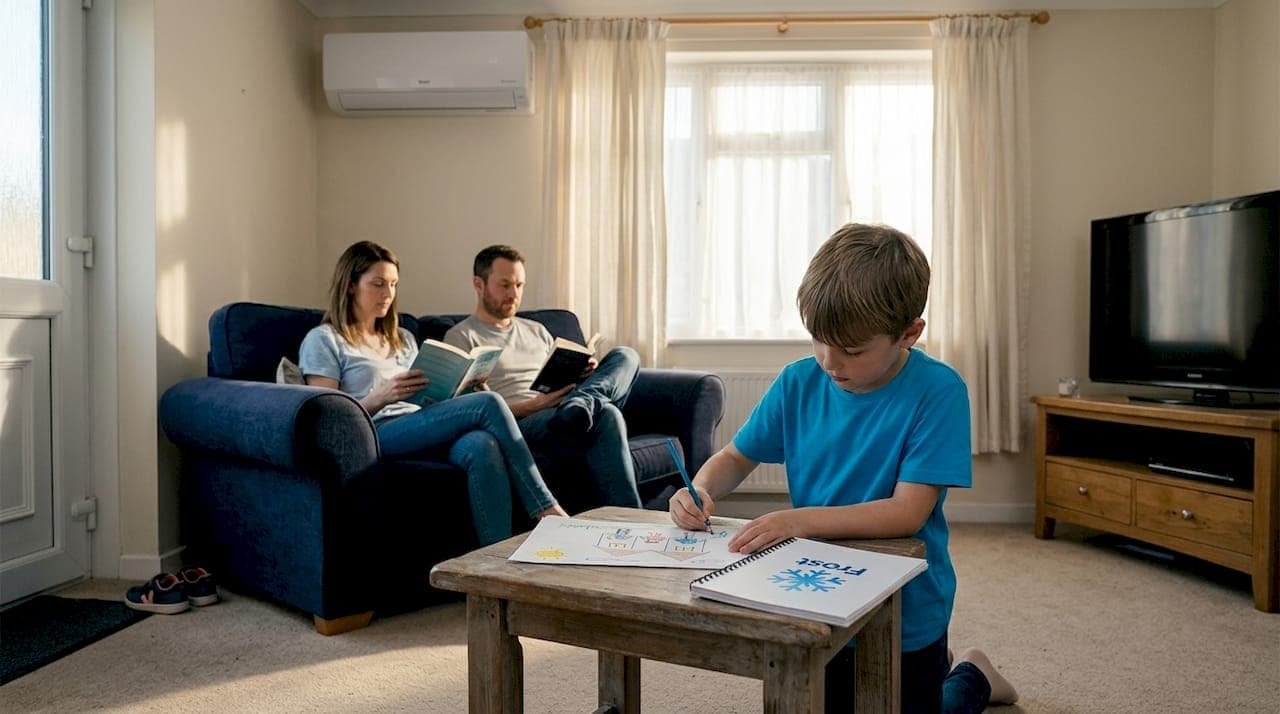
Summer in Devon and Cornwall has a way of catching people off guard. The mild coastal climate feels manageable right up until a humid July heatwave rolls in, and suddenly every bedroom in the house feels like a greenhouse. More homeowners across the South West are seriously weighing up air conditioning as a result, and it's no longer just a conversation for those with large, modern properties. Whether you live in a seafront cottage in Falmouth, a terraced house in Exeter, or a period farmhouse near Dartmoor, the question is the same: is air conditioning actually worth it, or are there smarter ways to stay cool?
Table of Contents
- Key criteria for deciding on air conditioning
- Benefits of air conditioning for Devon and Cornwall homes
- Downsides and challenges of air conditioning
- Comparing air conditioning with other cooling solutions
- Is air conditioning right for your Devon or Cornwall home?
- Why most homes may benefit more from 'passive cooling' than AC
- Get expert guidance before you decide
- Frequently asked questions
Key Takeaways
| Point | Details |
|---|---|
| Balance comfort and cost | Assess your home's needs and budget before opting for air conditioning. |
| Understand regional factors | Devon and Cornwall’s climate may favour alternatives like insulation or shading. |
| Weigh environmental impact | Air conditioning has significant energy and emissions downsides to consider. |
| Regular servicing is vital | Routine maintenance keeps air conditioning systems efficient and reliable. |
| Expert advice helps | Professionals can recommend the safest and most effective cooling solution for your home. |
Key criteria for deciding on air conditioning
To make an informed decision, it's vital to start by understanding the key factors unique to homes in this region. Air conditioning is not a one-size-fits-all solution, and the same system that works brilliantly in a modern flat in Exeter may be a poor fit for a draughty Victorian terrace in Truro.
Here are the core criteria worth examining before you commit:
- Your home's insulation level. A poorly insulated home will leak cooled air quickly, making any AC unit work harder and cost more to run. If your loft insulation is thin or your windows are single-glazed, you may get more value from addressing those first.
- Window orientation. South and west-facing rooms in Devon and Cornwall can trap significant heat during afternoon sun. Knowing which rooms are worst affected helps you decide where, or whether, to install.
- Your distance from the coast. Coastal humidity is one of the most compelling reasons to consider AC in this region. Damp and mould from coastal air is a genuine problem, and a good AC system doubles as a dehumidifier, actively removing excess moisture from the air.
- How often you actually overheat. Devon and Cornwall rarely hit the temperatures seen in London or the South East. If you're only uncomfortable for a handful of days a year, alternatives like insulation or shading may be a more proportionate and cost-effective response.
- Existing ventilation. Some homes already have good natural airflow through their layout. Others are stuffy by design, particularly newer builds with high air-tightness standards, where AC can offer real value.
Pro Tip: If you're concerned about dry air once AC is installed, a humidistat is a practical addition. It monitors moisture levels and can signal when your home's air is dropping too low, helping you balance comfort without overdoing the dehumidification.
Benefits of air conditioning for Devon and Cornwall homes
Now that you've mapped out your home's criteria, let's look at the strengths that air conditioning can offer in this part of the country.
The benefits go beyond just staying cool on a hot day. Here's what a well-specified system can genuinely deliver:
- Relief during summer heatwaves. UK summers are becoming increasingly intense, and what used to be a rare occurrence in the South West is now a near-annual event. A properly installed split-system AC unit can cool a room from 28°C down to a comfortable sleeping temperature within 20 to 30 minutes.
- Dehumidification as a core function. This is arguably the most relevant benefit for coastal Devon and Cornwall homes. Running AC reduces airborne moisture, which actively helps prevent the damp patches, condensation, and mould growth that plague older properties near the sea.
- Improved air quality for allergy sufferers. Modern AC units filter the air as they cool it, removing dust, pollen, and other airborne particles. If anyone in your household suffers from hay fever or asthma, this alone can make a meaningful difference during peak pollen season.
- Better sleep quality. Sleep science consistently points to cooler room temperatures, around 16 to 18°C, as optimal for deep, restorative sleep. A bedroom AC unit gives you precise control that no open window or fan can match.
- Appeal for home offices. Remote working from a sun-facing room in summer can be genuinely unproductive. A dedicated AC unit in a home office pays dividends in focus and comfort, and for self-employed households, installation costs may even be partially tax-deductible.
- Potential property value uplift. As summers warm, buyers increasingly view built-in air conditioning as a desirable feature rather than a luxury.
"In humid coastal areas like Devon and Cornwall, the dehumidification function of air conditioning is often its most valuable feature, particularly in older properties where damp is a recurring problem."
Downsides and challenges of air conditioning
For a balanced view, it's critical to also understand the drawbacks, some of which are easy to overlook at first.
- Upfront installation costs. A good quality split-system installation typically runs into several thousand pounds once you factor in equipment, labour, and F-Gas certification compliance. This is not a small outlay for most households.
- Running costs. Electricity usage adds up, particularly if you're running AC throughout warmer months. Global AC electricity demand has risen by 36% as ownership has spread, reflecting a broader trend of rising household energy bills tied to cooling.
- Annual servicing. To keep a system running efficiently and safely, annual maintenance costs typically run between £150 and £200. Skip this and you risk refrigerant leaks, filter blockages, and reduced efficiency.
- Environmental impact. Air conditioning accounts for 3 to 4% of global emissions, largely through electricity consumption and, in older systems, HFC refrigerant leaks. Newer systems use lower-impact refrigerants, but the energy footprint remains relevant.
- Noise from some unit types. Portable units in particular can be disruptive. A well-installed wall-mounted split system is much quieter, but portable or window units are not always suitable for bedrooms or home offices.
- Fuel poverty risk. For households already managing tight energy budgets, the running costs of AC can tip the balance towards genuine fuel poverty. This is a real concern for elderly or fixed-income residents across the South West.
- Grid strain during heatwaves. On the hottest days, widespread AC use contributes to peak demand on the electricity grid. This is worth factoring in if you're conscious of your wider environmental impact.
Statistic to note: Air conditioning ownership is linked to a 36% rise in electricity use globally, a figure that underscores how significant the cumulative energy impact can be.

Pro Tip: Book your servicing and maintenance appointment in early spring, before the summer rush. Systems that are serviced annually run more efficiently, last longer, and are far less likely to break down on the hottest day of the year, which is exactly when you need them most.
Comparing air conditioning with other cooling solutions
Given both the pros and cons, it's helpful to see how air conditioning stacks up against other common cooling methods.
| Cooling method | Upfront cost | Running cost | Heatwave effectiveness | Maintenance required |
|---|---|---|---|---|
| Split-system AC | £2,000 to £4,000+ | Moderate to high | Excellent | Annual, £150 to £200 |
| Improved insulation | £500 to £3,000 | Very low | Good (prevents heat gain) | Minimal |
| External shading/blinds | £100 to £800 | Negligible | Moderate | Very low |
| Natural ventilation (retrofitted) | £200 to £1,500 | Negligible | Moderate | Low |
| Portable AC units | £200 to £600 | Moderate | Moderate | Low to moderate |
As the table shows, insulation and shading cost considerably less over the long term and require almost no maintenance, making them a genuinely competitive option for the mild Devon and Cornwall climate. The trade-off is that during an intense heatwave, passive methods can only do so much. A shaded, well-insulated home will stay cooler longer, but once temperatures push past 30°C for several days, passive cooling has its limits.
Scenarios where air conditioning is clearly justified:
- You work from home in a south-facing room and productivity drops significantly in summer
- A family member has a health condition (respiratory, cardiovascular, or skin related) that is worsened by heat or humidity
- Your property has a persistent damp or mould problem linked to coastal humidity
- You are converting a room into a habitable space (loft or extension) with limited natural ventilation
- You run a holiday let and guest comfort is commercially important
For most other situations, a combination of home cooling alternatives such as roof insulation, external shutters, and cross-ventilation through window placement can handle the majority of what Devon and Cornwall summers throw at a home.
Is air conditioning right for your Devon or Cornwall home?
If you're still on the fence, let's break down how to apply this information to your own home and lifestyle.
Decision steps to follow:
- Identify your core problem. Is it heat, humidity, poor air quality, or a combination? The answer shapes which solution fits best.
- Assess your home's existing features. Check insulation, window glazing, room orientation, and existing ventilation before assuming AC is the only route.
- Set a realistic budget. Include installation, annual servicing, and likely running costs over five years to get a true picture.
- Consider alternatives first. Could loft insulation, external blinds, or improved window ventilation solve 80% of the problem for a fraction of the cost?
- Identify non-negotiables. If someone in the household has a medical need for temperature control or clean air, that changes the calculation considerably.
| Household type | Likely best solution | AC justifiable? |
|---|---|---|
| Elderly resident, health vulnerability | AC with quiet split system | Yes, high priority |
| Young family, coastal property | AC plus improved ventilation | Yes, especially for damp |
| Remote worker, south-facing study | Single-room AC unit | Yes, productivity focus |
| Period farmhouse, good insulation | Insulation and shading first | Conditional |
| Modern flat, good glazing | Insulation and natural ventilation | Unlikely without specific need |
Worth noting: energy consumption linked to AC ownership rises sharply globally as adoption grows, so individual choices do add up. Being intentional about whether you genuinely need AC, rather than simply wanting it, is a reasonable and responsible way to approach the decision.
Why most homes may benefit more from 'passive cooling' than AC
Here's an opinion that runs against the grain of most air conditioning content: for the majority of homes across Devon and Cornwall, passive cooling methods will deliver better overall value than a full AC installation.
The conventional narrative positions air conditioning as the natural upgrade for a warmer world. And in parts of the country where summer temperatures regularly exceed 35°C for weeks at a time, that argument is hard to dispute. But the South West is not Southern Spain. The climate here is mild, maritime, and genuinely temperate for most of the year.
Insulation and shading options suited to the region can handle the majority of warm periods without adding to your electricity bill or requiring annual maintenance. A home with good loft insulation, external shutters on south-facing windows, and thoughtful cross-ventilation will stay cooler through most Devon and Cornwall summers than a poorly insulated home with a split-system AC running flat out.
The hidden costs of AC are where many homeowners get caught out. The unit purchase, the installation, the F-Gas compliance work, the annual service, the increased electricity bills. These add up to a significant long-term commitment. For a handful of genuinely hot days per year, that commitment may not stack up.
Where we do believe a hybrid approach makes sense is in specific circumstances: a home office that needs reliable temperature control, a household with vulnerable or elderly members, a property with an ongoing damp problem, or a holiday let where guest comfort directly affects income. In those cases, a targeted single-room or multi-room install, paired with good passive cooling elsewhere in the home, gives you the best of both worlds without the cost of cooling every room all summer.
The honest truth is that alternatives in a mild climate are not a compromise. They are often the smarter, more sustainable choice. We say this as an AC installer, which should tell you something.
Get expert guidance before you decide
Making the right choice for your home is genuinely easier with local expertise behind you. Every property across Devon and Cornwall has its own quirks, from the direction it faces to its age, construction, and proximity to the sea.

At Frost Air Conditioning, we cover the whole of the South West from our base in Exeter. Whether you're ready to install or simply want an honest conversation about whether AC is the right fit for your home, we're happy to help. We offer 0% finance options to spread the cost, same-day installs where needed, and all our engineers are F-Gas certified. Looking for local air conditioning advice from people who know the region? Get in touch and request a tailored quote with no obligation. We'll assess your home, walk you through your options, and give you a straight answer, even if that means pointing you towards a passive cooling solution instead.
Frequently asked questions
How much does it cost to install air conditioning in a typical Devon or Cornwall home?
Initial equipment and installation typically runs from £2,000 to over £4,000 depending on the system, with annual servicing costing around £150 to £200. Multi-room systems will cost more, and 0% finance options can help spread the upfront cost.
Will air conditioning add value to my property?
It can make your home more comfortable and more attractive to buyers, particularly as UK summers become warmer and buyers increasingly view AC as a practical feature rather than an indulgence.
What are the main environmental concerns with home air conditioning?
Air conditioning contributes 3 to 4% of global emissions through energy use and HFC refrigerants, though modern systems use lower-impact alternatives and energy efficiency has improved considerably in recent years.
Are there cheaper alternatives to air conditioning for cooling my house in this region?
Yes. Insulation and shading are cheaper and often sufficient for Devon and Cornwall's mild climate, with natural ventilation improvements also worth considering before committing to a full AC installation.
Does air conditioning require much maintenance?
Annual servicing is strongly recommended to keep the system running efficiently and safely, and this typically costs between £150 and £200 per visit according to standard UK servicing benchmarks.