

Cornwall's summers are getting hotter, and many homeowners are finding that opening a window simply is not enough anymore. Demand for air conditioning is rising across the county as more frequent hot spells push indoor temperatures to uncomfortable and even dangerous levels. Yet for every homeowner who wants to act, there are myths, confusing choices, and unanswered questions standing in the way. This guide cuts through all of that. Whether you are thinking about your first system or comparing your options, you will find clear, practical answers here based on real local expertise.
Table of Contents
- Why air conditioning is becoming vital in Cornwall
- How air conditioning works: Simple explanation
- Comparing cooling solutions for Cornwall homes
- Installation options and choosing a qualified provider
- Why air conditioning pays off faster than you think in Cornwall
- Get expert air conditioning help in Cornwall
- Frequently asked questions
Key Takeaways
| Point | Details |
|---|---|
| Rising demand in Cornwall | Hotter summers are driving more homeowners to seek air conditioning solutions. |
| Fans often inadequate | Above 25°C, only air conditioning delivers consistent indoor cooling. |
| Certified installation is crucial | Using REFCOM and F-Gas certified professionals ensures safe, legal setup. |
| Comfort and health payback | Quality cooling improves well-being and is worth the investment even for short heatwaves. |
Why air conditioning is becoming vital in Cornwall
Cornwall has long enjoyed a mild Atlantic climate, but that reputation is shifting. Summers now regularly see temperatures climbing above 25°C, and heatwaves that once felt rare are becoming a familiar pattern. For many Cornish homeowners, this is new territory, and the old approach of leaving a window open overnight is no longer cutting it.
The health implications are serious. Rising temperatures increase health risks, particularly for older adults, young children, and anyone with a heart or respiratory condition. Prolonged exposure to high indoor temperatures disrupts sleep, raises blood pressure, and in severe cases can be life-threatening. This is not alarmist; it is the position of public health authorities who issue heat health alerts each summer.
"Sustained indoor temperatures above 26°C at night are associated with significant health risks, particularly for vulnerable groups."
Fans can help circulate air, but they do not actually cool it. On the hottest days, a fan simply moves warm air around the room. Natural ventilation depends entirely on outdoor temperatures dropping at night, which during a prolonged heatwave may not happen at all. These methods are not unreliable because they are old-fashioned; they are unreliable because the conditions they were designed for are changing.
For Cornwall homeowners exploring their options, a Cornwall air conditioning overview is a useful starting point. Here is what a properly installed air conditioning system actually delivers:
- Consistent cooling regardless of outdoor temperature or humidity
- Improved sleep quality by maintaining a comfortable bedroom temperature through the night
- Better air filtration, removing dust, pollen, and allergens from indoor air
- Protection for possessions such as wooden furniture, musical instruments, and electronics that can be damaged by excessive heat and humidity
- Safer conditions for vulnerable residents, including elderly relatives and young children
These are not luxury benefits. For families spending more time at home, including those working remotely, reliable cooling is becoming as practical as central heating.
How air conditioning works: Simple explanation
Understanding the basics helps you make a better buying decision and have more confident conversations with installers. Air conditioning does not generate cold air from nothing. Instead, it moves heat from inside your home to the outside, leaving the indoor air cooler and drier.
The process relies on a refrigerant, which is a fluid that absorbs heat as it evaporates and releases heat as it condenses. The importance of refrigerants in this cycle cannot be overstated; without the right refrigerant handled correctly, the system simply will not work safely or efficiently. This is one of the core reasons installation must be carried out by a certified professional.
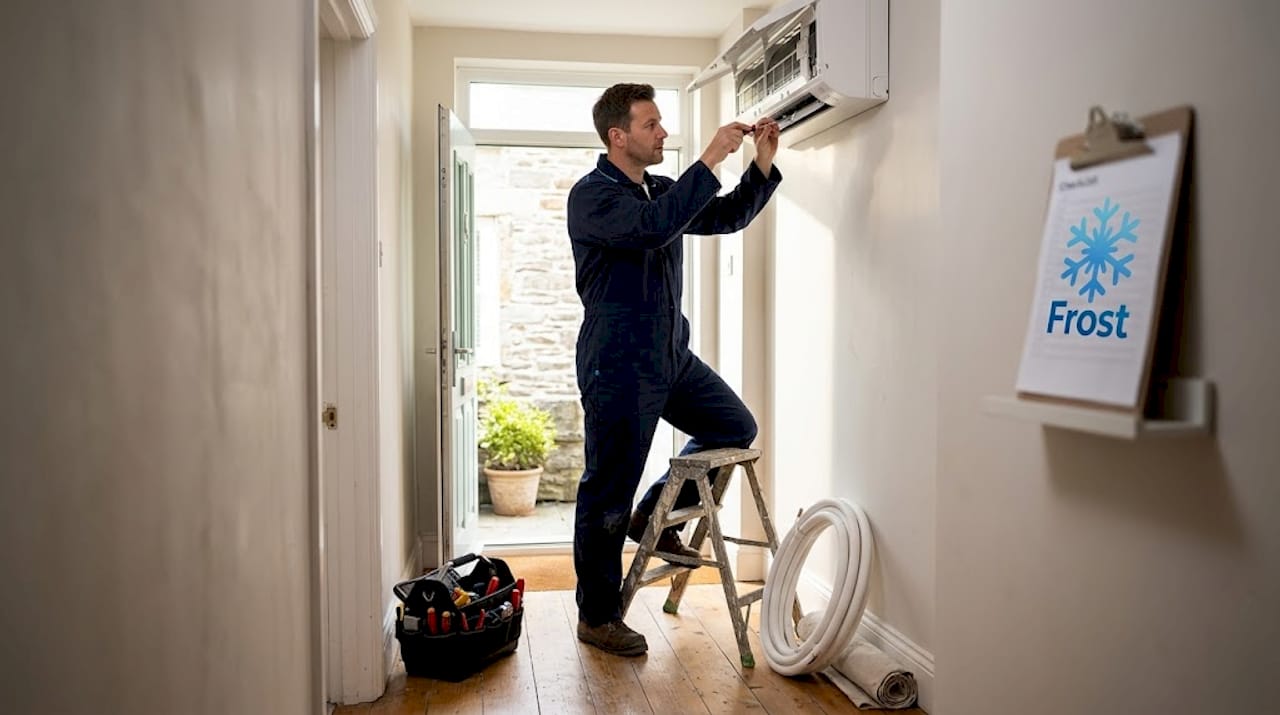
A split system is the most common setup for homes. It has two units: one inside (the indoor unit, which blows cool air into the room) and one outside (the outdoor unit, which expels the extracted heat). These are connected by refrigerant pipework. An inverter system adjusts its output continuously to match the cooling demand, rather than switching on and off at full power. This makes inverter systems significantly more energy-efficient and quieter in operation.
Modern air conditioning systems are rated for energy efficiency using a scale similar to household appliances. Higher-rated systems cost more upfront but save money on running costs over time.
The main types of units suited to Cornwall homes include:
- Wall-mounted split systems: The most popular choice, ideal for individual rooms and straightforward to install in most property types
- Multi-split systems: One outdoor unit connected to several indoor units, covering multiple rooms without multiple external installations
- Portable units: No permanent installation required, but significantly less efficient and noisier than fixed systems
- Ducted systems: Concealed throughout the property for whole-home cooling, best suited to new builds or major renovations
Pro Tip: Always check the energy rating before purchasing. An A-rated inverter system can cost as little as a few pence per hour to run, making the long-term savings substantial compared to lower-rated alternatives.
Comparing cooling solutions for Cornwall homes
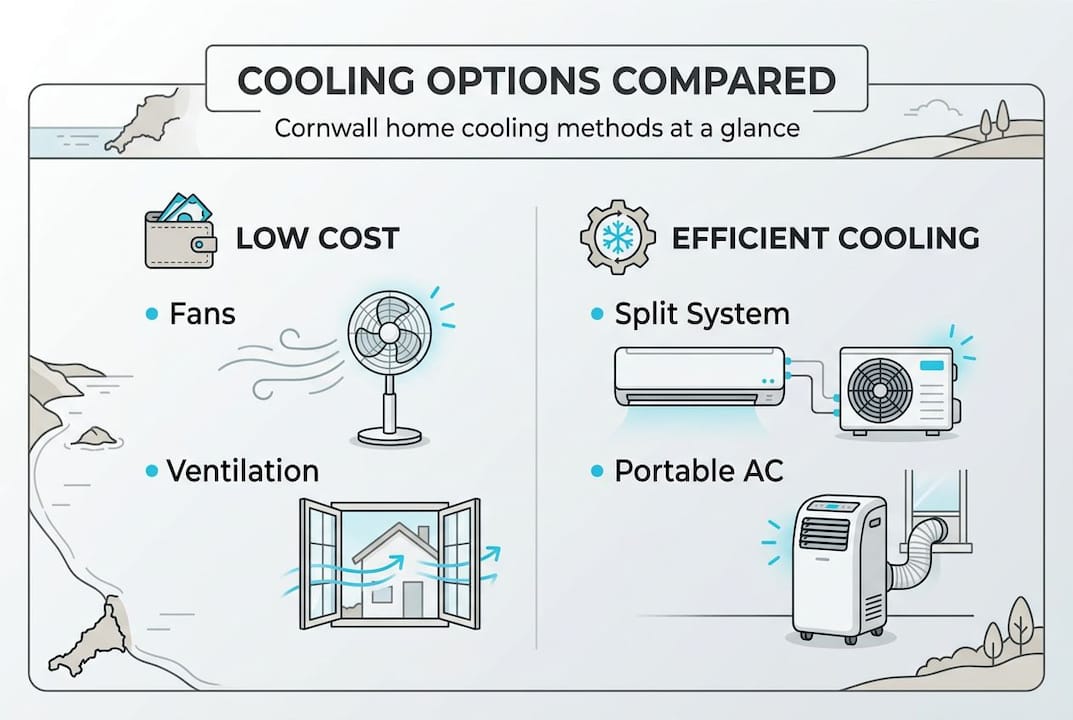
Before committing to any system, it helps to see all your options side by side. Fans and ventilation struggle once indoor temperatures stay above 25°C, while air conditioning delivers reliable comfort regardless of conditions outside.
| Solution | Upfront cost | Cooling effectiveness | Noise level | Maintenance | Suited to Cornwall |
|---|---|---|---|---|---|
| Electric fan | Very low | Low above 25°C | Low to medium | Minimal | Partial |
| Natural ventilation | None | Unreliable in heatwaves | None | None | Partial |
| Portable AC unit | Low to medium | Moderate | High | Low | Moderate |
| Wall-mounted split AC | Medium to high | Excellent | Low | Annual service | Yes |
| Multi-split system | High | Excellent | Low | Annual service | Yes |
Natural ventilation works well on mild days and in properties with good airflow through multiple rooms. It costs nothing and requires no maintenance. However, once a heatwave sets in and overnight temperatures stay elevated, it offers little relief.
For guidance on getting the installation right from the start, professional installation guidance covers what to expect from a reputable provider.
Here is a straightforward process for deciding which cooling solution is right for your home:
- Assess the problem honestly. If you are only uncomfortable on a handful of days each year and your home cools down overnight, fans may be sufficient.
- Consider who lives in the property. Older adults, young children, and anyone with health conditions benefit most from reliable cooling.
- Think about room size and layout. A single bedroom may only need a wall-mounted unit; a larger open-plan home may need a multi-split system.
- Set a realistic budget. Factor in installation, running costs, and annual servicing rather than just the purchase price.
- Think long-term. A quality system installed today will serve you for 15 years or more, making the per-year cost much more reasonable than it first appears.
Installation options and choosing a qualified provider
Cornwall's housing stock is wonderfully varied, and that variety matters when it comes to installation. Older stone-built properties, listed buildings, and homes with solid walls all present different challenges compared to modern builds. A good installer will assess your property before recommending any system, not after.
For certified installer guidance, the key is knowing what qualifications to look for and what questions to ask. The table below outlines the most important checks:
| Qualification or check | Why it matters |
|---|---|
| F-Gas certification | Legal requirement for handling refrigerants in the UK |
| REFCOM registration | Industry standard for responsible refrigerant management |
| Local references | Evidence of experience with similar Cornish properties |
| Aftercare and servicing | Ensures ongoing performance and warranty compliance |
| Transparent pricing | Avoids unexpected costs after work begins |
Typical installation paths include single-room installations (the most common starting point), multi-room setups using a multi-split system, and retrofit projects in older properties where routing pipework requires more planning. Each has its own considerations, and a proper site survey makes the difference between a clean, efficient installation and one that causes problems later.
Professional installation is crucial because handling refrigerants without the correct F-Gas certification is illegal in the UK. Beyond legality, improper installation affects performance, voids warranties, and can create safety risks.
Pro Tip: Before agreeing to any quote, ask your installer to itemise all costs including electrical work, wall penetrations, pipe covers, and any making-good after installation. Surprises in the final invoice are almost always avoidable with a clear written quote upfront.
Why air conditioning pays off faster than you think in Cornwall
There is a persistent belief that air conditioning is overkill for Cornwall. The argument goes: it is mild here, summers are short, and a fan does the job. We hear this regularly, and we respectfully disagree.
The value of air conditioning is not measured only in hours of use. It is measured in the quality of those hours. A few weeks of genuinely comfortable sleep, productive working days without heat fatigue, and the peace of mind that vulnerable family members are safe during a heatwave: these things have real, tangible worth that does not show up in a simple cost-per-hour calculation.
Low annual running hours actually work in your favour here. Because the system runs less than it would in a hotter climate, wear is lower and running costs are modest. Homeowners who have installed systems in Cornwall frequently tell us they wish they had done it sooner, not because summers are unbearable, but because the difference on the days that matter is dramatic.
The health argument is particularly compelling for families with elderly relatives or young children at home. Heat-related illness is underreported and often dismissed as tiredness or dehydration. A properly cooled home removes that risk entirely. That is not overkill. That is good sense.
Get expert air conditioning help in Cornwall
If you are ready to stop guessing and start planning, the next step is straightforward: get a proper assessment of your home and a clear, itemised quote from a qualified local installer.

Frost Air Conditioning Cornwall covers the whole of Cornwall and the wider South West, with F-Gas certified engineers who understand the specific challenges of local properties. Whether you need a single wall-mounted unit or a multi-room system, same-day installations are available and 0% finance options mean you can spread the cost without paying more. Take the first step and request a quote today to find out exactly what your home needs and what it will cost.
Frequently asked questions
Is air conditioning really necessary for Cornwall homes?
With rising temperatures increasing health risks, air conditioning is becoming a genuine comfort and health solution for Cornwall homeowners, not just a luxury for hotter climates.
Are fans and open windows enough to keep my house cool?
Fans and ventilation struggle once indoor temperatures stay above 25°C, making air conditioning the more reliable option during prolonged warm spells.
Should I install air conditioning myself or use a professional?
Always use a qualified professional. F-Gas and REFCOM requirements make DIY installation illegal for refrigerant-based systems in the UK.
How much does air conditioning cost to run in Cornwall?
Running costs are typically modest because Cornwall's climate means the system operates for fewer hours each year. Modern systems are designed for efficiency and A-rated inverter units can cost just a few pence per hour to run.