

Most homeowners in Devon and Cornwall think of air conditioning as a straightforward luxury: a machine that blows cold air when summer arrives. The reality is rather more interesting. True indoor comfort depends not just on temperature, but on moisture levels in the air, and as dehumidification capacity can become the limiting factor in humid conditions even when a system is correctly sized for cooling, getting the full picture matters before you invest. This guide cuts through the confusion and gives you a clear, practical look at how residential air conditioning works, which system suits your home, and what actually determines whether you will feel genuinely comfortable.
Table of Contents
- What does residential air conditioning actually do?
- Types of residential air conditioning systems
- Why sizing and installation matter for efficiency and comfort
- What most people miss: humidity, dehumidification and true comfort
- Our take: what really makes a difference for home air conditioning
- Next steps: get expert guidance or a free quote
- Frequently asked questions
Key Takeaways
| Point | Details |
|---|---|
| Cooling is more than temperature | Residential air conditioning also needs to manage humidity to deliver full comfort. |
| System choice impacts installation | Split, central, and packaged systems differ in cost, installation speed, and suitability for UK homes. |
| Sizing and ducts are critical | Proper system sizing and airflow design can avoid short cycling, uneven temperatures, and wasted energy. |
| Humidity often needs special attention | Even with good equipment, high humidity indoors may require extra solutions like a dehumidifier. |
| Expert advice matters most | Working with experienced local installers beats obsessing over equipment specifications alone. |
What does residential air conditioning actually do?
With misconceptions out of the way, let's clarify how residential air conditioning actually keeps you comfortable.
Most people imagine air conditioning simply "makes cold air." It does not. Your AC system moves heat from inside your home to outside it. The indoor air passes over a cold evaporator coil, heat transfers into the refrigerant, and that refrigerant travels to the outdoor unit where the heat is released. The result is cooler, drier air returned into your living space.
The process that makes this possible is the vapour-compression refrigeration cycle, which is the core method behind virtually every conventional residential air conditioning system. Understanding the four main components helps you make smarter decisions when speaking with an installer.
| Component | Location | Role |
|---|---|---|
| Compressor | Outdoor unit | Pressurises the refrigerant to drive the cycle |
| Condenser coil | Outdoor unit | Releases heat from refrigerant to outside air |
| Evaporator coil | Indoor unit | Absorbs heat from indoor air, cools and dries it |
| Expansion device | Between coils | Drops refrigerant pressure, enabling heat absorption |
As warm indoor air passes over the evaporator coil, moisture condenses on the coil's surface, just like condensation on a cold glass. This is your AC system actively removing humidity from your home. That dehumidification effect is often more responsible for your comfort than the temperature reduction alone.
Here is a quick summary of what residential air conditioning can and cannot do:
- Can do: Lower indoor temperature, reduce indoor humidity, filter airborne particles (with adequate filtration), improve sleep quality during warm weather
- Cannot do: Add heat in winter (unless paired with a heat pump), perfectly control humidity in extreme conditions, compensate for poor insulation or draughty rooms, work efficiently if incorrectly sized
For a broader look at how these technologies work together, integrated climate control solutions can combine cooling, heating, and ventilation into a single managed system for your home.
Types of residential air conditioning systems
Now that you understand the core cooling process, it is time to look at the main system types available for Devon and Cornwall homes.
The three most common options you will encounter are split systems, central (ducted) systems, and packaged units. Each has a distinct design and suits different properties and budgets. Central systems circulate cool air through ducts, while split systems link indoor and outdoor units directly, and packaged systems contain all the major components in a single cabinet, typically installed outside or on a roof.
| System type | Installation speed | Space needed | Typical cost | Best suited to |
|---|---|---|---|---|
| Wall-mounted split | Same day possible | Small indoor footprint | Lower upfront | Individual rooms, flats, smaller homes |
| Multi-split | 1 to 2 days | Multiple indoor units | Mid-range | Multiple rooms without ductwork |
| Central ducted | Several days | Loft or plant room, plus ducts | Higher upfront | Larger homes with existing ductwork |
| Packaged unit | 1 to 2 days | Outdoor space only | Varies | Commercial conversions, older properties |
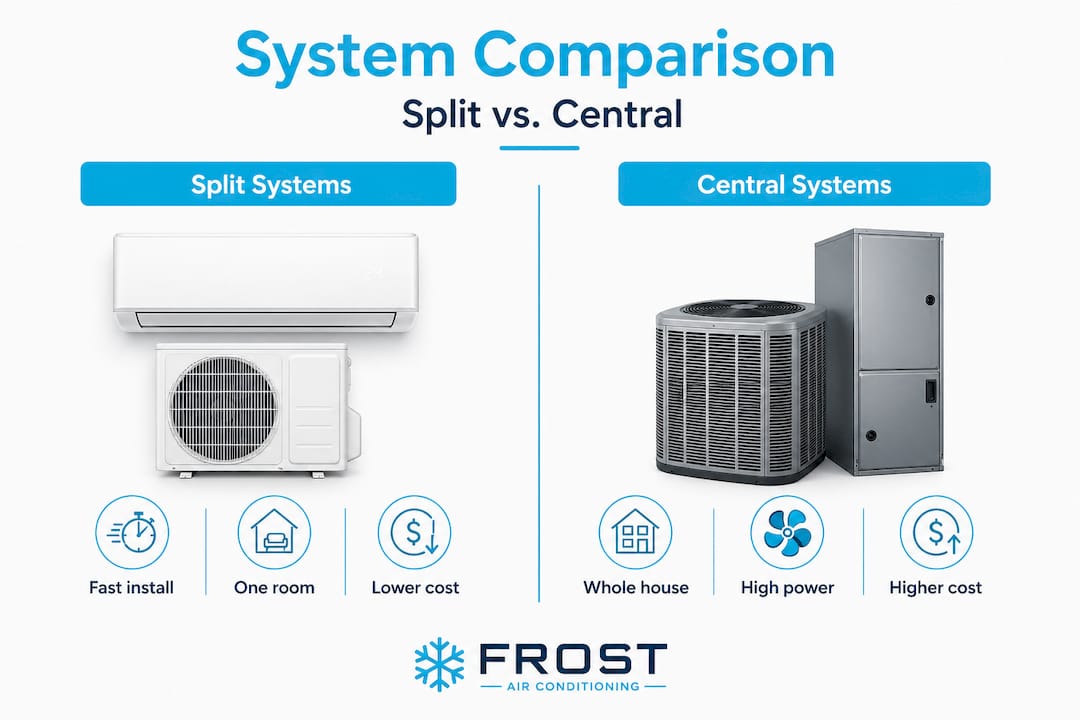
For most Devon and Cornwall homes, especially period cottages, terraces, and newer builds without existing ductwork, a wall-mounted or multi-split system offers the best balance of cost, speed, and comfort. Central ducted systems shine in larger, open-plan properties where consistent whole-home cooling is the priority.
Choosing the right type comes down to a clear process:
- Assess your property: How many rooms need cooling? Is there loft space for a ducted system? Are walls solid or cavity?
- Set your budget: Include both equipment and installation costs, and ask about 0% finance options if upfront cost is a concern.
- Decide on year-round use: Do you want cooling only, or cooling and heating?
- Check access and permissions: Some listed buildings or flats have restrictions on external units.
- Get a site survey: A qualified installer will measure your rooms and assess insulation before recommending a system.
Pro Tip: If you want cooling in summer and lower heating bills in winter, ask your installer about air-source heat pumps. Many modern split systems operate as heat pumps, delivering warmth efficiently in winter and coolness in summer from a single installation. You can explore your home air conditioning options and discuss heat pump upgrades with our team before committing to a single-function system.
Why sizing and installation matter for efficiency and comfort
Having compared the types, understanding the importance of proper sizing and installation is the next crucial piece.
There is a persistent belief among homeowners that buying the most powerful system available guarantees the best results. In practice, the opposite is often true. Poor load matching causes short cycling, which means the system switches on and off repeatedly without completing a full cooling and dehumidification cycle, leaving rooms uncomfortable and pushing energy bills up.
An oversized unit blasts cold air quickly, satisfies the thermostat before the air has been adequately dehumidified, and then shuts off. The room temperature may read correctly, but the air still feels clammy and heavy. An undersized unit, by contrast, runs continuously without ever reaching the target temperature, wearing itself out in the process.
Common problems caused by poor sizing and inadequate duct design include:
- Short cycling: The system runs for just a few minutes at a time, causing temperature swings and failing to remove humidity
- Uneven temperatures: Some rooms are too cold, others too warm, particularly in multi-storey properties
- High energy bills: Oversized compressors and poorly designed ducts waste electricity and increase running costs
- Premature wear: Frequent on-off cycling stresses the compressor and shortens equipment life
- Reduced air quality: Without full circulation cycles, filters cannot capture airborne particles effectively
- Noise issues: Oversized units are often noisier and can create pressure problems in a ducted system
"The delivered comfort and efficiency of a residential air conditioning system depends heavily on sizing and duct or airflow design. Equipment efficiency ratings tell only part of the story; how a system is matched to the building's actual load, and how airflow is engineered, determines what the homeowner genuinely experiences day to day."
This is why reputable installers carry out a load calculation before recommending any system. A load calculation accounts for your room dimensions, insulation quality, window sizes and orientation, the number of occupants, and even which direction your home faces. It produces a number in kilowatts that tells the installer exactly how much cooling capacity your home actually needs.
Pro Tip: When speaking to any installer, ask specifically: "Will you carry out a full heat load calculation before recommending a system?" If the answer is vague or they simply measure the room and offer a quick quote with no further assessment, treat that as a warning sign. Good installation advice always starts with a thorough survey, not a rushed estimate.
What most people miss: humidity, dehumidification and true comfort
Beyond sizing and airflow, many homes in Devon and Cornwall need an extra level of comfort control: managing humidity.
Devon and Cornwall have some of the most changeable and persistently humid conditions in England. Sea air, Atlantic weather fronts, and high rainfall mean that even during warm spells, indoor humidity can climb quickly. This is where many homeowners discover that their newly installed air conditioning system does not quite deliver the comfort they expected.
Dehumidification performance can be limited even when cooling capacity is correct. In very humid conditions, a properly sized system may cool your room to the target temperature but leave moisture levels high enough to feel uncomfortable, promote mould growth, or produce musty odours.
High indoor humidity causes a range of problems that go well beyond discomfort:
- Physical discomfort: Humid air feels warmer than dry air at the same temperature, so you feel hot even when the thermostat reads correctly
- Mould and mildew growth: Persistent moisture on walls, window frames, and soft furnishings encourages mould, which poses health risks and causes structural damage
- Musty odours: Even without visible mould, elevated humidity creates that distinctive damp smell familiar to many older Devon and Cornwall properties
- Damage to timber and furnishings: Excess moisture causes wooden floors, skirting boards, and furniture to warp over time
- Dust mite proliferation: Dust mites thrive above 50% relative humidity, worsening symptoms for allergy sufferers
"Even with correctly sized and properly installed equipment, air conditioning alone may not resolve high humidity in particularly humid climates or older properties with significant moisture ingress. Supplementary dehumidification and smart thermostat controls often make the critical difference between a comfortable home and one that merely feels cooler."
There are practical steps you can take. Setting your thermostat to run the system at slightly higher temperatures for longer periods, rather than blasting cold air for short bursts, improves dehumidification. Some modern systems include a dedicated dry mode that prioritises moisture removal over aggressive cooling. For particularly damp rooms or properties, a standalone dehumidifier working alongside your AC can close the gap.
There is a common but misguided workaround: overcooling. Some homeowners set their thermostat lower than needed, hoping the extra cold air will drive moisture out. This does remove more humidity, but it also wastes energy, increases running costs significantly, and often leaves rooms feeling cold rather than comfortable. It is an expensive solution to a problem better addressed through correct managing home humidity strategies and, where necessary, supplementary equipment.
Our take: what really makes a difference for home air conditioning
Let us step back and share our direct perspective from working with homeowners across Devon and Cornwall every day.
We see a consistent pattern. Homeowners research extensively, compare efficiency ratings, and invest significant time choosing between brands with impressive SEER (Seasonal Energy Efficiency Ratio) numbers. Then they have a system installed by whomever offered the lowest quote, often without a proper survey, and find themselves disappointed. The equipment is fine. The installation is the problem.
The uncomfortable truth is that manufacturer specifications mean very little without a proper assessment and commissioning process. A leading brand's flagship unit installed without a load calculation, with rushed pipework and no commissioning checks, will underperform a mid-range unit that has been properly sized, carefully installed, and correctly set up for your specific home.
We have worked with Devon homeowners who upgraded from one brand to another expecting a dramatic improvement, and found barely any difference, because the underlying issue was always how the system was designed and installed, not which name was on the outdoor unit. When we re-commissioned those systems properly, adjusted refrigerant charge, and sorted out airflow issues, the same equipment performed far better.
The obsession with SEER ratings and energy labels also tends to overshadow something equally valuable: aftercare and local expertise. Knowing your installer will answer the phone, respond quickly if something goes wrong, and understand the specific challenges of Devon and Cornwall properties (older stone walls, high humidity, coastal salt air near places like Exmouth or Falmouth) is worth more in the long run than chasing the highest efficiency number.
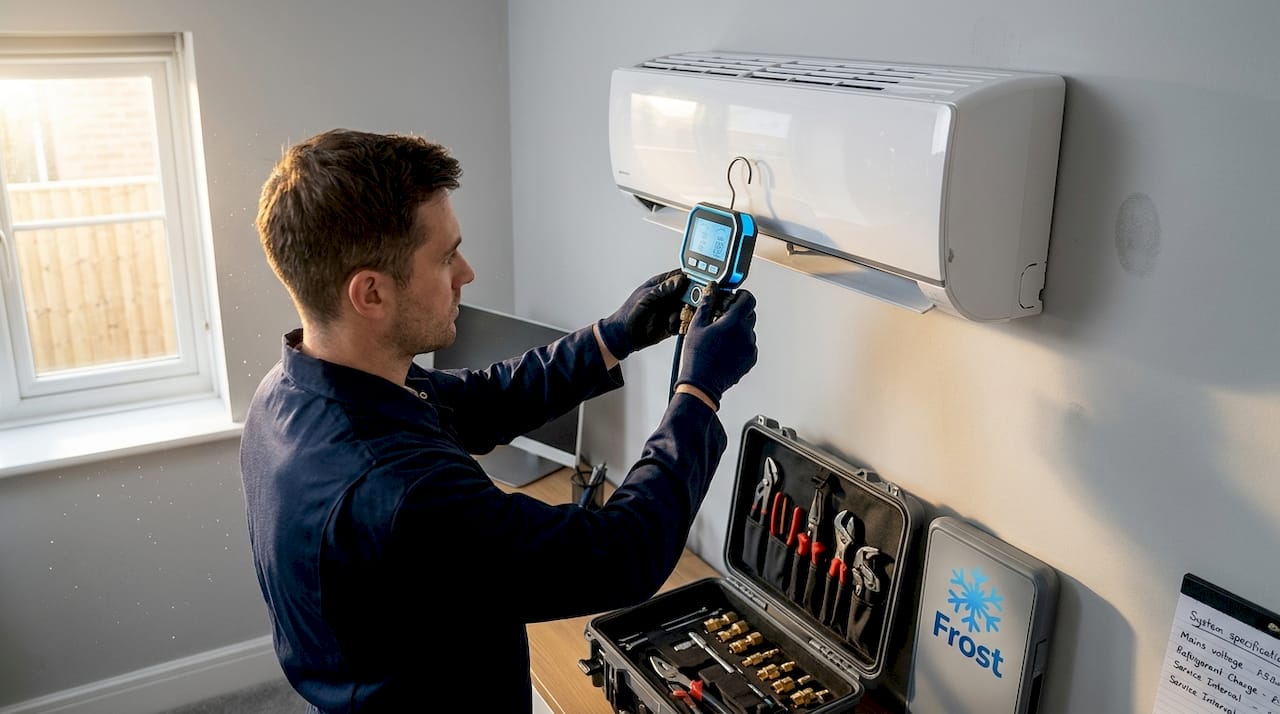
Our honest advice? Choose a qualified, F-Gas certified local installer you trust, ask for a proper survey, talk about your whole home rather than individual rooms, and consider how your cooling system might integrate with heating. That conversation will do more for your comfort than any spec sheet. Practical climate solutions built around your actual home always outperform generic off-the-shelf approaches.
Next steps: get expert guidance or a free quote
If you are ready to take action or need tailored recommendations, here is how we can help.
At Frost Air Conditioning, we work with homeowners across Devon, Cornwall, and the wider South West from our base in Exeter. Every project starts with a proper assessment of your home, not a rushed quote over the phone. Whether you are looking at a single room installation, a whole-home multi-split system, or a combined heating and cooling heat pump, we will match the right solution to your property and budget.

We offer 0% finance options so the cost of a quality installation does not have to be a barrier, and with same-day installations available for straightforward split system projects, you do not have to wait weeks for comfort. Our team is F-Gas certified, fully insured, and experienced with the specific demands of South West homes. Visit the Frost Air Conditioning home page to learn more about our services, or take a couple of minutes to get a fast free quote and we will be in touch promptly with clear, honest advice.
Frequently asked questions
What is the main difference between split and central air conditioning?
Split systems link an indoor unit to an outdoor unit to cool one or more rooms directly, while central systems circulate cool air through a network of ducts to reach the entire home from a single central unit.
Why might my air conditioner not remove enough humidity?
Dehumidification can be limited even in a correctly sized system during very humid conditions; supplementary dehumidifiers or adjusted thermostat settings may be needed to achieve genuine comfort.
How does correct sizing affect my comfort and bills?
Poor load matching causes short cycling and uneven temperatures, while a correctly sized system runs efficiently, removes humidity properly, and keeps energy bills predictable rather than inflated.
Can residential air conditioning help with heating in winter?
Yes, many modern split systems operate as air-source heat pumps, providing efficient year-round heating and cooling from one installation, which makes them particularly cost-effective for Devon and Cornwall homeowners.
Is professional installation really that important?
Absolutely. Load-to-capacity mismatch and duct design affect real-world comfort and efficiency far more than equipment ratings alone, meaning a poor installation can undermine even the best system on the market.