

Summers in Devon and Cornwall are getting hotter, and homes that once stayed cool without any help are now struggling. 80% of UK homes experienced overheating during recent heatwaves, and with coastal humidity added to the mix, the South West presents its own particular challenges. More homeowners here are now seriously weighing up air conditioning as a practical investment rather than a luxury. This article covers the key benefits you need to know: from comfort and health improvements to energy savings and the real costs involved, so you can make a confident, informed decision.
Table of Contents
- Improved comfort and climate control
- Health and air quality benefits
- Year-round efficiency and energy savings
- Cost, environmental and practical considerations
- A local expert's perspective: what truly matters when choosing air conditioning
- Get expert advice and quotes for air conditioning in your home
- Frequently asked questions
Key Takeaways
| Point | Details |
|---|---|
| Enhanced home comfort | Air conditioning provides stable temperatures and humidity, improving daily comfort especially during hotter periods. |
| Healthier indoor air | Modern systems filter allergens, reduce damp, and help vulnerable people breathe more easily. |
| Year-round efficiency | Reverse-cycle heat pumps offer both heating and cooling with impressive energy savings over traditional systems. |
| Consider costs and environment | Weigh upfront and running costs against your home’s needs, and combine AC with solar for lower bills and lighter impact. |
Improved comfort and climate control
The most immediate reason homeowners install air conditioning is simple: they want to feel comfortable in their own homes. Modern split systems give you precise control over indoor temperature, which matters far more than most people realise. Sleep quality improves when bedroom temperatures are held between 16 and 19°C, and maintaining indoor humidity between 40 and 60% prevents that sticky, oppressive feeling that coastal properties in Devon and Cornwall often suffer during July and August.
Heatwaves in the South West are no longer rare events. When outdoor temperatures push into the high twenties or beyond, a well-sized air conditioning unit keeps your living room, bedroom, or home office genuinely usable. For families with young children, elderly relatives, or anyone working from home, that reliability is worth a great deal.
Here are the spaces where homeowners in the region benefit most:
- Bedrooms: Consistent overnight cooling for deeper, more restful sleep
- Home offices: Stable temperatures improve focus and productivity during summer months
- Living rooms: Comfortable family spaces even during prolonged warm spells
- South-facing rooms: These heat up fastest and benefit most from active cooling
'In 2022, 80% of homes in the UK experienced overheating.'
Pro Tip: Use your unit's programmable timer to pre-cool rooms before you arrive home, and set it to eco mode overnight. You get the comfort without running the system at full power all day.
For properties close to the coast, air conditioning for coastal homes also needs to account for salt air and higher ambient humidity, which makes choosing the right unit and installation even more important.
Health and air quality benefits
Comfort is one thing, but the health case for air conditioning in South West homes is genuinely compelling. Modern units do far more than cool the air. They actively filter it. AC systems remove pollen, dust, and pet dander from circulating air, which is particularly valuable in coastal and rural areas of Devon and Cornwall where pollen counts can be high and properties are often older with limited ventilation.
For anyone in your household with asthma, hay fever, or other respiratory conditions, this filtering effect can make a real difference to daily life. Poorly ventilated modern homes trap pollutants indoors, and simply opening windows on a breezy coastal day can bring in more allergens than it removes.
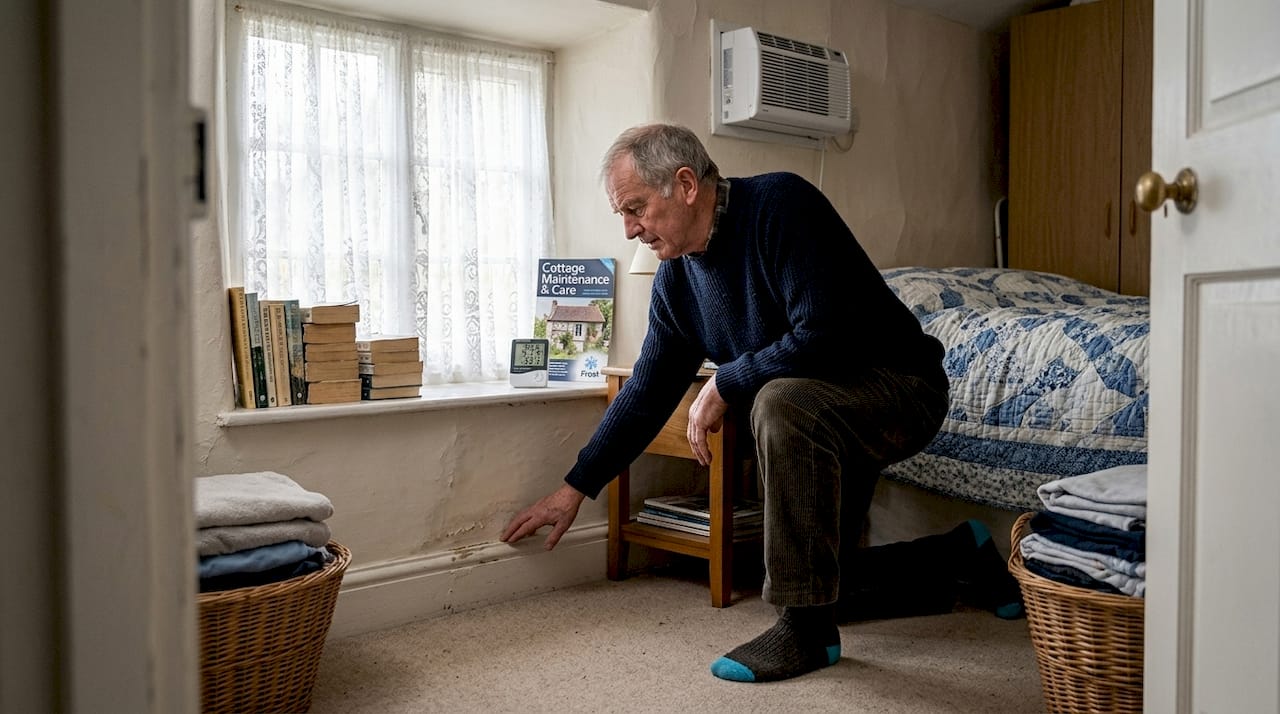
Air conditioning also dehumidifies as it cools. This is critical for preventing damp and mould, both of which are common problems in older Devon and Cornwall properties. Mould spores are a known trigger for respiratory illness, and reducing indoor humidity consistently is one of the most effective ways to prevent them taking hold.
| Pollutant | With AC filtration | Window ventilation only |
|---|---|---|
| Pollen | Significantly reduced | Enters freely on breezy days |
| Dust mites | Reduced via lower humidity | Thrives in warm, humid air |
| Pet dander | Filtered from circulation | Accumulates without filtration |
| Mould spores | Suppressed by dehumidification | Risk increases with damp air |
| External pollutants | Largely blocked | Enters with outdoor air |
Vulnerable groups, including older residents, young children, and those with chronic health conditions, are most at risk during hot spells. Keeping indoor air clean and cool is not a comfort preference for these households. It is a genuine health measure.
Pro Tip: Book an annual service for your air conditioning unit. Filters and coils that are not cleaned regularly can harbour bacteria and mould, which then circulates through your home. A quick yearly check keeps the system working for your health, not against it.
For households where allergies are a concern, air filtration for allergies is one of the strongest arguments for choosing a quality split system over a basic portable unit.
Year-round efficiency and energy savings
One of the most misunderstood aspects of modern air conditioning is that it is not just a summer purchase. Reverse-cycle heat pump systems provide both cooling in summer and heating in winter from a single unit. That means you are not buying two separate appliances. You are replacing your existing heating with something far more efficient.
Reverse-cycle AC delivers over 300% efficiency compared to a gas boiler's 80 to 90%. In practical terms, for every unit of electricity used, a heat pump can deliver three or more units of heat. That is a fundamental shift in how efficiently you heat your home.
Inverter technology takes this further. Rather than switching on and off at full power, inverter units adjust their output continuously to match what the room actually needs. This reduces electrical consumption significantly compared to older fixed-speed systems.
| System type | Typical efficiency | Estimated running cost |
|---|---|---|
| Inverter split AC (A++) | 300%+ (heating mode) | Lower than gas in mild weather |
| Gas boiler | 80 to 90% | Moderate, rising with gas prices |
| Portable AC unit | 100% (no heat pump) | High, inefficient for regular use |
| Electric fan | N/A (cooling only) | Very low, but no heating benefit |
To get the most from your system, follow these steps:
- Choose a unit with an A++ or higher energy label and strong SEER and SCOP ratings
- Ensure correct sizing for the room. Oversized units cycle inefficiently and undersized ones run constantly
- Install energy efficient AC solutions with smart controls to automate temperature management
- Pair your system with solar panels to reduce grid dependency and cut running costs further
- Service the unit annually to maintain peak efficiency throughout its lifespan
With A++ ratings and inverter technology now widely available, the running cost argument against air conditioning has weakened considerably for South West homeowners.
Cost, environmental and practical considerations
Being clear-eyed about costs is important before making any decision. A professionally installed split system typically costs between £1,500 and £2,500 per room, with running costs ranging from 26 to 54p per hour depending on the unit and your usage pattern. Portable units are cheaper to buy but cost more to run and offer no heating benefit.
The environmental picture is worth understanding too. Most systems use HFC refrigerants, which have a high global warming potential if they leak. Regular servicing reduces this risk significantly. Correct system sizing also matters. An oversized unit uses more refrigerant and energy than necessary, which compounds both the cost and environmental impact.
'Passive measures should be prioritised before fitting AC in mild climates.'
For Devon and Cornwall, where truly extreme heat is still relatively infrequent compared to southern Europe, alternatives like shading and insulation are worth considering first. External blinds, loft insulation, and draught-proofing can meaningfully reduce overheating in homes that only struggle on the hottest days.
| Solution | Upfront cost | Running cost | Cooling | Heating | Environmental impact |
|---|---|---|---|---|---|
| Split AC system | £1,500 to £2,500 | 26 to 54p/hour | Yes | Yes (heat pump) | Moderate (HFCs, managed) |
| Portable AC | £300 to £700 | Higher per hour | Yes | No | Higher per unit of cooling |
| Ceiling or desk fan | £30 to £200 | Very low | Partial | No | Very low |
| Insulation and shading | £500 to £2,000+ | Negligible | Partial | Partial | Very low |
For home offices, south-facing rooms, or households with vulnerable members, the case for a properly specified split system remains strong even in the South West's mild climate. The key is matching the solution to your actual situation rather than installing more than you need.
A local expert's perspective: what truly matters when choosing air conditioning
After working with homeowners across Devon and Cornwall, one thing stands out clearly: the biggest mistakes happen when people skip the basics. Before specifying any system, assess your insulation and consider passive measures. A well-insulated home with external shading will need a smaller, cheaper system to achieve the same result, and that means lower running costs for the life of the unit.
Avoid oversizing. It is a common error, and it results in a system that short-cycles, wears out faster, and never properly dehumidifies the room. Proper sizing, done by a qualified engineer, makes a measurable difference.
For the South West specifically, reverse-cycle heat pumps are the most practical choice. They handle the region's damp winters, occasional summer overheating, and air quality needs in one unit. Pair that with smart controls and solar panels, and you have a system that pays for itself over time.
Finally, do not overlook funding. Energy grants in Cornwall and schemes like ECO4 or the Boiler Upgrade Scheme can significantly reduce the upfront cost for eligible homeowners. Ask about these before committing to any installation.
Pro Tip: Pairing your AC with solar panels is the single most effective way to cut running costs long-term. Ask your installer about the Boiler Upgrade Scheme, which can provide up to £7,500 towards an eligible heat pump system.
Get expert advice and quotes for air conditioning in your home
Choosing the right air conditioning system for your home in Devon or Cornwall is not a decision to rush. The right unit, correctly sized and professionally installed, will serve your household for fifteen years or more.
At Frost Air Conditioning, we are F-Gas certified, cover the entire South West, and offer same-day installs alongside 0% finance options to make the process as straightforward as possible. Whether you need cooling for a single room or a whole-home heat pump solution, we will help you find the right fit. Request a tailored quote today and get clear, honest advice from a local team who understands South West homes.
Frequently asked questions
Is air conditioning worth it for mild climates like Devon and Cornwall?
Yes, particularly for managing humidity, improving air quality, and providing relief during increasingly frequent heatwaves, though passive measures come first for homes that only overheat occasionally.
How much does residential air conditioning installation typically cost?
Split system installation typically costs between £1,500 and £2,500 per room, with running costs of 26 to 54p per hour depending on usage and unit efficiency.
Does air conditioning improve air quality in homes?
Yes, AC filters remove pollen, dust, and damp, making a meaningful difference for allergy sufferers and households dealing with mould or poor ventilation.
Are there grants available for air conditioning or heat pump installation?
Yes, schemes like ECO4 and the Boiler Upgrade Scheme offer up to £7,500 for eligible homeowners installing qualifying heat pump systems in England and Cornwall.