
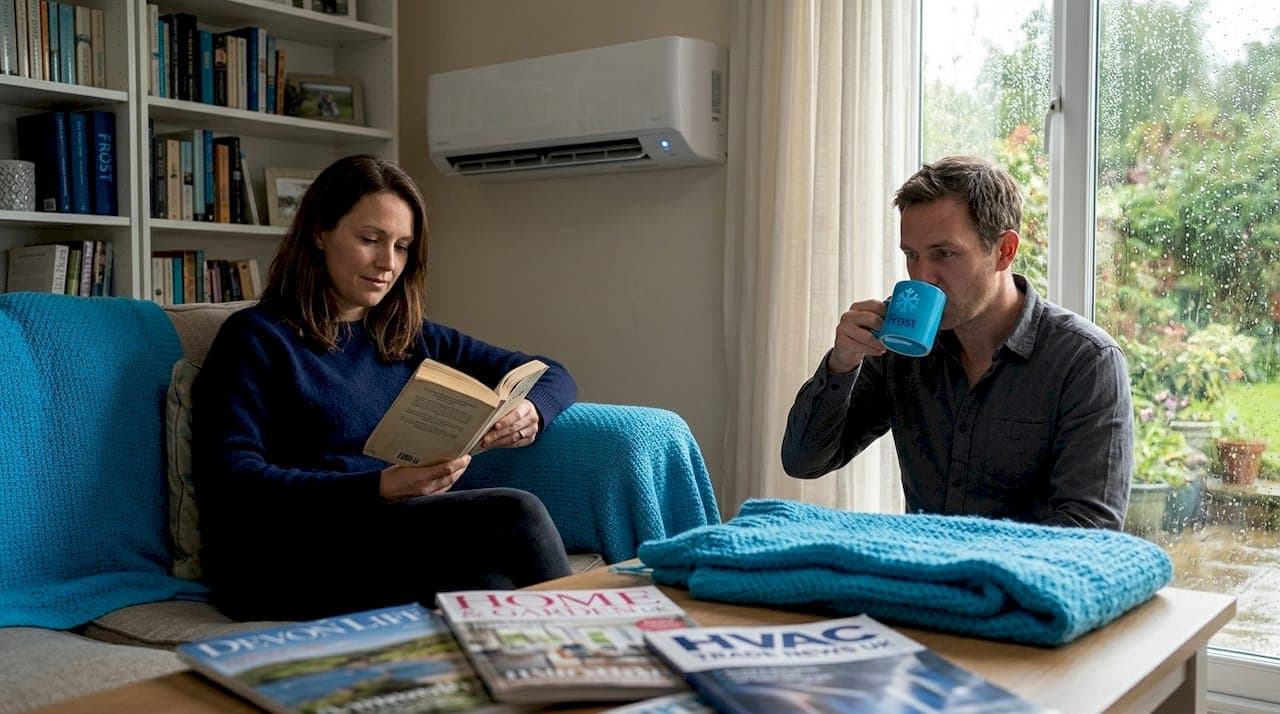
Most homeowners in Devon and Cornwall assume the UK's famously mild weather makes air conditioning a luxury rather than a necessity. That assumption is quietly becoming expensive. AC efficiency and performance depend heavily on the ambient conditions around your outdoor unit, meaning the same system installed in Exeter performs very differently across the seasons than one installed in, say, the East Midlands. Understanding exactly how the South West's distinctive climate influences efficiency, running costs, and system choice can save you money from day one and keep your home comfortable through increasingly unpredictable summers and winters.
Table of Contents
- Why climate matters for air conditioning
- How local weather influences installation choices
- Energy efficiency vs comfort: What really matters?
- Making the most of your air conditioning in Devon and Cornwall
- What most homeowners miss about climate and air conditioning
- Talk to local experts for tailored air conditioning solutions
- Frequently asked questions
Key Takeaways
| Point | Details |
|---|---|
| Climate drives efficiency | The South West’s unique weather patterns directly affect air conditioning performance and running costs. |
| Choose for local conditions | Select systems that fit Devon and Cornwall’s climate, balancing cooling, heating, and humidity management. |
| Mix passive and active | Combining passive methods with efficient air conditioning delivers the best comfort and cost balance. |
| Future-proof comfort | Planning for both heatwaves and cooler spells gives homes long-term comfort and energy savings. |
Why climate matters for air conditioning
Devon and Cornwall occupy a genuinely unusual climatic position in the UK. The influence of the Atlantic brings mild winters, above-average rainfall, and high humidity year-round. Summers are warming faster than many regions, and coastal areas regularly experience damp air that affects how equipment operates and ages.
This matters because air conditioning and heat pump systems do not deliver a fixed output regardless of conditions. They transfer heat between your home and the outdoor air, and that process gets harder or easier depending on how warm or cold it is outside. When outdoor temperatures are mild, the system works efficiently. When conditions push to extremes in either direction, performance changes sharply. Climate affects comfort and efficiency in ways that most people simply do not see on a spec sheet.
A key measure of this is the Coefficient of Performance (COP), which tells you how much heating or cooling energy you get per unit of electricity used. Higher COP means lower running costs. Heat pump COP falls from around 5 at 8 °C outdoors to roughly 3 at 0 °C, and this directly affects your electricity bill every winter.
| Outdoor temperature | Typical COP (heating) | Energy efficiency rating |
|---|---|---|
| 15 °C | 5.5 or above | Excellent |
| 8 °C | Approx. 5 | Very good |
| 2 °C | Approx. 3.5 | Moderate |
| 0 °C | Approx. 3 | Lower |
| Below -5 °C | 2 or below | Poor |
The good news for Devon and Cornwall homeowners is that temperatures below 0 °C are relatively rare here compared to northern England or Scotland. That means your reversible air conditioning system, one that both cools in summer and heats in winter, stays in its efficient operating range for the vast majority of the year. The shoulder seasons, those long stretches of mild weather in spring and autumn, are where reversible systems really earn their keep.
South West summers are also changing. Heatwaves that would once have been considered once-a-decade events are becoming more frequent, and even brief spikes above 30 °C can make an un-cooled home uncomfortable or even dangerous for elderly residents and young children. This is the tail risk that climate-aware homeowners are increasingly factoring into installation decisions.
How local weather influences installation choices
Now that you know why climate shapes efficiency, let us explore how it influences the kind of system you should install in Devon or Cornwall.
The BBC's reporting on overheating policy makes clear that where UK extreme heat leads to overheating, planning guidance has prioritised passive cooling first, such as insulation, shading, and ventilation, while also acknowledging that efficient active cooling is increasingly justified for heatwave tail risks and for vulnerable households. This is a sensible framing. Passive measures should always be the foundation. But they have limits, especially during extended heatwaves or in older properties that cannot easily be retrofitted with cross-ventilation.
For coastal homes in Cornwall or along the Devon coast, there is an additional factor that most installers from outside the region overlook: salinity and humidity. Salt-laden air accelerates corrosion on outdoor units, particularly on fins, coils, and metal casings. A system that would last fifteen years in an inland city might show significant wear within five years at the coast without proper protection.
This makes your choice of system, and your choice of installer, critically important. The best air conditioning options for coastal homes are those with marine-grade coatings or corrosion-resistant components on the outdoor unit.
| System type | Coastal suitability | Efficiency | Year-round use | Maintainability |
|---|---|---|---|---|
| Wall-mounted split (with marine coating) | Excellent | High | Yes (reversible) | Easy |
| Multi-split system | Good | High | Yes (reversible) | Moderate |
| Portable unit | Poor | Low | Cooling only | Easy but inefficient |
| Ducted system | Good | High | Yes | Requires specialist access |
Portable units, despite their appeal as a low-cost option, perform poorly on all the measures that matter most for South West homes. They vent warm air back into the room unless properly ducted, lose efficiency quickly in humid conditions, and offer no heating capability in winter.
Reversible split systems, particularly those with inverter technology, are widely regarded as the most practical solution for the region. They adapt their output to match actual demand rather than running flat out and switching off, which is far more efficient in the variable conditions Devon and Cornwall typically experience. Exploring local options for Devon and Cornwall can help you identify which configurations suit your property type and location.
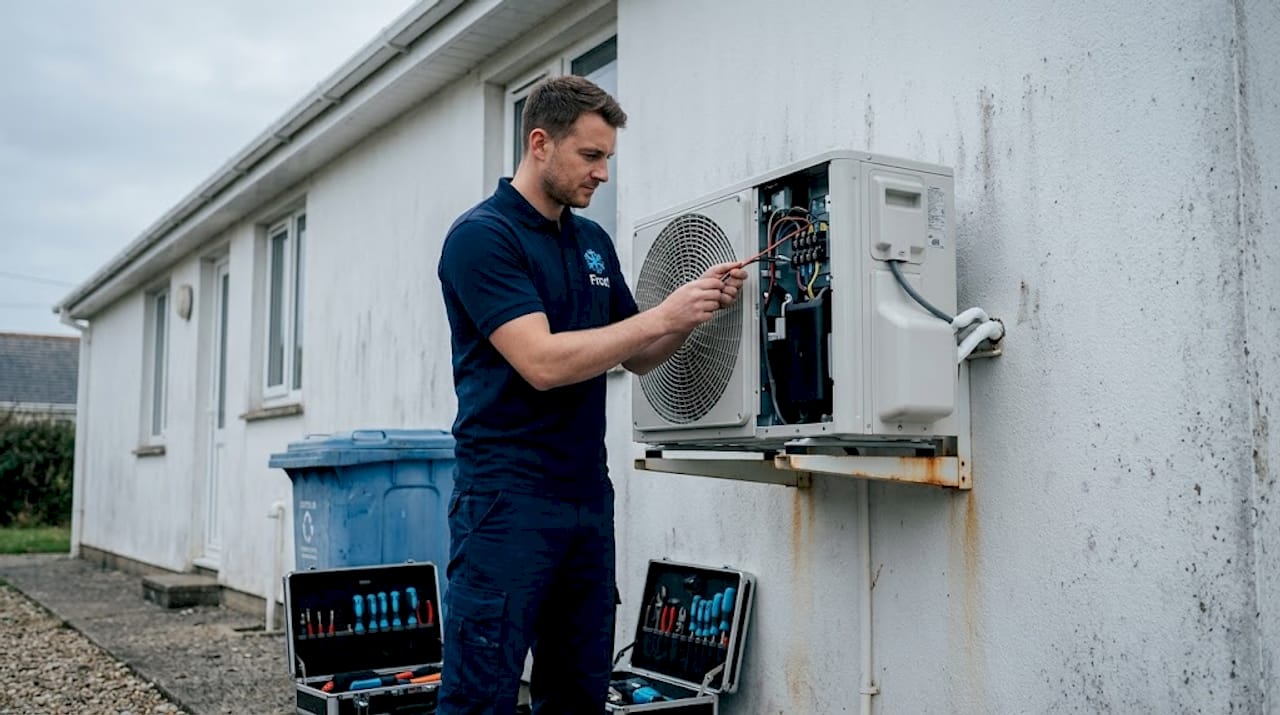
Pro Tip: Always ask your installer specifically about coastal corrosion protection for the outdoor unit. Request details of any anti-corrosion coatings or marine-grade components, and confirm whether these are covered under the warranty.
Energy efficiency vs comfort: What really matters?
After thinking through system types and climate factors, homeowners need to balance energy efficiency with their real comfort needs.
This is where honest advice matters. On a typical mild spring day in Exeter, your reversible air conditioning system can heat or cool your home at remarkable efficiency, and the running costs are genuinely low. But on a day when temperatures hit 34 °C, efficiency drops, the system works harder, and your electricity use climbs. In those moments, comfort rightly takes priority. Trying to scrimp by running the system at reduced capacity during a genuine heatwave is both uncomfortable and potentially a health risk.
The tension between efficiency and comfort resolves itself when you think in terms of risk management rather than everyday running costs. European policy debates around AC have often focused on urban heat and energy use, but the evidence increasingly supports efficient active cooling as part of a balanced, risk-managed approach rather than treating it as an indulgence.
Here is a practical framework for getting both right:
- Assess needs by room and usage. Bedrooms and living rooms where you spend the most time are priorities. Not every room needs conditioning, and a well-zoned system lets you focus energy where it matters.
- Compare running costs for different systems. Modern inverter-driven split systems typically cost far less to run than older fixed-speed units or portable devices. Ask for seasonal efficiency ratings (SCOP for heating and SEER for cooling) when comparing options.
- Factor in resilience to extremes. A system sized only for average conditions will struggle on the hottest days. Specify a system that can handle the peak temperatures your region is increasingly experiencing, not just the averages.
Pro Tip: Smart thermostats and zoning make a significant difference in climates like the South West where conditions shift frequently. Being able to pre-cool a room before a heatwave peaks, or to run heating only in occupied zones during mild autumn evenings, can cut your running costs noticeably compared to a basic on/off controller.
"Efficient active cooling should be understood as a risk-management tool alongside passive approaches, not as a replacement for them and not as an unnecessary extravagance." This framing, supported by current climate evidence, positions air conditioning as infrastructure rather than luxury for homes in warming regions.
Pairing good energy efficiency practices with a well-chosen system is the most reliable way to keep bills reasonable without compromising on comfort when you genuinely need it. And if you are considering using your system for heating as well as cooling, a reverse cycle system offers year-round value that standalone cooling units simply cannot match.
Making the most of your air conditioning in Devon and Cornwall
Once you have chosen the right system, getting the most from it means local tweaks and awareness, especially for Devon and Cornwall's distinctive climate.
AC uptake in the UK is rising as extreme summer weather becomes more frequent, and the South West is no exception. But owning a system and optimising one are two different things. Here is what makes a practical difference for homes in this region.
When to run your system. Cooling during genuine temperature spikes is sensible. Cooling a room to 19 °C on a 22 °C day is wasteful. Use the system to take the edge off during true heat events rather than treating it as a substitute for opening windows on mild evenings.
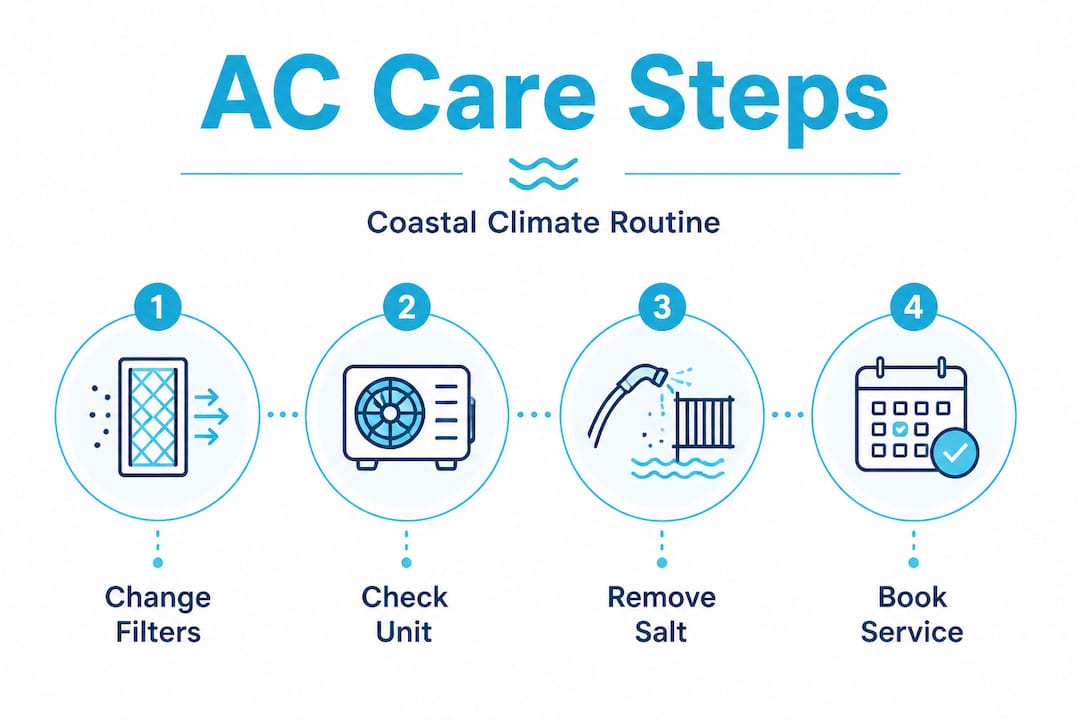
Filter and maintenance checks. Humid coastal air means filters clog faster than in drier inland climates. A blocked filter makes the system work harder and drives up energy use. Check your filters every six to eight weeks during periods of heavy use, and arrange an annual service to keep the system running at rated efficiency.
Use passive strategies to support the system. Closing blinds on south and west-facing windows before the hottest part of the day reduces the cooling load significantly. This lets your air conditioning work less hard, which means lower running costs and longer equipment life. External blinds or shutters are particularly effective.
Integrating heating and cooling across the year. Devon and Cornwall's mild winters mean your reversible system can handle space heating on most days far more efficiently than electric resistance heating. Programme it to maintain a background temperature rather than heating from cold, which is far more efficient for inverter systems.
Pro Tip: Combining passive measures, good insulation, external shading, controlled ventilation with an efficient modern AC system gives you the best possible comfort-to-cost ratio. Neither approach alone achieves what both together can deliver.
For tailored advice on getting the most from your bedroom and living space comfort, bedroom air conditioning guidance covers practical tips that directly address South West conditions.
What most homeowners miss about climate and air conditioning
There is a conversation that comes up repeatedly with homeowners across Devon and Cornwall. It usually starts with a version of: "Do I really need air conditioning here?" or "Is it worth the cost given our climate?"
Both questions frame the decision as a binary choice, and that framing is precisely what leads people to either overspend on a system they run inefficiently, or to dismiss air conditioning entirely and then suffer through a heatwave week with no options. The real answer is almost always somewhere in between, and getting there requires thinking differently.
The pros and cons of AC in the South West are genuinely nuanced, and a rigid stance in either direction misses the point. The South West's climate is not just mild. It is variable. Humidity fluctuates, coastal conditions stress equipment, and summers are delivering spikes that were genuinely rare a generation ago.
The smart approach for Devon and Cornwall homes is a hybrid strategy. Invest properly in passive measures first: insulation, draught-proofing, shading, and good ventilation. These provide everyday comfort without running costs. Then install an efficient, correctly sized reversible AC system as your backup for the days when passive measures are not enough. That might be fifteen or twenty days a year. But on those days, it matters enormously.
"Efficient active cooling should be seen as a risk-management tool in addition to passive approaches." This is the position supported by current evidence, and it is the one that serves South West homeowners best.
This approach future-proofs your comfort without requiring you to run expensive equipment constantly. It is also the most sustainable position, using technology purposefully rather than reflexively. The homeowners we see most satisfied with their installations are those who made a deliberate, climate-informed choice rather than buying the cheapest unit or the biggest one on the shelf.
Talk to local experts for tailored air conditioning solutions
Understanding how Devon and Cornwall's climate shapes your air conditioning choices is the first step. Translating that understanding into the right system for your specific home is where expert local knowledge makes a real difference.

At Frost Air Conditioning, we work exclusively across the South West, and we know the coastal corrosion challenges, the variable humidity, and the building types you are dealing with. Whether you are in a Victorian terrace in Exeter, a coastal cottage in Cornwall, or a newer build on the edge of Dartmoor, the right system and the right installation approach will differ. We offer same-day installations, 0% finance options, and our engineers are fully F-Gas certified. If you are ready to find out exactly what suits your home and your climate, get a bespoke quote and we will advise you without pressure or guesswork.
Frequently asked questions
Does air conditioning work better in hot or cold weather in the UK?
Air conditioning and heat pump systems work most efficiently in mild temperatures. COP drops from 5 at 8 °C to around 3 at 0 °C, meaning your running costs rise as winters get colder.
Should I consider both passive and active cooling for my South West home?
Yes. Passive cooling is policy-preferred, but efficient air conditioning handles heatwave tail risks that insulation and ventilation alone cannot address. The two approaches complement rather than replace each other.
Does rising UK summer heat increase the value of installing air conditioning?
Absolutely. AC uptake is rising across the UK as more frequent extreme weather events make cooling a practical necessity rather than a luxury, even in traditionally mild areas like Devon and Cornwall.
Do air conditioning systems need special features for coastal homes?
Coastal salt air and humidity accelerate corrosion on outdoor units, so systems with marine-grade anti-corrosion coatings are strongly recommended for homes near the Cornish or Devon coast to ensure long-term reliability.
What is the best way to manage running costs in changeable climates?
Combining smart thermostat controls, regular filter maintenance, and passive shading measures gives you the best balance of comfort and cost, particularly in the South West where conditions shift frequently across seasons.