
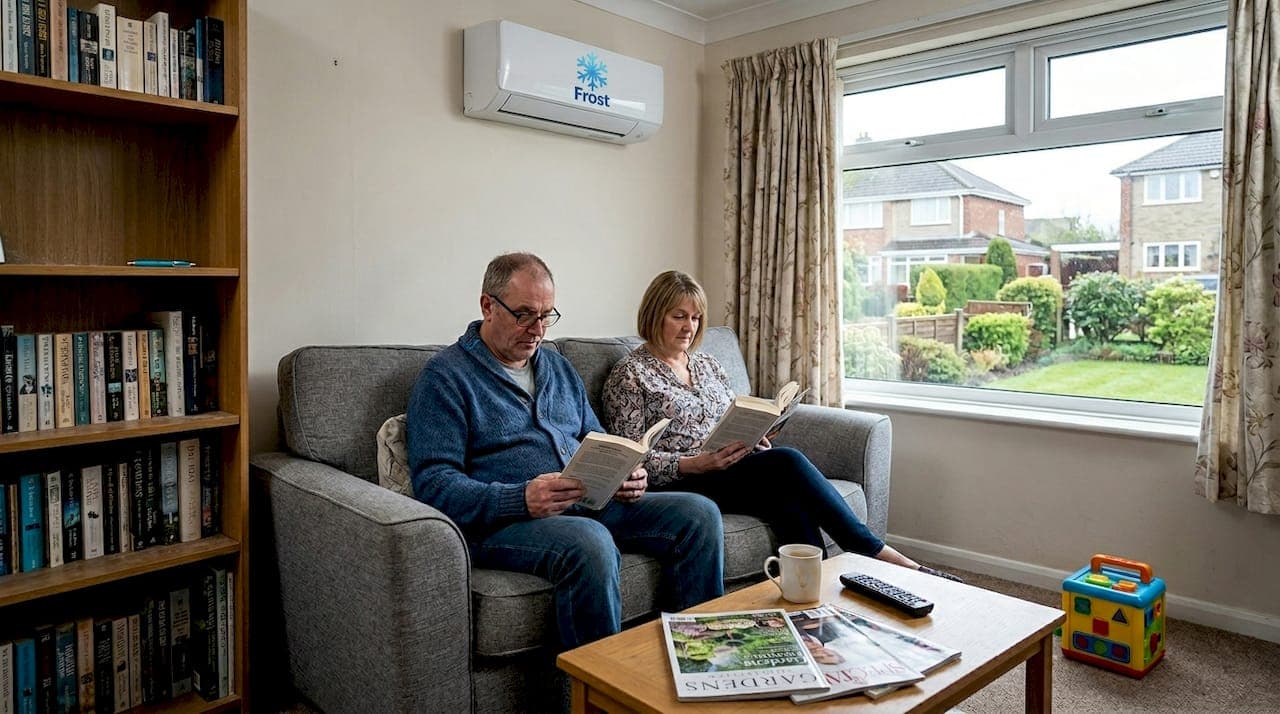
Choosing the right air conditioning for a home in Devon or Cornwall is genuinely tricky. The weather here swings from muggy coastal summers to damp, grey winters, and that variability matters enormously when picking a system. A unit that works brilliantly in a new-build flat in Manchester may be the wrong fit entirely for a stone cottage near Falmouth or a Victorian terrace in Exeter. This guide walks you through the main AC types available to UK homeowners, what to weigh up before you buy, and which solutions tend to work best for homes across the South West.
Table of Contents
- How to choose the right type of air conditioning
- Overview of main air conditioning types
- Head-to-head comparison: Which system suits your home?
- Expert tips: Getting the most from your new system
- The big mistake: Overlooking local climate and zoning
- Next steps: Find your ideal home air conditioning solution
- Frequently asked questions
Key Takeaways
| Point | Details |
|---|---|
| Consider local climate needs | Choose systems that work in Devon and Cornwall’s mild, sometimes humid conditions for best comfort and reliability. |
| Split and multi-split lead | Ductless split or multi-split systems are most efficient and flexible for UK homes, especially with inverter tech. |
| F-gas certification is essential | Only use F-gas certified engineers to ensure legal, safe, and reliable installation and servicing. |
| Match system to usage | Zoning allows you to cool only rooms that need it, cutting energy bills and boosting control. |
How to choose the right type of air conditioning
Before looking at specific systems, it pays to step back and think about what your home actually needs. The size of your property matters, but so does how well it holds heat. A poorly insulated home in a coastal village will lose cooled air fast, making an underpowered system work overtime and costing you more in running costs.
Here are the key criteria worth evaluating before committing to any system:
- Home size and layout: Larger or multi-storey homes benefit from multi-zone systems rather than a single unit.
- Insulation quality: Better insulation means a smaller, cheaper system can do the job effectively.
- Installation complexity: Some systems need ducting or structural work; others go up in a single afternoon.
- Energy efficiency rating: Look for systems with high SEER or SCOP ratings to keep bills manageable.
- Noise levels: Bedrooms and home offices need quieter units.
- Control flexibility: Smart thermostats and app controls add real day-to-day convenience.
Local factors make a meaningful difference here in Devon and Cornwall. Coastal humidity is a genuine issue. Heat pumps excel in mild UK climates for both heating and cooling, whereas evaporative coolers perform poorly in the humid conditions you find across much of Cornwall. Zoning in multi-split systems also helps avoid overcooling rooms you rarely use, which is a common and avoidable waste.
If your home is listed or sits within a conservation area, check with your local authority before fitting external units, as permitted development rules can apply. Installer availability matters too. Working with a local, F-gas certified engineer who understands the South West's quirks is far better than relying on a national contractor unfamiliar with your area.
Pro Tip: Multi-zone control in a multi-split system lets you cool the living room and bedroom independently, so you are not spending money chilling an empty spare room all day.
When reviewing HVAC system types, it quickly becomes clear that no single option suits every home. The right starting point is always an honest assessment of your property before browsing brochures.
Overview of main air conditioning types
With your priorities mapped out, here is a plain-English rundown of the systems you will encounter when shopping for air conditioning solutions for UK homes.
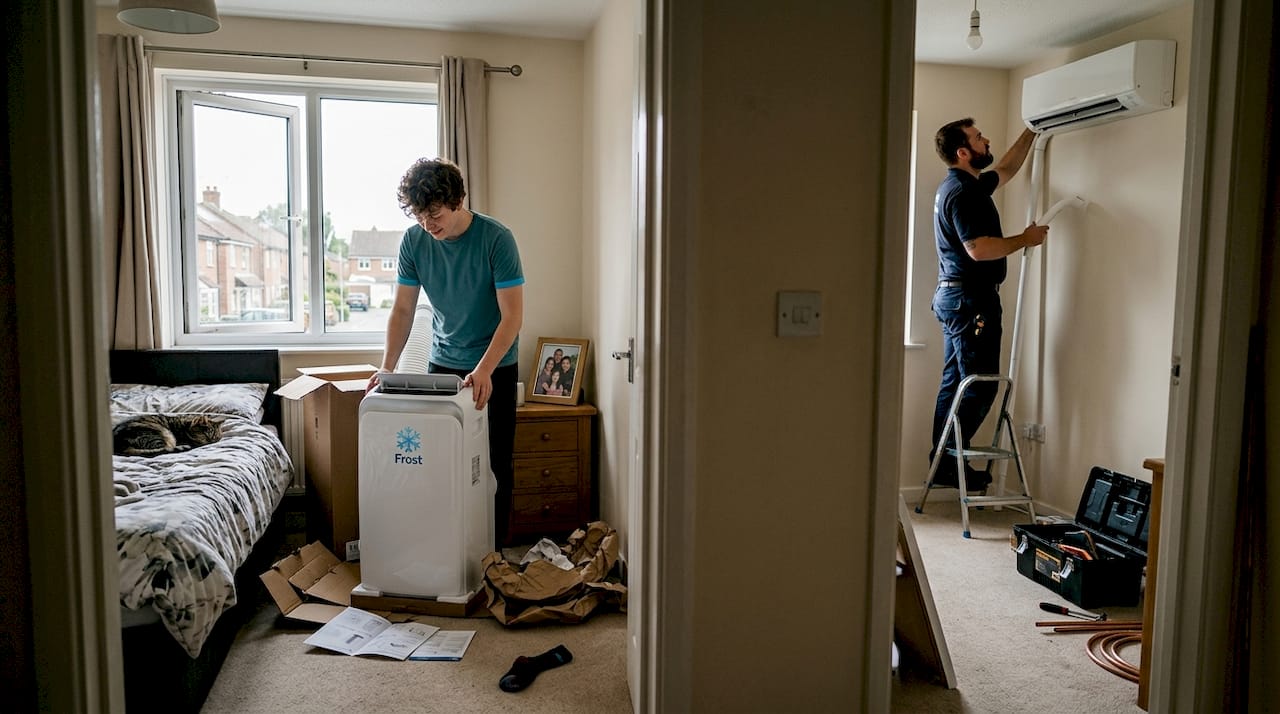
Wall-mounted split system: One indoor unit, one outdoor unit. Clean, quiet, and popular across the South West. Great for single rooms or open-plan living spaces.
- Pros: Efficient, relatively affordable, low noise, fast installation.
- Cons: Cools one zone only per unit.
Ductless multi-split system: One outdoor unit connected to multiple indoor units. Ideal for larger homes or those needing cooling across several rooms.
- Pros: Flexible zoning, one outdoor unit, energy efficient.
- Cons: Higher upfront cost, more complex installation.
Ducted central system: Distributes air through hidden ductwork. Works best in new builds where ducts can be planned in from the start.
- Pros: Invisible, whole-home coverage.
- Cons: Expensive to retrofit, not practical in older Devon or Cornwall properties.
Portable units: Freestanding and requiring no permanent installation.
- Pros: No fitting required, movable.
- Cons: Noisy, inefficient, and less effective in larger rooms.
Window units: Common in the US but rarely seen in UK homes.
- Pros: Self-contained.
- Cons: Visually intrusive, not suited to standard UK sash or casement windows.
Evaporative coolers: Use water evaporation rather than refrigerant to cool air.
- Pros: Cheap to run, no refrigerant needed.
- Cons: Completely ineffective in humid climates.
"Window units and evaporative coolers are rarely used in UK residential settings. Wall-mounted and multi-split systems dominate because they suit the British climate, building stock, and planning constraints far better."
Main AC system types range from these compact wall units through to large commercial ducted systems, but for most Devon and Cornwall homeowners, the split and multi-split options represent the most practical and cost-effective route. Always insist on an F-gas certified installer. Handling refrigerants without certification is illegal in the UK, and a poor installation can void your warranty overnight.
Head-to-head comparison: Which system suits your home?
Now let us put the main options side by side so you can see at a glance which system lines up with your situation.
| System | Installation difficulty | Typical cost | Energy efficiency | Suits humid climate? | Zoning control |
|---|---|---|---|---|---|
| Wall-mounted split | Low | £800 to £1,500 | High | Yes | Single zone |
| Multi-split | Medium | £2,000 to £4,500 | High | Yes | Multi-zone |
| Ducted central | High | £4,000 to £8,000+ | Medium to high | Yes | Whole home |
| Portable unit | None | £200 to £600 | Low | Partially | None |
| Evaporative cooler | Low | £100 to £400 | Medium | No | None |
The table makes a few things obvious. Portable units and evaporative coolers look attractive on price, but the efficiency and performance trade-offs are significant. For the humid summers typical across Cornwall, evaporative coolers are essentially useless. The vapour-compression refrigeration cycle used in split systems works by evaporating refrigerant indoors to absorb heat, compressing it, releasing that heat outdoors, then expanding the refrigerant to start again. This cycle is highly efficient and handles real-world humidity far better than evaporative technology.
For most South West homeowners, the wall-mounted split is the sweet spot: affordable, efficient, and quick to fit. If you have a larger property or want to cool multiple rooms without multiple outdoor units, a multi-split system is worth the extra investment. Ducted systems make sense only if you are building new or doing an extensive renovation where hiding ductwork is practical.
For a closer look at options and system comparisons, the differences in real-world running costs become even clearer when you factor in local energy prices. A wall-mounted split installation from a certified local engineer will typically be up and running far faster than a ducted alternative, with less disruption to your home.
Expert tips: Getting the most from your new system
Once you have chosen your system, a few smart decisions at the installation stage will save you money and hassle for years to come.
Inverter technology is worth every penny. Standard compressors run at full speed or not at all, which wastes energy. Inverter compressors modulate capacity for better efficiency at part-load, meaning the system ramps up and down based on demand rather than hammering away constantly. The result is lower bills, quieter operation, and a longer lifespan for the unit.
Opt for low-GWP refrigerants where possible. R32 and R1234ze have significantly lower global warming potential than older refrigerants. They may need minor system adjustments but are increasingly standard in new installations and better for the environment long term.
Here are five steps to maximise efficiency from day one:
- Set your temperature sensibly. Aiming for 21 to 24 degrees Celsius is comfortable and avoids unnecessary strain on the unit.
- Use timer functions. Pre-cool rooms before you arrive home rather than running the system continuously.
- Keep filters clean. Dirty filters reduce airflow and make the unit work harder. Check them every six to eight weeks.
- Close doors and windows. Sealed rooms cool faster and hold temperature more effectively.
- Book annual servicing. A well-maintained system runs more efficiently and has a longer operational life.
Pro Tip: Ask your installer about same-day fitting and 0% finance options. Getting your system installed quickly in a summer heatwave does not have to mean stretching your budget all at once.
Working with F-gas certified installers is not just a legal requirement; it is the only way to guarantee the system is set up correctly, the refrigerant is handled safely, and your warranty remains valid.
The big mistake: Overlooking local climate and zoning
Here is something national buying guides rarely tell you. The biggest regrets we see from homeowners in Devon and Cornwall are not about brand choice or budget. They are about ignoring local specifics. A customer buys a system recommended in a national magazine, fitting a single unit for the whole downstairs of a large farmhouse near Truro, and then wonders why one end of the room is freezing and the other barely cool.
Local humidity does not just affect evaporative coolers. It influences how hard any refrigerant-based system has to work, and which placement and airflow direction will actually serve you in practice. The South West's climate is mild but damp. That combination rewards systems designed for part-load efficiency, which means inverter-driven splits, sized correctly for your specific rooms.
Zoning matters more than most people expect. Older Devon properties with solid stone walls, high ceilings, and uneven room layouts behave very differently from modern builds. A single-zone system may be perfect for a flat but woefully inadequate for a three-bedroom cottage. The lesson is straightforward: get advice from someone who knows South West homes, not just someone who knows air conditioning in general.
Next steps: Find your ideal home air conditioning solution
If you have read this far, you already have a strong foundation for choosing the right system. The next step is getting the right people to advise and install it.

Frost Air Conditioning is an Exeter-based team of F-gas certified engineers covering Devon, Cornwall, and the wider South West. Whether you need a single wall-mounted split for a bedroom or a multi-zone system for a larger home, the team offers expert guidance, same-day installations where possible, and 0% finance options to spread the cost comfortably. You can get a free quote today and have a system specified, installed, and running far sooner than you might expect. No guesswork, no national call centres, just local expertise.
Frequently asked questions
Which type of air conditioning is most efficient for UK homes?
Ductless split and multi-split systems with inverter compressors offer top efficiency for most UK homes, as inverter compressors modulate capacity to match actual demand rather than running at full load unnecessarily.
Do I need planning permission for air conditioning in Devon or Cornwall?
Usually not, but always check for listed building status or conservation area restrictions before fitting any external units, as permitted development rules may apply.
Are evaporative coolers suitable for Cornish weather?
No. High local humidity dramatically reduces their effectiveness, making them a poor investment for the wet, coastal conditions found throughout much of Cornwall.
What does F-gas certification mean for air conditioning installers?
F-gas certified engineers are legally authorised to handle refrigerants in the UK and must demonstrate safe installation and recovery procedures to hold this qualification.
How does the standard air conditioning cycle work?
Most systems use a vapour-compression cycle: refrigerant evaporates to absorb indoor heat, is compressed, releases heat outdoors, then expands and repeats the process continuously.