
Most homeowners in Devon and Cornwall buy an air conditioning unit expecting it to cool things down in July. What they do not expect is for that same unit to keep them warm on a damp February morning. Yet that is exactly what a reverse cycle system does, and it does it more efficiently than most people realise. As energy bills remain a pressing concern across the South West, understanding how this technology actually works could change the way you think about heating and cooling your home for good.
Table of Contents
- What does reverse cycle mean in air conditioning?
- How reverse cycle aircon delivers efficient heating and cooling
- Key installation factors for maximum system efficiency
- Comparing reverse cycle with other climate solutions for Devon and Cornwall
- Why reverse cycle aircon is the smart choice for UK homes
- Explore efficient climate control with Frost
- Frequently asked questions
Key Takeaways
| Point | Details |
|---|---|
| Dual function | Reverse cycle aircon provides both heating and cooling for year-round comfort. |
| Energy efficiency | Modern systems deliver up to 92% of rated efficiency even in humid UK winters. |
| Install quality matters | Proper sizing and installation can prevent 15–30% efficiency loss. |
| Suitable for UK climate | Reverse cycle units outperform electric heaters in most Devon and Cornwall conditions. |
| Smart long-term investment | Choosing reverse cycle aircon saves energy and adapts to changing British weather. |
What does reverse cycle mean in air conditioning?
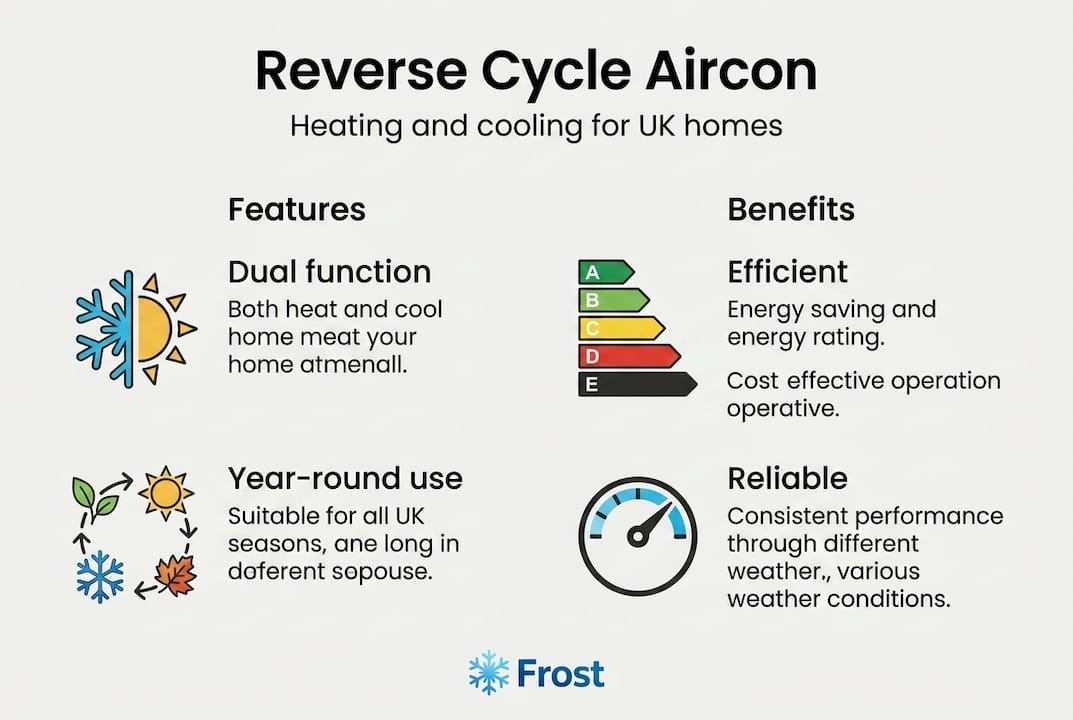
The term "reverse cycle" simply means the system can run in two directions: cooling your home in summer, and heating it in winter. Unlike a standard air conditioning unit that only removes warm air from inside your home, a reverse cycle system uses a heat pump mechanism to move warmth from one place to another depending on the season.
In winter, the unit extracts heat energy from the outside air, even when it feels cold, and transfers it inside. In summer, it reverses the process, pulling heat out of your rooms and expelling it outside. This is fundamentally different from an electric bar heater or a gas boiler, which generate heat by burning fuel or using electrical resistance. A reverse cycle system moves heat rather than creates it, which is why heat pump systems provide both heating and cooling functions so effectively.
Here is what sets reverse cycle aircon apart from other options:
- Dual function: One system handles both heating and cooling, removing the need for a separate boiler or electric heater in most rooms.
- Heat pump technology: Moves heat energy rather than generating it, making it far more efficient per unit of electricity used.
- Year-round usability: Suitable for the UK's variable climate, including the mild but wet winters typical of Devon and Cornwall.
- Precise temperature control: Modern units let you set exact temperatures rather than rough settings like low, medium, or high.
- Quiet operation: Split-system units are significantly quieter than older storage heaters or noisy portable fans.
If you are exploring the types of air conditioning available for your home, reverse cycle systems are generally the most versatile choice for the South West's climate. They are particularly well suited to homes where both summer cooling and winter warmth are genuine priorities, rather than just one or the other.
The key distinction to remember is this: standard aircon cools, reverse cycle aircon does both. That flexibility is what makes it worth understanding properly before you invest.
How reverse cycle aircon delivers efficient heating and cooling
Knowing what reverse cycle means is one thing. Knowing how well it actually performs in a Devon or Cornwall home is quite another.
Modern inverter models achieve SEER2 ratings of 14 to 22 for cooling and strong HSPF2 ratings for heating, with field efficiency typically reaching 85 to 92 percent of the manufacturer's stated figures. In plain terms, that means the unit delivers roughly nine tenths of the performance promised on the spec sheet in real home conditions.
| Performance metric | Manufacturer rating | Real-world field result |
|---|---|---|
| Cooling efficiency (SEER2) | 14 to 22 | 12 to 20 |
| Heating efficiency (HSPF2) | High | 85 to 92% of rated |
| Efficiency vs electric heater | N/A | 2 to 4 times more efficient |
| Optimal operating temperature | Above 7°C | Effective down to minus 15°C |
One factor that catches homeowners off guard is the defrost cycle. In cold, humid conditions, frost builds up on the outdoor unit's coil. The system periodically reverses briefly to melt this frost. During that short cycle, the air from your indoor unit may feel cooler than expected for a minute or two. In Devon and Cornwall winters, where humidity is high, defrost cycle impacts can occur every 45 to 120 minutes. It sounds alarming, but in practice the comfort loss is minimal.
Did you know? A reverse cycle system can deliver up to four units of heat energy for every one unit of electrical energy it consumes. That ratio is what drives the significant savings on heating bills.
Efficiency does dip below freezing, but the South West rarely sees sustained sub-zero temperatures, which means your system will spend most of its working life in its most efficient range. Understanding aircon in UK winter conditions is genuinely reassuring once you see the numbers.
Pro Tip: If you notice your system running defrost cycles more often than usual, check indoor humidity levels. Running a dehumidifier alongside your aircon during the dampest months can reduce defrost frequency and keep efficiency stable.
Key installation factors for maximum system efficiency
Even the best reverse cycle unit on the market will underperform if it is installed poorly. This is the part of the conversation many salespeople skip, and it is where homeowners often lose money.
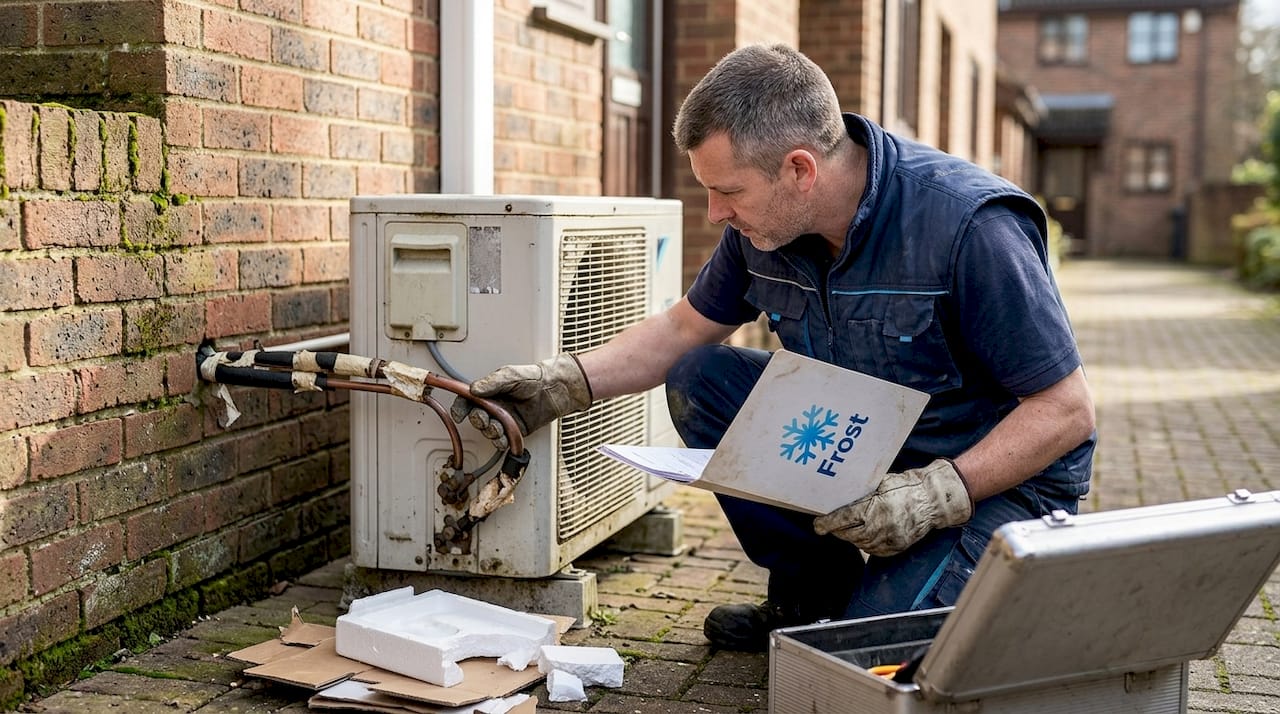
According to independent analysis, poor installation reduces efficiency by 15 to 30 percent, which can wipe out much of the cost saving you expected. That is not a small margin. Over five years, a poorly installed system could cost you hundreds of pounds more in running costs than a correctly installed one.
Here are the key steps that make the real difference:
- Correct sizing: A unit that is too small struggles to heat or cool your space. One that is too large short cycles, switching on and off repeatedly, which wastes energy and wears components faster.
- Proper placement: The outdoor unit needs adequate airflow around it. Tucking it behind a fence or in a corner reduces performance and risks overheating.
- Insulation check: Reverse cycle systems work harder in poorly insulated homes. Loft insulation, draught-proofing, and double glazing dramatically reduce the load on your unit.
- Refrigerant charge: Incorrect refrigerant levels are one of the most common installation errors. Even a small deviation affects efficiency significantly.
- Regular servicing: Annual checks keep filters clean, coils clear, and refrigerant levels correct, preventing the gradual decline in performance that many homeowners mistake for system age.
"The biggest downsides of reverse cycle systems are rarely about the technology itself. They are almost always the result of an undersized unit, a rushed installation, or a homeowner who skips the annual service."
Pro Tip: Always ask your installer for a written sizing calculation, not just a rough estimate based on room size. A proper calculation accounts for ceiling height, insulation quality, window area, and orientation.
For professional installation advice specific to South West homes, working with a local F-Gas certified installer who knows Devon and Cornwall's building stock makes a real difference to long-term performance.
Comparing reverse cycle with other climate solutions for Devon and Cornwall
With the installation factors clear, the next question most homeowners ask is whether reverse cycle is genuinely better than what they already have.
| System type | Heats? | Cools? | Efficiency | Typical running cost |
|---|---|---|---|---|
| Reverse cycle aircon | Yes | Yes | Very high | Low |
| Electric resistance heater | Yes | No | Low | High |
| Gas boiler | Yes | No | Medium | Medium |
| Portable fan or evaporative cooler | No | Partial | Low | Low |
| Standard split aircon | No | Yes | High (cooling only) | Medium |
The contrast with electric resistance heating is stark. Efficiency drops below 0°C but reverse cycle remains more effective than electric resistance heating at virtually every temperature Devon and Cornwall experiences. Electric heaters convert one unit of electricity into one unit of heat. A reverse cycle system converts one unit of electricity into two to four units of heat, depending on outdoor conditions.
Here is a quick guide to choosing the right option for your situation:
- Choose reverse cycle if you want year-round comfort from a single system, want to reduce heating bills, or are replacing an old storage heater or electric panel heater.
- Keep your gas boiler for wet heating (radiators and hot water) but consider reverse cycle for living rooms and bedrooms where comfort matters most.
- Avoid portable fans for anything other than very short-term use. They are inefficient and do nothing for the damp chill of a Cornish winter morning.
- Consider reverse cycle over a standard split system if you want winter value from your investment, not just summer cooling.
For Devon and Cornwall specifically, the mild but unpredictable climate makes reverse cycle vs alternatives a clear conversation. A system that handles the warm bank holiday weekend in May and the wet grey weeks in November is simply more practical than one built for a single season.
Why reverse cycle aircon is the smart choice for UK homes
After years of installing systems across Exeter and the wider South West, one pattern stands out clearly. The homeowners who get the most value from their reverse cycle units are not those who bought the most expensive model. They are the ones who invested properly in the installation and took insulation seriously.
There is still a widespread belief in the UK that air conditioning is a luxury item for hot countries. That perception is genuinely outdated. The technology has advanced dramatically, and a modern reverse cycle unit is arguably one of the most practical home improvements available to a Devon or Cornwall homeowner right now.
The contrarian truth is this: the technology almost never fails you. What fails you is a poorly sized unit installed by someone who does not understand the specific characteristics of older South West housing stock, which often has solid walls, limited loft access, and high natural humidity. The right local installer, looking at real installation stories from similar properties nearby, is worth far more than saving a few hundred pounds by going with the cheapest quote.
Reverse cycle is not a gadget. It is a genuine year-round climate solution, and the South West's climate is arguably one of the best in the UK for getting the most from it.
Explore efficient climate control with Frost
If you are ready to move from understanding reverse cycle aircon to actually experiencing it in your home, Frost Air Conditioning is here to help. Based in Exeter, we cover Devon, Cornwall, and the wider South West, offering F-Gas certified installations with same-day availability where needed.

We offer 0% finance options so the cost does not have to stand between you and year-round comfort. Whether you are replacing old heating, adding summer cooling, or starting fresh, explore our home aircon solutions or take the first step and get a quote today. The right system, installed correctly, makes a difference you will feel every single day.
Frequently asked questions
Is reverse cycle air conditioning suitable for Devon and Cornwall's climate?
Yes, reverse cycle systems are designed to handle both warm summers and damp, chilly winters. In fact, UK humidity increases defrost frequency in cold months but overall efficiency remains high, making these systems well matched to the South West.
Do reverse cycle systems use less energy than electric heaters?
Reverse cycle aircon uses significantly less energy than electric resistance heating at virtually all temperatures. Efficiency drops below 0°C but even then, reverse cycle outperforms electric resistance heaters, which have no heat pump advantage at all.
How often does defrosting affect heating performance?
In humid UK winters, defrost cycles occur roughly every 45 to 120 minutes. Each cycle lasts only a couple of minutes and causes a brief delivery of cool air, but no meaningful loss of room comfort over the course of a day.
What should I check before installing a reverse cycle aircon?
Prioritise correct sizing, good insulation, and a qualified local installer. As independent analysis confirms, poor installation reduces efficiency by 15 to 30 percent, which makes choosing the right installer just as important as choosing the right unit.