
Most homeowners in Devon and Cornwall assume that sorting out home climate control means buying an air conditioning unit and having it fitted. The reality is quite different. True climate control covers temperature, humidity, air quality, and the way your home's structure interacts with every system you install. Get it right and you'll have a comfortable, efficient home with manageable bills year round. Get it wrong and you'll spend more than necessary while never quite feeling comfortable, whatever the season.
Table of Contents
- What does climate control mean for UK homes?
- How home climate control systems work
- Benefits and drawbacks: comfort, costs, and the environment
- Energy efficiency and installation: what makes climate control effective?
- Why smart climate control is more than buying a box: an expert view
- Start your journey to better home climate control
- Frequently asked questions
Key Takeaways
| Point | Details |
|---|---|
| Climate control defined | Climate control involves more than just air conditioners—it's about managing temperature, humidity, and air quality through integrated home systems. |
| Efficiency comes from integration | Professional installation, smart controls, and insulation work together to maximise comfort and reduce energy waste in Devon and Cornwall homes. |
| Consider comfort and environmental impact | While climate control delivers comfort, it’s important to balance costs, energy use, and greener choices. |
| Local support matters | Get tailored advice and installations from experts familiar with South West homes for the best results. |
What does climate control mean for UK homes?
Climate control is the management of temperature, humidity, and air quality inside your home. It is not a single device or system. It is a combination of heating, cooling, ventilation, and controls working together within the fabric of your building.
In British homes, especially the older stone and solid-wall properties common across Devon and Cornwall, this is more nuanced than in newer builds. The range of solutions available includes:
- Radiator-based central heating running from a gas or oil boiler
- Underfloor heating, either wet or electric
- Standalone electric heaters, useful for supplementary warmth
- Air conditioning systems, which can cool in summer and heat in winter via reverse-cycle operation
- Air-source heat pumps, which heat pumps and air conditioners are commonly used for in the UK, with the added benefit that reverse-cycle models provide both heating and cooling
Each of these options interacts with your home's insulation, draught proofing, and ventilation. A system that works beautifully in a well-insulated new build may perform poorly in a draughty Victorian terrace without any fabric improvements first.
| System type | Primary function | Typical running cost | Best suited for |
|---|---|---|---|
| Gas/oil central heating | Heating only | Medium | Older homes with existing pipework |
| Air-source heat pump | Heating and cooling | Low to medium | Well-insulated properties |
| Split-system air con | Cooling and heating | Low to medium | Rooms needing year-round comfort |
| Electric storage heaters | Heating only | Medium to high | Properties without gas supply |
Modern climate control also requires proper commissioning, meaning the system is set up, tested, and calibrated after installation rather than simply switched on. Smart thermostats and zoned controls allow you to manage different rooms separately, cutting waste and improving comfort. Ventilation matters too, because a sealed, warm house without adequate fresh air exchange can cause condensation and poor indoor air quality.
"Energy-efficiency programmes for existing homes in Devon and Cornwall often combine fabric improvements with heating system upgrades, including air-source heat pumps and heating controls, following PAS 2035/2030:2023 processes."
This means that in the South West, the best approach to climate control almost always begins with looking at your home's insulation and draught proofing before or alongside any new system installation. Explore the range of air conditioning options available for UK homes to understand where a modern air conditioning system might fit into your overall plan.
How home climate control systems work
Once you understand the components involved, it helps to see how they function as a single, connected system rather than independent parts.
A modern climate control setup in a UK home typically includes four core elements:
- The primary source of heating or cooling, such as a heat pump, air conditioning unit, or boiler
- The distribution system, which moves conditioned air or water through the home via ducts, fan coil units, or radiators
- The controls, including thermostats, smart home integration, and zone controllers that tell the system what to do and when
- Ventilation, which ensures fresh air enters the home and stale, humid air is removed
The full system, including thermostat strategy, ventilation management, and commissioning quality, determines comfort and energy efficiency outcomes far more than the brand of unit you choose.
Here is how a well-commissioned system actually responds in practice:
- Your smart thermostat reads the indoor temperature and compares it to your set target
- It signals the primary unit to start heating or cooling
- The distribution system carries conditioned air or water to the relevant zones
- Ventilation runs continuously or intermittently to maintain air quality
- The thermostat monitors the space and signals the unit to modulate or stop when the target is reached
- Over time, smart systems learn your patterns and pre-condition the home before you need it
| Feature | Basic installation | Smart, commissioned system |
|---|---|---|
| Temperature accuracy | Within 2 to 3 degrees | Within 0.5 degrees |
| Energy waste | Higher due to on/off cycling | Lower due to modulation |
| Running costs | Typically 15 to 25% higher | Optimised and trackable |
| User control | Manual thermostat only | App, voice, automated scheduling |
For modern home air conditioning in new or recently renovated properties, this level of integration is increasingly standard. Older homes require more planning to achieve the same results, but the long-term savings and comfort improvements justify the investment.
Pro Tip: Before upgrading to a smart system, make sure your existing controls are compatible or budget for replacement. A well-programmed smart thermostat can cut energy use by 10 to 15% on its own, without changing the primary heat or cool source at all. Pairing smart controls with integrated comfort systems gives you the best possible outcome.
Benefits and drawbacks: comfort, costs, and the environment
Once the system components come together, it is worth being clear about what you genuinely gain and what you take on when you invest in a full climate control setup.
Benefits you can actually feel:
- Consistent temperatures throughout the year, not just in winter
- Humidity control, which reduces condensation, mould risk, and that sticky summer feeling
- Improved indoor air quality in systems with built-in filtration, particularly useful for allergy sufferers
- Quiet, efficient cooling during summer heat events, which are becoming more frequent in the South West
- The ability to heat efficiently even on cold days using a reverse-cycle heat pump
Air conditioning can cool and manage indoor humidity, but trade-offs exist between precise comfort control and higher running costs, upfront installation costs, and environmental considerations including refrigerant management.
Drawbacks to plan for:
- Upfront installation costs for a quality split-system start from around £1,500 to £3,000 per room depending on specification
- Running costs rise if the home is poorly insulated, because you are cooling or heating the outdoors as much as the indoors
- Refrigerant leaks are a genuine environmental concern, which is why F-Gas certification for installers matters
- Air conditioning can increase electricity demand, especially during summer peaks
The single most overlooked factor in this equation is insulation. A home in Exeter or Truro with poor loft insulation and draughty windows will see its climate control system work constantly and expensively to compensate. Addressing insulation often cuts the running cost of any new system by 20 to 30% before you even switch it on.

Read more about pros and cons locally to see how Devon and Cornwall homes specifically compare.
Pro Tip: If you are planning a new air con or heat pump installation, get a basic energy assessment first. Even simple measures like loft insulation top-up and draught-proofing external doors can be done in a day and will meaningfully reduce your system's ongoing running costs. Explore efficiency and comfort options to see which combination suits your home best.
Energy efficiency and installation: what makes climate control effective?
The practical reality of getting a climate control system to actually perform is where many homeowners in Devon and Cornwall find themselves disappointed. The unit looked right on paper. The price seemed fair. But the bills are higher than expected and one room is never quite the right temperature.
In most cases, the problem lies in how the system was specified and installed, not what was installed.
Improperly installed residential HVAC systems can consume 20 to 30% more energy than a correctly commissioned equivalent. In a home spending £1,200 a year on climate control, that is £240 to £360 wasted every single year simply because the installation was not done properly.
Follow this sequence when planning a new installation:
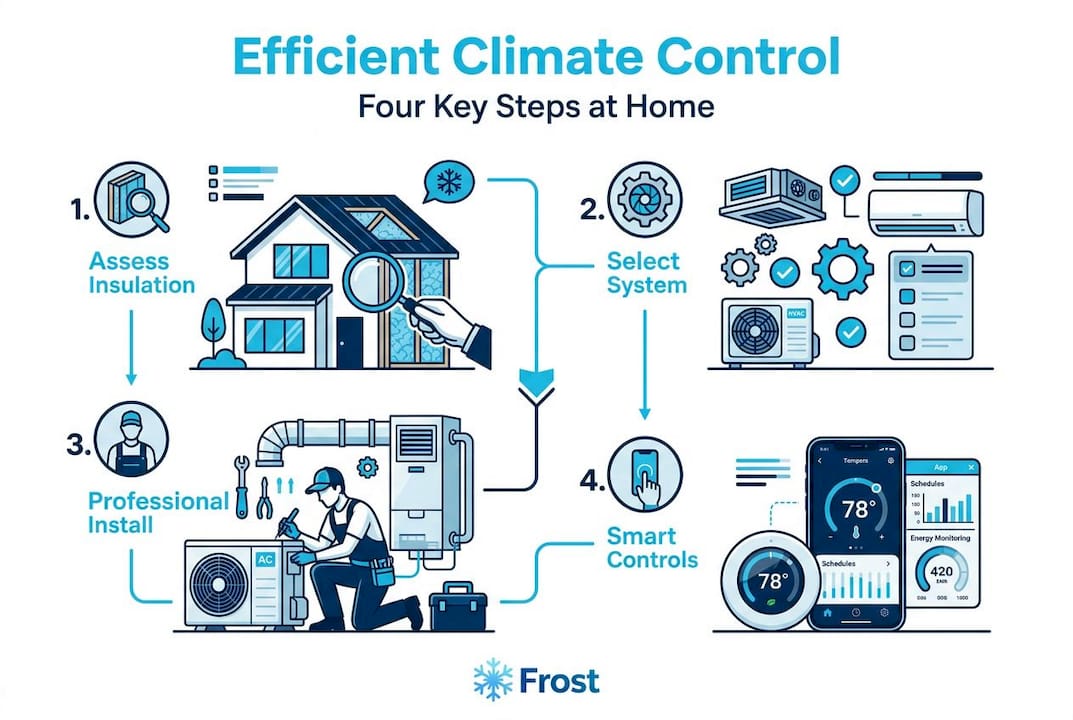
- Assess your home's fabric first. Check loft insulation depth, wall insulation, window quality, and obvious draught sources. The Warm Homes Local Grant for Devon and Cornwall follows PAS 2035/2030:2023 processes, combining fabric improvements with system upgrades as standard.
- Size the system correctly. An oversized unit short-cycles constantly, wasting energy and wearing out faster. An undersized unit runs continuously and never achieves target temperature. A qualified installer calculates the correct output based on your room volumes and insulation levels.
- Choose controls that suit your life. A smart thermostat with scheduling and zone control will outperform a basic on/off switch regardless of the primary unit's efficiency rating.
- Commission the system properly after installation. This means testing refrigerant charge, airflow, thermostat calibration, and control sequences before signing off.
- Schedule annual servicing. An F-Gas certified engineer checks refrigerant levels, cleans filters, and verifies performance every year.
| Step | DIY or basic install | Professional, commissioned install |
|---|---|---|
| System sizing | Estimated or guessed | Calculated from room data |
| Refrigerant charge | Not verified | Checked and corrected |
| Thermostat setup | Basic default settings | Calibrated and programmed |
| Energy use | Up to 30% higher | Optimised from day one |
"Energy-efficiency programmes in the South West combine fabric improvements with heating system upgrades following PAS 2035/2030:2023, recognising that the building fabric and the heating or cooling system must be addressed together."
The result of getting this sequence right is a system that delivers consistent comfort, runs efficiently, and costs less over its lifetime. Boosting efficiency at home starts with this foundation. For homeowners across the region, investing in domestic systems in the South West that are properly specified and commissioned is the difference between a good experience and a frustrating one.
Why smart climate control is more than buying a box: an expert view
Here is something the marketing brochures for air conditioning systems rarely tell you. The unit itself is almost the least important part of the decision.
Walk into any showroom or browse any website and you will be presented with specifications, seasonal efficiency ratings, and noise levels. These things matter, but only once the bigger questions are answered. What is the insulation like? How are the controls configured? Has the system been properly commissioned? Is there adequate ventilation?
In Devon and Cornwall, we see this play out regularly. A homeowner installs a well-regarded inverter unit in a granite-walled cottage. Three months later they are frustrated because it is not performing as expected. The problem is almost never the unit. It is that the solid stone walls are losing heat faster than the system can replace it, or the controls were left on factory defaults, or the installer fitted the unit and left without commissioning it properly.
The full system, including thermostat and control strategy, ventilation management, and commissioning quality, is what determines comfort and energy efficiency. This is the part of the conversation that most installers avoid because it takes more time and expertise to get right.
Our view is that the best investment you can make before choosing any climate control system is a genuine conversation with an installer who asks about your walls, your windows, and your typical usage patterns before recommending anything. If the first question you are asked is "how many rooms?", keep looking. See also how climate shapes your air conditioning choices in the South West specifically.
A well-planned system with proper controls, installed in a well-prepared home, will outperform an expensive unit dropped into a poorly considered situation every single time. That is the honest truth of climate control in British homes.
Start your journey to better home climate control
Understanding climate control is the first step. Taking action is the second, and it does not have to be complicated or expensive to begin.

Frost Air Conditioning are local specialists based in Exeter, covering Devon and Cornwall with expert advice, professional installation, and genuine aftercare. Whether you are considering a first installation, upgrading an older system, or simply want to know whether your current setup is running efficiently, the team can help. All installations are carried out by F-Gas certified engineers, same-day installs are available, and 0% finance options make it straightforward to invest in your home's comfort without a large upfront payment. Get a free quote and find out exactly what a properly planned climate control system could do for your home.
Frequently asked questions
Is climate control only about air conditioning?
No. Climate control includes heating, cooling, humidity regulation, and air quality management, typically using multiple devices and controls together. Heat pumps and air conditioners are common components, but the full system also depends on insulation, ventilation, and smart controls.
How can I reduce running costs for my climate control system?
Improving insulation and ensuring correct system installation are the two most effective steps. Improperly installed systems use 20 to 30% more energy than necessary, so commissioning quality directly affects your bills from day one.
Is air conditioning effective in older UK homes?
It can be very effective, but older homes benefit most from insulation and draught-proofing upgrades alongside the installation. Fabric improvements combined with system upgrades are the standard recommended approach for properties in Devon and Cornwall.
What about environmental impact? Are there greener options?
Modern inverter-based systems paired with good insulation reduce energy waste significantly. However, refrigerant leak concerns and increased electricity demand are real considerations. Choosing an F-Gas certified installer and pairing your system with renewable energy where possible reduces the environmental impact further.