
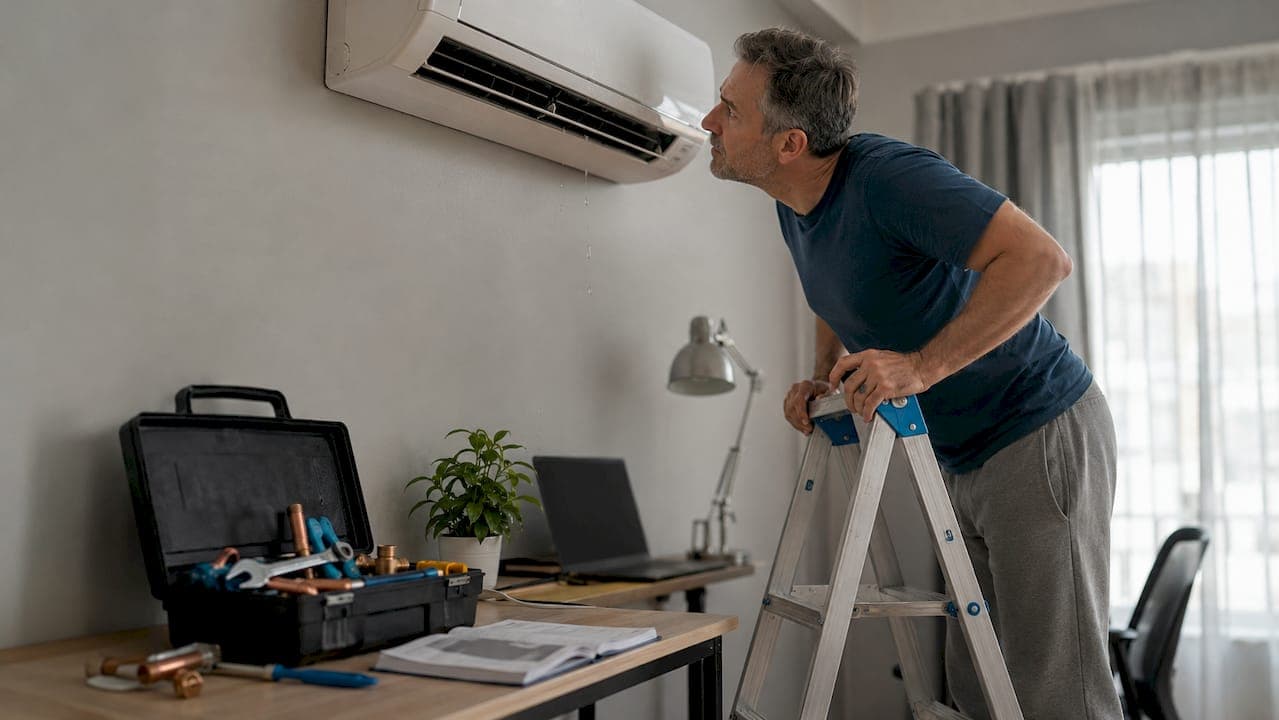
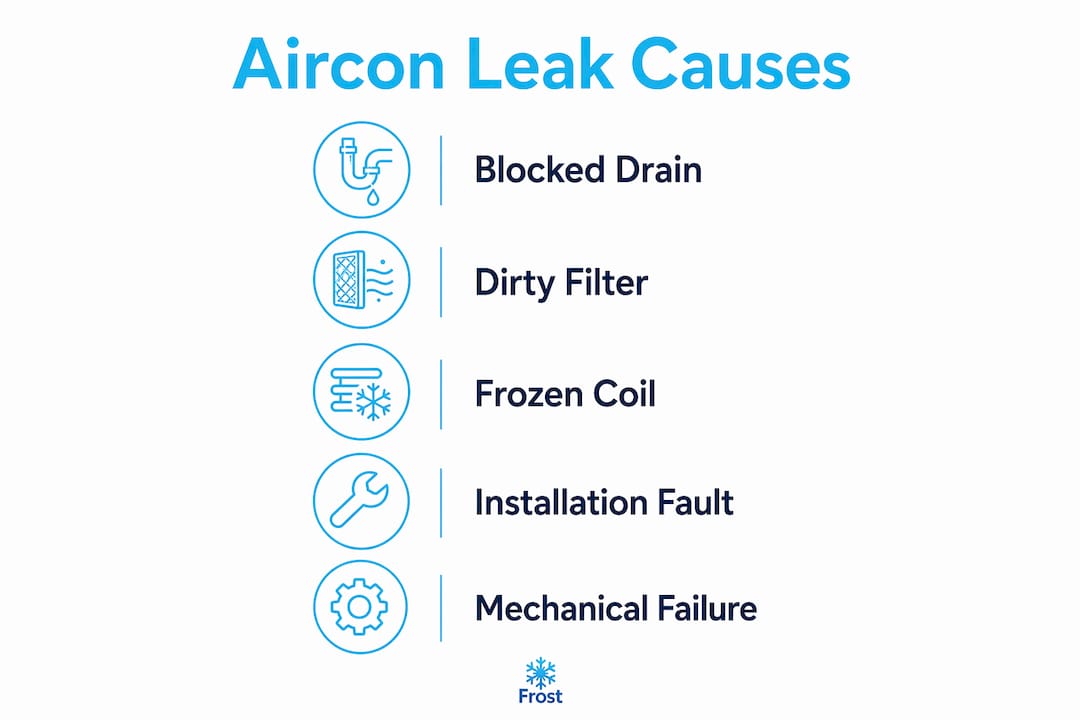
Air conditioners leak water when condensation cannot drain away properly, causing water to overflow inside your home. Understanding what causes aircon leaks is the first step to stopping damage before it spreads. The most common culprits are blocked condensate drain pipes, frozen evaporator coils, dirty air filters, and mechanical faults such as cracked drain pans. Each cause has clear warning signs and, in many cases, a straightforward fix.
What causes aircon leaks? The condensate drain explained
The condensate drain line is the single most common source of aircon leaks. As your unit cools warm air, moisture is pulled from that air and collects on the evaporator coil. That water drips into a drain pan and flows out through a PVC pipe. When that pipe blocks, water has nowhere to go and spills inside your home.
Blocked drainage pipes and dirty filters are the leading causes of indoor AC leaks. Dust, algae, and slime accumulate inside the drain pipe over months of use. The build-up narrows the pipe until water backs up completely.
Signs your condensate drain is blocked:
- Water pooling beneath the indoor unit
- Dripping from the ceiling near the unit
- A musty or damp smell around the air handler
- The unit switching itself off unexpectedly
That last point is worth noting. Modern AC units often carry a secondary safety float switch that cuts power when the drain backs up. Your unit shutting off is not always a fault. It is the system protecting your ceiling and floors from a flood.
Pro Tip: Flush your condensate drain line with a cup of diluted white vinegar every three months. It kills algae before it forms a blockage and costs almost nothing.
For a blocked line, a wet/dry vacuum is your most effective DIY tool. Sealing the vacuum hose to the drain pipe with a wet rag creates an airtight connection that pulls the blockage out cleanly. Without that seal, you draw air rather than the clog. If flushing and vacuuming fail to clear the line, call a technician. A persistent blockage may sit deeper in the pipework or indicate a more serious drainage fault.
How dirty filters cause frozen coils and water leaks
A clogged air filter does more damage than most homeowners realise. When the filter is blocked, airflow across the evaporator coil drops sharply. The coil gets too cold and freezes solid. When the unit cycles off, that ice melts rapidly and produces far more water than the drain pan can handle.
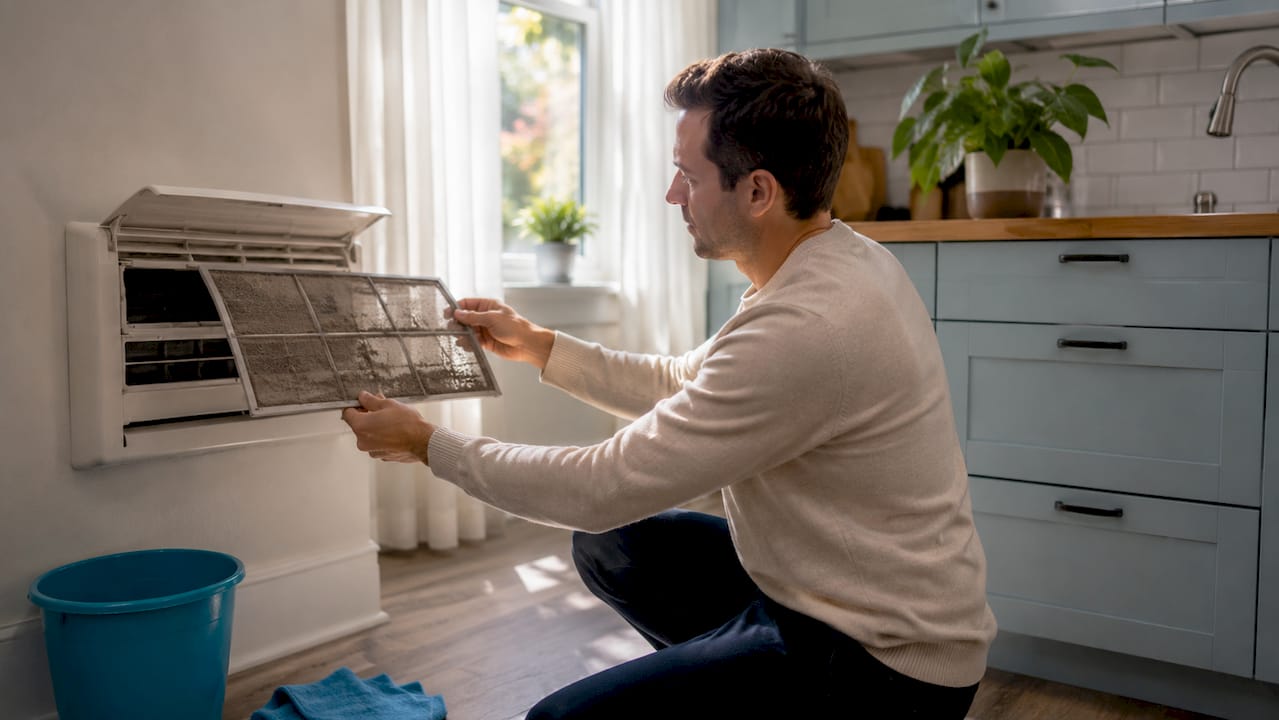
Neglecting air filter maintenance causes evaporator coil freezing and raises energy use by 10–15%. That energy spike often appears on your bill before you notice any dripping. Replacing or cleaning your filter every one to three months prevents both problems.
Signs your filter is dirty or your coil has frozen:
- Reduced airflow from the vents despite the unit running
- Ice visible on the indoor unit or refrigerant pipes
- Water leaking heavily when the unit defrosts
- Higher electricity bills with no change in usage
Low refrigerant is a related cause worth mentioning. When refrigerant levels drop, the coil pressure falls and the coil temperature drops below freezing even with clean filters. Refrigerant handling requires an F-Gas certified engineer and cannot be addressed as a DIY task.
Pro Tip: If you suspect a frozen coil, switch the unit to fan-only mode immediately. Thawing a frozen coil safely takes 2–3 hours. Do not apply heat or run the compressor on a cold setting. Patience here prevents component damage.
Check your filter monthly during heavy use periods such as summer. Hold it up to a light source. If you cannot see light through it, replace it. For ongoing air conditioner maintenance tips that cover filter schedules and coil care, Frostairconditioning publishes practical guidance for homeowners across the South West.
Installation faults and mechanical failures that cause leaks
Not every aircon leak traces back to a dirty filter or blocked pipe. Installation errors and mechanical wear are less common but harder to fix without professional help.
The four main mechanical and installation causes are:
- Incorrect drainage slope. The indoor unit must be angled slightly towards the drain outlet. If the unit sits level or tilts the wrong way, water pools in the drain pan and overflows before reaching the pipe.
- Cracked or corroded drain pan. Drain pans degrade over time. A hairline crack lets water drip directly onto the ceiling or floor below. Poor installation quality and incorrect unit positioning are key contributors to leaks in humid climates like the South West of England.
- Failed condensate pump. Units installed in loft spaces or below the natural drain level use a condensate pump to push water upward and out. When the pump fails, water backs up and leaks.
- Disconnected or loose drain pipe. Vibration over time can loosen pipe joints. A joint that separates inside a wall or ceiling void causes hidden water damage long before you see a drip.
| Fault | Visible sign | DIY fix possible? |
|---|---|---|
| Incorrect unit angle | Water pooling at one end of the unit | No. Requires repositioning by an engineer |
| Cracked drain pan | Dripping below the unit with clear drain line | No. Pan replacement needed |
| Failed condensate pump | Unit shuts off, no water at external outlet | No. Pump replacement required |
| Loose drain pipe joint | Damp patches in walls or ceiling | No. Access and resealing by a technician |
Professional diagnosis is the right call for all four of these faults. Attempting to reposition a wall-mounted unit or replace a drain pan without the correct tools risks refrigerant pipe damage and voids most manufacturer warranties.
DIY fixes vs. calling a professional: how to decide
Some aircon leak causes are genuinely fixable at home. Others are not, and attempting them without the right training makes the problem worse.
Tasks you can safely handle yourself:
- Cleaning or replacing the air filter
- Flushing the condensate drain line with vinegar or water
- Using a wet/dry vacuum to clear a drain line blockage
- Switching to fan-only mode to thaw a frozen coil
- Checking that the unit is not obstructed by furniture or curtains
Tasks that require a qualified engineer:
- Handling or topping up refrigerant (F-Gas regulations require certification)
- Replacing a cracked drain pan or failed condensate pump
- Repositioning a unit installed at the wrong angle
- Diagnosing electrical faults or float switch failures
- Any repair involving refrigerant pipework
Annual HVAC tune-ups in early spring prevent emergency repairs during peak summer. Booking a service before the warm months means a technician catches drain line build-up, checks refrigerant levels, and inspects the drain pan before any of those issues become a leak. For homeowners in Devon and Cornwall, Frostairconditioning offers troubleshooting guidance specific to residential settings in the region.
Pro Tip: Keep a photo record of your filter condition each time you check it. If a technician asks when you last serviced the unit, you have evidence. It also helps you spot how quickly your filter loads up, which varies by property and season.
Delaying professional diagnosis risks secondary damage including mould growth and structural rot. A slow drip behind a wall can cause thousands of pounds of damage before it becomes visible. Act on the first sign of a leak, not the second or third.
Regular maintenance can extend an AC unit's life from 7–10 years to 15–20 years. That is a significant return on a modest annual service cost. The tasks involved, such as cleaning filters and clearing debris around the outdoor unit, take roughly 15 minutes per visit.
Key takeaways
Aircon leaks are almost always caused by blocked drainage, restricted airflow, or mechanical faults that prevent condensation from leaving the unit safely.
| Point | Details |
|---|---|
| Blocked condensate drain | The most common cause. Flush with vinegar every three months and use a wet/dry vacuum to clear blockages. |
| Dirty filters and frozen coils | Replace or clean filters every 1–3 months to maintain airflow and prevent coil freezing. |
| Installation and mechanical faults | Incorrect unit angle, cracked drain pans, and failed pumps require a qualified engineer to fix. |
| Safety float switch | A unit that shuts off unexpectedly may be protecting itself. Check the drain line before assuming an electrical fault. |
| Annual servicing | Professional maintenance in spring prevents emergency repairs and can double the lifespan of your unit. |
What years of aircon work have taught me about leaks
Most homeowners call about a leak when water is already dripping onto the floor. By that point, the blockage or fault has usually been building for weeks. The condensate drain line does not block overnight. It narrows gradually, and the early signs, a faint musty smell or slightly reduced airflow, are easy to dismiss.
The thing that surprises people most is how much humidity plays into this. The South West of England is not a desert. Humid air carries more moisture, which means your unit produces more condensate than it would in a drier climate. A drain pipe that copes fine in a dry spring can overflow in a wet August. Homeowners consistently underestimate humidity's effect on leak formation and the importance of correct drain pipe installation.
My honest recommendation is this: do not wait for a drip to start your maintenance routine. Clean the filter monthly during summer. Flush the drain line quarterly. Book a professional service once a year, ideally in march or april before the heat arrives. Those three habits eliminate the vast majority of leak causes before they become problems.
The units I see fail early are almost always the ones that were never serviced. Proper annual servicing and filter cleaning are critical to extending AC lifespan. A unit that is looked after properly will outlast one that is ignored by a decade or more. That is not a sales pitch. It is just what the evidence shows.
— James
Frostairconditioning: expert help when you need it
If your aircon is leaking and a filter clean or drain flush has not solved it, the fault is likely mechanical or installation-related. That is where professional diagnosis makes a real difference.

Frostairconditioning is based in Exeter and covers the South West, offering domestic AC installation and service maintenance for homeowners and renters across the region. The team is F-Gas certified and carries out same-day installs where needed. Whether you need a full system check, a drain line service, or advice on a unit that keeps shutting off, Frostairconditioning can diagnose the cause and fix it correctly. Get a free quote and stop the drip before it becomes structural damage.
FAQ
Why is my aircon leaking water indoors?
The most common reason is a blocked condensate drain pipe. Dust, algae, and slime build up inside the pipe until water overflows into the room instead of draining outside.
Can a dirty filter cause my aircon to leak?
Yes. A clogged filter restricts airflow, which causes the evaporator coil to freeze. When the unit defrosts, the melting ice produces more water than the drain pan can handle.
Is aircon water leakage dangerous?
The water itself is not toxic, but persistent leaks cause mould growth and structural damage to walls and ceilings. Address any leak promptly to avoid costly secondary repairs.
Can I fix an aircon leak myself?
You can clear a blocked drain line, replace a dirty filter, and thaw a frozen coil using fan-only mode. Refrigerant faults, cracked drain pans, and pump failures require a qualified engineer.
How often should I service my aircon to prevent leaks?
A professional service once a year, combined with monthly filter checks during heavy use periods, prevents the majority of common leak causes and extends the unit's working life significantly.