

Air conditioning aftercare is defined as the set of regular maintenance tasks and professional servicing activities that keep your system running efficiently, safely, and for as long as possible. Explaining aftercare in air conditioning means covering everything from monthly filter checks to annual engineer visits. Done consistently, these practices reduce energy consumption by up to 15%, prevent the majority of common repairs, and extend your unit's working life by several years. For homeowners in the South West, where systems work hard through warmer months, getting this right from day one pays off quickly.
What does explaining aftercare in air conditioning actually mean?
Air conditioning aftercare is the industry term for the ongoing care programme that follows installation. It covers two distinct layers: the routine tasks you carry out yourself, and the deeper inspections that a qualified engineer performs annually. Neither layer replaces the other. Together, they form a complete air conditioner servicing guide that protects your investment.
The goal is simple. A well-maintained system costs less to run, breaks down less often, and lasts longer. Regular maintenance can save homeowners an estimated £240–£640 per year in combined energy and repair costs. That figure alone makes aftercare one of the highest-return habits a homeowner can build.
Post-installation air conditioning care also protects your warranty. Most manufacturers, including Daikin, Mitsubishi Electric, and Fujitsu, require evidence of annual servicing to honour long-term warranty claims. Skipping a service is not just a maintenance risk. It can void your cover entirely.
What routine aftercare tasks should homeowners do themselves?
The best practices for AC aftercare start with tasks you can complete in under 30 minutes, no specialist tools required. Doing these consistently is more valuable than doing them perfectly once a year.

Filter cleaning and replacement is the single most impactful DIY task. During peak season, inspect and clean filters every 30 days. A clogged filter forces the blower motor to work harder, raises energy bills, and reduces airflow to every room. Outside peak season, checking every 60–90 days is sufficient.
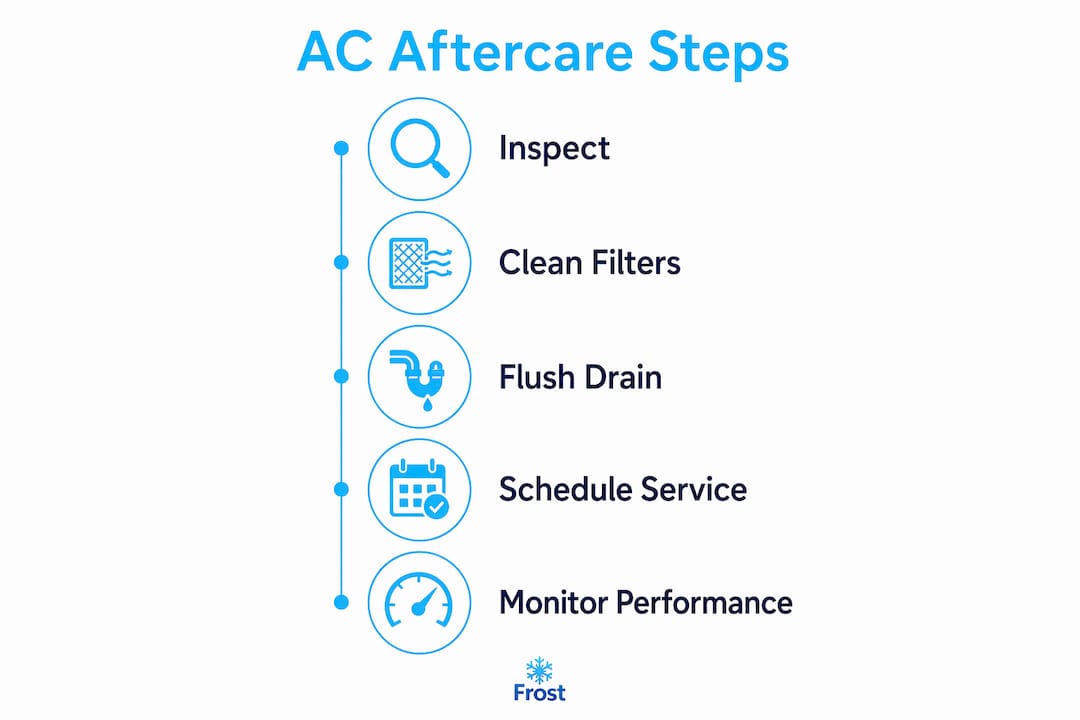
Here are the core routine tasks every homeowner should carry out:
- Clean or replace air filters every 30 days during heavy use periods.
- Clear the outdoor unit of leaves, grass clippings, and debris. Keep at least 60cm of clearance on all sides.
- Check thermostat settings at the start of each season. Recalibrate if the displayed temperature feels inaccurate.
- Flush the condensate drain line with distilled white vinegar once per season. Algae buildup is the leading cause of condensate overflow and water damage inside homes.
- Inspect visible pipework and insulation for signs of wear, moisture, or damage.
One task homeowners consistently overlook is the condensate drain flush. Algae grows quickly in warm, damp drain lines. Left unchecked, it causes blockages that push water back into the unit and into your ceiling or walls. A cup of white vinegar poured down the drain access point each season takes two minutes and prevents a potentially expensive repair.
Pro Tip: Never fit a filter with a MERV rating higher than your system specifies. A too-restrictive filter starves the blower of airflow, risks freezing the evaporator coil, and can cause system failure. Check your unit's manual or ask your installer for the correct MERV range.
Avoid hosing down the indoor unit, using chemical sprays near the air intake, or adjusting refrigerant lines yourself. These actions cause damage and, in the case of refrigerant, are illegal without F-Gas certification.
Why does annual professional servicing matter for AC aftercare?
Professional maintenance covers the components you cannot legally or safely access yourself. In the UK, refrigerant handling and electrical component work require certified engineers. Attempting either without the correct qualifications is both a legal offence and a safety risk.
A qualified engineer's annual visit typically covers the following:
- Refrigerant level check. Low refrigerant reduces cooling capacity and forces the compressor to overwork.
- Electrical component inspection. Loose connections and worn wiring are fire risks.
- Capacitor testing. Capacitors provide the start-up boost to the blower motor. They fail silently and most often give out during peak summer heat, causing sudden breakdowns.
- Coil cleaning. Dirty evaporator and condenser coils reduce heat transfer efficiency, increase run times, and push up energy costs.
- Blower motor and fan inspection. Worn bearings or imbalanced blades reduce airflow and cause noise.
- Condensate system check. Engineers clear blockages and test the overflow switch.
Scheduling this visit in early spring gives engineers time to catch failing parts before summer demand peaks. A capacitor that fails in april costs a fraction of an emergency call-out in july. Professional tune-ups typically cost between £120 and £320 in the UK, depending on system size and scope.
Pro Tip: Book your annual service in february or march. Engineers are fully available, lead times are short, and any parts needed can be ordered before the warm weather arrives.
Professional care does not replace your own routine tasks. It complements them. Think of it as the annual MOT that confirms your daily driving habits are keeping the car in good shape.
How does consistent aftercare affect efficiency, repairs, and lifespan?
The evidence for consistent air conditioning upkeep is clear. Regular maintenance prevents up to 85% of common repairs and extends system lifespan by 3–5 years. Those are not marginal gains. They represent the difference between a system that lasts 10 years and one that lasts 15.
| Aftercare activity | Primary benefit | Impact if neglected |
|---|---|---|
| Filter cleaning | Maintains airflow and efficiency | Higher energy bills, blower strain |
| Coil cleaning | Improves heat transfer | Longer run times, increased wear |
| Condensate drain flush | Prevents water damage | Overflow, mould, structural damage |
| Annual professional service | Catches hidden faults | Sudden breakdowns, voided warranty |
| Duct inspection | Reduces conditioned air loss | Wasted energy, uneven cooling |
Ductwork is a frequently missed part of the aftercare picture. Leaky ducts waste 20–30% of conditioned air, meaning your system works significantly harder for the same result. Even a perfectly serviced unit performs poorly if the ducts delivering its output are compromised.
"Effective AC maintenance addresses system efficiency as a whole, including duct leakage and airflow. Treating the unit in isolation misses a major source of energy waste." — HVAC Tune-Up Checklist
The relationship between clean coils and running costs is direct. Dirty coils absorb and release heat less effectively. The system compensates by running longer cycles. Longer cycles mean higher electricity consumption and faster component wear. Coil cleaning is one of the most cost-effective tasks an engineer performs during a service visit.
For practical guidance on boosting energy efficiency through aftercare, the relationship between clean components and lower bills is consistent across all system types.
What aftercare mistakes do homeowners most commonly make?
The main maintenance gap in most homes is not technical difficulty. It is the absence of consistent habits around coil cleaning and drain line flushing. Most homeowners know they should maintain their system. Far fewer do it on a regular schedule.
Common mistakes that cause real damage include:
- Fitting the wrong filter. A filter with too high a MERV rating restricts airflow, strains the blower, and can freeze the evaporator coil. Always match the filter specification to your unit.
- Skipping the condensate drain flush. Algae builds up quickly in warm conditions. A blocked drain causes water to back up into the unit and overflow into your home.
- Ignoring early warning signs. Unusual noises, reduced airflow, or warm air from vents are signals that something is wrong. Acting early costs far less than waiting for a full breakdown.
- Blocking the outdoor unit. Storing items against the unit, or allowing plants to grow close to it, restricts airflow and causes the compressor to overheat.
- Attempting DIY refrigerant or electrical work. Both are illegal without the correct certification and both carry serious safety risks.
The DIY versus professional boundary is clear. Filter changes, drain flushes, debris clearing, and thermostat checks are all safe for homeowners. Refrigerant, electrical components, and coil chemical cleaning belong to a certified engineer. Staying within that boundary protects both you and your system.
What aftercare does each type of air conditioning system need?
Different system types have different maintenance requirements. Understanding which type you have shapes your aftercare routine.
| System type | Key DIY tasks | Professional service focus | Frequency |
|---|---|---|---|
| Split system (wall-mounted) | Filter clean, drain flush, outdoor unit clearance | Refrigerant, coils, electrical | Annually |
| Ducted central system | Filter replace, vent checks | Duct inspection, coil clean, refrigerant | Annually, plus duct check every 3–5 years |
| Portable unit | Filter clean, exhaust hose check | Coil clean if accessible | Every season |
| Multi-split system | Filter clean per indoor unit, drain flush | Full system refrigerant and electrical check | Annually |
Ducted central systems carry the additional requirement of periodic duct inspection. Leaky or deteriorating ductwork undermines the entire system regardless of how well the unit itself is maintained. A duct inspection every 3–5 years is a sensible addition to the annual service schedule.
Ductless mini-split systems, which are common in South West homes, require filter cleaning more frequently than most homeowners expect. Each indoor unit has its own filter. A home with four indoor units needs four filters checked every 30 days during peak season. Building that into a monthly routine prevents the gradual efficiency loss that comes from neglect.
For homeowners who have recently had a new system fitted, the post-installation care guide covers the first steps to take after your engineer leaves, including setting up your thermostat correctly and logging your first service date.
Key takeaways
Consistent aftercare is the single most effective way to protect your air conditioning investment, reduce running costs, and avoid unexpected breakdowns.
| Point | Details |
|---|---|
| Define your aftercare routine | Combine monthly DIY tasks with an annual professional service for full system protection. |
| Flush the condensate drain | Use distilled white vinegar once per season to prevent algae blockages and water damage. |
| Match your filter correctly | Always use the MERV rating specified for your unit to avoid airflow restriction and coil freeze. |
| Book spring servicing early | Scheduling in february or march catches faults before summer demand and avoids emergency call-out costs. |
| Check your ductwork | Leaky ducts waste 20–30% of conditioned air, undermining even a well-maintained unit. |
What I have learned from watching homeowners get this wrong
The pattern I see most often is not neglect through laziness. It is neglect through confusion about what actually needs doing. Homeowners assume that because the system is running, it is running well. That assumption is expensive.
The most telling example is the condensate drain. I have seen water damage in ceilings and walls that took months to become visible, all traced back to a blocked drain line that a cup of vinegar once a season would have prevented. The repair bill was several times the cost of years of professional servicing combined.
The other thing I notice is that homeowners who treat aftercare as a habit rather than a chore get far better results. Setting a phone reminder on the first of each month to check the filter takes ten seconds to set up and saves real money over time. The HVAC maintenance checklist for homeowners is a useful reference for building that habit around a structured schedule.
My honest view is that the DIY versus professional boundary is where most people go wrong in the other direction too. Some homeowners attempt refrigerant top-ups or electrical checks they have watched on video. That is not aftercare. That is a liability. Know what is yours to do and what belongs to a certified engineer. That clarity makes the whole process simpler and safer.
The systems that last longest are not the most expensive ones. They are the ones owned by people who check the filter, flush the drain, and book the annual service without being reminded.
— James
Frostairconditioning's service maintenance options for homeowners
Frostairconditioning offers professional service maintenance packages designed for homeowners across Exeter and the wider South West. Whether you need a one-off annual tune-up or a regular maintenance plan, the team is F-Gas certified and covers all system types.

Scheduled servicing gives you peace of mind that your system is inspected by a qualified engineer before the seasons change. Frostairconditioning also offers 0% finance options, making it straightforward to spread the cost of ongoing care. For a no-obligation quote or to discuss the right maintenance plan for your home, get in touch today.
FAQ
How often should I service my air conditioning unit?
Homeowners should clean or check filters every 30 days during peak season and book a professional service annually, ideally in early spring.
Can I top up refrigerant myself?
No. Refrigerant handling requires F-Gas certification under UK law. Attempting it without certification is illegal and unsafe.
What is the condensate drain and why does it need flushing?
The condensate drain removes moisture extracted from the air. Flushing it with white vinegar once per season prevents algae blockages that cause water overflow and damage.
How long does a well-maintained air conditioning unit last?
Regular aftercare extends a typical unit's lifespan by 3–5 years compared to a neglected system, with consistent maintenance preventing up to 85% of common repairs.
Does aftercare affect my manufacturer's warranty?
Most manufacturers, including Daikin and Mitsubishi Electric, require evidence of annual professional servicing to honour long-term warranty claims.