
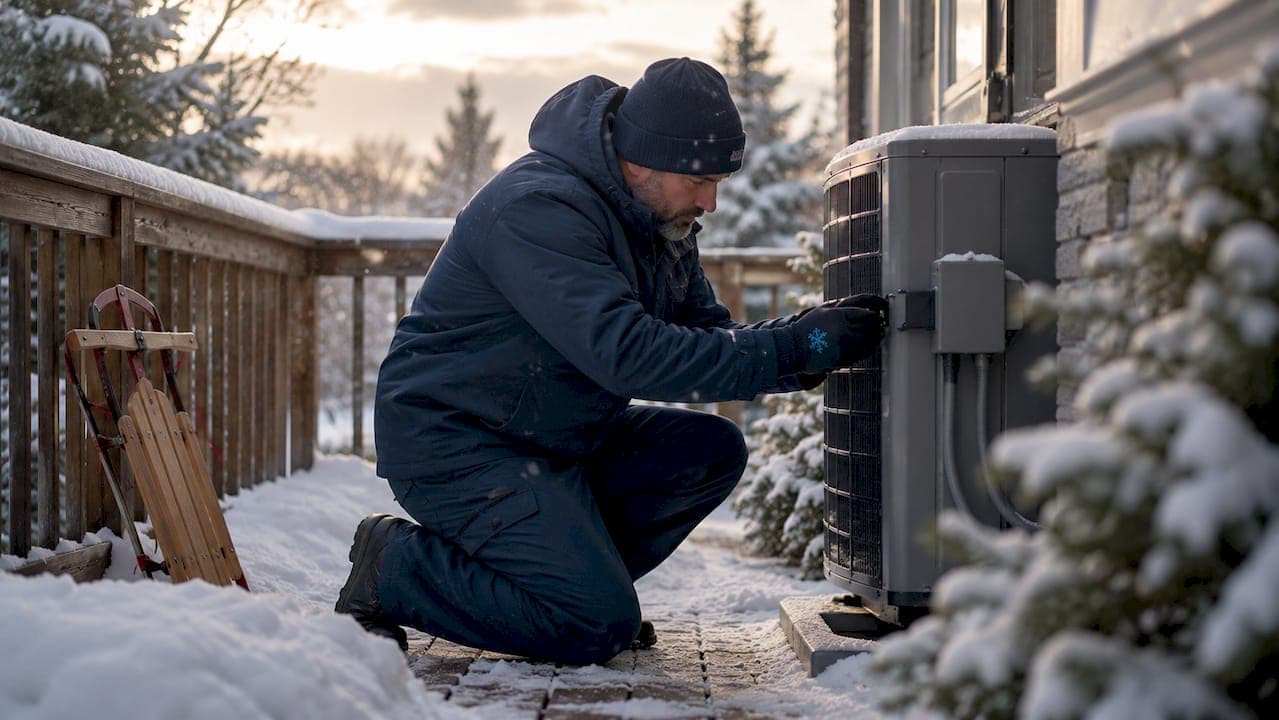
Proper winter care for air conditioners means shutting off power, clearing debris, insulating refrigerant lines, and using breathable protective covers before cold weather sets in. Skip these steps and you risk compressor damage, corrosion, and a costly repair bill when summer arrives. The good news is that most of this work takes under an hour and requires no specialist tools. Frostairconditioning recommends treating autumn as your annual maintenance window, not spring, because catching problems early costs far less than fixing them under pressure.
What are the essential steps for winter care of your air conditioner?
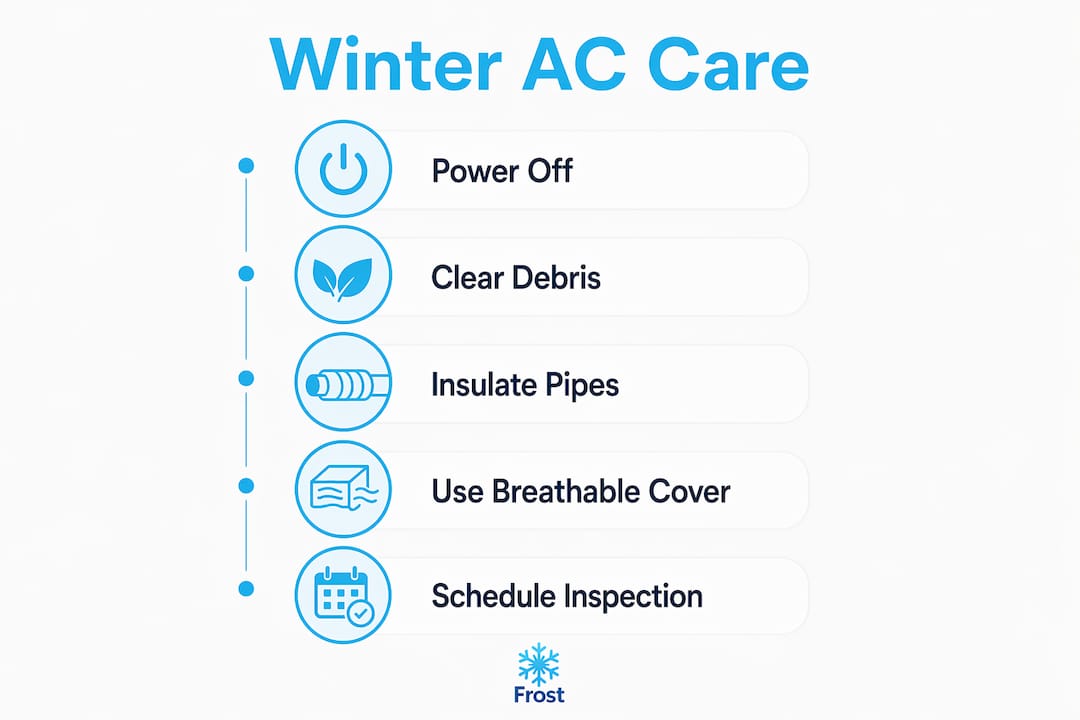
Air conditioner winter maintenance follows a clear sequence. Work through each step before temperatures drop to freezing, and your unit will be ready to perform when you need it again.
-
Turn off the power at the disconnect switch. The disconnect box sits on the wall beside your outdoor unit. Switching it off prevents accidental startups on warm winter days, which can stress the compressor when refrigerant is cold and thick. This step is the most frequently skipped, yet it causes some of the most avoidable damage.
-
Clean the outdoor unit. Use a garden hose on a gentle setting to rinse the fins and coils from the inside out. Remove leaves, twigs, and any debris lodged in the casing. Experts recommend cleaning before temperatures fall below freezing to prevent airflow restriction and energy waste the following season.
-
Inspect for visible damage. Look for rust, cracked casing, loose screws, and any signs of pest activity. Check the refrigerant lines for cracked or missing foam insulation. Replace any damaged foam pipe covers before winter moisture gets into the gaps.
-
Insulate exposed refrigerant lines. Foam pipe lagging is inexpensive and available at any DIY store. Wrap any bare sections of pipework running between the outdoor unit and your home. This protects against frost damage and keeps the system efficient when you restart it in spring.
-
Apply appropriate protection. A breathable, fitted cover or a weighted sheet of plywood placed on top of the unit shields it from falling ice and debris. Never wrap the unit in a sealed plastic tarp.
-
Check the unit weekly through winter. Inspect at least weekly for snow or ice accumulation on and around the unit. Clear any build-up promptly to maintain airflow and prevent structural stress on the casing.
Pro Tip: Set a phone reminder every Sunday through december, january, and february to do a two-minute visual check of your outdoor unit. It takes less time than making a cup of tea.
The sequence above covers the core of seasonal air conditioner care. Each step builds on the last, so skipping one creates a gap that the next step cannot compensate for.
How to safely clean and inspect your air conditioner for winter
Cleaning your outdoor unit is straightforward, but the method matters. The wrong approach can bend the delicate aluminium fins or force debris deeper into the coil.
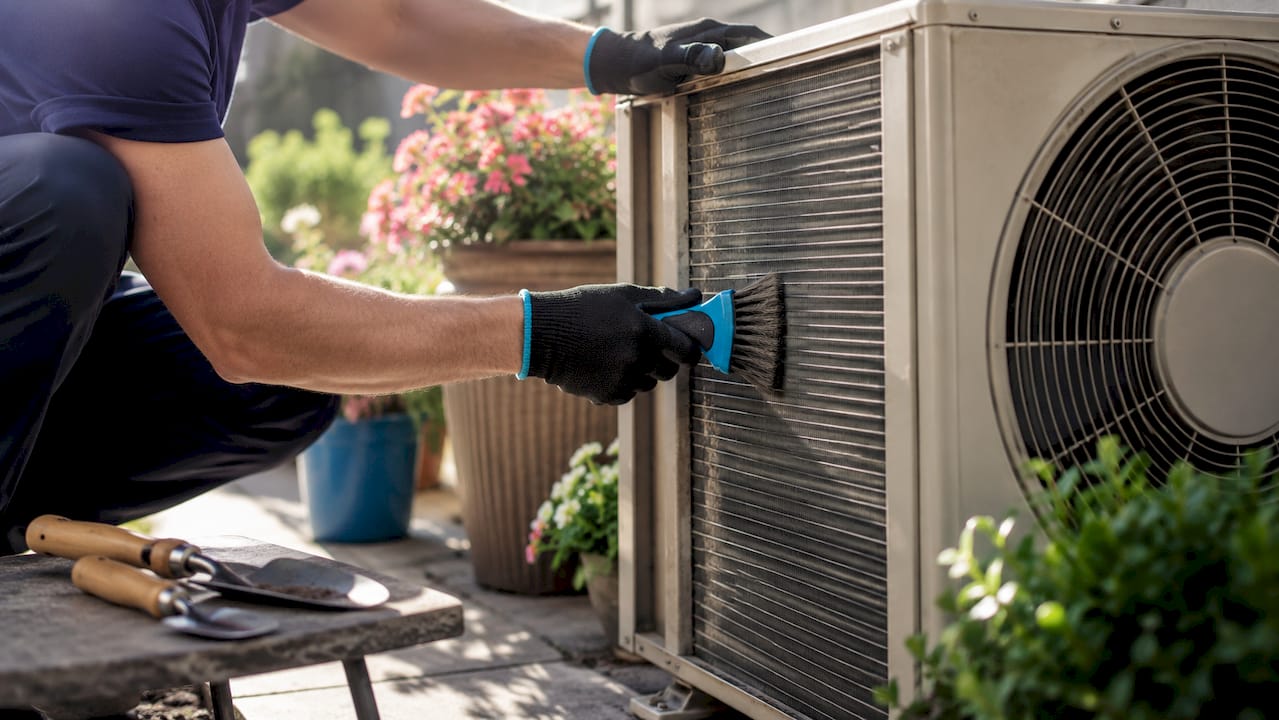
Start by confirming the power is off at the disconnect switch and at the main breaker. Never rely on just one isolation point. Once you are certain the unit is dead, remove the top grille if your model allows it, and lift out any large debris by hand.
Use a garden hose, not a pressure washer. A pressure washer bends the fins and voids most manufacturer warranties. Rinse from the inside out, directing water through the fins to push debris outward. Work around the full circumference of the unit.
- Check the fins for bends or crushing. Straighten minor damage with a fin comb, available cheaply online.
- Look at the refrigerant lines where they enter the unit. Cracked foam insulation is a common finding and an easy fix.
- Examine the electrical connections for corrosion or loose wiring. If you see anything beyond surface dust, call a qualified engineer.
- Check for insect nests, especially wasp nests, which can block drainage channels and damage wiring.
- Look at the base of the unit for standing water or rust staining, which signals a drainage problem.
Pro Tip: Take a photo of the unit before and after cleaning each year. You will spot gradual changes, like new rust patches or bent fins, far more easily when you have a reference image.
Damp leaves trapped against the condenser through winter foster rust and attract rodents. Clear all organic material from the base and sides of the unit before you apply any cover.
What protective measures should you take for your AC unit during winter?
Protection is not one-size-fits-all. The right approach depends on your unit type, your local climate, and what physical risks your installation faces.
Standard AC condensers
Most modern AC units tolerate snow and ice without any cover at all. They are built for outdoor exposure. The main risk is not cold temperatures but falling debris, ice from gutters, and physical impact. A sheet of plywood weighted down on top of the unit addresses all three without trapping moisture underneath.
If you prefer a fitted cover, choose one made from breathable fabric. Plastic covers trap condensation inside the unit and accelerate internal corrosion. A breathable cover lets moisture escape while keeping leaves and ice out.
Heat pump units
Heat pumps operate differently. They run through winter to provide heating, which means covering them is not just unnecessary but actively harmful. Heat pumps must not be covered airtight because they need airflow for their defrost cycles. If you have a heat pump, leave it fully exposed and focus instead on keeping the area around it clear.
Vegetation and drainage
- Trim foliage at least 2 feet from the condenser on all sides. Overgrown shrubs trap moisture and create ideal conditions for pest nesting.
- Check that gutters and roof runoff do not drip directly onto the unit. Persistent dripping causes ice build-up and accelerates corrosion.
- Keep a path clear to the unit so you can access it for weekly checks without difficulty.
Pro Tip: If your unit sits below a roofline, fit a simple drip guard above it. A local builder can install one in an afternoon, and it will protect your unit for years.
Protective coverings should balance debris shielding with moisture escape to prevent corrosion. That balance is the single most misunderstood aspect of winterising air conditioners.
When and why should you schedule professional winter maintenance inspections?
A professional inspection catches what a homeowner cannot see. Refrigerant pressure, electrical wear, and compressor health all require instruments and training to assess accurately.
Winter is the optimal time for annual AC maintenance. Engineers are less busy, prices are lower, and booking slots are easier to secure. Waiting until spring means competing with every other homeowner who left their service too late.
A standard professional inspection covers five areas:
- Thermostat function. The engineer checks that the system switches correctly between modes and holds the set temperature accurately.
- Condensate drain. Blockages in the drain cause water damage and mould. Clearing it in winter prevents problems when the system runs hard in summer.
- Refrigerant line integrity. The engineer checks for leaks and inspects the insulation on all pipework.
- Electrical components. Capacitors, contactors, and wiring are checked for wear and corrosion.
- Compressor and fan motor health. These are the most expensive components to replace. Early detection of wear saves significant money.
"Scheduling your AC service in winter rather than spring is one of the most cost-effective decisions a homeowner can make. You get faster availability, lower call-out rates, and the peace of mind that your system is ready before the heat arrives." — Frostairconditioning
Winter maintenance avoids the spring service rush, reducing emergency breakdown risks and saving costs. An annual inspection also satisfies the requirements of most manufacturer warranties, which typically specify regular professional servicing to remain valid.
For DIY versus professional decisions: clean the unit, clear the surroundings, and check the insulation yourself. Leave refrigerant checks, electrical testing, and compressor assessment to a qualified, F-Gas certified engineer. Frostairconditioning holds F-Gas certification and covers the whole of the South West, with same-day availability for urgent calls.
You can find a full seasonal air conditioning maintenance checklist to use alongside your professional service, and guidance on why annual inspections matter for long-term system health.
Key takeaways
Proper winter care for air conditioners requires power isolation, thorough cleaning, pipe insulation, breathable protective covering, and a professional inspection booked during the off-season.
| Point | Details |
|---|---|
| Isolate power first | Turn off the disconnect switch to prevent compressor damage from accidental winter startups. |
| Clean before the freeze | Rinse fins and clear debris before temperatures drop below freezing to protect airflow. |
| Avoid plastic covers | Use breathable fabric or plywood on top only; sealed plastic traps moisture and causes corrosion. |
| Heat pumps need no cover | Heat pumps run through winter and must stay exposed for defrost cycles to function correctly. |
| Book winter servicing early | Off-season inspections are cheaper, faster to book, and catch faults before the summer rush. |
What I have learned from years of winter callouts
Every february, we get calls from homeowners whose units have failed. Nine times out of ten, the fault traces back to one of two things: a compressor that started accidentally on a warm winter day, or a unit that was wrapped in plastic and corroded from the inside out.
The disconnect switch issue surprises people. They assume the thermostat being off is enough. It is not. A warm spell in january can trigger the system to attempt a startup, and if the refrigerant is cold and the compressor is not ready, you are looking at a repair bill that dwarfs the cost of a full service. Turning off the disconnect takes ten seconds.
The plastic cover mistake is even more common. People see a cover in a hardware shop, buy it, and think they are doing the right thing. They are not. A sealed cover turns your outdoor unit into a damp box. By spring, the internal components are corroding and the warranty is void.
My honest advice is this: do the DIY steps yourself, they are genuinely simple. But book a professional inspection every winter. Not because you cannot manage the basics, but because the components that fail expensively are the ones you cannot assess with your eyes. A qualified engineer with the right instruments will find a failing capacitor or a slow refrigerant leak before it becomes a breakdown. That inspection pays for itself every time.
For homeowners who want to go deeper on keeping running costs down, the energy efficiency guide on the Frostairconditioning blog is worth reading alongside your winter maintenance routine.
— James
Frostairconditioning winter servicing for South West homeowners
Frostairconditioning offers professional winter servicing for homeowners across Exeter and the wider South West. Our F-Gas certified engineers carry out full five-point inspections covering thermostat function, condensate drainage, refrigerant line integrity, electrical components, and compressor health.

Booking a winter service now means faster availability and lower rates than the spring rush. If your unit is ageing or underperforming, our team also provides domestic installation with 0% finance options and same-day fitting available. Get a free quote today and protect your investment before the cold sets in.
FAQ
Do air conditioners need winter care?
Yes. Seasonal air conditioner care prevents compressor damage, corrosion, and pest nesting, all of which cause expensive faults when the system restarts in spring.
Should I cover my air conditioner in winter?
A breathable cover or plywood on top of the unit is sufficient for most installations. Avoid sealed plastic covers as they trap moisture and accelerate internal corrosion.
Can I run my AC in winter?
Standard AC condensers should be switched off at the disconnect during winter. Heat pumps are designed to run year-round and should never be covered or shut down.
When is the best time to service my air conditioner?
Winter is the best time for an annual service. Off-season bookings are cheaper, faster to arrange, and allow faults to be fixed before summer demand peaks.
How do I protect my AC pipes in winter?
Wrap exposed refrigerant lines in foam pipe lagging, available from any DIY retailer. Replace any cracked or missing sections before temperatures drop to prevent frost damage and energy loss.