

Most homeowners only think about their air conditioning system when something goes wrong. By that point, the bill is already climbing. The truth is that consistent air conditioning maintenance tips, applied through the year, can cut energy costs noticeably, prevent expensive breakdowns, and add years to your system's life. This guide covers the most practical steps you can take right now, from the quick wins you can do yourself in ten minutes to the professional checks that protect your investment long term.
Table of Contents
- Key takeaways
- 1. Replace your air filters regularly
- 2. Keep condenser coils and fins clean
- 3. Clear the condensate drain line
- 4. Check thermostat settings and placement
- 5. Inspect and seal your ductwork
- 6. Check refrigerant levels and lines
- 7. Test electrical connections and components
- 8. Know what to DIY and what to leave to a professional
- James's take: the tasks most homeowners never do
- Keep your system running with Frostairconditioning
- FAQ
Key takeaways
| Point | Details |
|---|---|
| Filter changes save real money | Replacing clogged filters can cut energy consumption by 5% to 15%. |
| Coil cleanliness drives efficiency | Dirty coils force longer run times and higher bills regardless of filter condition. |
| Drain lines need pre-season attention | Flushing condensate lines before summer prevents shutdowns and water damage. |
| Thermostat settings affect running costs | Avoid overcooling settings and use programmable controls to reduce waste. |
| DIY and professional tasks are different | Some jobs require certified technicians. Knowing the split protects you and your system. |
1. Replace your air filters regularly
This is the single most impactful thing you can do at home. Dirty filters reduce airflow and force the system to work harder, which leads to dirt building up on the evaporator coils and reducing heat absorption. The knock-on effect is a less efficient system drawing more electricity for the same amount of cooling.
For most households, checking filters every month during the cooling season and replacing them every one to two months is the right cadence. If you have pets or someone in the house with allergies, err towards monthly changes. When choosing a replacement filter, pay attention to the MERV rating. Higher ratings catch smaller particles but restrict airflow more. For most home systems, a MERV rating between 8 and 11 strikes the right balance.
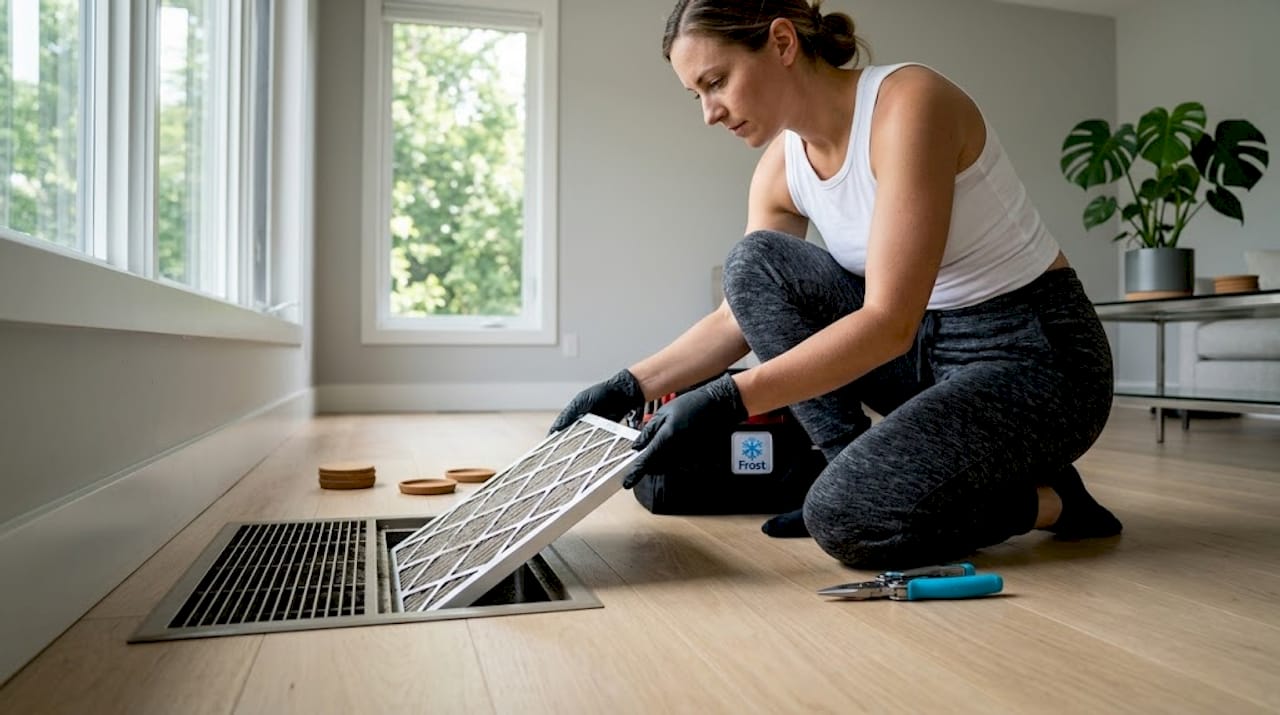
Signs your filter needs changing include reduced airflow from vents, a dusty smell when the unit runs, or simply visible grey discolouration on the filter itself.
Pro Tip: Set a recurring phone reminder or use a filter subscription service so replacements arrive before you need them. It takes the decision-making out of the process entirely.
2. Keep condenser coils and fins clean
Your outdoor unit works hard to expel heat from your home. When its coils are coated in dirt, leaves, or grime, that heat exchange becomes less effective, and dirty evaporator coils cause the system to run for longer to hit the same temperature. Over time this puts real strain on the compressor.
Here is what to check and how:
- Turn off power to the unit at the isolator switch before doing anything.
- Remove any leaves, twigs, or garden debris from around and inside the unit casing.
- Use a garden hose on a gentle setting to rinse the fins from the inside out. Avoid pressure washers as they bend fins easily.
- Check the fins themselves. If they look bent or crushed, a fin comb (available cheaply online) can straighten them and restore airflow.
- Keep a two-foot perimeter clear around the outdoor condenser at all times. Foliage and garden clutter reduce heat dissipation and make the compressor work harder.
Pro Tip: Do a quick outdoor unit inspection after any storm. Debris builds up fast and even a partial blockage noticeably reduces performance.
3. Clear the condensate drain line
This is the one homeowners most frequently skip, and it is also the one that causes some of the more unpleasant surprises. The condensate drain removes moisture that your system pulls from the air. When the line becomes blocked with algae or debris, clogged drain lines cause system shutdowns and can allow water to back up into the unit or your ceiling.
Here is a straightforward pre-season routine to follow:
- Locate the condensate drain pan, usually beneath the indoor air handler unit.
- Check the pan for standing water or slime, which indicates a partial or full blockage.
- Pour a solution of diluted white vinegar (roughly 250ml vinegar to 250ml water) into the drain access point and allow it to sit for 30 minutes.
- Flush through with clean water and confirm it drains freely.
- If the blockage persists or you see mould growth in the pan, contact a technician rather than probing further yourself.
Inspecting drain lines before the cooling season is a step many homeowners skip entirely, yet it is one of the simplest ways to avoid a costly mid-summer shutdown.
4. Check thermostat settings and placement
Your thermostat is not just a control panel. It is the brain of your system, and how you use it has a direct effect on your bills. A common mistake is cranking the thermostat down lower than needed when you first turn the system on. Setting the thermostat colder than usual does not cool the space faster. It simply runs the system longer, wasting energy without any benefit.
There are a few practical habits worth adopting:
- Set the thermostat to the highest comfortable temperature rather than the lowest tolerable one. Each degree lower typically adds around 3% to 5% to running costs.
- Use a programmable or smart thermostat to reduce cooling automatically when the house is empty or overnight.
- Keep the thermostat away from heat sources like televisions, lamps, or direct sunlight, as these cause false readings and trigger unnecessary cooling cycles.
- At the start of each season, test the thermostat by setting a temperature and confirming the system responds accurately. If it cycles on and off erratically, it may need recalibrating or replacing.
These simple energy saving air conditioning tips around thermostat use genuinely reduce the role of your AC system's energy draw without sacrificing comfort.
5. Inspect and seal your ductwork
Leaky ducts are one of the quietest efficiency killers in any home. Sealing and insulating ducts can improve system efficiency by up to 20%, which is a meaningful saving across a full cooling season. The problem is that most homeowners never look at their ductwork.
Check accessible duct sections in loft spaces or utility areas for visible gaps, loose joints, or sections where insulation has deteriorated. Foil tape or mastic sealant works well for small gaps. For a more thorough assessment, a professional can pressure-test your duct system and identify losses you cannot see. If you are also considering whether your current system is correctly specified, a guide on sizing air conditioners correctly can help you understand whether poor installation is part of the problem.
6. Check refrigerant levels and lines
This is not a DIY task. Handling refrigerant in the UK requires F-Gas certification by law, so this sits firmly in the professional column. That said, as a homeowner you should know the signs of a refrigerant problem: ice forming on the indoor unit, reduced cooling performance despite the system running normally, or a hissing sound near the refrigerant lines.
Wrong sizing or installation and refrigerant leaks both reduce efficiency and shorten equipment life significantly. If you notice any of the symptoms above, book a professional inspection rather than waiting for a complete breakdown.
7. Test electrical connections and components
Loose or corroded electrical connections inside your unit can cause inefficient operation, tripped breakers, and in the worst cases, fire risk. This inspection is another job for a certified technician, but you can carry out one sensible safety check yourself: listen for any buzzing, clicking, or humming sounds when the system starts up. Any unusual electrical noise warrants a call to a professional.
As part of an annual service, professional tune-ups include refrigerant level checks, coil cleaning, and electrical component testing. This kind of yearly inspection is what keeps a system running well beyond the manufacturer's expected lifespan.
8. Know what to DIY and what to leave to a professional
A clear understanding of this distinction saves you money and keeps your system safe. Here is a straightforward breakdown:
| Task | DIY or professional? |
|---|---|
| Filter replacement | DIY |
| Condensate drain flushing | DIY |
| Outdoor unit debris clearance | DIY |
| Thermostat checks and adjustments | DIY |
| Fin straightening with a comb | DIY |
| Refrigerant level check or top-up | Professional only (F-Gas required) |
| Evaporator coil chemical cleaning | Professional |
| Electrical component testing | Professional |
| Duct pressure testing | Professional |
| Full annual service | Professional |
Scheduling a professional service once a year, ideally before the summer season begins, is the most cost-effective way to keep everything in order. A technician will catch issues that DIY checks miss entirely, particularly around refrigerant and electrical components.
Pro Tip: Book your annual service in spring rather than July. Engineers are far less busy, waiting times are shorter, and you will have any issues resolved before the first heatwave.
James's take: the tasks most homeowners never do
I have spent years seeing the same patterns. Homeowners change their filters occasionally, do a quick clean of the outdoor unit, and assume that is enough. The parts they consistently miss are the condensate drain and the coils, and those two things together are responsible for most of the mid-season breakdowns I see.
What I have found is that people tend to underestimate how much a partially blocked drain or slightly dirty coil affects their bill month to month. You do not get a warning light. The system just quietly gets less efficient, runs longer, and costs more. By the time most people notice, the difference can be substantial.
My honest advice is this: do the filter and drain checks yourself on a schedule you actually stick to, and then let a certified technician handle the rest once a year. Do not try to handle refrigerant or electrical components yourself regardless of what you find online. The common AC problems that end up costing the most are almost always the ones that started small and were left too long.
— James
Keep your system running with Frostairconditioning
If you are based in Exeter or anywhere across the South West and want professional support alongside your own upkeep routine, Frostairconditioning can help.

Frostairconditioning is F-Gas certified and offers same-day installations as well as maintenance support for both new and existing systems. Whether you need a full annual service, a refrigerant check, or simply want an expert to assess your current system's condition, the team can take care of it. With 0% finance available, you do not have to delay getting the most from your system. Visit Frostairconditioning to find out more, or get a tailored quote for your home and speak to an engineer directly.
FAQ
How often should I replace my AC filter?
During the cooling season, check filters monthly and replace them every one to two months. Homes with pets or allergy sufferers should replace filters monthly without fail.
Can I clean my own air conditioning coils?
You can rinse outdoor condenser fins gently with a hose, but evaporator coil chemical cleaning should be left to a professional. Dirty evaporator coils reduce heat absorption and need proper treatment to restore efficiency safely.
Why does my air conditioning keep shutting off?
A blocked condensate drain line is one of the most common causes. Clogged drain lines trigger automatic shutdowns to prevent water damage. Flush the line with diluted vinegar and check the drain pan for standing water.
Does turning the thermostat lower cool a room faster?
No. Setting the thermostat colder than needed does not speed up cooling. It only extends the run time and increases your energy bill. Set it to the highest comfortable temperature instead.
How much can regular maintenance save on energy bills?
Replacing a clogged filter alone can reduce AC energy consumption by 5% to 15%. Combined with coil care, drain maintenance, and smart thermostat use, total savings across a summer season can be significant.