
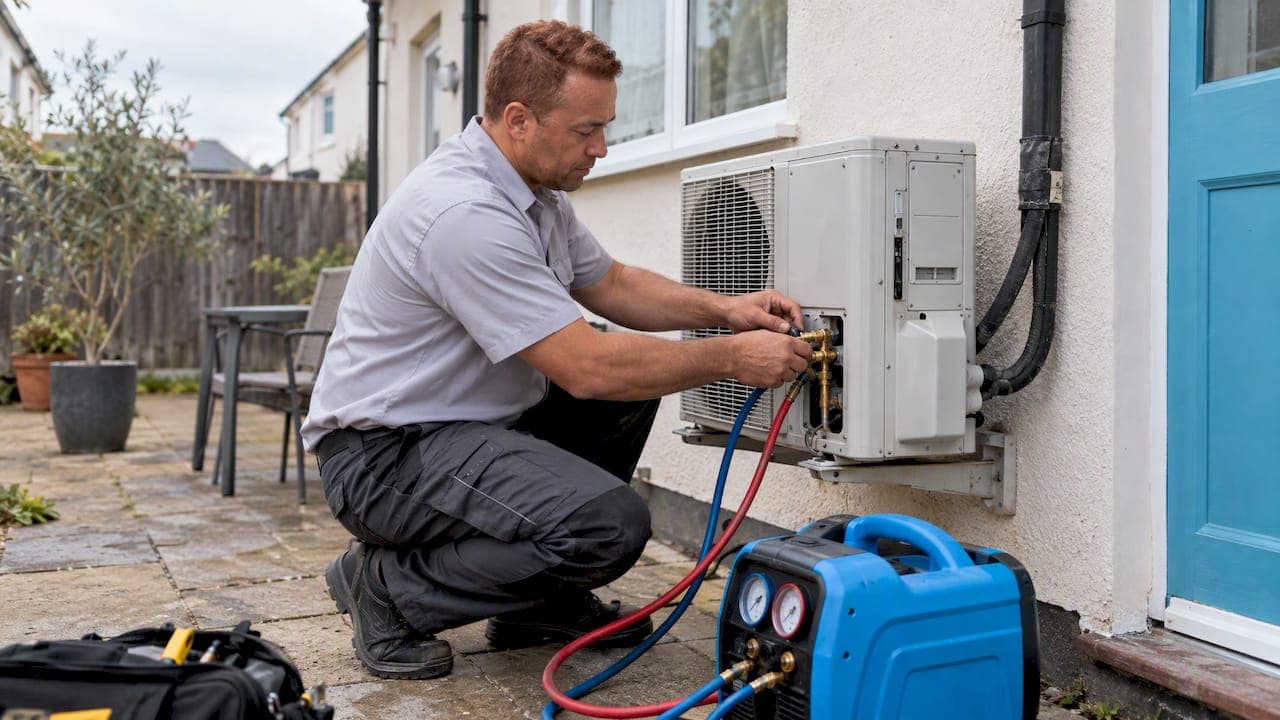
If you rent your home and want an air conditioning unit removed, you need your landlord's written consent first. A fixed split system must then be taken out by an F-Gas certified engineer, because the refrigerant has to be recovered legally. Portable units are different: they plug in, vent through a window and leave when you do. The sections below cover who owns the system, who pays, what the law requires of the engineer, and how to avoid a deposit deduction.
TL;DR
- A fixed air conditioner, with pipework through the wall and an outdoor unit, is usually treated as a fixture. In most cases it belongs to the landlord's property, not to you.
- Get the landlord's consent in writing before anything is installed or removed, and keep the emails.
- Removing a fixed system means recovering the refrigerant. By law that needs an F-Gas certified professional, so DIY is not an option.
- Photograph the walls, the outdoor mounting and the electrics before and after, so a repair bill cannot be inflated later.
- If you are a landlord or tenant in Devon or Cornwall, we can survey the system and quote for a clean removal or a safe refit.
Table of Contents
- Why removal is not as simple as unplugging
- Fixture or chattel: who owns the system?
- What the 1927 Act says about improvements and reinstatement
- Who is allowed to do the removal
- How to ask your landlord, step by step
- Protecting your deposit when the unit comes out
- If you are the landlord
- Perspective: what we see on the ground
- Getting a clean removal in Devon and Cornwall
- FAQ
- Sources
Why removal is not as simple as unplugging
A wall-mounted split system looks like an appliance, but it behaves like part of the building. Two units are linked by copper pipework carrying refrigerant. The pipes run through a drilled hole in the wall, the outdoor unit is bolted to a bracket or sits on a stand, and there is usually a dedicated electrical supply and a condensate drain.
Taking it out therefore involves three separate jobs: recovering the gas, disconnecting the electrics, and making good the building. Each has a different person responsible, and in a rented home each also needs the landlord to agree.

Portable units are the exception. A freestanding unit with a hose through a window needs no drilling, so removal is only a matter of carrying it out. Practitioners often suggest portables as the safest route for tenants because they avoid the disputes that fixed installations create. That advice is about avoiding conflict, not a legal rule, and portables are less efficient and noisier than a fixed system.
Fixture or chattel: who owns the system?
The legal distinction that decides most disputes is between a chattel and a fixture. A chattel is a movable possession, such as a freestanding fan or a portable unit. A fixture is something fixed to the building so that it becomes part of it. A permanent air conditioning system that needed drilling through walls or fixed wiring is typically treated as a fixture. Once it is in place, it generally becomes part of the landlord's property.
That has practical consequences:
- If a previous tenant installed it with consent, you may be living with it, and you cannot assume you may remove it.
- If you installed it, you should not assume you can take it with you when you leave.
- If the landlord supplied it, you cannot remove or modify it without their agreement. Check whether the landlord is responsible for maintaining it, because Citizens Advice sets out which repairs a landlord must handle.
Your tenancy agreement is the first document to read. Most contain a clause saying fixtures and fittings cannot be altered without consent, and an estate agent's guide to renting with air conditioning makes the same point about written consent. A landlord is also generally not obliged to fit air conditioning simply because a tenant asks for it.
What the 1927 Act says about improvements and reinstatement
The Landlord and Tenant Act 1927 is the statute people quote here, and it is worth knowing what it does and does not do. Section 19 deals with covenants that restrict a tenant from making improvements without consent. Where a lease contains such a covenant, the landlord cannot unreasonably withhold consent, but they may require the tenant to pay for any damage to the premises or any diminution in their value, and may require the tenant to reinstate the premises at the end of the term if the improvement does not add to the letting value of the holding.
Section 1 covers compensation for improvements, but that part of the Act applies to holdings used for business purposes and so is mainly relevant to commercial tenants. A residential tenant on an assured shorthold or assured tenancy should not expect to claim compensation for an air conditioner they paid for.
The practical reading is this. A landlord who consented to an installation can still reasonably ask for it to be removed and the wall made good when you leave, if it is not adding value. A landlord who did not consent can claim for damage and for reinstatement. In both cases written consent, covering who removes it and when, is the thing that prevents the argument. If you are unsure how the Act applies to your lease, a solicitor or a Citizens Advice adviser can read the actual wording.

Who is allowed to do the removal
Only a certified professional may take out a fixed system. This is the part tenants most often get wrong, because a unit can look easy to disconnect.
Air conditioners contain fluorinated gases (F-gases). The government's guidance is clear that a company working on stationary air conditioning equipment must be certified by an approved body, and that individual engineers must hold their own qualifications, even if they work for someone else. Breaching this can lead to a civil penalty. Decommissioning counts as work on the equipment, so removal sits inside the same rules.
In practice that means:
- The gas is recovered into a cylinder, not vented into the air.
- The pipework is capped or removed safely.
- The electrical supply is isolated and the spur is made safe or removed.
- The units are taken away and the refrigerant and equipment are handled as controlled waste.
If someone offers to cut the pipes and take the unit for scrap, that is a red flag. It is unlawful, it can release high-pressure refrigerant, and it leaves you with no paperwork for the landlord. Our guide to checking F-Gas compliance before you hire lists the questions to ask any installer or remover.
Building regulations and the electrics
The wiring side matters too. Fixed air conditioning is among the works that may need building regulations approval in England, and you do not need to apply yourself if you use someone registered with a competent person scheme. If the original installation was done without proof of compliance, a landlord can reasonably ask for it to come out at the tenant's expense at the end of the tenancy. For more on how this works for homes, see our permitted development checklist for air conditioning.
The same principle applies to a fixed system you may later want moved: a licensed engineer must handle the refrigerant, and the siting rules still apply at the new position.
How to ask your landlord, step by step
The order matters. Doing things in this sequence protects both your deposit and your tenancy.
- Read the agreement. Look for clauses on alterations, fixtures and fittings, and reinstatement. Note whether the landlord or agent manages the property.
- Establish who owns the unit. Ask for any invoice or installation record. If a previous tenant fitted it, say so in your email.
- Write to the landlord or agent. State what you want (removal, or removal and making good), who will do it, and the proposed date. Ask for a written reply.
- Get a survey and a quote. A certified engineer can tell you what removal involves, what the wall will look like afterwards and whether the electrics need work.
- Agree who pays. Put the cost split in writing. If the landlord requires removal, ask whether they will cover it, particularly where the unit was there when you moved in.
- Document before and after. Take dated photographs of the indoor unit, the outer wall, the outdoor mounting and the consumer unit.
- Keep the certificate or job sheet. The engineer's paperwork shows the refrigerant was recovered properly and is your evidence if a deduction is claimed.
If the landlord says no
You cannot overrule them by simply removing it. Citizens Advice is clear that tenants must not withhold rent to force repairs or changes, and unauthorised alterations that count as damage can hand a landlord a case against you. Keep the correspondence, stay polite, and raise the dispute through the deposit scheme process or with Citizens Advice instead.
The Renters' Rights Act has also changed the background. Government information for tenants says that from 1 May 2026 a landlord cannot serve a section 21 notice, even if the tenancy agreement says they can. That does not make alterations safe. Damage and breach of the agreement can still be grounds for a landlord to seek possession, so careful records are more important, not less.
Protecting your deposit when the unit comes out
Deductions for air conditioning usually fall into three categories: holes and patching in the wall, damaged paint or render around the pipe route, and an unfinished electrical spur. A neat removal addresses all three.
Before you hand the keys back, ask the engineer to:
- cap and seal the wall penetration properly from both sides, rather than leaving a hole;
- remove the outdoor bracket and fill the fixing holes, or agree in writing that the landlord will do so;
- make the electrical spur safe with a proper blanking plate or termination;
- take away the units and every offcut.
Then work through the rest of the checkout. Cleaning and evidence matter as much as the repair, and a UK end of tenancy checklist covering deposit evidence is a sensible companion to your photographs. If you also have fitted furniture to take down before you leave, the same care applies: dismantling fitted wardrobes safely under UK rules shows how to avoid wall damage on that side.
If you are the landlord
Many removal queries come from landlords who inherit a system from a previous tenant or a purchase. Your position is stronger when you act early.
- Decide whether to keep or remove it. A working, maintained system can add to the letting value, and some tenants will pay for the comfort. An abandoned, unserviced one is a liability.
- Check the paperwork. If there is no installation certificate or evidence the installer was certified, that is a compliance gap. Our guide to commercial aircon regulations for property managers shows what a record trail should contain, including the F-Gas checks that apply once a system passes certain size thresholds.
- Consent in writing both ways. Agree removal, reinstatement and cost, and keep it with the tenancy file.
- Do not use a tenant-arranged remover without proof. Ask for the engineer's F-Gas certification before anyone starts.
Commercial landlords in the South West should also remember that a shop unit is a different animal from a flat. Business leases often include explicit reinstatement clauses, so the removal question should be settled with the lease in hand. Our shop fitting and commercial team handles installs and removals for retail and office premises.
Perspective: what we see on the ground
We are an Exeter installer, and removal calls usually arrive in one of two ways. Either a tenant is a fortnight from moving out and has just realised the landlord expects the unit gone, or a landlord has taken over a flat with a system nobody can explain. In both cases the cheapest route is almost always the one where someone asked for consent in writing before the job began.
We would rather survey first. A free survey lets us see the pipe route, the wall finish, the outdoor mounting and the electrics, so the quote covers making good, not only taking the unit away. Our engineers are F-Gas certified and REFCOM registered, and we do not use subcontractors, so the person who recovers the refrigerant is the person who signs the job off.
Our honest view for tenants: if you are thinking of installing, talk to the landlord about who owns it at the end. If you are unsure whether you will stay, a portable unit avoids the question entirely. If you do want a fixed system and the landlord is happy to keep it, it is worth having it done properly so it never becomes a removal job. The reasons are set out in our piece on professional AC installation.
— James
Getting a clean removal in Devon and Cornwall
If you need a fixed system taken out, or a landlord wants one assessed and either made compliant or removed, we can help. We cover Exeter and the wider South West, offer free surveys, and can often work within one or two days. Where the answer is that the system should stay, our service and maintenance plans keep it legal and working, and our domestic installation team can fit a replacement with the landlord's consent. To start, contact us through our website with the address, the make if you know it, and a few photos of the units.
FAQ
Can I take the air conditioner with me when I move out?
Only if the landlord agrees in writing. A fixed system is usually treated as part of the building, so removing it without consent risks a claim for damage. If you do have permission, an F-Gas certified engineer must remove it, and you should agree who makes good the wall.
Can a tenant remove an air conditioner themselves?
No, not a fixed split system. Recovering the refrigerant requires F-Gas certification, and working without the right qualifications is against the law. A portable unit that only plugs in and vents through a window is a different matter and can simply be carried out.
Does a landlord have to provide air conditioning?
Generally not. A landlord is responsible for the condition and safety of the home, but they are not usually obliged to fit cooling because you ask. If you want it, you need consent, and you should agree in writing who owns it and who removes it at the end.
Who pays to remove air conditioning in a rental?
It depends on the agreement and who installed it. If you installed it, expect to pay for removal and making good. If it was already there, or the landlord is requiring removal for their own reasons, ask them to cover it, and get the answer in writing before booking anyone.
Sources
- Company certification to work with F gas, GOV.UK
- Qualifications to work with F gas, GOV.UK
- Building regulations approval, GOV.UK
- Landlord and Tenant Act 1927, section 19
- Landlord and Tenant Act 1927, section 1
- Citizens Advice: who is responsible for repairs
- Citizens Advice: getting repairs done if you rent privately
- The Renters' Rights Act Information Sheet 2026, GOV.UK
- Air conditioning in a rented home, Your Move