
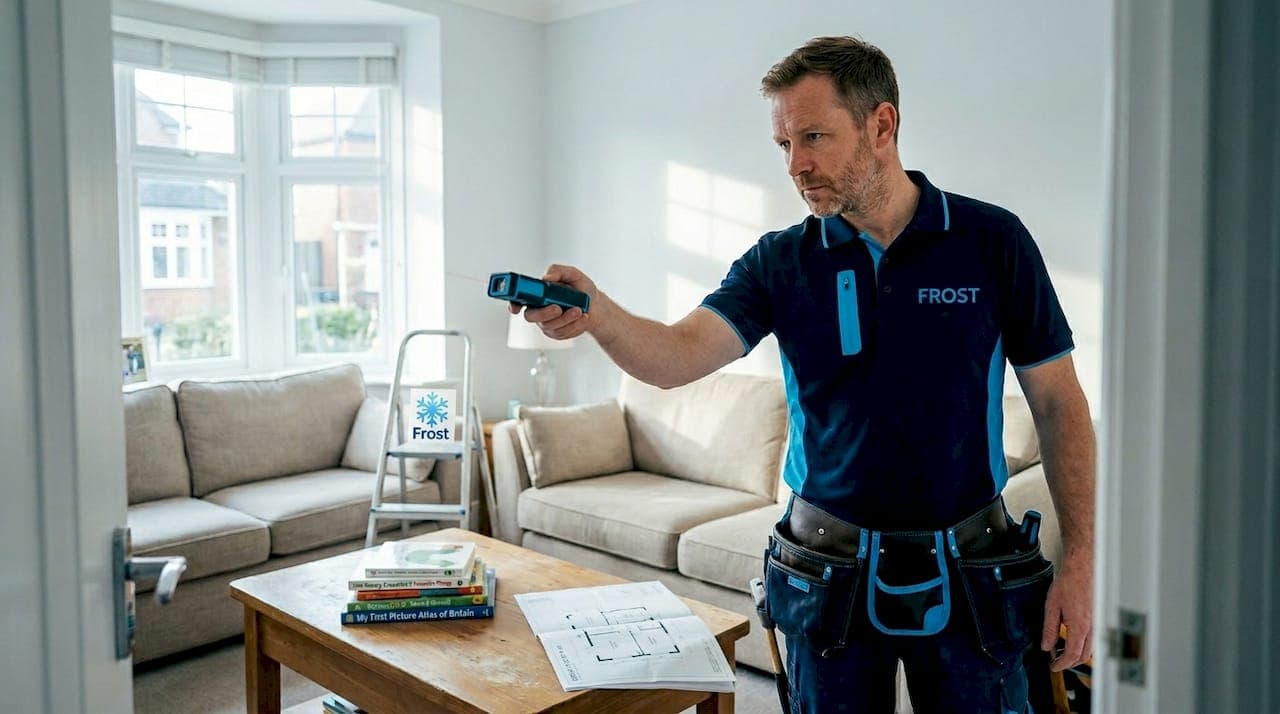
Summer in Devon and Cornwall has changed. Temperatures regularly push past 28°C, and homeowners who put off air conditioning installation are paying for it in sleepless nights and stuffy rooms. But here's the thing: getting it wrong costs far more than getting it right first time. Split system installation requires an F-Gas certified professional because DIY handling of refrigerants is illegal in the UK. This guide walks you through everything, from prerequisites and the installation process itself, to troubleshooting, maintenance, and financing options available right here in the South West.
Table of Contents
- What you need before installing air conditioning
- Step-by-step guide to professional installation
- Troubleshooting, common mistakes and expert tips
- What to expect after installation: performance, maintenance, and financing
- Why professional installation is non-negotiable: our take
- Get your certified air conditioning installed in Devon or Cornwall
- Frequently asked questions
Key Takeaways
| Point | Details |
|---|---|
| Certified installation required | UK law mandates F-Gas certified professionals for split system air conditioning installations. |
| Professional process overview | Step-by-step installation takes four to eight hours, ensuring safety, efficiency, and warranty validity. |
| Expert tips for homes | Upgrade electrics and plan for thick walls in period properties; annual servicing maintains efficiency. |
| Flexible financing available | Homeowners can access 0% financing for ten months or consider loans and savings as alternatives. |
| Energy savings and quiet operation | Modern inverter units save up to 60 percent in energy and operate quietly for year-round comfort. |
What you need before installing air conditioning
Before anyone drills a single hole in your wall, there are legal requirements, practical considerations, and a checklist of materials that need to be in order. Getting this preparation right is what separates a smooth, efficient installation from an expensive headache.
Legal requirements first
The most important thing to understand is that split system air conditioning is not a DIY job. UK law mandates that anyone handling refrigerants must hold F-Gas certification, and this applies to installation, maintenance, and decommissioning. A single-split installation takes 4 to 8 hours when carried out by a certified engineer, and skipping certification doesn't just void your warranty. It can result in prosecution under the F-Gas Regulation.
Portable air conditioners are the only type you can legally install yourself, but they come with significant trade-offs. They vent warm air through a window hose, which reduces efficiency considerably. They are also considerably noisier than split systems and far less effective at cooling larger rooms. For most Devon and Cornwall homes, a properly installed split system is the right long-term choice.
Considerations for period properties
Devon and Cornwall are full of beautiful period homes, stone cottages, and listed buildings, and these present specific challenges. Wall thickness can vary enormously, which affects how the refrigerant pipework is routed between the indoor and outdoor units. Older electrical systems may need upgrading before installation, as modern inverter units require a dedicated circuit with appropriate cable sizing. If your home is listed, you may also need planning permission before any external unit is fitted.
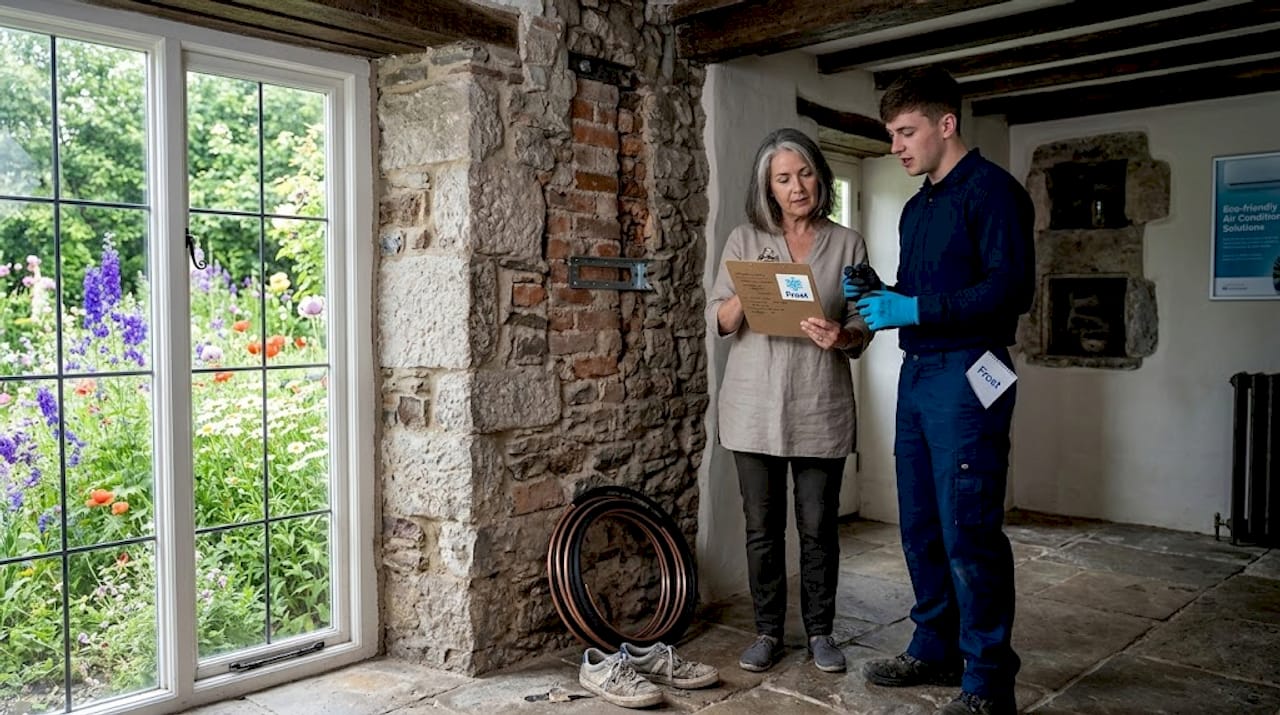
Pro Tip: Always ask your installer to carry out a site survey before booking. A good engineer will flag electrical upgrades, wall complications, or planning issues before work begins, saving you time and money.
What your installer will need on site
| Item | Purpose |
|---|---|
| Indoor unit and mounting plate | Fixed to interior wall in chosen room |
| Outdoor condenser unit | Mounted on a level base outside |
| Copper refrigerant pipework | Connects indoor and outdoor units |
| Electrical cable and isolator | Powers the system safely |
| Vacuum pump | Removes moisture from the pipework |
| Refrigerant charge (F-Gas certified) | Completes the sealed system |
| Pipe lagging and trunking | Protects and conceals pipework |
| Dust sheets and protective equipment | Keeps your home clean during work |
You should also have your property details ready, including room dimensions, wall construction type, and the location of your consumer unit. Your installer will use this to select the correct unit capacity, measured in kilowatts, for your space.
Step-by-step guide to professional installation
Once your prerequisites are in place, here is exactly what you can expect during a professional installation. A certified engineer follows a precise sequence, and understanding each stage helps you know the job is being done properly.
-
Site assessment and unit positioning. The engineer confirms the ideal location for both the indoor and outdoor units, balancing airflow efficiency, noise, aesthetics, and pipe run length. Shorter pipe runs improve efficiency and reduce material costs.
-
Mounting the indoor unit plate. A steel backing plate is fixed securely to the wall using appropriate fixings for your wall type, whether that is plasterboard, solid brick, or stone. Getting this level and secure is critical because the indoor unit clips onto it and must sit perfectly flush.
-
Drilling the wall penetration. A 60mm to 65mm core hole is drilled through the wall at a slight downward angle toward the outside. This angle ensures any condensate drains away naturally rather than collecting inside the wall. Installation steps like this one are where experience really counts, particularly in stone or rubble-filled walls common across Cornwall.
-
Installing the outdoor condenser unit. The outdoor unit is mounted on a purpose-made bracket or a level concrete pad. Anti-vibration mounts are fitted beneath it to reduce noise transmission into the building structure. This is especially important in terraced homes or properties with shared walls.
-
Running and connecting the pipework. Copper refrigerant pipes are insulated and run between the two units, either through trunking on the exterior wall or concealed within the building fabric where possible. Electrical cables are also run at this stage and connected to the dedicated circuit.
-
Vacuuming the system. Before any refrigerant is released, the engineer uses a vacuum pump to remove all air and moisture from the pipework. Skipping this step is one of the most common mistakes made in poor-quality installations and leads to compressor failure over time.
-
Charging with refrigerant and testing. The system is charged with the correct quantity of refrigerant, sealed, and then tested across all modes, including cooling, heating, fan, and dehumidification. The engineer checks temperatures, pressures, and airflow before signing off.
"A professional installation protects your warranty, ensures the system runs at rated efficiency, and keeps your home safe. Cutting corners at any stage of this process has real consequences for performance and longevity."
DIY vs. professional installation at a glance
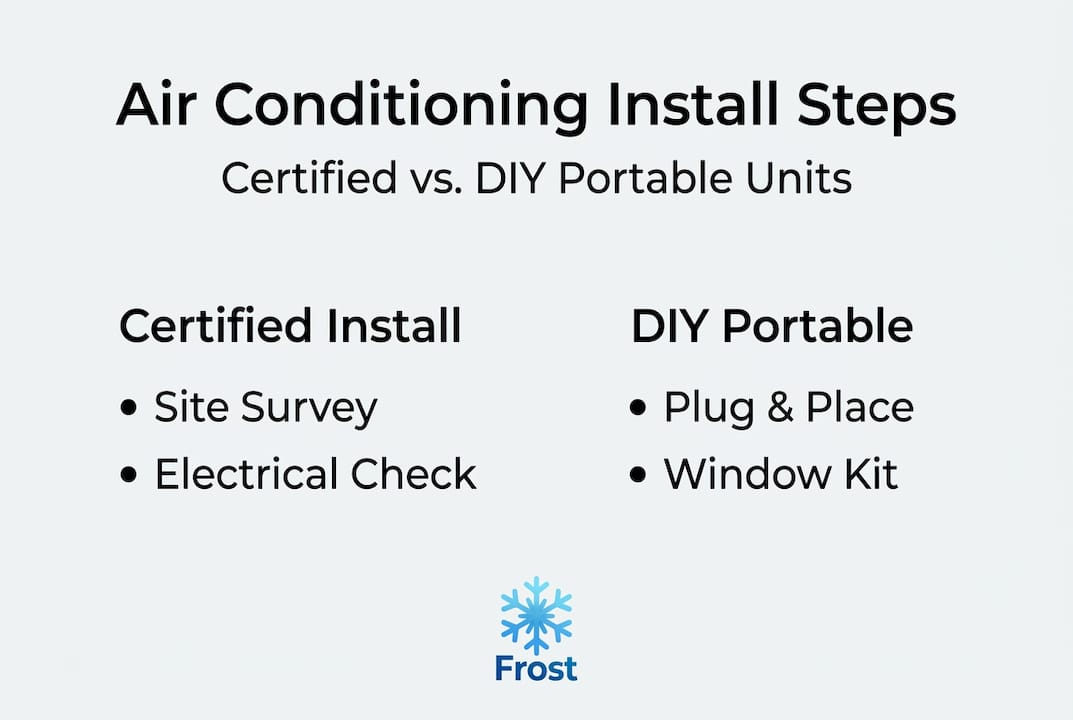
| Factor | DIY (portable unit) | Professional split system |
|---|---|---|
| Legal status | Permitted | Requires F-Gas certified engineer |
| Cooling efficiency | Lower | Significantly higher |
| Noise level | Higher | As low as 19dB |
| Warranty protection | Limited | Full manufacturer warranty |
| Installation time | Minutes | 4 to 8 hours |
| Long-term running cost | Higher | Lower |
Troubleshooting, common mistakes and expert tips
With your air conditioning installed, the next priority is making sure it performs well and that small issues are caught before they become costly repairs.
The most common installation mistakes
The biggest errors we see in poorly installed systems fall into three categories. First, improper sizing: fitting a unit that is too small for the room means it runs constantly without ever reaching the target temperature, driving up your energy bills. Fitting one that is too large causes short-cycling, where the unit switches on and off rapidly and fails to dehumidify the air properly.
Second, skipping the vacuum stage. As mentioned above, this introduces moisture into the refrigerant circuit, which causes acid formation and compressor damage over time. It is an invisible problem that only shows up months or years later, usually just after the warranty period has expired.
Third, refrigerant leaks caused by poorly flared copper joints. Professional installation avoids leaks, ensures correct sizing, and protects your warranty. A certified engineer uses calibrated flaring tools and pressure-tests every joint before the system is charged.
Troubleshooting common performance issues
- Unusual noise: A rattling sound usually indicates a loose panel or debris in the outdoor unit. A hissing sound can indicate a refrigerant leak and needs immediate professional attention.
- Reduced airflow: The most likely cause is a dirty air filter. Most indoor units have a washable filter that should be cleaned every four to six weeks during heavy use.
- Unit not reaching set temperature: Check that doors and windows are closed, and that the unit is not in direct sunlight. If the problem persists, the system may be low on refrigerant.
- Water dripping indoors: This suggests a blocked condensate drain. Your engineer can clear this quickly during a service visit.
Expert tips for period homes in Devon and Cornwall
Stone and cob walls found across the South West retain heat differently to modern cavity walls. Position your indoor unit on an internal partition wall where possible, as this simplifies the pipe run and avoids drilling through thick external stonework. If external drilling is unavoidable, ask your installer about flexible pipe routing to minimise the length of exposed trunking on the facade.
Pro Tip: Book your annual service in spring, before the summer demand peak. Engineers are easier to schedule, and any small issues are caught before you actually need the system to perform.
What to expect after installation: performance, maintenance, and financing
Once installation is complete, understanding what good performance looks like and how to maintain it will protect your investment for years to come.
Energy performance and comfort
Modern inverter-driven split systems are remarkably efficient. Quiet inverter units save 60% energy compared to older fixed-speed systems, and the best models operate at noise levels below 19dB indoors, which is quieter than a whispered conversation. For Devon and Cornwall homeowners, the heat pump function is particularly valuable. The same unit that cools your home in summer can heat it efficiently in winter, making it a genuine year-round comfort solution rather than a seasonal luxury.
Key performance expectations after installation:
- Indoor unit noise: typically 19dB to 35dB depending on fan speed
- Outdoor unit noise: typically 45dB to 55dB, equivalent to moderate rainfall
- Energy efficiency ratio: modern units achieve SEER ratings above 7, meaning they produce more than 7 units of cooling for every unit of electricity consumed
- Heating mode: effective down to external temperatures of minus 15°C in most modern heat pump models
Maintenance routine to protect your investment
Annual servicing is not optional if you want sustained performance. A service visit includes checking refrigerant levels, cleaning the heat exchanger, inspecting electrical connections, clearing the condensate drain, and verifying that the system is operating within manufacturer specifications. Skipping annual servicing is the single most common reason systems underperform or fail prematurely.
Financing your installation
Cost is the most common reason homeowners in Devon and Cornwall delay air conditioning installation, and that is entirely understandable. A quality split system installation represents a meaningful investment. Finance options include 0% interest arrangements over up to 10 months, making the cost manageable without the need for large upfront savings. Personal loans and drawing on existing savings are also viable alternatives, though it is worth comparing APRs carefully if you go down the loan route.
Pro Tip: When comparing finance deals, look at the total amount repayable rather than just the monthly payment. A 0% offer with no arrangement fee is almost always the most cost-effective route for installations completed within the interest-free period.
Why professional installation is non-negotiable: our take
We have seen what happens when homeowners cut corners, and it is never pretty. A refrigerant leak from a poorly flared joint, discovered two years after a cheap installation, is not covered by warranty and can cost more to fix than the original installation. We have also seen systems installed without a proper vacuum that failed within 18 months because of compressor damage caused by moisture contamination.
For homes across Devon and Cornwall, the stakes are slightly higher than in a standard new-build. Period properties with thick walls, older electrics, and exposed external facades require an engineer who understands regional building stock, not just someone who has watched an installation video online.
The legal position is clear: handling refrigerants without F-Gas certification is a criminal offence. But beyond legality, the practical argument for using local certified installers is overwhelming. Local engineers know the planning considerations for listed buildings in Cornwall, understand the electrical quirks of older Devon farmhouses, and are available for follow-up servicing without a lengthy wait.
Annual servicing and transparent financing are not extras. They are the foundation of a system that actually works when you need it most.
Get your certified air conditioning installed in Devon or Cornwall
If you are ready to move forward, Frost Air Conditioning installs certified split systems across Devon and Cornwall from our base in Exeter. We are F-Gas registered, offer same-day installations where possible, and provide flexible 0% finance to spread the cost without the stress.

Whether you are cooling a single room or planning a multi-room system, our team carries out a full site survey before recommending anything. We work with period properties, new builds, and everything in between. Contact our local certified installers to discuss your requirements, or go straight to our request a quote page to get a fixed price for your installation. No obligation, no pressure, just straightforward advice from engineers who know the South West.
Frequently asked questions
Can I install a split air conditioner myself in the UK?
No. UK law requires all split system installations to be carried out by an F-Gas certified professional due to refrigerant handling regulations, and DIY installation is a criminal offence.
How long does air conditioning installation take?
A professional single-split installation typically takes between four and eight hours, depending on your property's wall type, electrical setup, and pipe run length.
Are portable air conditioners effective for Devon and Cornwall homes?
Portable units are permitted for DIY use, but they are less efficient and noisier than professionally installed split systems and struggle to cool larger rooms effectively.
What financing options are available for air conditioning installation?
Finance options include 0% interest for up to 10 months; personal loans and savings are alternatives, but always compare the total amount repayable before committing.