

AC filters are components that trap airborne particles to protect your HVAC system and improve the air you breathe indoors. The main types of AC filters are fiberglass, pleated, electrostatic, and HEPA, each differing in filtration efficiency, material, and maintenance needs. Filter performance is measured using the MERV (Minimum Efficiency Reporting Value) rating system, which runs from 1 to 16 for residential use. For most homes, pleated filters rated MERV 8–11 offer the best balance between clean air and healthy airflow. Choosing the wrong filter type risks poor air quality, higher energy bills, or even damage to your system.
1. Fiberglass filters: affordable but basic
Fiberglass filters are the entry-level option in air conditioning filter types. They are made from layered glass fibres bonded together to catch large particles such as dust, lint, and debris. Fiberglass filters require replacement every 30 days and sit at the lower end of the MERV scale, typically MERV 1–4. That low rating means they do very little to capture smaller allergens, mould spores, or fine dust.
Pros and cons at a glance:
- Very low purchase cost
- Easy to find and replace
- Protect the system from large debris
- Poor at capturing fine particles or allergens
- Monthly replacement adds up over time
- Not suitable for households with pets or allergy sufferers
Pro Tip: If you use fiberglass filters, set a monthly phone reminder to replace them. A clogged fiberglass filter restricts airflow just as badly as a more expensive one.
Fiberglass filters suit secondary applications, such as protecting equipment in a utility room, or households on a very tight budget who replace them religiously. For living spaces where air quality matters, they fall short.
2. Pleated filters: the best all-round choice for most homes
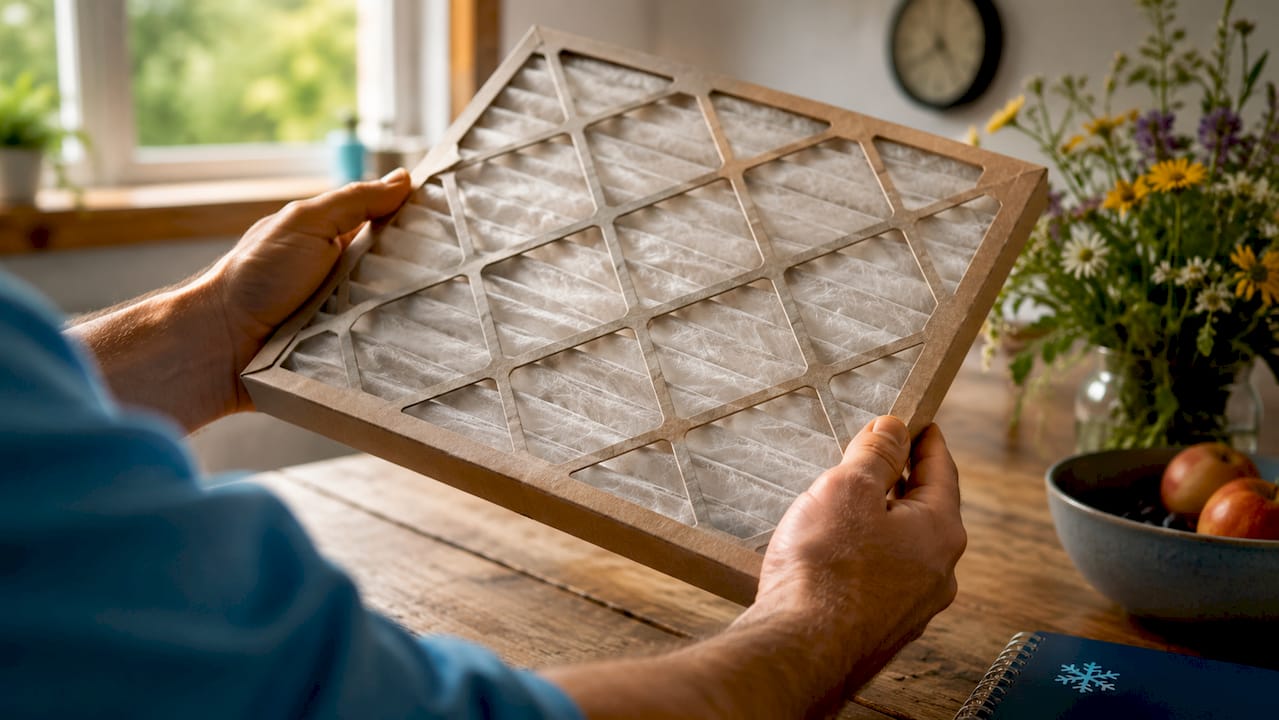
Pleated filters are made from polyester or cotton paper folded into accordion-style pleats. Those pleats increase the total surface area of the filter, which means more contact with passing air and better particle capture. They catch mould spores, pet dander, pollen, and fine dust far more effectively than fiberglass alternatives.
Pleated filters with MERV 8–11 are recommended as the optimal balance for most residential HVAC systems. They last around 90 days under normal conditions, though homes with pets or heavy use may need changes closer to every 60 days.
Key advantages of pleated filters:
- Higher surface area captures smaller particles
- MERV 8–11 range suits most domestic AC systems
- Longer lifespan than fiberglass, typically 90 days
- Available in a wide range of sizes and thicknesses
- Modest price increase over fiberglass with significantly better performance
Pro Tip: Buy pleated filters in multipacks. You save money and always have a replacement ready, which removes the temptation to leave a dirty filter in place.
The main trade-off is that denser pleated filters do restrict airflow slightly more than fiberglass. That is rarely a problem at MERV 8–11, but it becomes relevant if you consider upgrading further. Pleated filters are the default recommendation from Frostairconditioning for most domestic installations in the South West.
3. Electrostatic filters: self-charging particle traps
Electrostatic filters use static electricity to attract and hold airborne particles. As air passes through the filter material, friction generates a static charge that pulls particles toward the fibres, similar to the way a balloon sticks to a wall after being rubbed. This makes them particularly effective on fine particles including smoke, dust, and some allergens.
These filters come in two forms: disposable and washable. Washable electrostatic filters are the more common choice for homeowners who want a reusable option.
What to know before buying:
- Effective on fine particles including smoke and dust
- Washable versions reduce long-term filter costs
- No ongoing purchase cost once you own a washable unit
- Require cleaning every 2–4 weeks during heavy use periods
- Performance drops sharply if cleaning is neglected
- Disposable versions cost more per unit than standard pleated filters
Washable mesh filters should be cleaned every 2–4 weeks during peak seasons to maintain airflow and prevent coil freezing in split AC systems. That is a task most homeowners can handle themselves with a gentle rinse and air dry.
Pro Tip: Never reinstall a washable filter while it is still damp. A wet filter restricts airflow and creates the exact conditions mould needs to grow inside your system.
Electrostatic filters suit households that want to reduce waste and ongoing costs, provided they commit to the cleaning schedule. If that maintenance feels unrealistic, a pleated disposable filter is the more reliable choice.
4. HEPA filters: maximum filtration with important caveats
HEPA (High Efficiency Particulate Air) filters are the gold standard in air filtration. HEPA filters capture 99.97% of particles down to 0.3 microns, which includes bacteria, tobacco smoke, and the finest allergens. For households with severe allergies, asthma, or pets, HEPA filtration delivers a meaningful improvement in air quality. You can read more about filtration and allergy relief in detail.
HEPA filters are not a plug-and-play upgrade for standard residential AC systems. Their dense material restricts airflow significantly, and installing one in a system not designed for it can reduce efficiency, increase energy consumption, and cause premature motor failure. Always confirm compatibility with a qualified engineer before fitting a HEPA filter to an existing unit.
Practical considerations:
- Replacement intervals typically fall between 6 and 12 months
- Higher unit cost than pleated or electrostatic options
- Often require system modifications or dedicated air purifier units
- Ideal for allergy sufferers, asthma patients, or homes with multiple pets
- Not compatible with all standard domestic HVAC systems without modification
Installing high-MERV or HEPA filters in incompatible systems increases energy consumption and risks premature damage to HVAC motors due to airflow reduction. The EPA is clear on this point, and it is one of the most common and costly mistakes homeowners make when upgrading filters.
5. How to choose the right AC filter for your home
Choosing between different AC filter options comes down to four factors: your HVAC system's airflow capacity, your household's air quality needs, your maintenance habits, and your budget.
Start with MERV ratings. The MERV scale is a national consensus standard, while MPR and FPR ratings are proprietary systems used by specific manufacturers. MERV ratings are the most reliable basis for comparing filters across brands. Always cross-check proprietary ratings against their MERV equivalent before buying.
Using filters with higher MERV ratings than your system supports reduces airflow, increases energy use, and risks equipment damage. The EPA recommends consulting an HVAC professional before upgrading above MERV 11 in a standard residential system.
Household factors that affect your choice:
| Factor | Recommended filter type | MERV range |
|---|---|---|
| No pets, no allergies | Pleated disposable | MERV 8–10 |
| Pets or mild allergies | Pleated or electrostatic | MERV 10–11 |
| Severe allergies or asthma | HEPA-compatible unit | MERV 13+ with professional check |
| Budget priority | Fiberglass disposable | MERV 1–4 |
| Eco-conscious, hands-on | Washable electrostatic | MERV 8–10 |
Visual inspection every 30 days is the most reliable way to judge when a filter needs changing, regardless of what the packaging states. Household dust levels, pet hair, and local air quality all affect how quickly a filter loads up.
Pro Tip: Hold your filter up to a light source. If you cannot see light through it, replace it immediately, regardless of how recently you installed it.
For a broader view of how your filter choice fits into your overall system, the HVAC air quality improvements guide covers the full picture well. Frostairconditioning also recommends pairing your filter choice with the right domestic AC unit to get the most from your system.
Filtration is only one part of indoor air quality. Source control and ventilation with clean outdoor air are equally critical, and no filter type compensates for a poorly ventilated home.
Key takeaways
Pleated filters rated MERV 8–11 are the best choice for most homes, balancing effective particle capture with the airflow your system needs to run efficiently.
| Point | Details |
|---|---|
| Pleated filters suit most homes | MERV 8–11 pleated filters balance air quality and system airflow for typical residential use. |
| HEPA requires system compatibility | Never fit a HEPA filter without confirming your HVAC system can handle the airflow restriction. |
| MERV is the standard to use | Ignore proprietary MPR and FPR ratings; always compare filters using the MERV scale. |
| Inspect filters monthly | Visual checks every 30 days are more reliable than following fixed packaging intervals. |
| Washable filters need regular cleaning | Clean electrostatic washable filters every 2–4 weeks during heavy use to prevent coil freezing. |
What I have actually learned from years of filter questions
The single most common mistake I see homeowners make is assuming that a higher MERV rating is always better. It is not. The best filter is the one that matches your system's airflow capacity, not the one with the most impressive number on the box. I have seen perfectly good AC units develop motor problems within a year because someone fitted a MERV 13 filter into a system designed for MERV 8. The motor works harder to pull air through a denser filter, and over time, that extra strain adds up.
The second myth worth challenging is the idea that washable filters are low effort. They are lower cost over time, but they demand consistent attention. A washable filter that gets cleaned once every few months performs worse than a cheap disposable that gets swapped out on schedule. Maintenance discipline matters more than filter type.
What I genuinely advocate for is treating your filter as part of a wider air quality strategy rather than a standalone fix. AC systems improve indoor air quality most effectively when the filter is right for the system, changed or cleaned on time, and supported by adequate ventilation. Get those three things right and the filter type becomes almost secondary.
If you are ever unsure whether your system can handle a filter upgrade, ask a qualified engineer before you buy. That conversation costs nothing and could save you a significant repair bill.
— James
Frostairconditioning: professional installation and maintenance in the South West
Getting the right filter is only half the equation. The other half is making sure your AC system is installed correctly and maintained so that the filter can do its job.
Frostairconditioning is based in Exeter and covers the South West, offering domestic AC installation with same-day availability and 0% finance options. Every installation is carried out by F-Gas certified engineers who specify the correct filter type and size for your system from day one. Frostairconditioning also provides service and maintenance plans that include filter checks, coil cleaning, and system performance reviews. If you want to know which filter type suits your home and system, request a quote and get advice from an engineer who knows your local conditions.
FAQ
What are the main types of AC filters?
The main types are fiberglass, pleated, electrostatic (disposable or washable), and HEPA. Each differs in filtration efficiency, cost, and maintenance requirements.
What MERV rating should I choose for a home AC system?
Pleated filters rated MERV 8–11 are recommended for most homes, as they balance effective filtration with the airflow your system needs to run without strain.
Can I fit a HEPA filter in my standard home AC unit?
Not without checking compatibility first. HEPA filters restrict airflow significantly and can damage HVAC motors in systems not designed to handle them. Consult a qualified engineer before upgrading.
How often should I replace or clean my AC filter?
Inspect your filter visually every 30 days. Replace disposable filters when they appear grey and clogged. Clean washable electrostatic filters every 2–4 weeks during periods of heavy use.
Is MERV the same as MPR or FPR?
No. MERV is a national consensus standard and the most reliable measure for comparing filters. MPR and FPR are proprietary rating systems used by specific manufacturers and should always be cross-referenced against their MERV equivalent.