
Resetting a home air conditioning unit means performing a full power cycle to clear temporary electronic faults and restore normal operation. You turn off the indoor unit, cut power to the outdoor unit, wait for internal components to discharge and equalise, then power everything back up in the correct sequence. This guide covers how to reset home aircon systems safely, what to check beforehand, how to troubleshoot if the reset does not work, and when to stop and call a certified engineer. Brands like Carrier and TCL build reset functions into their units differently, so the steps below apply broadly across split and multi-split systems.
What pre-reset checks should you perform?
Before you touch a single switch, a few quick checks can save you time and prevent unnecessary risk. 90% of common AC issues are solvable by homeowners using a basic diagnostic checklist covering thermostat settings, breaker status, and filter condition. That means most call-outs to engineers are avoidable with five minutes of preparation.
Safety equipment and precautions
Work with dry hands at all times. If you need to reach a high disconnect switch or outdoor unit panel, use a stable step ladder rather than improvising. Rubber-soled shoes add an extra layer of protection when working near electrical components. Never attempt any checks during heavy rain or if the area around the outdoor unit is flooded.
Thermostat and power status
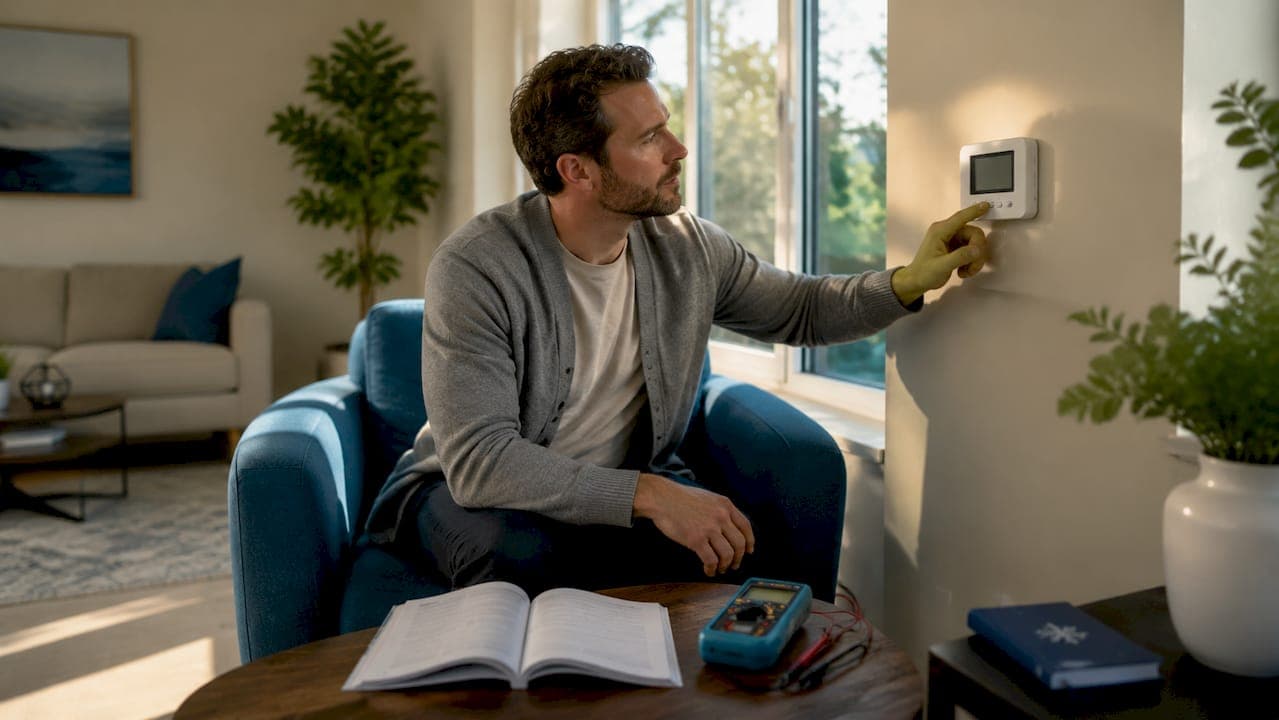
Check your thermostat first. Confirm it is set to Cool mode, the fan is set to Auto, and the target temperature is below the current room temperature. A thermostat left in Fan Only or Heat mode will prevent the compressor from running regardless of any reset you perform. Also check the circuit breaker panel to confirm the AC breaker is in the On position and has not tripped to the middle position.
Air filters and outdoor unit
Dirty or clogged air filters are a leading cause of airflow problems and frozen coils. Pull the filter out and hold it up to the light. If you cannot see light through it, replace it before resetting. Also walk around the outdoor condenser and remove any leaves, debris, or overgrown vegetation blocking the unit's airflow.
Pre-Reset Checklist
| Check Item | What to Look For | Tool Needed |
|---|---|---|
| Thermostat mode | Set to Cool, fan on Auto | None |
| Circuit breaker | Not tripped, in On position | None |
| Air filter | Clean and unobstructed | Replacement filter |
| Outdoor unit | Clear of debris and vegetation | Gloves, brush |
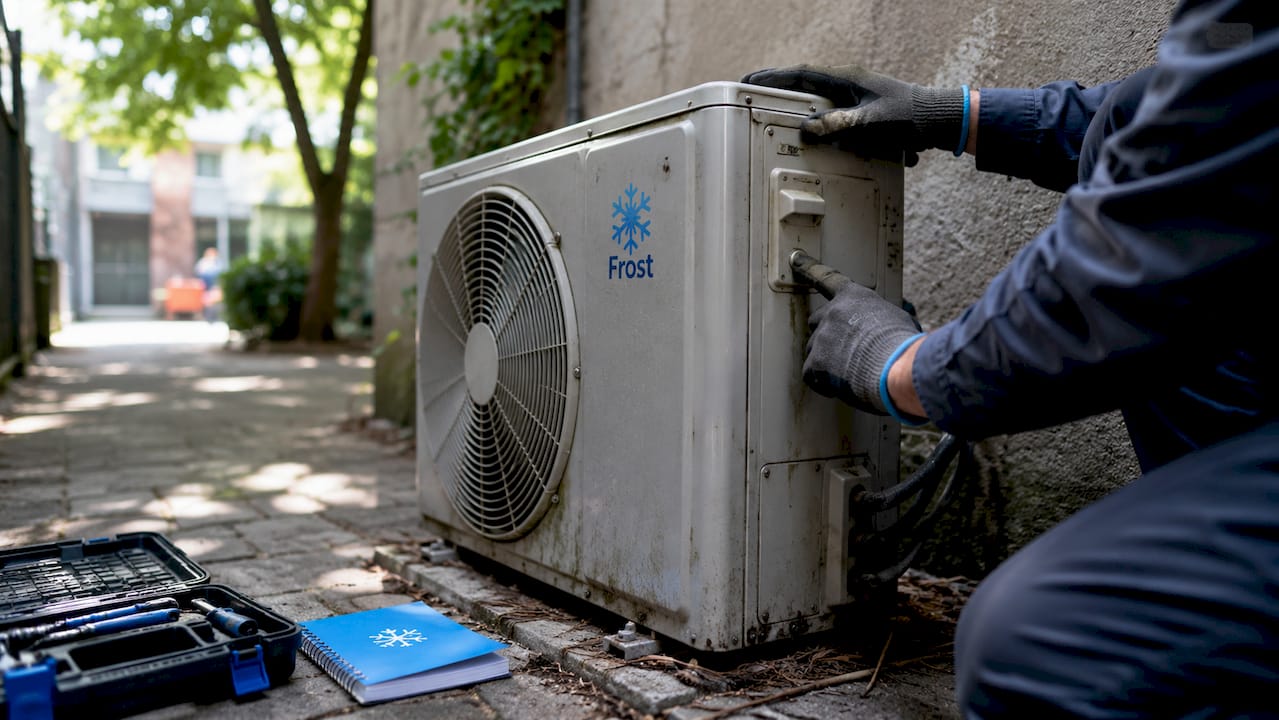
| Reset button | Located on outdoor condenser panel | Torch, stable ladder |
Pro Tip: Reset buttons are typically found on outdoor condensers and must be held for 3–5 seconds until you hear a click or see a light flash. Not all units have one, so check your model's manual before searching.
How to reset your home air conditioning unit
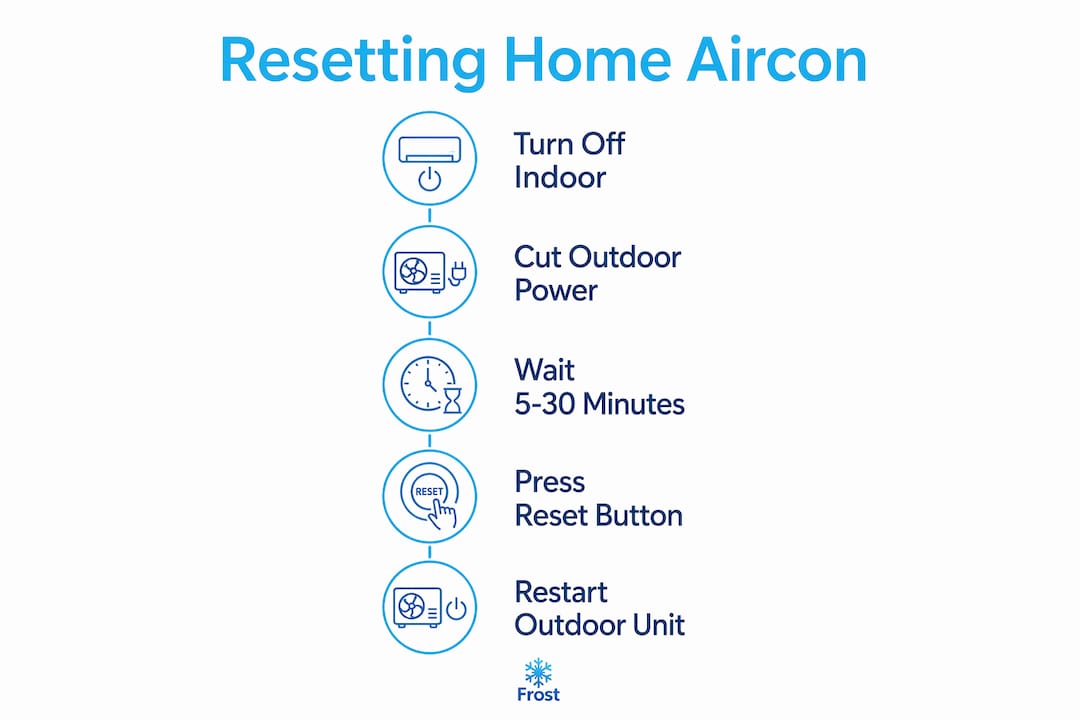
A power cycle reset follows a specific sequence: indoor unit off first, outdoor unit off second, wait, then outdoor unit on first and indoor unit on second. Reversing this order can cause communication errors between the two units and trigger fault codes on start-up.
The step-by-step reset process
- Turn off the indoor unit using the remote control or wall thermostat. Set it to Off rather than simply lowering the temperature.
- Switch off the outdoor unit at the isolator switch or circuit breaker. This is usually a grey or red box mounted on the wall near the outdoor condenser, or the dedicated breaker in your consumer unit.
- Wait a minimum of 5 minutes. Waiting at least 5 minutes allows refrigerant pressure to equalise and capacitors to discharge fully, protecting the compressor from damage on restart. For a more thorough discharge, wait up to 30 minutes.
- Restore power to the outdoor unit first by switching the isolator or breaker back to On.
- Power on the indoor unit using the remote or thermostat. Set it to Cool mode with the target temperature at least 3–4 degrees below the current room temperature to call for cooling immediately.
- Observe the system for 10–15 minutes. Both the indoor and outdoor fans should run, cool air should begin flowing within a few minutes, and no error codes or blinking fault lights should appear on the display.
If your model has a dedicated reset button on the outdoor unit, press and hold it for 3–5 seconds after restoring power in step 4, before switching on the indoor unit in step 5.
Pro Tip: Never rapidly cycle the power on and off. Rapidly resetting or flipping breakers repeatedly can cause catastrophic electrical failure and create a fire hazard. One reset attempt, done correctly, is always preferable to several rushed ones.
A typical home air conditioner reset requires powering down and waiting 5–30 minutes before rebooting. That window is not arbitrary. It reflects the time needed for both refrigerant pressure and electrical components to return to a safe resting state.
How to troubleshoot aircon that still will not cool
If the reset does not restore normal operation, a handful of common faults are worth checking before calling an engineer. Resetting clears temporary electronic glitches but cannot fix mechanical faults or persistent underlying problems. Think of the reset as a diagnostic step, not a repair.
Common issues and what to do
- Tripped breaker that keeps returning to Off. Reset the breaker once. If it trips again within minutes, stop. A recurring trip signals an electrical fault that requires a certified engineer, not another reset.
- Dirty air filter. Replace the filter if you did not do so before the reset. A blocked filter restricts airflow enough to cause the unit to shut down on thermal overload.
- Thermostat batteries or settings. Replace remote control batteries and double-check that no child lock or timer function is active. Many apparent faults trace back to a remote that is not communicating properly.
- Error codes or blinking lights. Note the exact code or flash pattern and look it up in your unit's manual. Codes like E1, E4, or F3 each point to specific subsystems and tell you whether the fault is user-resolvable or requires a technician.
- Blocked outdoor unit. A gentle rinse with a garden hose on the condenser fins can clear dust and debris that cause overheating. Do not use a pressure washer, as this bends the fins and reduces efficiency.
Troubleshooting Comparison Table
| Symptom | Likely Cause | Homeowner Action | Call a Technician? |
|---|---|---|---|
| Unit does not start | Tripped breaker | Reset breaker once | Yes, if it trips again |
| Warm air from vents | Dirty filter or low refrigerant | Replace filter | Yes, if filter is clean |
| Error code on display | Sensor or component fault | Check manual for code | Yes, for most codes |
| Outdoor unit not running | Capacitor or contactor fault | Check isolator switch | Yes |
| Frequent shutdowns | Overheating or electrical fault | Clear debris around unit | Yes, if it continues |
Pro Tip: Never open sealed electrical panels beyond the main breaker or attempt to access refrigerant lines. Handling refrigerants requires F-Gas certification in the UK. Attempting this without certification is illegal and dangerous. For common faults you can address yourself, the fix common air conditioning problems guide from Frostairconditioning covers the full diagnostic process.
What safety limits should homeowners respect?
The boundary between a safe DIY reset and a dangerous intervention is clear. You can operate breakers, replace filters, clean condenser fins, and check thermostat settings. Everything beyond that requires a qualified engineer.
Frequent resets suggest underlying issues such as clogged filters, overheating, or unstable electricity supply. A unit that needs resetting every few days is telling you something is wrong mechanically or electrically. Treating each reset as a solution rather than a warning sign leads to compressor failure, which is one of the most expensive repairs on any air conditioning system.
"Do not keep cycling the breaker if the unit trips repeatedly. Each forced restart under fault conditions stresses the compressor and wiring. One trip is a warning. Two trips in quick succession is a fault. Three trips means you need a certified engineer on site before you touch that breaker again."
Refrigerant handling is a legal matter in the UK, not just a safety one. F-Gas regulations require certification for anyone working with refrigerant gases. No homeowner should attempt to top up, recover, or check refrigerant levels. If your unit is not cooling despite a successful reset and a clean filter, low refrigerant is a likely cause and a certified engineer is the only legal route to a fix. Regular air conditioning maintenance reduces the frequency of these issues significantly by catching problems before they escalate.
Key takeaways
A successful home aircon reset depends on the correct power-down sequence, an adequate wait time, and restarting outdoor before indoor to avoid fault codes.
| Point | Details |
|---|---|
| Correct reset sequence | Turn indoor off first, outdoor off second, then restart outdoor before indoor. |
| Wait time matters | Wait at least 5 minutes, up to 30, to allow pressure equalisation and capacitor discharge. |
| Pre-reset checks save time | Verify thermostat settings, breaker status, and filter condition before resetting. |
| Reset is not a repair | Persistent faults after reset require professional diagnosis, not repeated power cycling. |
| Know your legal limits | F-Gas regulations prohibit homeowners from handling refrigerant without certification. |
What i have learned after years of seeing homeowners reset their aircon
The most common mistake I see is the rushed reset. Someone notices the unit is not cooling, flips the breaker off, counts to ten, and flips it back on. When it does not work, they do it again. By the third attempt, they have potentially stressed the compressor and made a simple fault into an expensive one.
The reset is a diagnostic tool. When it works first time and the unit runs normally afterwards, the fault was a temporary electronic glitch, probably caused by a power surge or a brief voltage drop. When it does not work, the reset has done its job by telling you the problem is deeper than a software hiccup.
What I would also say is this: most homeowners who call an engineer for a non-cooling unit have not checked the filter in months. A blocked filter is the single most common cause of poor performance, and it takes two minutes to check. Build a habit of checking your filter every four to six weeks during heavy use periods. That one habit will reduce your need for resets, service calls, and repairs more than anything else.
Finally, if you are resetting your unit more than once or twice a year, book a service. A certified engineer will find the underlying cause before it becomes a breakdown.
— James
Keep your aircon running without the guesswork
If your unit keeps throwing faults or you want to avoid the reset cycle altogether, Frostairconditioning can help. Based in Exeter and covering the South West, Frostairconditioning offers F-Gas certified engineers, same-day installs, and 0% finance options for new domestic systems.
Whether you need a new domestic installation or a planned service maintenance visit to keep your existing unit in peak condition, Frostairconditioning handles it from start to finish. A well-serviced unit rarely needs resetting. Get in touch today and let a certified engineer take the guesswork out of your home cooling.
FAQ
How long should i wait when resetting my home aircon?
Wait a minimum of 5 minutes after cutting power. Waiting up to 30 minutes allows full refrigerant pressure equalisation and capacitor discharge, which protects the compressor on restart.
Why does my aircon keep tripping the breaker after a reset?
A breaker that trips repeatedly after being reset indicates an electrical fault in the system. Stop resetting it and contact a certified HVAC engineer, as continued cycling risks compressor damage or fire.
Can i reset my aircon without a reset button?
Yes. Most units do not have a dedicated reset button. A full power cycle, turning off the indoor unit, cutting outdoor power, waiting, then restoring power in reverse order, achieves the same result.
How do i know if my aircon reset was successful?
Both indoor and outdoor fans should run within a few minutes of restart, cool air should flow from the vents, and no error codes or fault lights should appear on the unit's display.
When should i call a professional instead of resetting my aircon?
Call a certified engineer if the breaker trips more than once, if error codes persist after a reset, if the unit runs but produces no cool air with a clean filter, or if you suspect a refrigerant issue.