
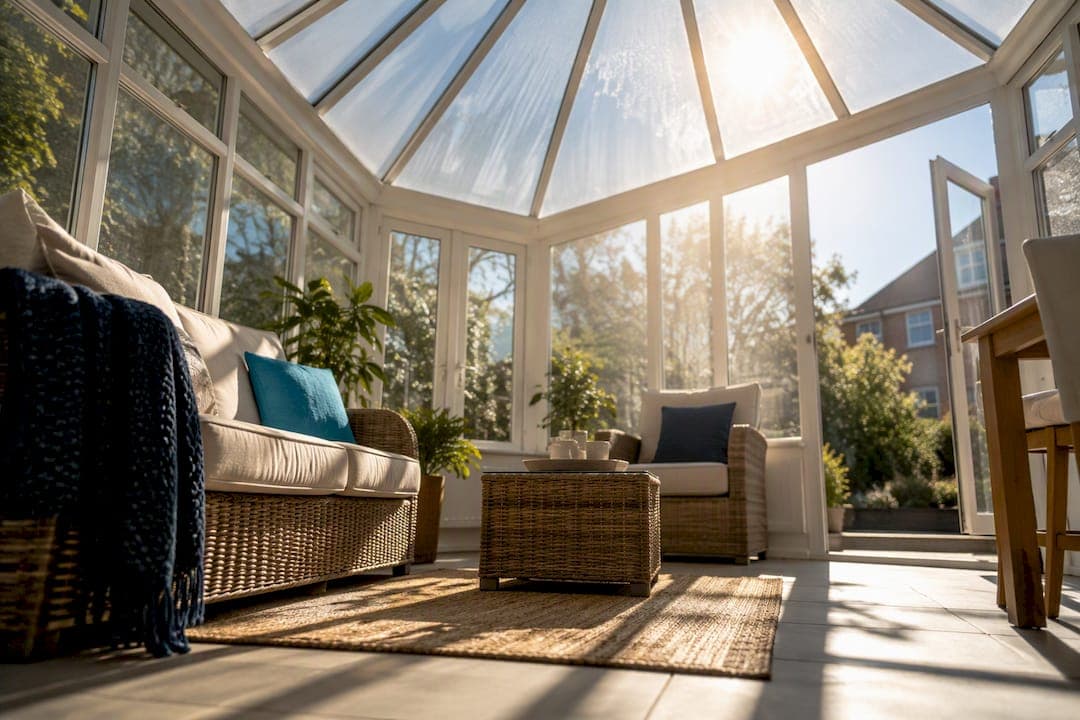
A conservatory gets too hot because sunlight through the roof and glazing generates more heat than the space can shed. Start by shading the glass and timing your ventilation properly: keep it closed during peak sun and purge it overnight. Only move on to mechanical cooling or a roof upgrade once those low-cost steps have been tried, and always keep an eye on vulnerable family members during hot spells.
TL;DR:
- External shading options like awnings or brise soleil outperform internal blinds by intercepting sunlight before it heats the room.
- Using a thermometer to monitor peak temperatures helps time shading, ventilation, and cooling measures more effectively.
- Roof and window films can reflect solar radiation, with performance depending on proper matching to roof material and durability.
- Properly sized air conditioning units, based on detailed heat-load calculations, are the most reliable fix for rooms remaining uncomfortably hot despite passive measures.
- Converting to a solid, insulated roof can significantly improve comfort in both summer and winter but may impact building regulation exemptions.
Table of Contents
- Why conservatories get so hot
- Quick fixes you can try this week
- Passive upgrades that reduce solar gain
- Active cooling: air conditioning, correct sizing and installation notes
- When a roof upgrade or conversion is the right fix
- How to choose the right solution and questions to ask tradespeople
- Installer perspective: rules of thumb from the field
- How Frost Air Conditioning can help
- Sources
- FAQ
Why conservatories get so hot
A conservatory is, structurally, a greenhouse attached to your house. Sunlight passes through the glazing, warms the surfaces inside, and that heat then struggles to escape because the same glazing that let it in also traps it. The roof does most of the damage. A polycarbonate or glass roof faces the sun almost directly for hours, while side glazing only catches direct light at lower angles, so a room with a full glass roof and south or west facing walls will run hotter than one with a shaded or north facing aspect.
Ventilation shortfalls make it worse. Many homeowners open windows in the afternoon once the room already feels unbearable, which does little because the air coming in is often as warm as the air trapped inside. The more useful pattern, according to NHS guidance on coping in hot weather, is to close windows and blinds between roughly 11am and 3pm, then open them at night once outdoor air has cooled, to purge the trapped heat.

This is not a pure comfort issue. The NHS notes that even in a relatively cool summer, around one in five UK homes are likely to overheat, and overheating carries real risks for older people, young children and anyone with a heart or respiratory condition.
Quick fixes you can try this week
Before you spend anything, get the basics right. These changes cost little or nothing and can take several degrees off the peak temperature in a conservatory.
- Close blinds, curtains or shutters between 11am and 3pm to block the sun at its strongest, then open windows and doors at night for purge ventilation once the outdoor air is cooler.
- Rig up a temporary external awning, umbrella or shade sail if you do not yet have external blinds, since stopping heat before it hits the glass works better than trying to block it once inside.
- Shut the door between the conservatory and the rest of the house during the day so the heat stays contained in one room rather than spreading.
- Switch off anything that generates extra heat, such as lamps, laptops or a television left on standby, and use a fan only once the room is below about 35°C, since fans move air rather than cool it.
Pro Tip: A cheap max/min thermometer left in the conservatory for a week will tell you exactly when the room peaks, so you can time your shading and venting to the actual pattern rather than guessing.
These measures typically buy you a noticeable drop in peak temperature, but they will not fix a conservatory that is unusable all summer. If you are still finding it too hot to sit in by early afternoon even with blinds down and windows managed properly, that is your signal to look at passive upgrades or active cooling.

Passive upgrades that reduce solar gain
Once you have exhausted the free options, the next tier is upgrading the glazing itself or adding proper external shading. This is where you start reducing the amount of heat entering the room in the first place, rather than just managing what is already there.
- Roof films and window films cut solar heat gain by reflecting a portion of incoming radiation, though performance and durability differ between films rated for glass and those rated for polycarbonate, so check the specification matches your roof material.
- External shading, such as retractable awnings, external blinds or brise soleil, generally outperforms internal blinds because it intercepts sunlight before it reaches the glass rather than after the heat is already inside.
- Solar control glazing, described by its g-value or solar heat gain coefficient, tells you what proportion of solar energy passes through: ask suppliers for the g-value of any replacement glazing and compare it against your existing panels.
- Check whether the installer needs to alter roof or wall junctions, since some film and shading systems fit to existing frames while others require brackets or fixings into the structure.
Costs and lifespan vary by product, and a supplier or installer for your specific conservatory should confirm what a given film or blind will realistically achieve for your roof type and orientation. Research into overheating in new homes points to solar control glazing and purge ventilation as genuinely effective mitigation measures, rather than cosmetic fixes.
Active cooling: air conditioning, correct sizing and installation notes
Fans only move air around, which offers some relief but does nothing to actually remove heat from a room with heavy solar gain. Air conditioning is the only method on this list that removes heat rather than redistributing it, which is why it remains the most dependable route for a conservatory that is unusable for weeks at a time. Our comparison of air conditioning and fans covers this distinction in more detail.
Sizing matters more in a conservatory than almost anywhere else in the house. Glazed roofs and walls push the heat load well above what a similarly sized bedroom or lounge would need, so a unit sized by floor area alone is likely to underperform. A proper heat-load calculation, factoring in glazing area, orientation and roof type, is the only reliable way to specify a system that will actually keep the room comfortable. Our guide to sizing air conditioners walks through how that calculation works.
- Wall-split systems are the most common choice for conservatories, offering efficient cooling with a discreet indoor unit, though they need a suitable wall for mounting and a route for pipework to an outdoor condenser.
- Floor-standing units suit rooms without an obvious wall-mounting spot, though they take up floor space.
- Portable units are the least effective option for a heavily glazed room, since their limited capacity struggles against sustained solar gain.
Pro Tip: Ask any installer how they calculate condensate drainage and cable routing for a conservatory specifically, since these rooms often lack the wall cavities a typical room has, and a rushed installation can lead to visible pipework or drainage problems later.
Whoever you use, ask for F-gas and REFCOM credentials, and find out what warranty and maintenance plan comes with the installation, since a system that is not serviced annually will lose efficiency over time.
When a roof upgrade or conversion is the right fix
If you have tried shading, ventilation and even a properly sized air conditioning system and the room still runs uncomfortably hot, or uncomfortably cold in winter, the roof itself may be the underlying problem. A poor-performing polycarbonate or single-glazed roof lets through far more solar radiation than a solid, insulated alternative.
Solid, tiled or composite insulated roof conversions typically improve both summer and winter comfort substantially, because they cut solar gain in summer and reduce heat loss in winter. That dual benefit is why many conservatory owners eventually convert rather than layering on more shading and cooling.

The catch is regulatory. Many conservatories in the UK are built under an exemption from full Building Regulations, but that exemption depends on conditions such as glazing area and separation from the main heating system. A roof conversion that removes a significant proportion of glazing, or that connects the room to the house's heating, can lose that exemption and trigger a Building Control requirement, potentially assessed against CIBSE TM59 overheating criteria or Part O. A reputable roofing contractor should flag this before work starts, and the job itself typically runs from a few days for a straightforward panel swap to a couple of weeks where structural work is involved.
How to choose the right solution and questions to ask tradespeople
Match the fix to how often the room overheats, your budget, what you actually use the space for, and its orientation and structural condition. A conservatory used only occasionally in summer needs a different answer to one that functions as a daily living room.
- Ask any air conditioning installer how they calculate system size, since a quote based on floor area alone is a red flag.
- Confirm they hold F-gas certification, which is a legal requirement for anyone handling refrigerant in the UK.
- Ask what maintenance plan and warranty come with the installation, and how breakdowns are handled.
- For roof work, ask directly whether the proposed changes will keep the conservatory's exemption status intact, and whether they liaise with Building Control when needed.
- Get a structural check before committing to a solid roof conversion, and seek a second opinion if a contractor cannot explain how they arrived at a quote.
Installer perspective: rules of thumb from the field
On a survey visit, the things worth checking are roof material, orientation, the condition of the frame and how much ventilation already exists. The sensible order is shade first, then passive upgrades, then air conditioning, and only then a roof conversion if the room is still unusable. Domestic air conditioning installation timelines vary depending on the project complexity and structural work involved.
— James
How Frost Air Conditioning can help

If shading and ventilation have not been enough to make your conservatory usable this summer, a correctly sized air conditioning system is usually the most reliable next step, and getting that sizing right is where a proper survey earns its keep.
| What you get | Detail |
|---|---|
| Certification | Certified engineers |
| Survey | On-site heat-load assessment |
| Finance | Interest free finance options |
| Coverage | Regional service coverage |
Our guide to why UK homeowners choose air conditioning covers the reasoning in more depth. If your conservatory is the room you avoid every summer, book a free domestic installation survey and get a proper sizing assessment before you commit to a system.
Sources
NHS heatwave guidance, the government's overheating evidence review, and CIBSE TM59 research cover the topic in detail. Building technology background on cooling principles is also available from Sprout Lab.
This article is general information, not a substitute for advice from a qualified doctor. Consult a qualified healthcare professional about your own circumstances before acting on anything here.
- Beat the heat: keep cool at home checklist (NHS)
- Research into overheating in new homes - phase 1 (UK government / CIBSE references)
FAQ
How do I cool down a hot conservatory quickly?
Close blinds and windows between roughly 11am and 3pm to block peak sun, then open everything at night for purge ventilation once the outside air cools. If the room is still too warm to use, external shading or a correctly sized air conditioning unit is the next step.
What is the exempt conservatory rule and how does it work?
Many UK conservatories are built without full Building Regulations approval under an exemption tied to conditions such as glazing area and separation from the main house heating. Replacing the roof with a solid structure or connecting it to the home's heating can remove that exemption and bring the work under Building Control, so it is worth checking this before any roof conversion.
Is it normal for a conservatory to be hot in summer and cold in winter?
Yes, this is a common pattern because the glazing that lets in strong solar heat in summer offers little insulation against heat loss in winter. Improving shading, ventilation and glazing performance helps in summer, while a solid insulated roof conversion tends to improve both seasons.
What are the best ways to keep the sun out of a conservatory?
External shading such as awnings, external blinds or brise soleil works better than internal blinds because it stops heat before it reaches the glass. Solar control films or glazing with a lower g-value also reduce how much solar energy enters the room in the first place.