
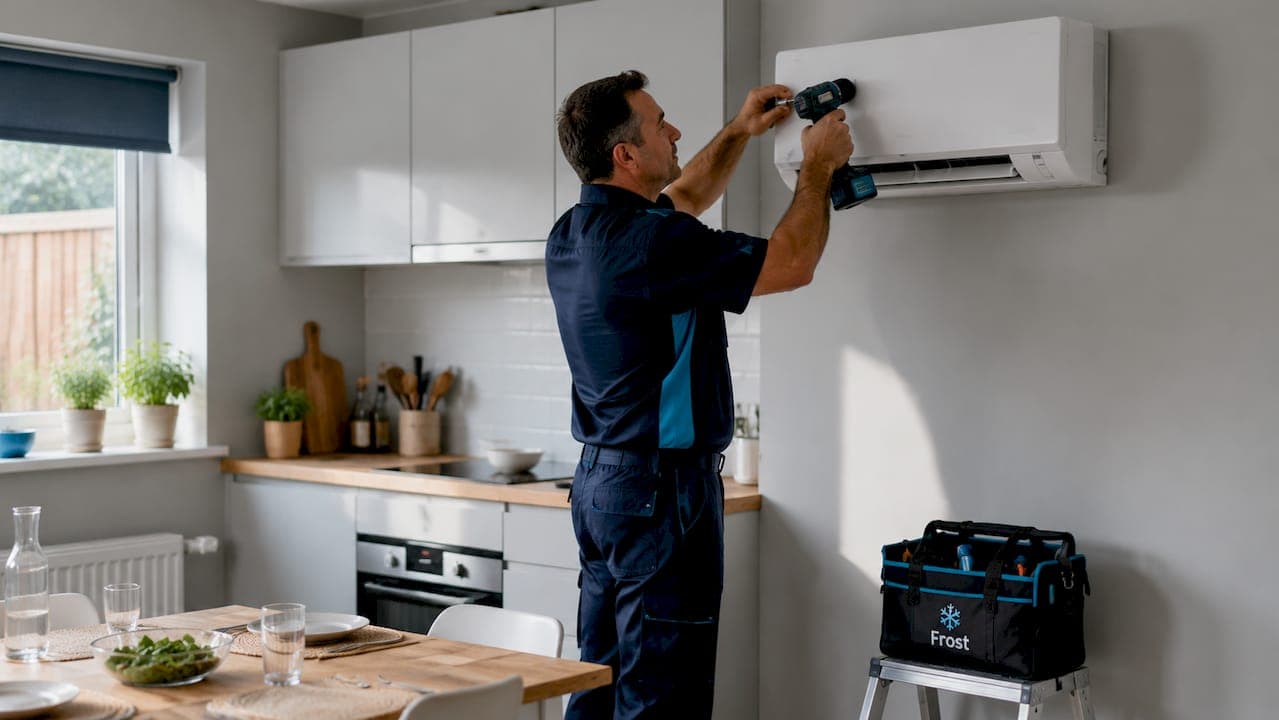
Split AC systems outperform window units and portable coolers on almost every measure that matters: energy efficiency, noise, installation simplicity, and the ability to heat and cool specific rooms independently. The outdoor compressor handles the noisy, heat-generating work while a slim indoor unit delivers conditioned air quietly and directly into the room. For UK homeowners weighing up their options, the practical case for split systems is strong.
Here is a quick summary of the core benefits:
- Energy efficiency: high SEER2 and EER2 ratings reduce electricity consumption compared to older or less efficient alternatives
- Quiet operation: noisy components sit outside, so indoor units run at near-whisper levels
- Zoning: each room can be controlled independently, so you only condition the spaces you actually use
- Simple installation: typically completed within a day for a single zone, with minimal disruption to your home
- Air quality: advanced filtration captures dust, pollen, and allergens
- Environmental footprint: modern refrigerants carry zero ozone depletion potential
- Flexibility: units can be added room by room as your budget and needs evolve
How split AC systems work, and what types are available
A split system separates its components into two units connected by refrigerant lines. The indoor air handler distributes conditioned air into the room; the outdoor unit houses the compressor and condenser, which do the heavy thermodynamic lifting. That physical separation is what makes the system quieter, easier to install, and more adaptable than a packaged unit that crams everything into one box.
Ductless mini-splits and traditional split systems share this two-unit architecture, but differ in one key way: traditional split systems connect to existing ductwork to distribute air throughout a whole home, while ductless mini-splits deliver air directly into each room via a wall-mounted or ceiling-mounted indoor unit. The ductless route suits UK homes without existing duct infrastructure, older properties, and room additions where running new ductwork would be prohibitively disruptive.
Multi-split systems extend the concept further. A single outdoor unit connects to up to five indoor units, each controllable independently. That means one compressor can serve a bedroom, a living room, and a home office simultaneously, with different temperatures in each. Single-split systems pair one outdoor unit with one indoor unit, which keeps costs lower and suits homes where only one or two rooms need conditioning. For a broader look at how these compare to ducted alternatives, the guide to ducted air conditioning covers the trade-offs in detail.
Many modern split systems also function as heat pumps, providing both heating and cooling from a single unit. That dual function makes them particularly well suited to the UK climate, where you might want cooling in July and heating in November without running a separate boiler circuit for individual rooms.
Energy efficiency and cost savings in the UK context
The efficiency case for split AC is built on two things: the elimination of duct losses and the precision of zoned control. Ducted systems lose a meaningful share of conditioned air through leaky ductwork before it ever reaches the room. Split systems, particularly ductless mini-splits, deliver air directly, so energy loss from leaky ducts is removed from the equation entirely.
High-efficiency models carry SEER2 (Seasonal Energy Efficiency Ratio) and EER2 ratings that reflect real-world performance under varied conditions. High SEER2 ratings translate directly to lower electricity consumption during cooling, which matters when UK energy prices remain elevated. Some high-end split systems reach up to 24 SEER2, and ductless mini-splits can go higher still.

Zoning amplifies those savings. Cooling only occupied rooms rather than an entire property cuts running costs considerably, particularly in larger homes where several rooms sit empty for most of the day. Units are available from 2.0kW to 9.0kW, so matching capacity to room size prevents the unit from working harder than it needs to.
| Factor | Split AC system | Window unit |
|---|---|---|
| Energy efficiency rating | High SEER2/EER2 | Lower, no zoning |
| Installation disruption | Minimal (small conduit hole) | Moderate (window frame) |
| Noise level (indoor) | Very low | Higher |
| Zoning capability | Yes (multi-split) | No |
| Upfront cost | Higher | Lower |
| Long-term running cost | Lower | Higher |
Installation costs are also lower than ducted systems. A single-zone split typically takes 4–8 hours to install, compared to the days or weeks a full ducted retrofit can require. The long-term picture favours split systems: energy savings offset the higher upfront cost over the system's lifespan, and durability tends to be strong with proper maintenance.
Key efficiency insight: inverter-driven compressors modulate their output to match the actual load rather than cycling on and off at full power. That continuous adjustment is what keeps temperatures stable and electricity bills lower than older on/off compressor designs.
Why split AC systems are so much quieter
The compressor is the loudest component in any air conditioning system. In a split system, it lives outside. That single design decision means the indoor unit only needs to move air across a coil and through a fan, which is a far quieter operation. Variable-speed indoor fans run at near-whisper levels, making split systems genuinely suitable for bedrooms and home offices where noise affects sleep or concentration.

There is also no "whoosh" of air rushing through ductwork, which is a common complaint with central systems. The air enters the room directly and quietly, without the pressure-driven noise that duct systems generate.
Pro Tip: Most split AC units include a dedicated low-noise or "sleep" mode that reduces fan speed overnight. If you are installing a unit in a bedroom, activate this mode by default rather than waiting until noise becomes an issue. Pairing the unit with noise-reducing shutters on windows can further improve the acoustic environment in the room.
For a detailed breakdown of decibel levels across different AC types, the Frostairconditioning guide to AC noise levels is worth reading before you decide on placement.
Single-split vs multi-split: which suits your property?
The choice between a single-split and a multi-split system usually comes down to how many rooms you need to condition and how much you want to spend upfront.
| Feature | Single-split | Multi-split |
|---|---|---|
| Energy efficiency | High | High, with zoning per room |
| Installation complexity | Low | Moderate (multiple indoor units) |
| Upfront cost | Lower | Higher |
| Noise level | Very low indoors | Very low indoors |
| Zoning capability | Single room only | Up to five independent zones |
| Best for | Flats, single rooms, offices | Whole-home or multi-room coverage |
A single-split system is the right call for a flat, a single room addition, or a home office where you want targeted comfort without a large outlay. Installation is straightforward and the running costs are predictable.
Multi-split systems suit larger homes or commercial premises where several rooms need independent temperature control. One outdoor unit serves multiple indoor units, which keeps the exterior footprint small and avoids the visual clutter of multiple compressors on an outside wall. The trade-off is a more involved installation and a higher initial cost, though the phased installation approach means you can start with two indoor units and add more later without replacing the outdoor unit.
Scalability is a genuine advantage here. As your property or usage patterns change, adding an indoor unit to an existing multi-split system is far less disruptive than retrofitting an entirely new system.
Expert advice for choosing and installing a split AC system in the UK
Selecting the right system starts with matching unit capacity to room size. An undersized unit runs constantly and never quite reaches the target temperature; an oversized one short-cycles, which wastes energy and wears components faster. The 2.0kW–9.0kW range available in most split system ranges covers most UK residential rooms, but a proper heat load calculation accounts for insulation, window area, and room orientation.
F-gas certification is not optional in the UK. Any engineer handling refrigerant must hold a valid F-gas qualification under UK regulations. Choosing a certified installer protects you legally, ensures the refrigerant is handled safely, and keeps your warranty intact. Frostairconditioning holds F-gas certification and covers the South West, with same-day installations available for homeowners who cannot afford extended downtime.
Phased installation deserves more attention than it usually gets. Rather than committing to a full multi-room system upfront, adding units gradually lets you manage costs and refine your comfort priorities room by room. A bedroom unit installed this year and a living room unit next year is a perfectly sensible approach, particularly with 0% finance options that spread the cost without interest.
The installation itself requires only a small conduit hole, typically around three inches in diameter, to connect the indoor and outdoor units. That minimal penetration preserves the building fabric and makes split systems ideal for retrofits in occupied properties. Brands such as Johnson Controls, YORK, and Champion manufacture units across a wide capacity range, giving installers and homeowners genuine choice on performance specifications and price points.
For year-round comfort, reverse-cycle split systems that operate as heat pumps are worth serious consideration in the UK climate. They provide efficient heating in winter and cooling in summer from a single installation.
Maintenance, durability, and long-term reliability
Split AC systems are built to last, and their maintenance requirements are straightforward compared to ducted alternatives. The biggest ongoing task is filter cleaning. Regular filter maintenance keeps indoor air quality high and prevents the unit from working harder than necessary to push air through a clogged filter. Most manufacturers recommend cleaning filters every four to six weeks during periods of heavy use.
Because split systems have no ductwork, there is no risk of the duct degradation, mould growth, or accumulated dust that can compromise air quality in central systems over time. The filtration built into modern indoor units captures dust, pollen, bacteria, and allergens at the source, and multi-stage filtration in higher-specification units goes further still.
Annual servicing by a qualified engineer keeps the refrigerant charge correct, checks electrical connections, and cleans the coils. Neglecting this shortens the system's life and reduces efficiency. Frostairconditioning's service and maintenance programme covers exactly this, keeping systems running at their rated efficiency year after year.
The refrigerant used in modern split systems, R410A, carries zero ozone depletion potential, which means the system's environmental impact across its lifecycle is considerably lower than older refrigerant types. Combined with the energy savings from zoning and high efficiency ratings, the carbon footprint of a well-maintained split system compares favourably to most alternatives.
Key takeaways
Split AC systems deliver superior energy efficiency, quiet operation, and flexible zoning compared to window units or portable coolers, making them the most practical choice for UK homeowners seeking long-term comfort and cost control.
| Point | Details |
|---|---|
| Energy efficiency | High SEER2/EER2 ratings and zoning reduce electricity consumption versus window units or ducted systems. |
| Quiet operation | Outdoor compressor placement keeps indoor noise at near-whisper levels, suitable for bedrooms and offices. |
| Installation speed | A single-zone system typically installs in 4–8 hours with minimal disruption to the property. |
| Phased upgrades | Multi-split systems allow additional indoor units to be added over time without replacing the outdoor unit. |
| F-gas compliance | UK regulations require a certified engineer for refrigerant handling; always verify certification before booking. |
Ready to install a split AC system in your home?
Frostairconditioning installs split AC systems across Exeter and the wider South West, with F-gas certified engineers and same-day availability. Whether you need a single bedroom unit or a multi-room system for a larger property, the team can size, supply, and install the right solution without the wait.

Get a personalised quote with no obligation at Frostairconditioning's quote page, or explore the full range of domestic installation options to find the right fit for your home. 0% finance is available, so the upfront cost does not have to be a barrier.