
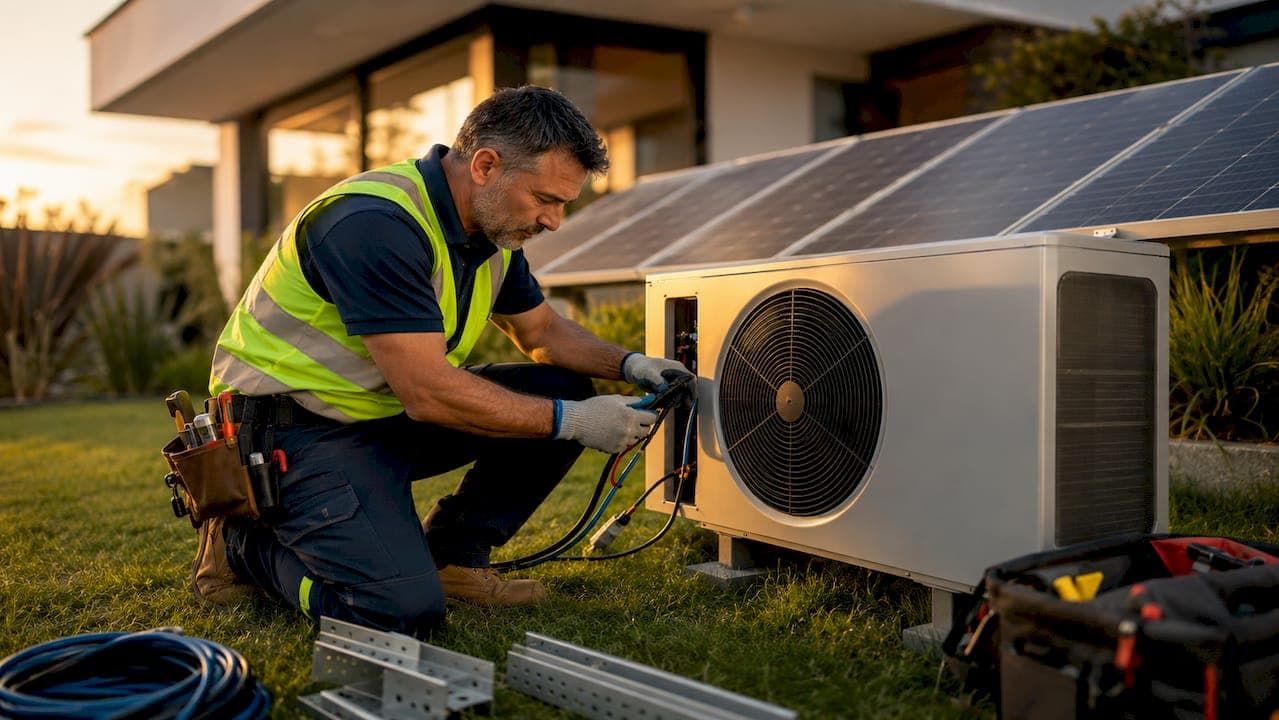
Renewable energy air conditioning is defined as any cooling system powered by solar, wind, or other renewable sources rather than fossil-fuel electricity from the grid. For UK homeowners, the reasons to choose this approach are concrete: lower carbon emissions, reduced energy bills, and access to financial incentives that make the upfront cost far more manageable. High-efficiency AC units powered by local renewable sources can decouple cooling comfort from fossil fuel use entirely. Frostairconditioning installs these systems across Exeter and the South West, and the demand from environmentally conscious homeowners has grown sharply in 2026.
Why use renewable energy air conditioning to cut emissions
The environmental case for switching is backed by hard numbers. Upgrading from a 2-star to a 5-star energy-rated unit cuts household CO2 emissions by around 300 kg every year. That is roughly equivalent to driving a petrol car for over 1,000 miles. Pair that efficiency gain with a renewable power source and the impact compounds significantly.
Renewable energy sources emit little to no greenhouse gases during operation, which means solar or wind-powered cooling produces near-zero operational carbon. Traditional grid electricity in the UK still carries a carbon intensity that varies by time of day and season. Running your AC from a solar PV system sidesteps that variability entirely.
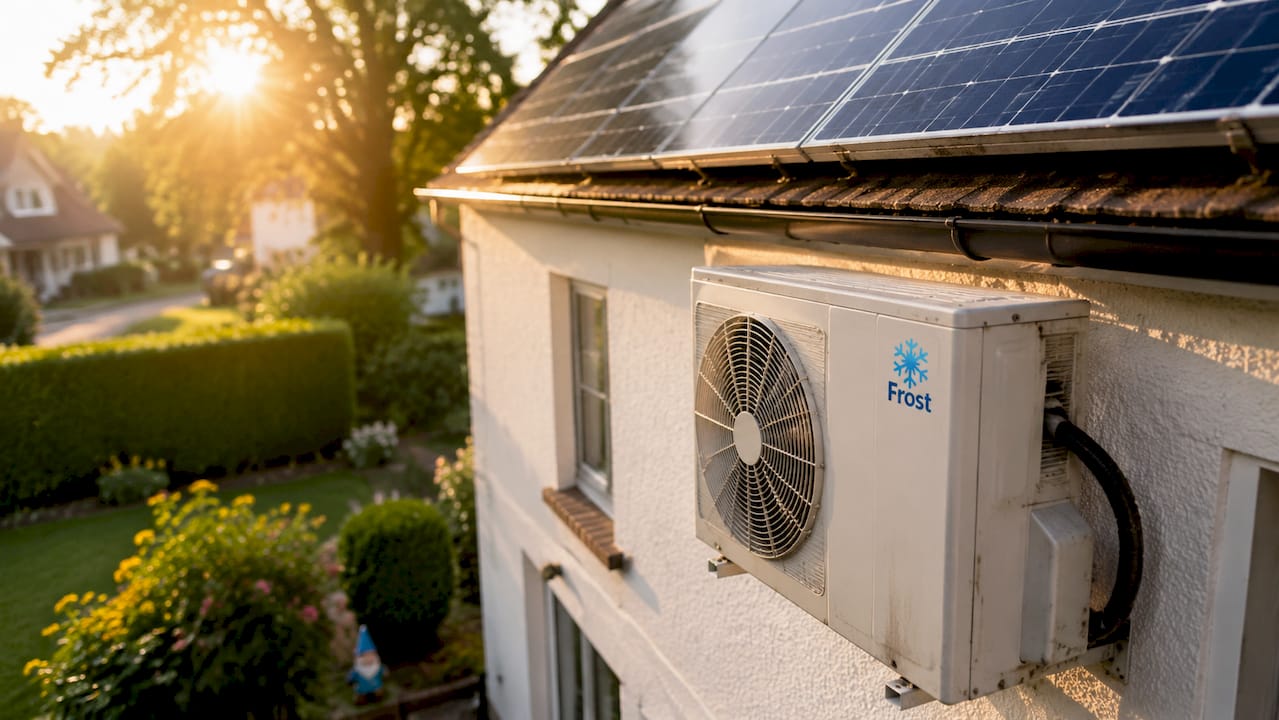
The urban heat island effect is a less-discussed consequence of widespread air conditioning use. Conventional units reject heat into the surrounding air, raising local temperatures in dense residential areas. Renewable-powered systems combined with green building design reduce this heat rejection impact, making them a better neighbour as well as a better choice for the climate.
Key environmental benefits at a glance:
- Near-zero operational greenhouse gas emissions when powered by solar or wind
- Up to 300 kg CO2 saved annually by switching to a 5-star rated unit
- Reduced urban heat island contribution compared to fossil-fuel-powered cooling
- Lower refrigerant leakage risk when systems are properly sized and maintained
- Supports the UK's legally binding net-zero targets at household level
What are the cost and efficiency advantages for homeowners?
The financial case for eco-friendly cooling is stronger than most homeowners expect. Solar-integrated AC systems typically return their investment within 4 to 7 years through lower utility bills and reduced grid reliance. That payback period shortens further when you factor in available incentives.
Homeowners installing solar-powered air conditioning can receive a tax credit of 30% on qualified system costs, up to a £600 cap as of 2026. That is a meaningful reduction on a typical domestic installation. The credit applies to the solar component of the system, so it stacks on top of any energy bill savings you generate from day one.
Energy efficiency ratings directly affect running costs. An inverter-driven unit rated at a high Seasonal Energy Efficiency Ratio (SEER) uses significantly less electricity per unit of cooling than an older fixed-speed model. When that electricity comes from your own solar panels, the cost per hour of cooling drops to near zero during daylight hours.
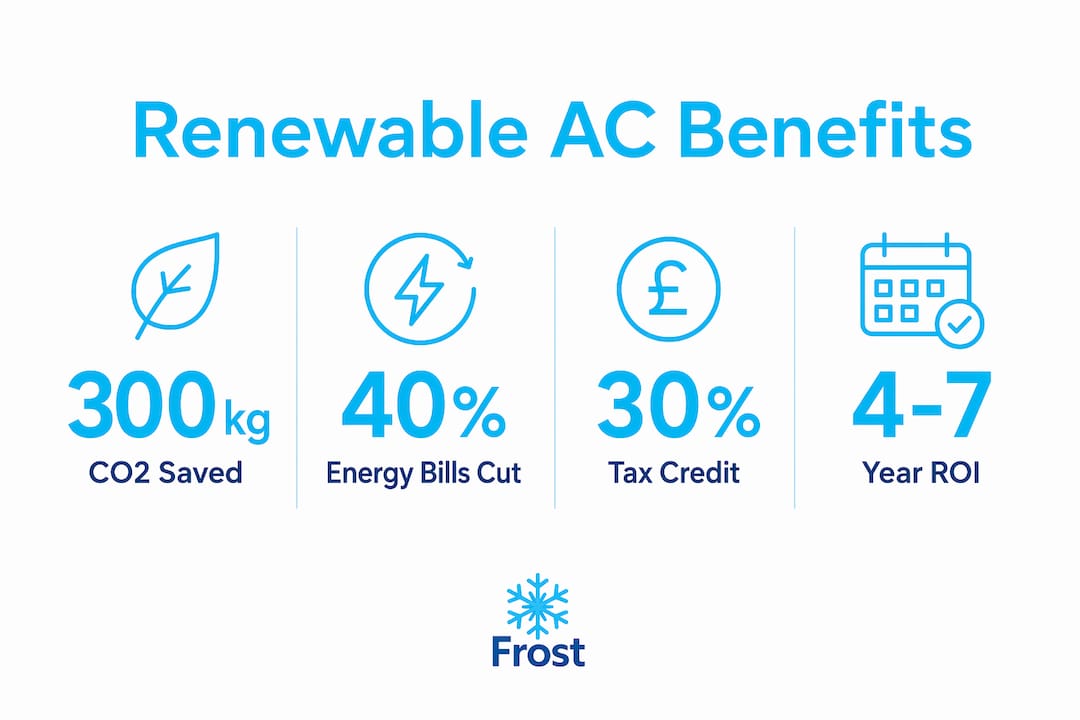
Solar-powered air conditioners can generate up to 90% of their energy from solar, cutting energy bills by 40% or more. That figure assumes a well-sized system matched to your home's cooling demand. Getting the sizing right is where professional installation, such as the service Frostairconditioning provides, makes a measurable difference to your long-term returns.
Here is how the financial picture typically stacks up for a UK homeowner:
- Upfront cost: Higher than a standard grid-tied unit, but offset by the 30% tax credit and 0% finance options where available.
- Annual savings: Bill reductions of 40% or more once the solar component is generating at capacity.
- Payback period: 4 to 7 years for most domestic installations, depending on system size and local solar irradiance.
- Long-term value: After payback, the system generates free cooling for the remainder of its lifespan, typically 15 to 20 years.
- Maintenance costs: Inverter-driven units have fewer mechanical stress cycles, which reduces wear and lowers servicing frequency.
Pro Tip: Ask your installer to model your specific roof orientation and shading before committing to a system size. A south-facing roof in Devon generates considerably more solar yield than a north-facing one in the same postcode.
Which renewable AC systems work best for UK homes?
Several system types suit UK residential properties, each with different operating principles and cost profiles.
Solar PV-powered air conditioners
These units connect directly to a solar photovoltaic array. During daylight hours, the panels generate DC electricity that powers the AC unit, with any surplus exported to the grid or stored in a battery. The system draws from the grid only when solar generation falls short. This is the most common configuration for homeowners who already have, or plan to install, solar panels.
Air source heat pumps
Air source heat pumps (ASHPs) are the most widely adopted renewable HVAC solution in the UK. They extract heat from outside air and move it indoors in winter, or reverse the process for cooling in summer. When powered by renewable electricity, either from solar panels or a green tariff, they deliver heating and cooling with a coefficient of performance (COP) well above 1. That means they produce more energy as heat or cool air than they consume as electricity.
Hybrid systems
Hybrid systems switch automatically between solar generation and grid power based on availability and cost. They are well suited to UK weather patterns, where solar generation is reliable in summer but variable in spring and autumn. A hybrid setup gives you the environmental and cost benefits of solar when conditions allow, without sacrificing comfort when they do not.
Inverter technology and why it matters
Inverter-driven air conditioners adjust their power draw continuously based on cooling demand, rather than cycling fully on and off. This smoother load profile is far more compatible with solar generation, which itself fluctuates with cloud cover. A non-inverter unit demands a large surge of power each time it starts. An inverter unit ramps up gradually, placing less strain on the solar inverter and battery system.
Thermal storage is an emerging option worth noting. Systems that chill water or ice during the day using surplus solar energy can then deliver cooling at night without drawing from the grid. This approach improves 24-hour reliability and helps balance peak grid loads.
Pro Tip: When comparing system types, check the energy-efficient cooling options available for your property type. A flat in Exeter has different requirements to a detached house in rural Devon.
How to maximise the benefits with passive cooling
Passive cooling is the most cost-effective complement to any renewable AC system. The principle is straightforward: reduce the amount of heat entering your home, and you reduce the cooling demand your AC must meet. Passive measures and building improvements can cut cooling energy demand by up to 80%. That figure means you could install a significantly smaller, cheaper AC system and still maintain the same level of comfort.
Practical passive cooling measures for UK homes include:
- External shading: Fit blinds, shutters, or awnings on south and west-facing windows. External shading blocks solar heat before it enters the glass, which is far more effective than internal blinds.
- Insulation: Roof and wall insulation keeps heat out in summer as well as in during winter. A well-insulated home holds a stable internal temperature for longer, reducing how often the AC needs to run.
- Natural ventilation: Open windows on opposite sides of the house during cooler evening and night hours to flush out accumulated heat. Close them in the morning before temperatures rise.
- Ceiling fans: Running a ceiling fan alongside your AC allows you to raise the thermostat setpoint by around 2°C without any loss of perceived comfort. Each degree higher saves a meaningful amount of energy over a cooling season.
- Thermal mass: Stone or concrete floors absorb heat during the day and release it slowly at night, moderating temperature swings without any energy input.
Combining these measures with a well-chosen AC system means you get the best of both approaches. The passive measures reduce peak demand, and the renewable AC handles whatever residual cooling is needed. The result is a smaller system, a lower upfront cost, and a lower carbon footprint across the system's lifetime.
A broad, long-term approach to cooling demand management that integrates equipment efficiency with building and urban planning delivers the greatest reductions. For individual homeowners, that translates to treating passive cooling and renewable AC as a package rather than alternatives.
Key takeaways
Renewable energy air conditioning delivers the greatest value when a high-efficiency inverter-driven unit is paired with solar generation, passive cooling measures, and professional system sizing.
| Point | Details |
|---|---|
| Emissions savings are real | Switching to a 5-star unit cuts around 300 kg of CO2 per household each year. |
| Payback is achievable | Solar-integrated AC systems typically return investment within 4 to 7 years. |
| Tax incentives reduce upfront cost | A 30% tax credit up to £600 is available on qualified solar AC installations as of 2026. |
| Inverter technology is the right choice | Inverter-driven units place a smoother load on solar systems, improving reliability and efficiency. |
| Passive cooling multiplies the benefit | Building improvements can cut cooling demand by up to 80%, reducing system size and cost. |
What I've learned from installing renewable AC systems in the South West
The conversation about renewable air conditioning often gets stuck on upfront cost. That is understandable, but it misses the more important question: what does the system cost you over ten years? When I look at the numbers for a typical Devon homeowner with a south-facing roof, the case for solar-integrated AC is genuinely strong. The 4 to 7 year payback period is not a marketing claim. It reflects real bill savings from generating your own cooling energy.
What gets overlooked most often is system sizing. An AC unit that is too large for the solar array will constantly pull from the grid, undermining the whole point. An inverter that cannot handle the startup surge of the AC compressor will trip on the first hot day. These are not theoretical problems. They are the most common reasons renewable AC installations underperform. Getting a certified installer to size the system properly, accounting for your roof's output, your home's heat load, and the AC's startup current, is the single most valuable thing you can do before spending a penny on equipment.
I also think passive cooling is undervalued. Homeowners want a technology solution, but fitting external shutters and improving loft insulation before installing AC can halve the size of system you need. A smaller system costs less, uses less energy, and lasts longer. The sustainable home cooling argument is not just about the AC unit. It is about treating your home as a system.
The future looks good. Thermal storage is becoming more accessible, battery costs are falling, and grid carbon intensity is dropping. Every improvement in the grid makes your renewable AC system cleaner even without any changes on your end. Getting in now means you benefit from all of that progress from day one.
— James
Frostairconditioning: renewable AC installations across the South West
Frostairconditioning installs renewable energy air conditioning systems for homeowners across Exeter and the wider South West. Every installation is carried out by F-Gas certified engineers, with same-day installs available for straightforward domestic setups.
Whether you are looking at a solar PV-integrated split system or an air source heat pump for year-round comfort, the team at Frostairconditioning will size the system correctly for your home and your renewable energy setup. Domestic installation services cover everything from initial survey to commissioning, and 0% finance options are available to spread the cost. Request a quote to get a personalised assessment for your property.
FAQ
What is renewable energy air conditioning?
Renewable energy air conditioning is any cooling system powered by solar, wind, or other renewable sources rather than fossil-fuel grid electricity. Common configurations include solar PV-connected split systems and air source heat pumps running on green electricity.
How much can I save on energy bills with solar-powered AC?
Solar-powered air conditioners can generate up to 90% of their energy from solar, cutting energy bills by 40% or more. Actual savings depend on system size, roof orientation, and local solar irradiance.
Is there a tax credit available for solar air conditioning in the UK?
Homeowners can receive a 30% tax credit on qualified solar AC system costs, up to a £600 cap as of 2026. This applies to the solar component of the installation.
How long does it take to recoup the cost of a renewable AC system?
Solar-integrated AC systems typically return investment within 4 to 7 years through lower utility bills and reduced grid reliance. Combining the system with passive cooling measures can shorten that payback period further.
Do I need a special type of air conditioner to run on solar power?
Inverter-driven units are strongly recommended for solar-powered setups. They adjust power draw gradually rather than cycling fully on and off, which places a far smoother load on solar inverters and battery systems.