
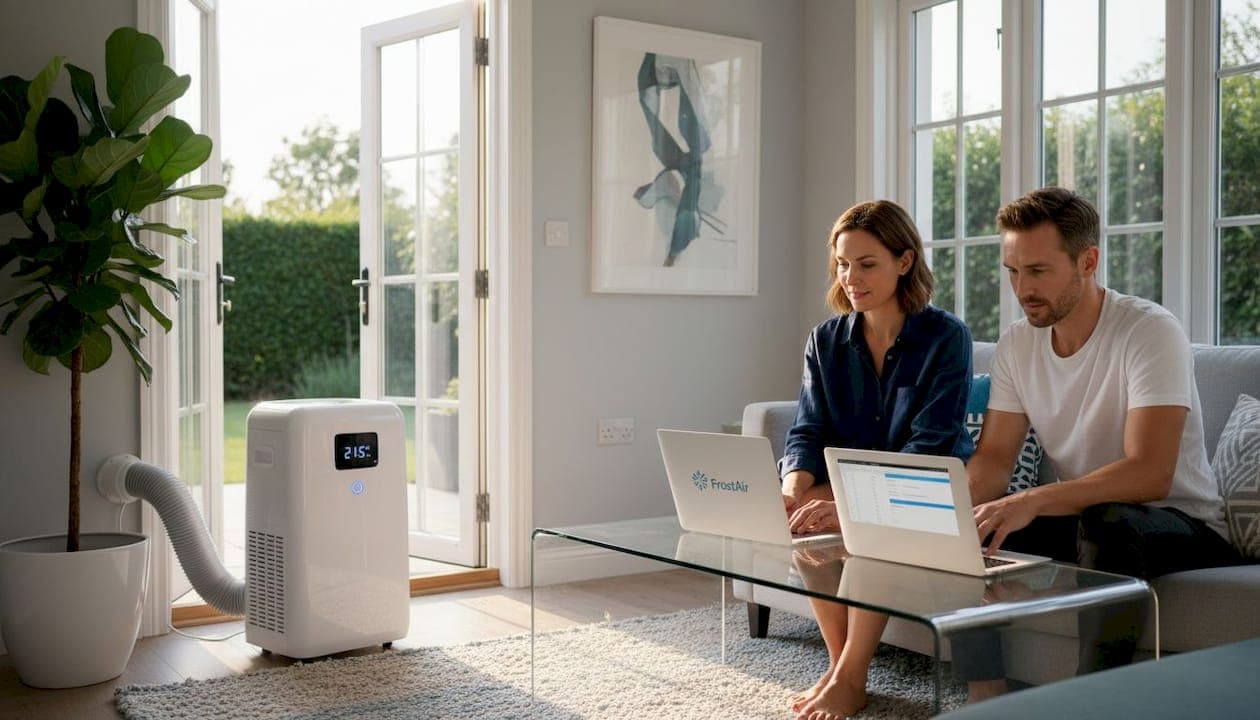
Portable air conditioning is one of those topics that generates more confusion than it should. People assume these units work like a window unit or a full split system, then wonder why their room still feels warm. What is portable air conditioning, really? It is a self-contained cooling unit on wheels that sits inside your room, draws in warm air, removes the heat using a refrigerant cycle, and expels that heat outside through an exhaust hose. This guide explains how these units work, the different types available, and how to decide whether one is right for your home or rented flat.
Table of Contents
- Key takeaways
- What is portable air conditioning and how does it work?
- Types of portable air conditioners and their features
- Benefits and limitations of portable AC units
- Getting the best out of your portable AC
- Is a portable AC the right choice for your home?
- My take on portable AC for UK homes
- How Frostairconditioning can help
- FAQ
Key takeaways
| Point | Details |
|---|---|
| Self-contained cooling | Portable AC units use a sealed refrigerant cycle to cool a room without requiring permanent installation. |
| Hose design matters | Single-hose units create negative room pressure, whilst dual-hose models are 15 to 30% more efficient. |
| Capacity ratings differ | DOE SACC ratings reflect real-world cooling output, often 50 to 70% of the ASHRAE figure shown on packaging. |
| Best for targeted cooling | Portable ACs are most cost-effective when used to cool one specific room rather than an entire home. |
| Setup is straightforward | Most units take 20 to 60 minutes to set up and require no professional tools or permanent fixtures. |
What is portable air conditioning and how does it work?
At its core, portable air conditioning is a refrigeration cycle packed into a single freestanding cabinet. Unlike a split system, where the compressor and condenser sit outside the property, a portable unit houses every component indoors. That is the defining characteristic and also the source of its main limitation.
Here is what happens inside: the unit pulls warm room air across an evaporator coil filled with refrigerant. The refrigerant absorbs the heat from that air, cooling it down before blowing it back into the room. The refrigerant then carries that absorbed heat to the condenser coil, where a fan pushes it into the exhaust airstream and out through the hose connected to a window kit or vent panel.
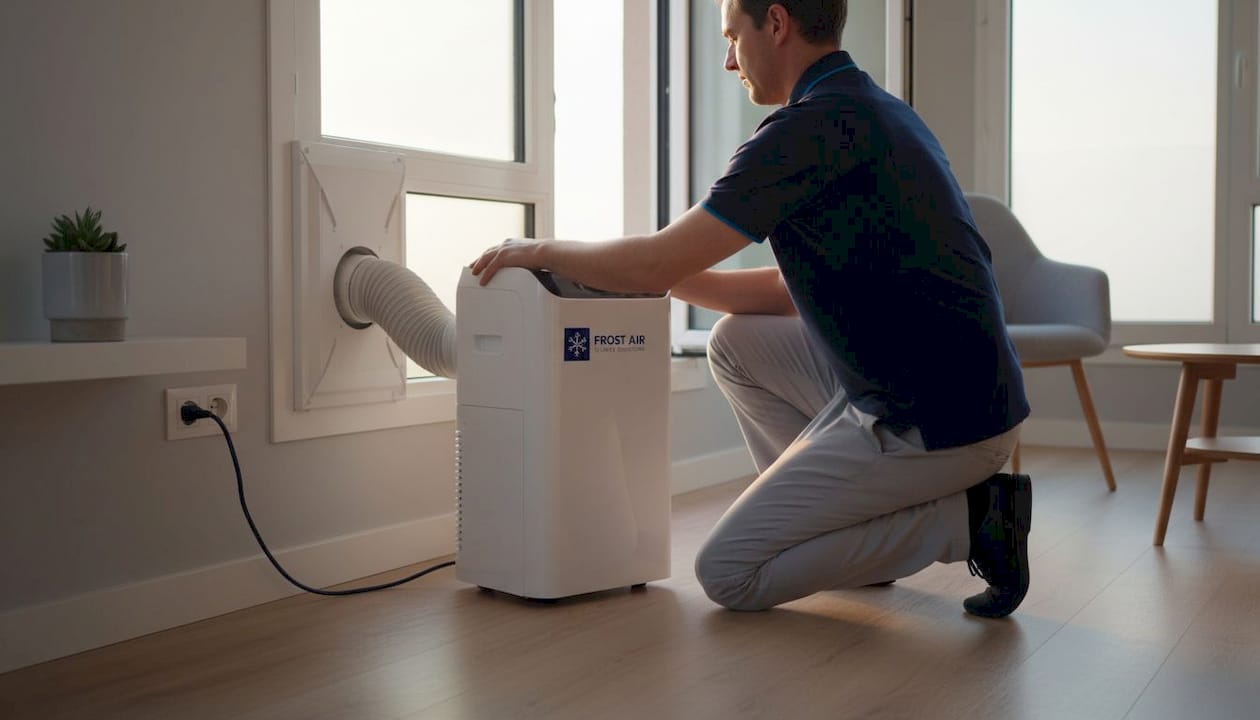
No portable AC unit generates cold air from nothing. Every unit simply moves heat from inside to outside. Proper exhaust is vital because if that hot air cannot escape, it circulates back into the room and the compressor has to work harder for no gain.
Setup is one area where portable units genuinely shine. Setup typically takes 20 to 60 minutes and requires no drilling, no professional installer, and no landlord permission in most cases. You fit a window seal panel into a sash or casement window, connect the exhaust hose, plug the unit into a standard 13-amp socket, and you are running.
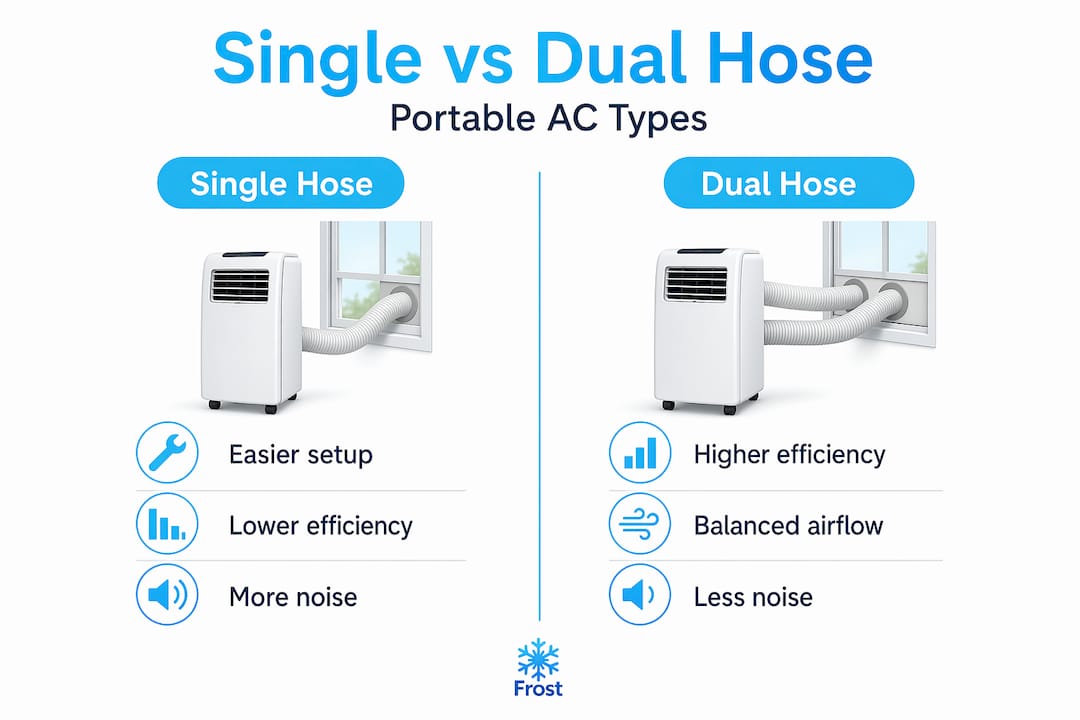
Single-hose vs dual-hose explained:
- A single-hose unit uses one hose for exhaust only. It draws the air it uses to cool the condenser from inside the room, then expels it outside. This creates a slight negative pressure in the room, causing warm air to be drawn in through gaps around doors and window frames.
- A dual-hose unit uses one hose to pull fresh outdoor air over the condenser and a second hose to exhaust the heated air. Room pressure stays neutral, which means less warm air infiltrates from outside.
Pro Tip: If your room has draughty doors or older single-glazed windows, the negative pressure created by a single-hose unit can noticeably undermine its cooling. A dual-hose model is worth the extra cost in that situation.
Types of portable air conditioners and their features
Understanding the types of portable air conditioners on offer helps you match the right unit to your space and budget. The market broadly divides into three categories, each with distinct performance characteristics.
| Type | Best for | Efficiency | Noise level | Typical BTU range |
|---|---|---|---|---|
| Single-hose portable AC | Small rooms, temporary use | Moderate | 50 to 55 dB | 8,000 to 12,000 BTU |
| Dual-hose portable AC | Medium rooms, sustained use | Good | 52 to 58 dB | 10,000 to 14,000 BTU |
| Inverter portable AC | Regular use, energy saving | Best | 48 to 52 dB | 9,000 to 14,000 BTU |
Dual-hose portable ACs offer 15 to 30% better cooling efficiency than single-hose models, largely because they do not depressurise the room. If you plan to run the unit for several hours a day throughout summer, the dual-hose design pays for itself fairly quickly.
Inverter compressors are a more recent addition to portable AC ranges. Rather than switching the compressor on and off at full power, an inverter model ramps the motor speed up and down to match demand. This cuts energy use and reduces the temperature fluctuations you notice with standard on/off compressors.
Understanding the capacity ratings:
This is where many buyers get caught out. The BTU figure on the box is usually an ASHRAE rating measured under ideal conditions, which does not reflect real-world performance. The DOE SACC (Seasonally Adjusted Cooling Capacity) rating adjusts for real conditions and typically comes out at 50 to 70% of the ASHRAE figure. A unit labelled 14,000 BTU ASHRAE may deliver the equivalent of roughly 7,000 to 9,800 BTU in practice.
- Always check the SACC rating, not just the BTU headline
- Match the SACC figure to your room size, not the ASHRAE figure
- A room of around 20 square metres typically needs 5,000 to 6,000 BTU SACC
Pro Tip: Look for the DOE SACC figure in the product specification sheet rather than the marketing headline. If a retailer only shows the ASHRAE BTU, ask directly or check the manufacturer's website.
Benefits and limitations of portable AC units
Portable air conditioning fills a genuine gap in the cooling market. Its flexibility suits renters and situations where permanent installation is not possible or practical. However, setting realistic expectations upfront will save you frustration.
Benefits worth knowing about:
- No permanent installation required, making them ideal for renters
- You can move the unit between rooms as needed
- Cooling one room costs less energy than running central air conditioning throughout the house
- Setup requires no specialist tools or F-Gas certification from the user
- Good for properties with non-standard windows that cannot accommodate a window unit
- Useful as a back-up during a heatwave when you need cooling fast
Limitations to consider honestly:
- Noisier than split systems, typically running at 50 to 58 dB
- Less efficient than window units or ductless mini-splits for the same room size
- The exhaust hose limits placement options within the room
- Single-hose units create negative pressure that draws warm air in through gaps, reducing effectiveness
- Condensate collection tanks need emptying regularly in humid conditions
- Running costs for a 14,000 BTU unit run to approximately £35 to £45 per month based on eight hours of use per day
The energy use point deserves more nuance. Portable ACs can be more energy-efficient than running a whole-home system when you only need to cool one bedroom or a home office. The mistake is using a portable unit to try to cool three interconnected rooms simultaneously. That is where the unit struggles and costs mount quickly.
Pro Tip: Close the door of the room you are cooling. It sounds obvious but many people leave doors open and then conclude the unit is underpowered. Containing the cooled air to one room makes a significant difference to comfort and running costs.
You can find a broader look at the pros and cons for UK homes if you want to weigh portable cooling against other installed options for your region.
Getting the best out of your portable AC
Setup decisions have a bigger impact on performance than most people realise. Follow these steps to get the most from your unit.
- Vent correctly from the start. Fit the window seal panel as snugly as possible. Any gaps around the panel allow hot exhaust air to leak back in, which undermines cooling immediately.
- Keep the exhaust hose short and straight. Exceeding the recommended hose length of 5 to 9 feet reduces efficiency, increases backpressure on the compressor, and can void the manufacturer's warranty. Avoid sharp bends in the hose for the same reason.
- Manage condensate proactively. Most portable units collect condensate in an internal tank. In very humid weather, this fills quickly. Position the unit near a suitable drain point, or choose a model with a continuous drain option.
- Use a dedicated socket where possible. Portable AC units draw significant current. Sharing an extension lead with other high-draw appliances risks tripping your circuit or causing the unit to underperform.
- Position the unit thoughtfully. Place it on hard flooring rather than carpet where possible, allow at least 30 cm clearance around the sides and back, and position it away from direct sunlight.
- Seal the room properly. Close windows, doors, and pull any blinds or curtains against south-facing glass. This reduces the cooling load considerably and lets the unit keep up more easily.
For a more detailed walkthrough of setup, the guide on DIY air conditioner setup covers the process room by room.
Is a portable AC the right choice for your home?
This is the question that matters most. Portable air conditioning units are not the right answer for everyone, and matching the solution to your situation avoids wasted money.
A portable unit makes sense when:
- You rent and cannot make structural modifications
- Your windows are non-standard, pivot-style, or restricted by a landlord
- You need cooling in one specific room for part of the year only
- You want a solution you can install today without waiting for an engineer
- Budget constraints make a permanent installation impractical right now
A fixed system is likely better when:
- You need to cool multiple rooms or an open-plan space regularly
- You want quieter operation and higher energy efficiency long-term
- You own your home and plan to stay for several years
- Comfort and consistent temperature control is a priority throughout summer
The cost comparison is instructive. Upfront costs for portable units range from around £200 to £550, which is accessible. However, a properly installed ductless split system covers a larger area more efficiently and runs considerably quieter. For homeowners in the south west, the investment in a permanent unit often makes more sense over a three to five year horizon.
For a clearer picture of all the options available to homeowners, the complete home air conditioning guide on the Frostairconditioning blog is a good next step.
My take on portable AC for UK homes
I have spoken with a lot of homeowners and renters across Devon and the south west who bought a portable unit expecting it to work like a proper air conditioning system. Most of them were not unhappy exactly, but they were surprised. The unit was louder than they expected, the room did not get as cool as they hoped, and the exhaust hose was awkward to position.
The honest truth is that portable air conditioning is a practical compromise. It solves a real problem for renters and for people who cannot wait weeks for an installation slot during a heatwave. What it does not do is replace a properly sized, installed split system for comfort and efficiency.
What I find gets overlooked most often is the capacity rating confusion. People buy based on the ASHRAE BTU headline and end up with a unit that is effectively undersized for their room once real-world conditions are factored in. If you take nothing else from this article, check the SACC figure.
I would also say that portable ACs are underrated as a back-up or secondary solution. Paired with a more capable cooling source for the hottest weeks, they do a decent job. Used as a primary solution for a large living room all summer, they will disappoint.
— James
How Frostairconditioning can help
If you have read this far and realised a portable unit might not quite cut it for your home, that is a useful conclusion to reach.
At Frostairconditioning, we install split systems across Exeter and the wider south west, with same-day installs available and 0% finance options to spread the cost. Our team is F-Gas certified, so every installation is carried out to the proper standard. Whether you want advice on the right system for your room size, or you are ready to get a price, you can request a quote directly on our website. We make the process straightforward from first call to cool room.
FAQ
What is a portable air conditioner and how does it work?
A portable air conditioner is a self-contained unit that uses a refrigerant cycle to remove heat from a room and expel it outside through an exhaust hose. Setup takes 20 to 60 minutes and requires no professional tools or permanent fixtures.
Are portable air conditioners energy efficient?
Portable AC units are less efficient than window or split systems for the same room size, but they can reduce overall household energy use when used to cool a single room rather than running a whole-home system throughout the day.
What is the difference between single-hose and dual-hose portable ACs?
A single-hose unit exhausts air from inside the room, creating negative pressure that draws warm air in through gaps. A dual-hose model uses separate intakes and exhaust paths, maintaining neutral room pressure and offering 15 to 30% better cooling efficiency.
What size portable air conditioner do I need?
Use the DOE SACC rating rather than the ASHRAE BTU figure to size your unit correctly. The SACC rating reflects real-world output, which is typically 50 to 70% of the ASHRAE figure shown on the box.
Can I use a portable air conditioner in a rented flat?
Yes. Portable air conditioning is one of the few cooling solutions that requires no permanent modification to a property, making it well suited to renters. You simply fit a removable window seal panel when needed and take the unit with you when you leave.