
Most small-to-mid commercial air conditioning projects in the UK land somewhere between £10,000 and £60,000 installed, with larger chiller replacements often exceeding £100,000. The three factors that move you up or down that range are system type, site access, and whether your electrical supply needs upgrading. Before you sign anything, get itemised quotes from at least two installers and build in budget for commissioning and a maintenance contract.
TL;DR:
- Site access, electrical capacity, and building size significantly influence the final cost, with electrical upgrades and complex pipework adding substantial expenses.
- Quotes vary widely based on site logistics, occupancy load, and infrastructure challenges, making site surveys essential for accurate budgeting.
- Proper commissioning, refrigerant handling, and control system integration can add 10 to 25 percent to the hardware cost, often surprising business owners.
- Using itemized quotes and verifying certifications helps prevent hidden costs from unexpected exclusions or scope gaps.
- Energy-efficient systems and maintenance contracts can reduce long-term operating costs, with incentives and tax allowances potentially offsetting initial expenses.
Table of Contents
- How much does commercial air conditioning cost by system type?
- What actually drives up your air conditioning quote?
- How do you estimate a commercial AC project budget?
- What will running and maintaining the system actually cost?
- What hidden costs catch businesses out?
- How should you compare commercial AC quotes?
- Are there grants or tax breaks for efficient commercial AC?
- An installer's perspective on realistic budgeting
- Get a site survey and itemised quote from Frostairconditioning
- Sources
How much does commercial air conditioning cost by system type?
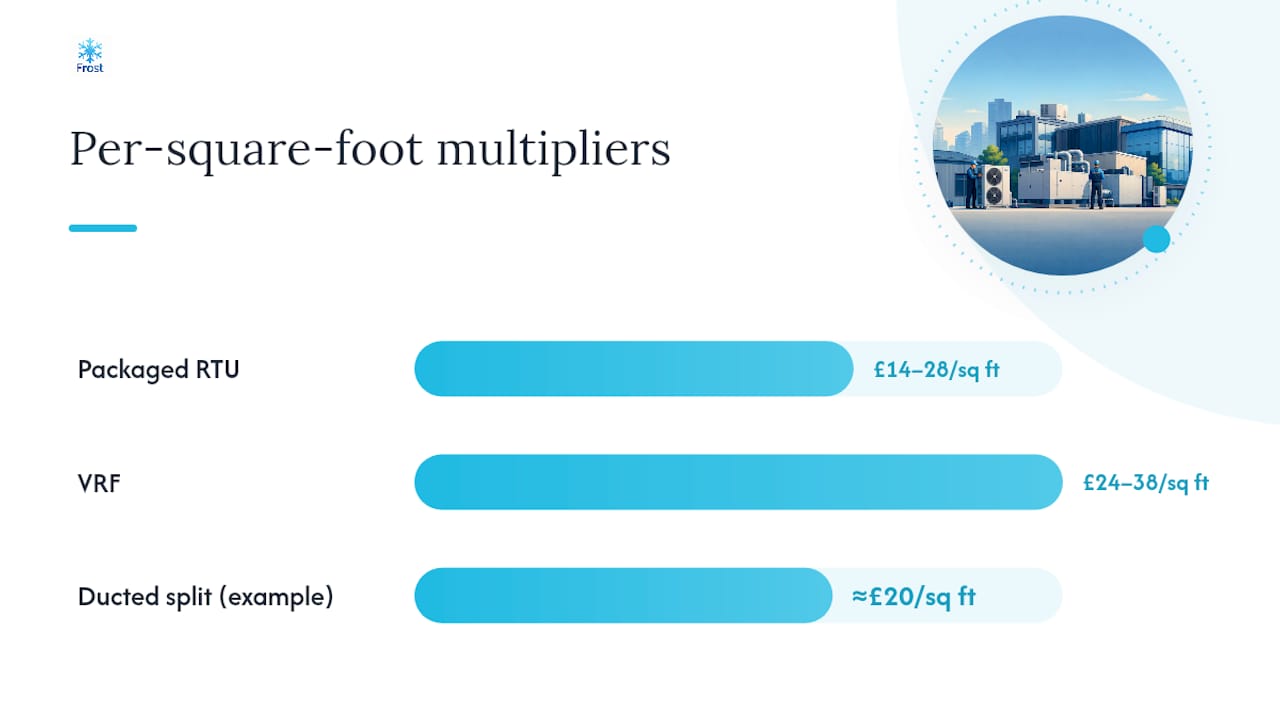
Price per square foot is the fastest way to sanity-check a quote before you've even seen the paperwork. Packaged rooftop units (RTUs), the boxy units you see bolted to flat roofs above shops and small offices, typically run £14 to £28 per square foot installed. VRF and VRV systems, which use variable refrigerant flow to heat and cool different zones independently, cost more at £24 to £38 per square foot but pay that back through flexibility in larger, multi-room buildings.
Split and ducted systems sit in a wider band depending on how many indoor units you need and how far pipework has to run. Chiller plants, generally reserved for larger buildings or process cooling, carry the highest upfront cost but the lowest cost per tonne of cooling at scale.
These ranges normally include the equipment itself, installation labour, basic controls, and commissioning or start up work. What they usually exclude: major electrical upgrades, structural roof works, asbestos surveys, and any bespoke ductwork redesign. Ask your installer to confirm exactly what's inside the number, not just the headline figure.
A few things worth flagging before you use these as gospel:
- The larger the building, the more the price per square foot tends to fall, since fixed costs like design and commissioning spread across more capacity.
- Older buildings with solid walls or listed status often push costs to the top of the range because of harder cable runs and pipework.
- Evaporative cooling from suppliers like Seeley International can undercut conventional split or VRF systems in warehouses and industrial spaces where humidity control matters less than raw air movement.
What actually drives up your air conditioning quote?
Two buildings the same size can generate wildly different quotes, and it's rarely the equipment causing the gap. It's almost always the site.
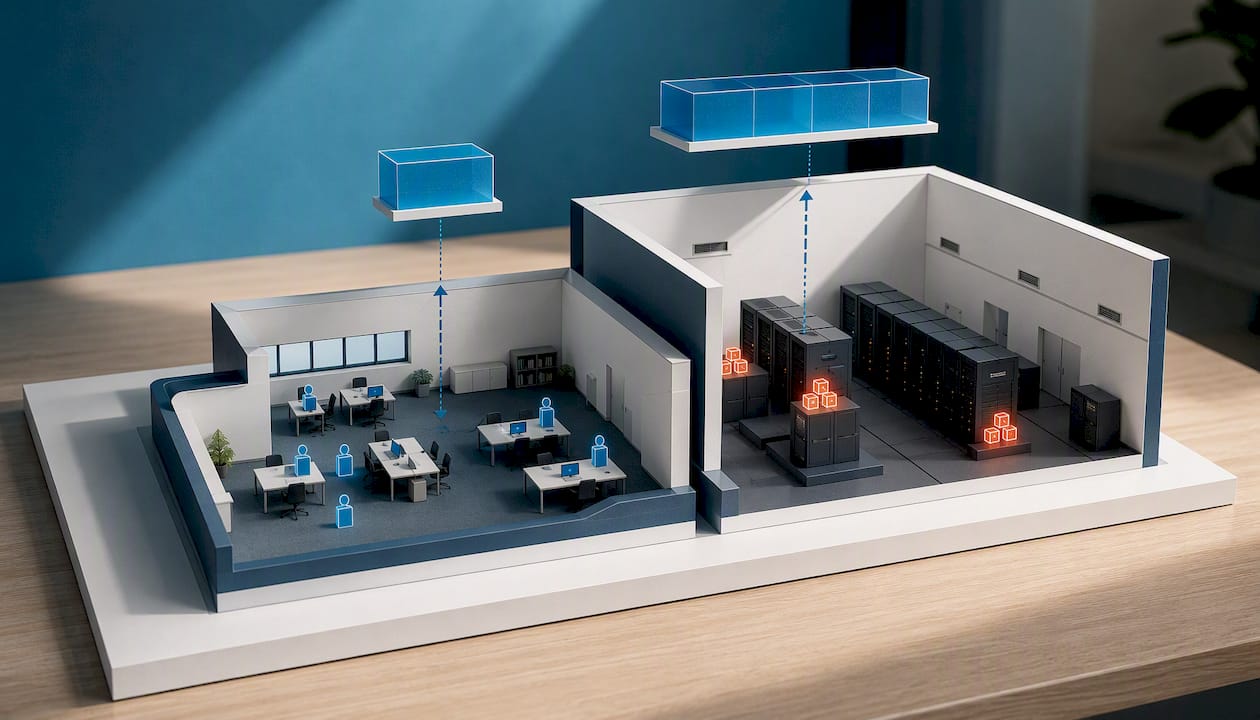
Your building's load profile comes first. Occupancy hours, how many people and machines generate heat inside, and ceiling height all determine how much cooling capacity you actually need. A server room needs vastly more capacity per square foot than a quiet back office, even if both measure the same on a floor plan.
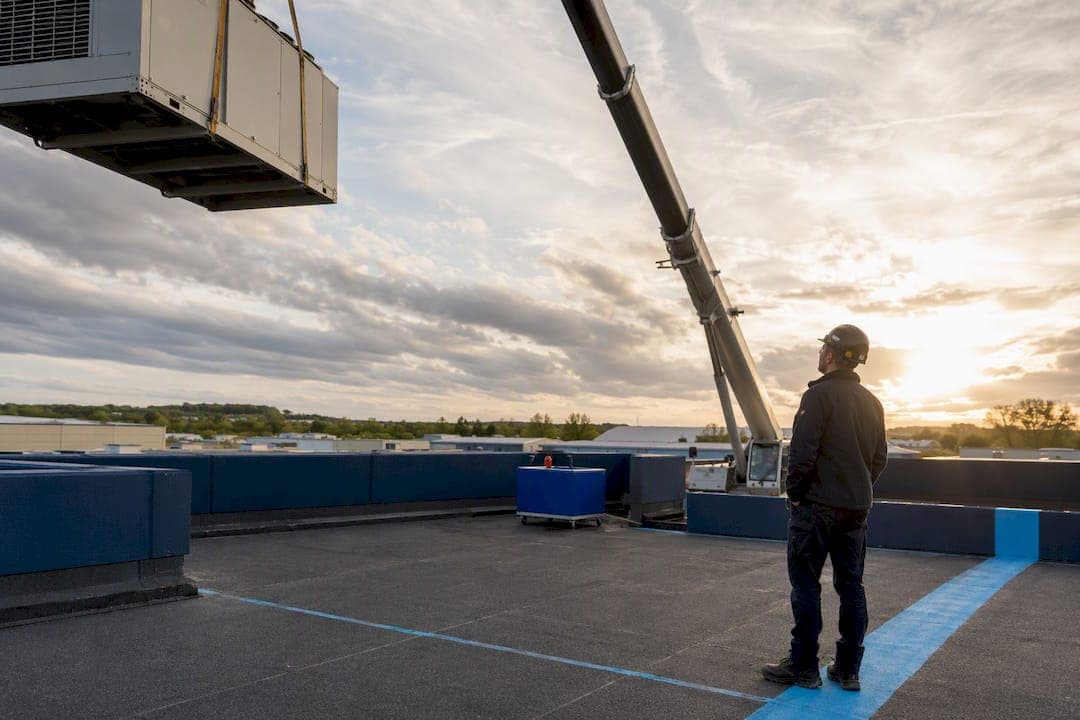
Site logistics matter more than most business owners expect. If a crane is needed to lift a condenser onto a roof, or scaffolding has to go up first, that's several thousand pounds before a single refrigerant pipe is fitted. Installers working only during your trading hours, rather than a straight eight-hour day, will usually charge for the disruption.
Electrical work is the quiet budget killer. Many commercial buildings, especially older units, don't have spare capacity on the incoming supply. A new distribution board, isolator, or metering point can add a meaningful chunk to the final bill, and you won't know until an electrician has actually looked at your consumer unit.
Then there's the pipework itself. Long refrigerant line-sets for VRF systems, especially across multiple floors, cost more in copper, insulation, and labour than a simple single-room split. Add F-Gas handling requirements, permits, and commissioning testing, and you're looking at genuine, unavoidable line items rather than padding.
- Building load and occupancy hours
- Roof access, cranes, and scaffolding
- Electrical supply upgrades and new isolators
- Pipework length and complexity
- F-Gas compliance and commissioning testing
Pro Tip: Ask any installer to walk the site before quoting, not just measure from photos or floor plans. A five-minute look at your electrical cupboard can save you a nasty surprise once the invoice arrives.
How do you estimate a commercial AC project budget?
Before you ring round for quotes, it helps to build your own rough number first, if only so you can spot a quote that's wildly off.
- Measure your floor area in square feet and note ceiling height, since higher ceilings mean more air volume to cool.
- Count occupancy and equipment load — how many people, computers, and heat-generating machines run during peak hours.
- Decide on zones — do different rooms need independent temperature control, or will one zone suffice?
- Apply a per-square-foot figure based on system type: use £14 to £28 for a packaged RTU or £24 to £38 for VRF as your starting multiplier.
- Add allowances for electrical upgrades (often £2,000 to £8,000 on older buildings) and access equipment if roof work is involved.
- Apply contingency of 10 to 20% on top of your subtotal.
Worked example: a 2,500 sq ft office choosing a ducted split system at roughly £20 per square foot gives a base figure of £50,000. Add £4,000 for a modest electrical upgrade and £3,000 for scaffolding access, and your subtotal reaches £57,000.
Commissioning and system integration commonly add 10 to 25% on top of hardware cost when they're properly scoped rather than bolted on later. Push your contingency toward the higher end of that range if your building has an older BMS, unusual roof access, or you suspect the electrical supply is marginal.
What will running and maintaining the system actually cost?
The installed price is only half the story. Higher-efficiency systems, like inverter-driven units from Daikin or Mitsubishi, typically cost more upfront but can cut annual energy bills by a meaningful margin compared with older fixed-speed equipment, especially where the system runs long hours.
Maintenance contracts in the UK commonly range from a few hundred pounds a year for a single split system to several thousand for a multi-unit commercial estate with scheduled visits, filter changes, and refrigerant checks. A proper maintenance contract also protects your warranty, which some manufacturers make conditional on documented annual servicing.
Over five years, a typical mid-size office might spend £65,000 on installation, then £1,500 to £3,000 annually on servicing and minor repairs, roughly £7,500 to £15,000 across the period. Capital allowances may apply to qualifying energy-efficient plant purchases, so check current guidance with your accountant before finalising a system choice.
- Efficiency tier affects annual running cost more than most buyers assume
- Maintenance contracts protect manufacturer warranties
- Five-year whole-life cost often exceeds the installation price alone
What hidden costs catch businesses out?
Commissioning and integration work commonly adds 10 to 25% to the hardware cost when it's properly scoped, and that's the single biggest surprise for business owners who only budgeted for the boxes on the wall.
- Commissioning and handover: proper start-up testing, performance verification, and a documented handover pack, not just switching the system on.
- F-Gas and refrigerant transition: certified handling is a legal requirement, and moving to lower-GWP refrigerants can add 8 to 15% to equipment costs, plus disposal fees for legacy refrigerant.
- BMS/BAS integration: connecting new plant to an existing building management system often uncovers undocumented wiring, generating extra programming hours nobody quoted for.
- Permits and temporary works: roof access permissions, scaffolding hire, and any listed building consent.
How should you compare commercial AC quotes?
A genuine, comparable quote breaks down equipment, labour, ductwork, electrical work, controls, permits, commissioning, and delivery or disposal as separate lines. If a quote arrives as one lump figure, ask for it itemised before you compare anything.
- Request itemised pricing for equipment, labour, rigging, electrical, and commissioning separately.
- Confirm the installer holds current F-Gas and REFCOM certification before work starts.
- Check warranty length and whether it's conditional on an ongoing service contract.
- Ask what's excluded, not just what's included, since exclusions are where surprise invoices come from.
- Compare finance options; 0% finance can make a higher-spec system affordable without a bigger upfront outlay.
Our own guide to comparing air conditioning quotes sets out the exact questions worth asking any installer, whether it's Frostairconditioning or someone else.
Pro Tip: Book your installation outside peak summer months where you can. Scheduling around the rush can shave a modest amount off labour costs simply because installers aren't juggling five jobs a week.
Are there grants or tax breaks for efficient commercial AC?
Businesses replacing an ageing system with a genuinely energy-efficient one should not assume the entire cost sits on one side of the ledger. Capital allowances, including the Annual Investment Allowance, can apply to qualifying plant and machinery purchases, potentially letting you offset a chunk of the installation cost against taxable profits in the year you spend it. Eligibility depends on your business structure and current HMRC rules, so this is worth a direct conversation with your accountant before you commit to a system, not after.
Beyond tax treatment, choosing higher-efficiency equipment, inverter-driven heat pumps from brands like Samsung or Daikin rather than older fixed-speed units, reduces your ongoing energy bill regardless of any incentive scheme. Some local authorities and energy suppliers periodically run efficiency-linked grant schemes for commercial premises, though availability shifts year to year and by region, so it's worth checking what's currently open in the South West before you finalise a specification. Building the potential saving into your business case alongside any capital allowance often shifts the numbers enough to justify the better-specified system rather than the cheapest one on the table.
An installer's perspective on realistic budgeting
The mistake we see most often is business owners pricing the box, not the project. Electrical upgrades, roof access, and commissioning are where budgets actually blow out, not the unit itself. Book your installation early rather than waiting for the first hot week of summer; rushed jobs cost more and limit your choice of installer. A trustworthy contractor walks the site before quoting and tells you what could go wrong, not just what will go right.
— James
Get a site survey and itemised quote from Frostairconditioning
Frostairconditioning is the local alternative to chasing quotes from installers who've never seen your building. Based in Exeter and covering the South West, our REFCOM and F-Gas certified engineers design, install, and commission commercial systems from Samsung, Mitsubishi, Toshiba, and Daikin, with same-day or next-day installs where your schedule demands it.

We offer 0% finance so a properly specified system doesn't mean a painful upfront hit, and every quote we provide is itemised, covering equipment, labour, electrical work, and commissioning, so you can see exactly what you're paying for. Once your system is running, our maintenance contracts keep it compliant and covered under warranty. If you're weighing up a new commercial installation anywhere across Devon, Cornwall, or the wider South West, get in touch through Frostairconditioning to book a site survey and receive a proper itemised quote.
Sources
Cost benchmarks in this guide draw on Terrapin Construction Group's per-square-foot data, FindTrustedHelp's project cost ranges, and Current Cost's quote breakdown guide, with Seeley International covering UK evaporative cooling options.
- Commercial HVAC Cost Per Square Foot 2026 | Terrapin Construction Group
- Seeley International – Breezair evaporative cooling (UK)
- Commercial air conditioner cost: price breakdown, size and installation estimates 2026 – Current Cost