
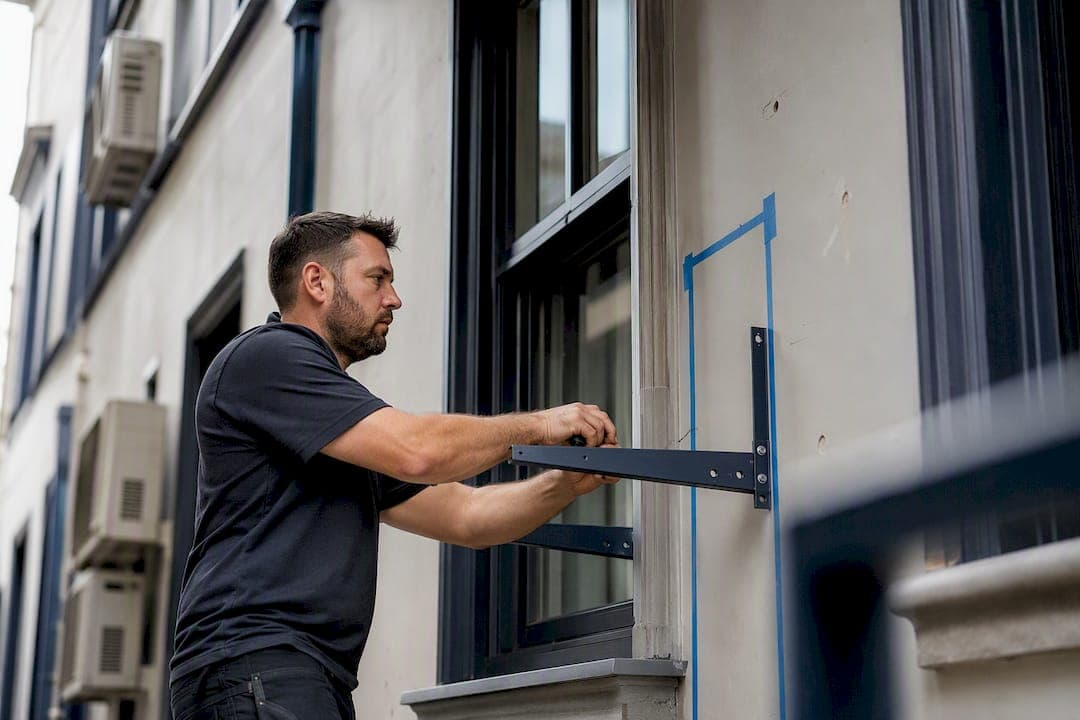
The fastest, lowest-risk route through a hotel air conditioning retrofit is a staged, turnkey job that starts with controls and correct sizing, then moves to targeted hardware replacement. One F‑Gas and REFCOM certified installer should run the whole thing, not three subcontractors handing off between phases.
Priorities this week:
- Book a full site survey and load calculation before specifying any equipment.
- Trial occupancy-based controls on one floor to measure real savings.
- Shortlist a single turnkey installer rather than separate suppliers for removal, install and commissioning.
Your next-steps checklist:
- Brief your finance and facilities teams on scope and budget.
- Gather energy bills, floor plans and existing unit specifications.
- Call an F‑Gas registered installer for a REFCOM-compliant site survey.
- Ask for a phased proposal with acceptance tests written into the contract.
Key Takeaways
A staged, turnkey retrofit led by one F‑Gas and REFCOM certified installer delivers faster paybacks and less guest disruption than piecemeal procurement.
| Point | Details |
|---|---|
| Start with controls | Pilot occupancy sensors and smart thermostats on one floor before committing capital to hardware. |
| Get sizing right | Professional load and dehumidification calculations prevent oversizing and undersizing failures. |
| Use one turnkey partner | A single installer managing removal, install and commissioning cuts handoff errors and downtime. |
| Check compliance first | Confirm F‑Gas registration and REFCOM certification before signing any contract. |
| Frostairconditioning delivers locally | REFCOM/F‑Gas certified engineers across the South West offer turnkey retrofits and maintenance contracts. |
Table of Contents
- What retrofit options suit a UK hotel?
- How do you plan and specify a hotel AC retrofit?
- What savings and payback can you expect?
- What UK compliance rules apply to hotel retrofits?
- How do you choose a turnkey installer and lock in fair contract terms?
- How long does a retrofit take without shutting rooms?
- What actually goes wrong on site
- Get a turnkey retrofit quote from a local South West specialist
- Frequently asked questions
- Sources
What retrofit options suit a UK hotel?
Not every hotel needs a plant-room rebuild. Retrofits fall into rough tiers, and matching the tier to your building and budget matters more than chasing the newest technology on the market.
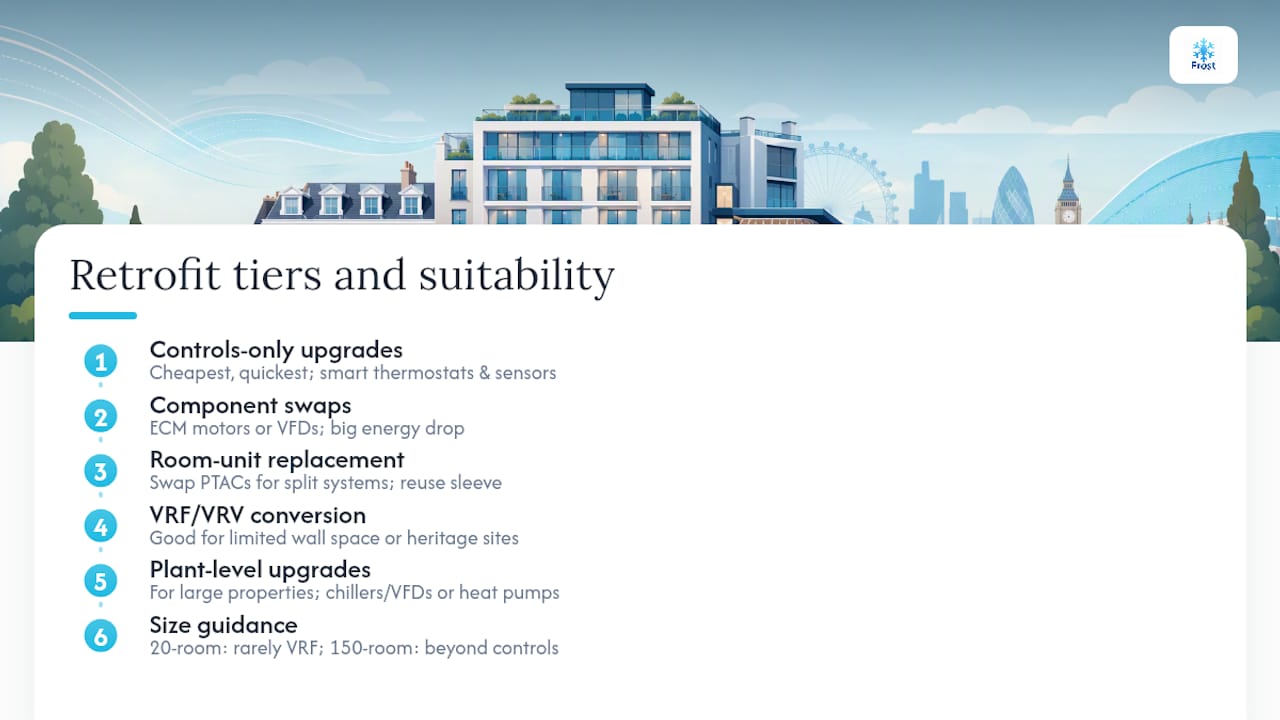
Controls-only upgrades add smart thermostats and occupancy sensors to existing units. Cheapest, fastest to install, and a sensible starting point for any hotel still running manual dial controls.
Component swaps replace fan and pump motors with ECM motors or add variable frequency drives (VFDs) to existing plant. A modest cut in fan speed produces a disproportionately large drop in power draw, which is why ECM and VSD retrofits feature so often in hotel energy audits.
Room-unit replacement covers swapping ageing PTAC units for split systems or heat pumps, often reusing the existing wall sleeve to avoid demolition.
VRF/VRV conversion suits hotels with limited external wall space or heritage constraints, since one outdoor condenser can serve many indoor units through slim pipework.
Plant-level upgrades (chillers with VFDs, central heat pumps) suit larger properties with ageing central plant and the capital to match.
A 20-room guesthouse rarely needs VRF; a 150-room city-centre hotel rarely gets far with controls alone.
Pro Tip: Run a controls-only pilot on one floor before committing to a full retrofit. It's the cheapest way to prove savings to your finance director and de-risk the bigger spend that follows.
How do you plan and specify a hotel AC retrofit?
Specification quality determines whether your tender attracts serious bids or vague guesswork. Follow this sequence:
- Appoint an internal sponsor who owns the project and liaises with the installer.
- Run a baseline energy and occupancy audit covering current consumption, peak demand periods and seasonal occupancy swings.
- Commission a detailed site survey of every room, plant room and electrical intake.
- Get professional load and dehumidification sizing done by a qualified engineer, not estimated from room square footage alone.
- Draft a written specification covering capacity, noise limits, refrigerant type and controls integration.
- Tender to shortlisted turnkey installers with identical scope documents so quotes are comparable.
- Phase installation by floor or wing to keep rooms sellable throughout.
- Commission and hand over with signed-off acceptance tests.
Sizing errors are the single most common cause of retrofit failure. Oversized units short-cycle, fail to dehumidify properly, and leave guest rooms feeling clammy even at the right temperature. Undersized units run constantly, wear out faster, and still leave guests uncomfortable on hot afternoons. Getting this wrong costs more to fix retroactively than doing it properly first time.
Acceptance tests to write into any contract:
- Capacity verification against the specified design load.
- Dehumidification performance checks, not just temperature readings.
- Sound level testing in occupied rooms and adjacent corridors.
- Vibration mitigation confirmation on any rooftop or wall-mounted plant.
- A written commissioning report signed off before final payment.
Before tendering, gather room dimensions, existing unit models, electrical supply capacity, boiler or chiller details, and at least twelve months of energy bills. That paperwork shapes every quote you receive.
What savings and payback can you expect?
Expected returns vary sharply by retrofit tier, so treat any single "average payback" figure with suspicion.
Controls-only upgrades typically cost between $50 and $250 per room and deliver 15 to 30 percent HVAC energy reduction at room level, often paying back within 12 to 18 months. That's the fastest return of any tier, and the easiest business case to put in front of a finance committee.
Component swaps such as VFDs on chillers can deliver considerably larger gains at plant level. One hotel case study saw substantial operational cost cuts and a return on investment that beat the customer's own forecast after fitting VFDs to its chiller plant, demonstrating how targeted plant upgrades can outperform a full system replacement on cost-per-saving.
Full unit replacement tends to carry the longest payback window but delivers the biggest single jump in reliability and guest comfort.
Because outcomes depend heavily on occupancy patterns, building envelope and local climate, treat any modelled figure as a starting estimate.
What UK compliance rules apply to hotel retrofits?
Get this section wrong and you're looking at fines, failed insurance claims, or a system that can't legally be serviced.
- Confirm your installer holds current F‑Gas registration and REFCOM certification before signing anything.
- Insist on a written refrigerant management plan covering charge monitoring and leak reporting obligations.
- Ask about refrigerant choice early. Low‑GWP options such as R‑32 are now standard in many systems, and one UK hotel installed modular heat pumps running on natural refrigerant R‑290 to support its Verified Net Zero targets while cutting gas-fired heating entirely.
- If the retrofit involves rooftop plant, lift shafts, or structural openings, liaise with building control early, particularly in listed or conservation-area properties.
Ask for the installer's REFCOM certificate number and check it before work starts, not after.
How do you choose a turnkey installer and lock in fair contract terms?
Pre-qualify suppliers with direct questions, not a tick-box form:
- Have you delivered turnkey hotel retrofits before, and can you provide local references?
- Are your engineers F‑Gas registered and REFCOM certified, with certificates you can show now?
- Do you manage removal, installation and commissioning under one contract, or do you subcontract parts of the job?
- What's your emergency response time once the system is live?
- What warranty and maintenance packages do you offer post-handover?
On the contract itself, insist on:
- Fixed-price phases tied to defined milestones, not open-ended time-and-materials billing.
- Written acceptance tests before final sign-off, matching the specification drawn up during planning.
- Performance guarantees on efficiency and noise levels.
- Clear latent defect provisions covering faults that surface after handover.
- Explicit health and safety obligations for work in occupied guest areas.
Daikin's own technical teams describe successful hotel retrofits as turnkey projects managed end-to-end by one partner, which reduces handoff errors between removal, install and commissioning teams. A single point of accountability means no contractor can blame another when something goes wrong. Ask every shortlisted supplier for evidence of public liability insurance and at least one third-party commissioning report from a comparable project.
How long does a retrofit take without shutting rooms?
| Retrofit scale | Typical duration | Guest disruption |
|---|---|---|
| Controls-only pilot (one floor) | 1–2 days | Minimal, rooms stay lettable |
| Room-unit swaps (single floor) | 1–2 weeks | Low, phased room by room |
| Multi-floor VRF conversion | 4–8 weeks | Moderate, floor-by-floor closure |
| Chiller/VFD plant upgrade | 6–12 weeks | Low if plant room isolated |
Tell guests in advance via booking confirmations and room signage, and offer alternative rooms or a small compensation gesture on install days. In a PTAC replacement project, drop-in heat-pump units reused the existing wall sleeve and electrical service, which cut room downtime to hours rather than days.
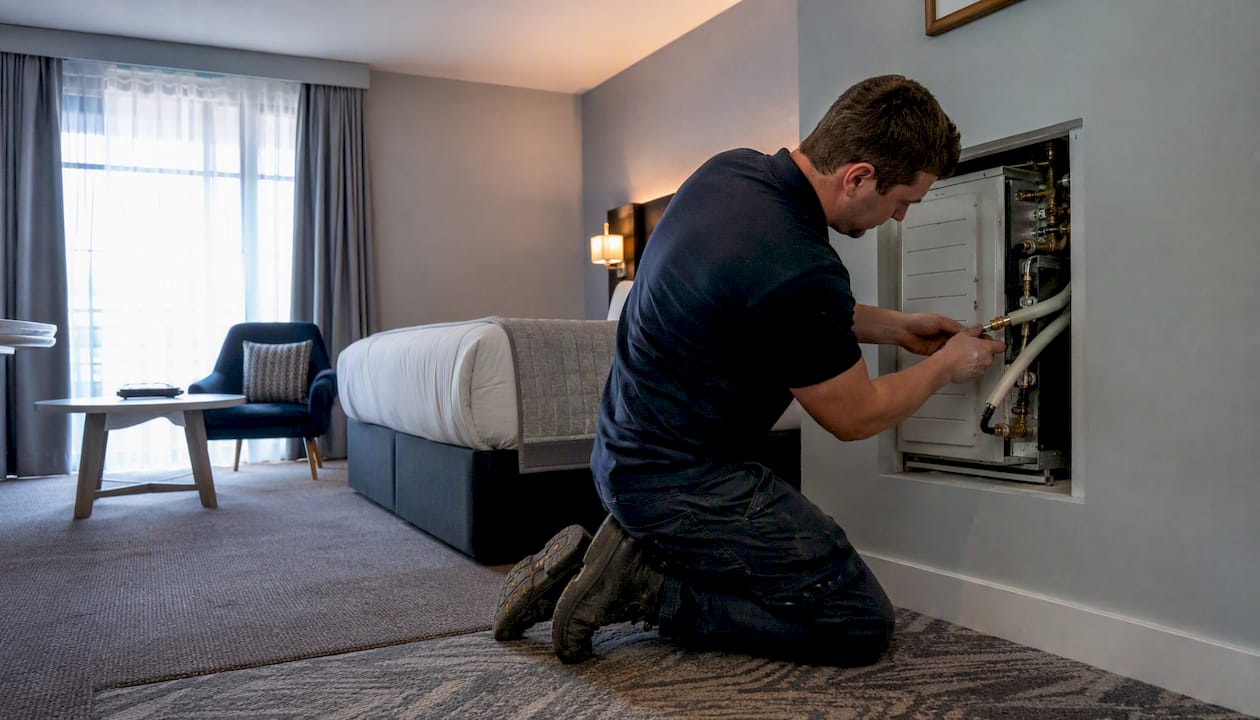
Pro Tip: Insist on agreed working hours and vibration mitigation clauses in the contract. Noisy drilling at 8am in an occupied corridor generates more complaints than the retrofit itself ever will.
What actually goes wrong on site
Electrical supply capacity catches out more hotels than anything else. Older buildings often can't take the extra load a heat pump plant needs without a supply upgrade, so check this at survey stage, not mid-install. Asbestos surveys matter too, particularly in properties built or extended before 2000. On noise-sensitive sites, acoustic neighbours or listed status can dictate which units you're even allowed to fit.
Schedule around UK seasonal occupancy. Coastal hotels lose the least revenue installing in November; conference hotels prefer January. Where structural work touches a listed building, loop in the conservation officer early.
Get a turnkey retrofit quote from a local South West specialist
Frostairconditioning is the alternative to juggling separate contractors for survey, removal and commissioning: one REFCOM and F‑Gas certified team handles the whole job, from Exeter out across Devon, Cornwall and the wider South West.

That matters most on a hotel job, where every extra handoff between suppliers is another day of disrupted rooms. Frostairconditioning runs domestic and commercial installations with same-day response where the job allows, backed by annual maintenance contracts that keep systems running once the retrofit is signed off. Request a site survey through Frost Air Conditioning and get a phased, turnkey proposal built around your building, not a generic template.
Frequently asked questions
How much does a hotel air conditioning retrofit cost in the UK? Costs vary enormously by tier. Controls-only work runs roughly $50 to $250 per room, while full plant upgrades cost considerably more but deliver bigger long-term gains. Get a site survey for a figure specific to your property.
How disruptive is a hotel HVAC upgrade to guests? A phased, room-by-room approach using drop-in units that reuse existing sleeves can limit disruption to hours per room rather than days, particularly on PTAC replacement projects.
Do I need F‑Gas certification for a hotel retrofit? Yes. Any installer handling refrigerant-containing equipment in the UK must hold F‑Gas registration, and REFCOM certification is the recognised industry benchmark for competence.
Which refrigerant should a new hotel system use? Low‑GWP refrigerants such as R‑32 are now standard, and some UK hotels have adopted natural refrigerants like R‑290 to support net zero commitments. Your installer should explain the trade-offs for your specific plant.
Is a phased retrofit better than replacing everything at once? For most working hotels, yes. Staging the work by floor or wing keeps rooms sellable and spreads capital spend, while still letting one turnkey partner manage the whole project end to end.
Sources
- Munich hotel HVAC replacement — Daikin Applied blog
- Trane helps Hablis Hotel reduce operation cost with highly-efficient retrofit solutions — Thermal Control Magazine
- Hotel HVAC retrofitting to reduce energy costs — Sensibo
- Project Files: Episode 62 — PTAC replacement at Quality Inn — ACHR News
- Radisson Hotel Manchester City Centre case study — Carrier UK