

Most property owners assume fitting air conditioning will noticeably push up what their home is worth. The reality of the role of air conditioning in property value is considerably more nuanced than that. AC can protect your equity, sharpen your home's appeal to buyers, and prevent costly appraisal deductions. But it rarely delivers the dramatic price jump people expect. Understanding exactly what it does and does not do for your property gives you a real advantage, whether you are preparing to sell, refinancing, or simply making a smart long-term investment.
Table of Contents
- Key takeaways
- The role of air conditioning in property appraisal
- How AC shapes buyer appeal and marketability
- Comparing ROI on AC upgrades
- Practical guidance for property owners and investors
- Common misconceptions about AC and property value
- My honest take on AC as a property investment
- Get expert advice from Frostairconditioning
- FAQ
Key takeaways
| Point | Details |
|---|---|
| AC protects more than it adds | Air conditioning primarily prevents appraisal penalties rather than creating large value increases on its own. |
| Energy efficiency drives buyer interest | Over 70% of UK buyers in 2026 prioritise energy-efficient features, making modern AC systems a genuine selling point. |
| ROI depends on system type | A new HVAC system can return around 30%, with energy-efficient upgrades sometimes reaching 5-7% value addition. |
| Condition matters to appraisers | Outdated or failing AC systems can trigger significant downward appraisal adjustments, reducing available equity. |
| Local market expectations count | AC's value contribution varies by region and climate, so understanding your local buyer pool is critical before upgrading. |
The role of air conditioning in property appraisal
When a surveyor or appraiser assesses your home, they do not look at air conditioning the way they look at a new kitchen or loft conversion. HVAC condition sits within the broader assessment of how well a property has been maintained. A modern, working system signals that the owner has kept on top of things. A neglected or ageing unit signals the opposite.
The practical consequence of this is significant. HVAC upgrades often prevent appraisal penalties of £5,000 to £10,000 that would otherwise be applied for deferred maintenance. That is not a small number. If you are refinancing or applying for a home equity loan, a failing air conditioning system can directly reduce the equity your lender will recognise.
Appraisers also work from comparable properties in your area. In markets where AC has become standard, its absence can result in a downward adjustment on your valuation. In regions where it is still uncommon, the adjustment may be negligible. Here is what typically drives those appraisal decisions:
- System age and condition. Units older than 10 to 15 years, or showing signs of wear, are flagged as deferred maintenance.
- Service history. A documented maintenance record reassures appraisers about the system's remaining useful life.
- System type. Central HVAC systems are generally viewed more favourably than portable or room-by-room units in formal appraisals.
- Market norms. In warmer UK regions like the South West, buyer and appraiser expectations around cooling are shifting noticeably.
Pro Tip: Before any appraisal or sale, gather all service records for your AC system. Appraisers weigh documented maintenance heavily when assessing condition ratings.
One important distinction: air conditioning and property appraisal interactions are fundamentally about condition, not about the presence of a feature. A new AC unit does not automatically earn you a higher valuation. But a poorly maintained or broken one almost certainly earns you a lower one.
How AC shapes buyer appeal and marketability
Where air conditioning genuinely earns its keep is in marketability. Buyers making decisions based on lifestyle, comfort, and running costs increasingly see AC as a standard expectation rather than a luxury. Over 70% of UK buyers now list energy-efficient and comfort features as a top priority when choosing a property in 2026.
A property with a modern, efficient system stands out in a competitive market. This is especially true when buyers are comparing two otherwise similar homes. The one with newer AC, lower projected energy bills, and a well-maintained system will almost always move faster. The benefits of air conditioning for real estate are often felt in time-on-market figures more than in listed price.
Here is a practical breakdown of how AC influences buyer decisions:
- Running cost transparency. Modern systems with higher SEER ratings signal lower bills. Buyers factor monthly costs into affordability calculations, and higher SEER ratings can justify a modest asking price premium.
- Comfort during viewings. A cool, well-ventilated home during a summer viewing creates a positive emotional response. It is not rational, but it is real.
- Smart system appeal. Integrated or smart AC systems that connect to apps or home automation are increasingly attractive to younger buyers. You can explore how integrated AC solutions affect comfort and efficiency perceptions.
- Health and air quality. Modern AC systems filter allergens and improve air quality, which resonates strongly with families. The indoor air quality benefits from newer units are a tangible differentiator in buyer conversations.
- System type preference. Central systems are broadly preferred over ductless or portable alternatives, both by buyers and appraisers, because they feel less intrusive and more permanent.
Pro Tip: If you are selling, have the AC serviced and leave the engineer's report on the kitchen counter during viewings. Buyers notice it, and it removes a common objection before it is raised.
The air conditioning influence on resale value is therefore most reliably felt through fewer days on the market and stronger offers, rather than a headline price increase. That is a genuine commercial benefit, even if it does not show up neatly on a valuation report.

Comparing ROI on AC upgrades
The financial case for air conditioning upgrades requires some honest context. A new HVAC system can increase home value by approximately 5% to 7%, with an ROI of around 30%. Those numbers sound appealing, but they apply primarily to high-quality, energy-efficient replacements in markets where AC is already an expected feature.
| Upgrade type | Estimated cost | Typical value increase | Approximate ROI |
|---|---|---|---|
| Like-for-like HVAC replacement | £5,000 to £8,000 | 2.5% to 5% | 25% to 30% |
| Energy-efficient system upgrade | £8,000 to £12,500 | 5% to 7% | 30% to 40% |
| Heat pump conversion | £8,000 to £15,000 | Variable | 49% to 96% depending on region |
| Kitchen remodel (mid-range) | £10,000 to £20,000 | 5% to 10% | 60% to 80% |
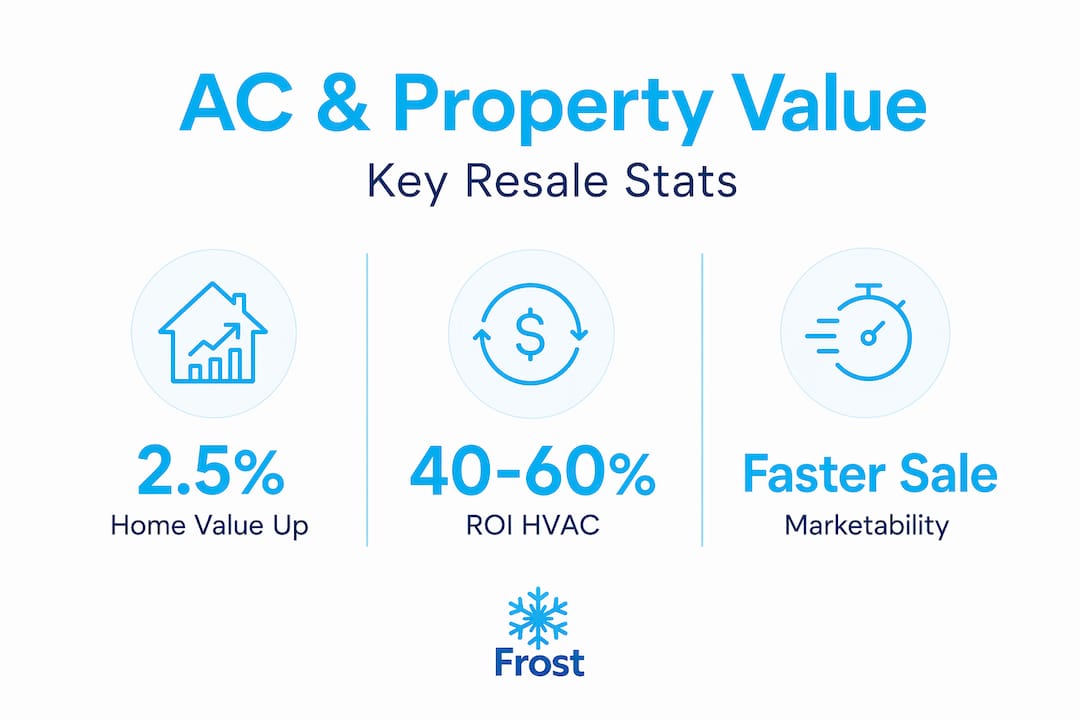
As the table shows, HVAC upgrades recoup 40 to 60 per cent of their cost at resale on average, compared with kitchens and bathrooms which generally perform better on pure return. The case for AC is therefore strongest when framed as equity protection. A property with a failing system loses value. A property with a modern, efficient system holds it.
Regional factors matter here too. In the South West of England, where summers are warmer and buyer expectations around comfort are rising, the impact of AC on home value is becoming more pronounced than in cooler northern regions. The heat pump ROI ranges from 49% to 96% depending on year and location, making these conversions particularly worth considering in the current climate policy environment.
For property investors specifically, the calculus is straightforward. You are rarely installing AC to make a profit on the upgrade itself. You are installing it to protect your asset, reduce time on market, and meet the expectations of an increasingly discerning buyer pool.
Practical guidance for property owners and investors
Knowing when and how to act on air conditioning upgrades separates smart property decisions from unnecessary spending. Here is what the evidence and experience suggest:
- Replace rather than repair if the system is over 12 years old. Older units are less energy-efficient and flag as deferred maintenance in appraisals. A replacement resets that concern entirely.
- Document everything. Service records, installation certificates, and warranty documents carry real weight with appraisers and buyers. Keep them organised and ready to present.
- Choose energy efficiency over brand recognition. A system with a strong energy rating does more for buyer confidence than a well-known brand on an older, less efficient unit.
- Understand your local market before spending. In areas like Devon and Cornwall, regional AC expectations are shifting quickly. In cooler northern areas, the same spend may not move the needle as clearly.
- Schedule maintenance annually. Regular servicing maintains the condition rating that appraisers look for and sustains buyer confidence at the point of sale.
Pro Tip: If you are planning to sell within 12 to 18 months, prioritise a full service and certification over a full replacement. A well-maintained existing system with current paperwork often performs as well in appraisals as a brand-new one.
The importance of HVAC in property worth is not purely about the hardware. It is about how that hardware is presented, documented, and perceived. Buyers and appraisers both respond to evidence of care.
Common misconceptions about AC and property value
A few beliefs persist around how AC affects house pricing that are worth addressing directly, because acting on them can lead to poor investment decisions.
- "A new AC unit will pay for itself at resale." Rarely. The ROI sits well below 100% in most scenarios. Think of it as protecting existing value, not creating new value from thin air.
- "Any AC system adds value." Appraisers focus on condition and market comparables. A cheap, poorly installed unit can actually raise concerns rather than reassure.
- "Replacing a working system will boost my valuation." Replacing a functional, reasonably modern system has minimal impact on appraisal outcome. The most meaningful gains come from replacing failing or outdated systems.
- "Buyers care that AC is present, not what kind it is." System type, energy rating, and integration with smart home technology all influence buyer perception in 2026. Presence alone is no longer enough.
The air conditioning value addition narrative is real, but it requires realistic expectations. AC contributes most meaningfully when it removes a problem, not when it introduces a luxury.
My honest take on AC as a property investment
I have worked closely with property owners and AC installers across the South West for years, and the conversation I have most often is some version of: "Will this put £10,000 on my house?" The answer is almost always: not directly, but that is not the right question.
What I have seen is that the properties that suffer at valuation or sit on the market longest are the ones where obvious maintenance has been skipped. A tired, noisy AC unit that leaks refrigerant does not just fail to add value. It actively costs you money by triggering appraisal deductions and giving buyers a negotiating chip.
The smarter framing I have come to is this. AC is infrastructure. You do not fit a new roof to make a profit on it. You fit it because without one, the property deteriorates and loses value. Cooling and climate control sit in the same category now, particularly as UK summers warm and buyer expectations shift.
Where I think people genuinely leave money on the table is in failing to document upgrades properly. I have seen homeowners spend £8,000 on a high-quality system, lose the paperwork, and get no credit for it at appraisal. The system is only as valuable as the proof of its condition. That lesson is simple, but it is consistently overlooked.
My advice is to invest in the right system for your market, keep the records, and service it annually. That combination protects your equity and makes your property genuinely easier to sell.
— James
Get expert advice from Frostairconditioning
If you are weighing up an AC upgrade for your property, the decision is worth getting right the first time. Frostairconditioning is a trusted F-Gas certified installer based in Exeter, covering the South West of England. Whether you need a same-day installation, a system assessment before a sale, or want to explore 0% finance options, the team can help you make a decision that actually supports your property's value.

From energy-efficient split systems to fully integrated solutions, Frostairconditioning provides professional installations that appraisers and buyers recognise as quality. Visit Frostairconditioning to learn more, or go straight to the quote request page to get a personalised figure for your property.
FAQ
Does air conditioning increase home value in the UK?
Installing AC adds around 2.5% to a home's value in some markets, though the primary benefit is often preventing appraisal deductions from failing or outdated systems rather than creating a direct price premium.
How does air conditioning affect property appraisals?
Appraisers assess HVAC as part of overall home condition. An outdated or failing system can trigger downward adjustments, while a well-maintained system with service records supports a positive condition rating.
What is the ROI on a new HVAC system?
A like-for-like replacement typically returns around 30%, while energy-efficient upgrades can add 5% to 7% to home value. Heat pump conversions show more variable returns depending on region and timing.
Is central AC better than ductless for resale value?
Yes, in most cases. Central HVAC systems are generally more attractive to buyers and appraisers because they are less visually intrusive and perceived as a more permanent, high-quality feature.
When should I replace rather than repair my AC before selling?
If the system is over 12 years old or requires costly repairs, replacement is usually the better option. A new installation protects against appraisal penalties and presents more confidently to buyers than an ageing unit with a repair history.