
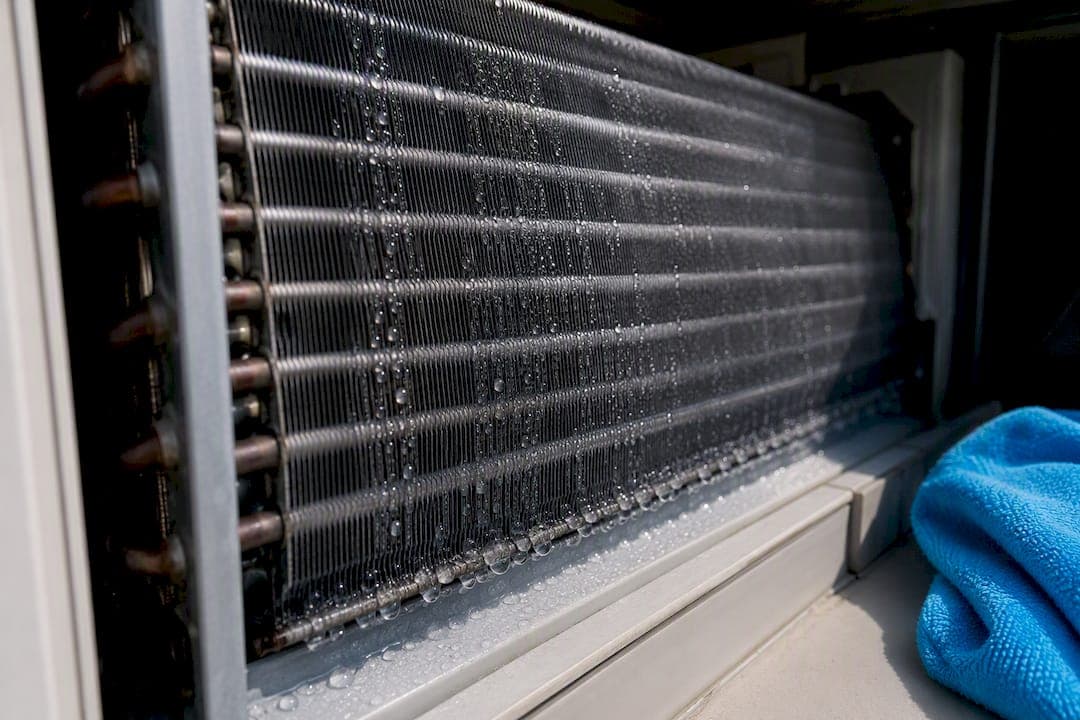
A musty smell from your air conditioner almost always means moisture has collected somewhere in the system and mould or bacteria are feeding on it, usually in the condensate drain, the evaporator coil, or nearby ductwork. If the odour only appears when the unit runs, suspect the coil or drain; if it lingers constantly, check ducts and damp nearby. Switch the unit to fan-only or off, then check the filter and drain pan before doing anything else.
TL;DR:
- Most musty odors are caused by microbial activity in the condensate drain, evaporator coil, or damp ductwork, not by the air conditioner's electrical faults.
- Regular maintenance, including filter replacement, drain flushing with vinegar, and coil cleaning, can eliminate the majority of odors and prevent mold growth.
- Persistent smells, mold inside ductwork, or electrical odors require professional inspection due to health risks and the complexity of contamination.
- External factors like high indoor humidity above 60% and poor insulation or ventilation increase mold and moisture buildup, worsening odors and system dampness.
- Routine seasonal checks and maintaining indoor humidity levels between 30% and 50% help prevent mold growth and reduce musty smells effectively.
Table of Contents
- Where the smell comes from: a homeowner diagnostic checklist
- Quick DIY fixes: safe steps to remove the smell now
- Problems DIY won't fix: when to call an F-Gas certified technician
- How to prevent musty smells: a homeowner maintenance schedule
- Health risks and immediate precautions if you suspect mould
- Frost Air Conditioning's field-proven fixes for musty smells
- How musty smells actually develop inside your unit
- When musty AC smells are most likely to strike
- Why high humidity in your home makes AC smells worse
- How poor insulation and ventilation trap moisture in your system
- Author's field perspective on likely causes and outcomes
- Book a professional check with Frost Air Conditioning
- Sources
- FAQ
Where the smell comes from: a homeowner diagnostic checklist
The smell's timing tells you most of what you need to know. A musty odour that only shows up while the unit is running usually points to the evaporator coil or the ductwork closest to the indoor unit, both of which only get wet during operation. A smell that's there all the time, running or not, suggests standing water in the drain pan, a damp duct run, or damp somewhere else in the room bleeding into the airflow.
Four culprits cause the vast majority of cases:
- Clogged condensate drain: algae and biofilm build up in the drain line and the water backs up instead of draining away.
- Dirty air filters: dust and debris trap moisture, giving mould spores a surface to settle on.
- Mould on the evaporator coil: cold, wet metal in a dark cabinet is close to ideal growing conditions.
- Damp ducts or drain pan: a cracked or overflowing pan, or ductwork that's picked up condensation, keeps the whole system slightly damp.
Work through it in this order. Stand near the indoor unit and the vents and sniff each one separately, since a smell concentrated at the vents usually means ducts, while a smell right at the unit points to the coil or drain pan. Pull the filter out and look at it under a bright light for a grey or greenish film. Open the drain access panel if your unit has one and check whether water is sitting rather than trickling away. Finally, look at the point where the condensate line discharges outside. If it's dripping weakly or not at all, that's your answer.
Quick DIY fixes: safe steps to remove the smell now
Most musty smells clear up with three cleaning jobs, done in this order:
- Clean or replace the filter. Wash a reusable filter or swap a disposable one every one to three months, more often if you have pets or live somewhere dusty.
- Flush the condensate drain. Locate the drain line access point, pour a cup of white vinegar through it to break down biofilm, then run a wet/dry vacuum on the outdoor discharge end to pull the clog free. This stepwise drain clear removes the algae and biofilm behind most odour complaints.
- Clean the drain pan and grilles. Wipe the pan with a mild detergent solution and rinse the return-air grille to stop dust feeding future growth.
- Wipe the visible coil surface. If you can see the evaporator coil without dismantling anything, a soft brush and a no-rinse coil cleaner lifts surface mould. Don't go further than what's visible without removing panels.
Pro Tip: Always switch off power at the isolator before removing any panel, and never spray cleaner directly into electrical connections, only onto the coil fins.
There's a firm line DIY should never cross. Refrigerant lines, compressors, and any electrical components inside the unit are sealed for a reason, and opening them without training risks a refrigerant leak or a shock. Deep duct cleaning, where mould has spread beyond what you can reach with a cloth, also needs specialist kit. For the everyday grime that causes most odours, a homeowner's guide to cleaning your air conditioner covers the safe reach of a DIY clean in more detail.

Problems DIY won't fix: when to call an F-Gas certified technician
Some signs mean stop cleaning and start calling. Treat any of the following as your cue to book a professional visit rather than reach for more vinegar:
- The smell persists after you've cleaned the filter, drain, and visible coil.
- You can see mould inside the ductwork itself, not just on accessible surfaces.
- The odour only appears when the system runs, despite a clean filter and clear drain.
- You notice a burning or electrical smell, which means switching the unit off immediately and calling for an inspection, not a clean.
Mould hidden behind panels or deep in ducts is genuinely risky to disturb yourself, since breaking up a colony without containment can push spores further into the air you're breathing rather than remove it. A certified engineer can decontaminate the coil properly, handle refrigerant safely if the system needs opening, re-grade or fit a pump to a condensate pipe that's draining badly, and sanitise ductwork that's beyond a cloth and brush. That level of work needs F-Gas certification precisely because refrigerant handling carries legal and safety requirements a general handyman won't meet.
How to prevent musty smells: a homeowner maintenance schedule
Prevention comes down to keeping the system dry, since mould needs moisture more than it needs anything else and there's no practical way to remove every nutrient mould could feed on. A simple seasonal routine catches most problems before they turn into a smell:
- Change or wash filters regularly, more often in dusty or pet-heavy environments.
- Check the condensate drain and pan at the start and end of the cooling season.
- Book an annual professional service to check coil condition and drainage.
- Keep indoor humidity between 30% and 50% using extraction fans in kitchens and bathrooms.
Condensate pipes need a genuine fall to drain properly. Industry guidance calls for a continuous fall of roughly 45mm per metre, and any external run should be insulated to stop freezing or pooling in cold weather. It's worth asking your installer to confirm this when they're on site.
Keep a short log before your annual service, noting anything you spotted, when you last changed filters, and whether the smell came back after cleaning. Our maintenance tips guide sets out a fuller seasonal checklist if you want to build this into a routine, and our condensation prevention guide covers humidity control in more depth.
Health risks and immediate precautions if you suspect mould
Damp and mould aren't just unpleasant. They produce allergens and spores that raise the risk of respiratory infections, asthma flare-ups, and allergic rhinitis, and children, elderly occupants, and anyone immuno-compromised face a higher risk from exposure.
Estimates suggest between 10% and 50% of indoor environments across Europe show some level of dampness, which puts a musty AC smell in a much wider context than one appliance.
If anyone in the house has asthma, a chest condition, or a weakened immune system, move them out of the room while you clean and don't let them back in until the smell has cleared. Wear a mask and gloves during any filter or drain work, open a window if you can, and avoid dry-brushing visible mould, which throws spores into the air rather than lifting them away.
Frost Air Conditioning's field-proven fixes for musty smells
Working across Exeter and the South West, Frost Air Conditioning's F-Gas certified engineers find the same pattern on most call-outs for musty smells: a partially blocked condensate drain paired with a filter that's overdue a change. A typical service visit checks the drain path, inspects the coil, and clears any blockage on the spot, with same-day appointments available and 0% finance if the fix turns into a bigger job.
How musty smells actually develop inside your unit
The smell itself comes from microbial activity, not from the air conditioner malfunctioning in any electrical sense. Bacteria and fungi release volatile compounds as they break down organic matter, and that off-gas is what your nose picks up as "musty" or "like a wet towel."
Every air conditioner creates the exact conditions these organisms need to thrive. The evaporator coil runs cold enough to pull moisture out of the air, that moisture collects as condensation, and dust, skin cells, and airborne debris settle onto the wet surface as a food source. Bacteria colonise first because they multiply fastest in a damp film, and fungi follow once a stable, moist layer builds up on the coil fins or drain pan.
Left undisturbed, this becomes a biofilm, a slippery coating you can sometimes see and often smell before you see it. It's the same process that makes a damp flannel smell sour if it sits in a warm bathroom for a few days, just happening on a coil instead of a fabric. The reason cleaning works is that it physically removes this film rather than masking the smell, which is why air fresheners and scented filters only ever hide the problem temporarily rather than solving it. Break the moisture cycle, whether through drainage, ventilation, or a proper coil clean, and the smell has nothing left to feed on.
When musty AC smells are most likely to strike
Musty smells cluster around specific points in the year rather than appearing randomly. Late spring and early summer are the worst stretch, because that's when a system that's sat idle over winter gets switched back on, and any moisture or debris left in the drain pan from the previous season has had months to develop into a smell.
Humid, muggy weather makes the problem worse regardless of the calendar, since the coil is working harder to strip moisture from the air and produces more condensate than it would on a dry day. Coastal and southwestern parts of the UK, where humidity tends to run higher for longer stretches, see this more often than drier inland regions.
The other seasonal trigger is the shoulder period at the end of summer, when a unit that's run continuously for weeks finally gets a rest and any residue left in the system starts to dry and change character, sometimes producing a stronger smell on the next start-up than during continuous running. A quick filter check and drain flush before you switch the system on for the season, and again before you put it away, catches both of these windows.
Why high humidity in your home makes AC smells worse
Your air conditioner doesn't operate in isolation. It reflects the humidity of the room it's cooling, and a home that consistently sits above 60% relative humidity gives the unit far more moisture to process, meaning more condensate, more standing water risk, and more opportunities for mould to establish itself on the coil or in the drain pan.
Kitchens and bathrooms are the usual sources of that excess humidity, especially where extraction fans are weak, missing, or simply switched off out of habit. Drying laundry indoors on radiators does the same thing gradually, raising background humidity across the whole property rather than in one room. None of this is about the air conditioner being faulty. It's about the unit being asked to fight a losing battle against moisture that keeps getting topped up faster than it can remove it.
Keeping indoor humidity in the 30% to 50% range, the same band recommended for general damp and mould prevention, takes real pressure off the system and cuts down how often condensate collects enough to cause a smell. A hygrometer costs very little and gives you an actual number to work from instead of guessing.

How poor insulation and ventilation trap moisture in your system
Insulation and ventilation shape how much moisture ends up inside the unit itself, not just in the room around it. Poorly insulated ductwork running through a loft or unheated space lets warm, moist air condense on the outside of the ducting, and that moisture can work its way into joints and seams over time, creating exactly the damp environment that supports mould growth.
There's a genuine tension here worth knowing about. Sealing a home tightly for energy efficiency, without matching that with adequate ventilation, can trap moisture indoors that would otherwise have escaped naturally, and that trapped moisture ends up feeding into whatever air conditioning or ventilation system is running. Good insulation is still worth having; it just needs pairing with proper airflow rather than being treated as a standalone fix.
External condensate pipe runs face a related problem. A run that's poorly insulated or exposed to the weather can encourage condensation to form on the outside of the pipe as well as inside, and in colder months that same run risks freezing and backing up the whole drainage system. Building guidance on this is specific: internal condensate routing is preferred where it's practical, and where a pipe has to run outside, it should be insulated and adequately sized to cope with the weather it will face.
Author's field perspective on likely causes and outcomes
Most musty smells trace back to condensate management, not a failing unit. A clogged drain or a coil that's been left to collect biofilm is a maintenance gap, not a mechanical fault, and it's usually fixable within a day or two once someone identifies it. Costs for that kind of fix tend to sit well below a full repair or replacement, though a neglected system can develop knock-on issues that push the bill up. If you find mould rather than just a smell, resist the urge to scrub it yourself before getting advice; disturbing it carelessly can make the air quality worse before it gets better.
— James
Book a professional check with Frost Air Conditioning
Frost Air Conditioning is the practical alternative to guessing your way through a musty smell with another bottle of coil cleaner.

A typical call-out starts with a free survey to establish whether you're looking at a quick drain flush or something that needs a coil decontamination and re-graded pipework. Our service and maintenance page covers one-off diagnostic visits, emergency breakdown response, and annual service contracts that keep condensate checks on a schedule rather than left until a smell forces the issue. If the smell turns out to be a symptom of a unit that's simply past its best, our domestic installation service covers replacement with premium systems from brands including Samsung, Mitsubishi, Toshiba, and Daikin. Book a survey through the service and maintenance page to get a certified engineer looking at the actual cause rather than the symptom.
This article is general information, not a substitute for advice from a qualified doctor. Consult a qualified healthcare professional about your own circumstances before acting on anything here.
Sources
- Gov
- Why your air conditioner smells musty (Apartment Therapy)
- How to remove musty smell from an air conditioner (This Old House)
- HHIC industry condensate guidance (HHIC PDF)
FAQ
What is the 3-minute rule for AC?
The 3-minute rule means waiting at least three minutes after switching an air conditioner off before switching it back on, giving internal pressure time to equalise so the compressor doesn't strain. It's a mechanical protection measure and unrelated to musty smells, which come from moisture and microbial growth rather than power cycling.
Is mould in an air conditioner harmful?
Yes. Mould exposure raises the risk of respiratory infections, asthma flare-ups, and allergic rhinitis, with children, elderly people, and anyone immuno-compromised at greater risk. Visible mould in ductwork or behind panels should be handled by a professional rather than disturbed with DIY cleaning.
Why does my air conditioner smell like a wet towel?
That smell comes from bacteria and fungi feeding on moisture trapped on the evaporator coil, in the drain pan, or in nearby ductwork, the same process that makes a damp flannel go sour. Clearing the condensate drain and cleaning or replacing the filter resolves most cases within a day.
What can I put in my air conditioner to make it smell better?
A vinegar flush through the condensate drain line, followed by a clean or replaced filter, deals with most odours at the source rather than masking them. Frost Air Conditioning's service and maintenance team can carry out a full diagnostic and coil decontamination if a DIY flush doesn't clear the smell.