

What is programmable cooling and how does it work?
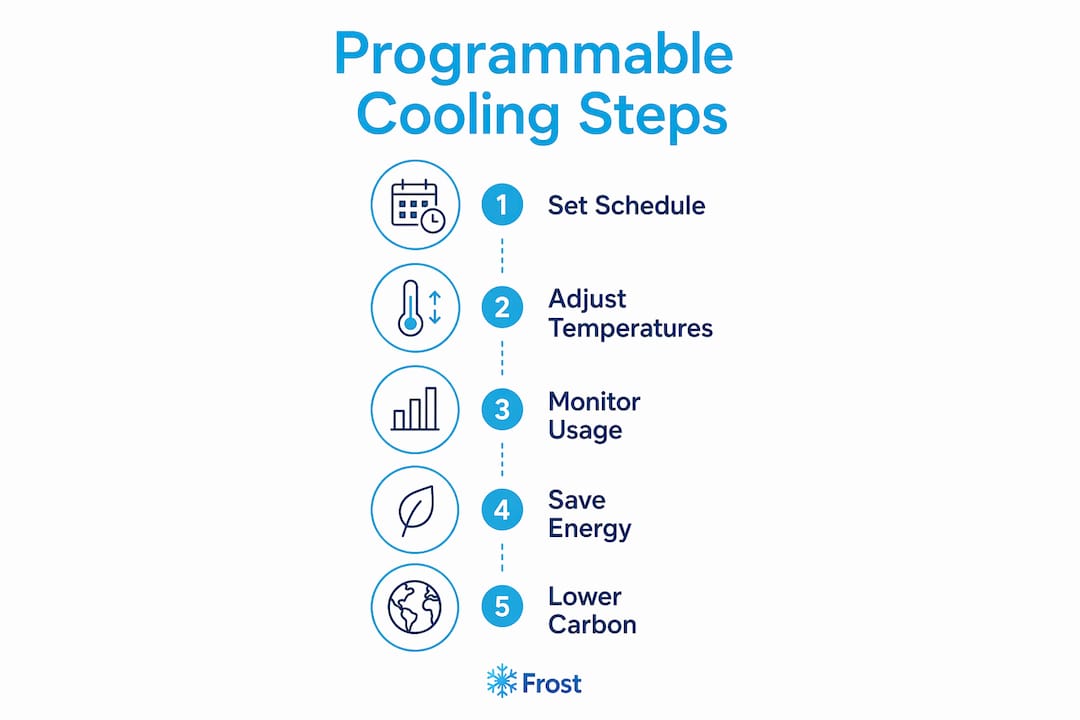
Programmable cooling uses a thermostat set to a schedule so your heating and cooling system adjusts automatically throughout the day. Rather than manually turning the temperature up or down, you programme the thermostat once and it handles the rest, raising or lowering the temperature based on when you wake, leave, return, and sleep.
The core goals are straightforward:
- Comfort on autopilot: your home reaches the right temperature before you need it, not after
- Lower energy bills: the system reduces output when the house is empty or you are asleep
- Convenience: no daily fiddling with controls
- Flexible scheduling: separate settings for weekdays, weekends, and different periods within each day
Most programmable thermostats offer four named periods: Wake, Leave, Return, and Sleep. You set a target temperature for each, and the thermostat does the rest.
Table of Contents
- How programmable thermostats actually control your home temperature
- The real benefits of programmable cooling for UK homes
- How to get the most from your programmable thermostat
- Programmable cooling vs traditional thermostat control
- Key takeaways
- Ready to install programmable cooling in your home?
How programmable thermostats actually control your home temperature
A programmable thermostat measures room temperature using a built-in sensor, compares that reading against your programmed setpoint, and signals your heating or cooling system to switch on or off accordingly. The process repeats continuously throughout the day.
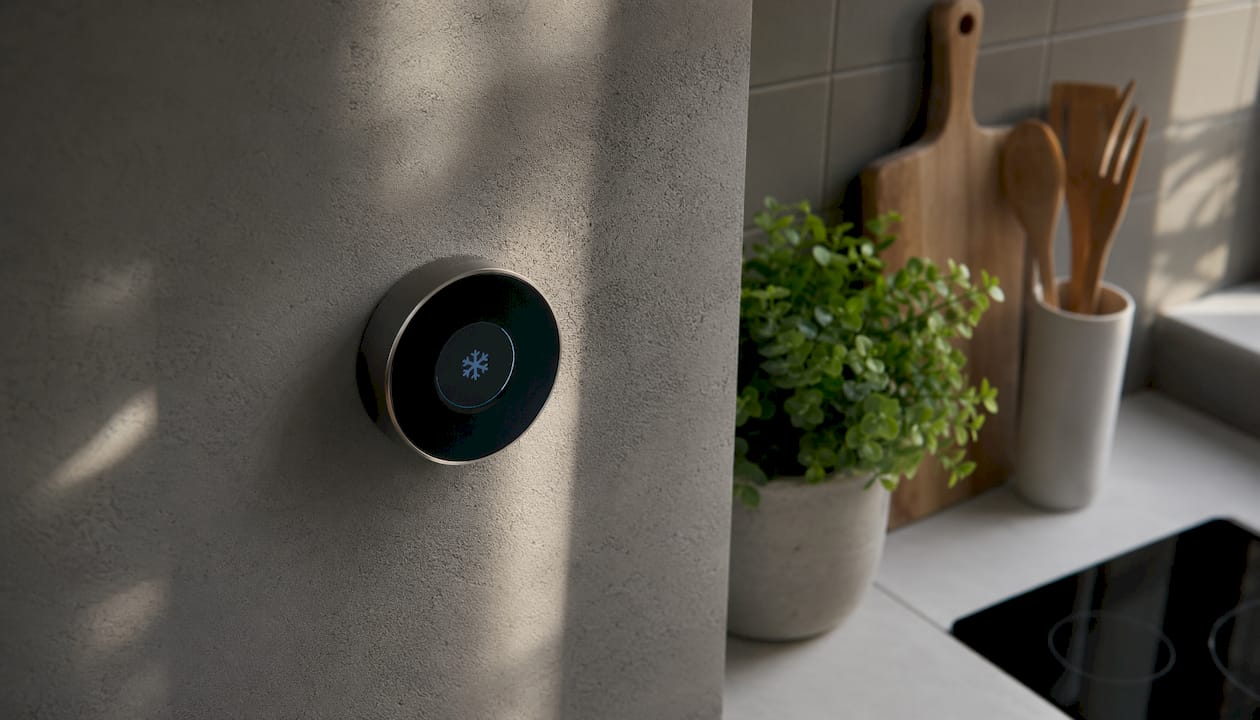
When you set up the thermostat, you programme separate schedules for heating mode and cooling mode. That matters in the UK, where most homes use a boiler for heating and a split-system air conditioner or heat pump for cooling. The thermostat manages both independently.
A few features worth understanding before you buy:
- Hold mode: overrides the schedule and holds a fixed temperature indefinitely, useful for days when your routine changes
- Run mode: returns the thermostat to its programmed schedule
- Manual override: lets you adjust the temperature temporarily without wiping the whole schedule
Understanding hold vs run is genuinely useful. Many homeowners switch to hold mode during a bank holiday and forget to switch back, which wipes out a week of savings.
UK homes also need to check wiring before buying. Some thermostats require a C-wire connection to power the display and Wi-Fi features. Older UK HVAC wiring often lacks this, so it is worth confirming compatibility before purchase.
The real benefits of programmable cooling for UK homes
Setting back your thermostat by 7–10°F for 8 hours daily can save approximately 10% annually on heating and cooling bills. Some sources, such as Trane®, suggest programmable thermostats can reduce heating and cooling costs by up to 15% when schedules are used properly. Beyond the bill, there is a comfort argument. Your living room reaches 21°C by the time you get home from work, not 30 minutes after. The bedroom cools down before you go to sleep. These are small things that add up across a year.

Reducing unnecessary heating and cooling also lowers your carbon footprint, which aligns with the UK government's push toward lower household energy consumption. ENERGY STAR-certified programmable and smart thermostats offer additional energy-saving capabilities beyond traditional manual controls, and homes with long unoccupied periods benefit most.
Pro Tip: Set your cooling schedule to begin 20–30 minutes before you arrive home rather than when you walk through the door. The system runs more efficiently bringing a warm room down gradually than blasting a cold room from scratch.
How to get the most from your programmable thermostat
Getting the setup right matters more than the device itself. A poorly configured thermostat on a £200 unit will underperform a well-configured one on a £60 model.
Common mistakes to avoid:
- Frequent manual overrides: treating a programmable thermostat like a manual one erodes most of the savings
- Ignoring the home envelope: improving insulation and duct sealing often delivers more impact than thermostat upgrades alone
- Poor placement: fitting the thermostat near a window, radiator, or external door gives it inaccurate temperature readings, causing the system to short-cycle
Professional installation ensures the thermostat is calibrated to your specific HVAC type, whether that is a gas boiler, heat pump, or split-system air conditioner. Placement, wiring, and calibration all affect long-term performance. Regular HVAC servicing alongside thermostat use prevents equipment failures that quietly undo the efficiency gains.
For those interested in taking things further, pairing a programmable thermostat with a smart home cooling setup adds remote control and, in some cases, occupancy-based learning. That said, the core savings come from a consistent schedule, not from extra features.
Pro Tip: Before upgrading your thermostat, check your loft insulation and draught-proof your doors and windows. A well-insulated home holds temperature longer, meaning your system runs for shorter periods and your thermostat schedule works harder.
Programmable cooling vs traditional thermostat control
A traditional, non-programmable thermostat holds one fixed temperature until you manually change it. You set 20°C and it stays at 20°C whether you are home, asleep, or away for the weekend. The system runs whenever the house drifts below that point, regardless of whether anyone is there to benefit.
Programmable cooling shifts that logic entirely. The system works around your life rather than against it, reducing output during the hours it would otherwise be wasting energy on an empty house. The difference between the two comes down to one thing: the ability to set a schedule.
Smart thermostats sit one step further along. They connect to Wi-Fi, can be controlled remotely via an app, and some learn your habits automatically, adjusting temperature based on real-time occupancy. For a fuller comparison, the guide to smart thermostat technology covers how these features work in practice. A programmable thermostat does not need any of that to deliver solid savings. It just needs a schedule that reflects how you actually live.
Key takeaways
Programmable cooling delivers real energy savings only when the schedule is set correctly and left to run without constant manual overrides.
| Point | Details |
|---|---|
| Core function | A programmable thermostat adjusts heating and cooling automatically based on a set daily or weekly schedule. |
| Energy savings | Setting back heating or cooling temperature by 7–10°F for 8 hours a day can save approximately 10% annually on energy bills, and savings may reach up to 15% with consistent schedule use. |
| Maximum savings | Consistently following a programmed schedule can reduce heating and cooling costs by up to 15%. |
| Installation matters | Professional fitting ensures correct placement, wiring, and calibration for your specific UK HVAC system. |
| Home envelope first | Improving insulation and sealing ducts often delivers greater efficiency gains than thermostat upgrades alone. |
Ready to install programmable cooling in your home?

Frostairconditioning installs air conditioning and cooling systems across Exeter and the South West, with F-Gas certified engineers, same-day installs available, and 0% finance options. If you are ready to move from manual temperature control to a properly scheduled system, book a domestic installation or get a free quote today.