

Upgrading an old air conditioning unit means choosing between targeted maintenance, partial component replacement, or full system swap to restore efficiency and comfort. Knowing how to upgrade old aircon correctly saves money, reduces energy bills, and keeps your home compliant with current UK regulations. This guide covers every decision point: assessing your current system, the best maintenance improvements available, how to choose high-efficiency components, and why professional commissioning determines whether your upgrade actually works.
How to upgrade old aircon: assess before you act
The first step in any upgrade is an honest assessment of what you have. Air conditioning systems have a typical lifespan of 12 to 15 years, and age alone tells you a great deal about what to expect from repairs going forward.
Work through these four checks before spending a penny:
- Check the age of the unit. If your system is over 12 years old and using R-22 refrigerant (phased out in the UK), replacement is almost certainly the right call. R-22 is no longer legally available for servicing, which makes any repair involving refrigerant both difficult and expensive.
- Review your repair history. A system that has needed two or more significant repairs in the past three years is signalling the end of its reliable life. Each fix buys less time than the last.
- Apply the 30 to 40 per cent rule. Repair costs exceeding 30 to 40 per cent of the replacement price indicate that replacement is the financially wiser choice, particularly for units older than 12 years. Spending £600 to repair a system worth £1,500 as new is rarely sensible.
- Measure your energy bills. A unit losing efficiency draws more electricity for the same output. If your cooling costs have risen noticeably without a change in usage habits, the system is working harder than it should.
The repair versus replacement decision works best when you combine age, cost, and risk together rather than relying on any single factor. A 10-year-old unit with one minor fault and low repair costs may be worth fixing. The same unit with compressor failure is almost certainly not.
Pro Tip: Before concluding you need a refrigerant top-up or major repair, check airflow first. Blocked vents, dirty filters, and restricted returns cause symptoms that look identical to refrigerant problems. Fixing airflow costs almost nothing compared to a refrigerant service call.
What maintenance upgrades can improve aircon performance?
Strict maintenance routines can restore comfort and efficiency before replacement becomes necessary. Many homeowners skip these steps and go straight to expensive repairs or replacements when the fix was far simpler.
The core maintenance upgrades that deliver real performance gains are:
- Filter replacement every one to two months during the cooling season. Clogged filters reduce airflow and cause dirt to build up on the evaporator coil, reducing cooling capacity and eventually causing premature failure. This is the single highest-return maintenance task available.
- Evaporator coil cleaning. Even with regular filter changes, the evaporator coil accumulates grime over time. A dirty coil insulates itself from the air it is supposed to cool, cutting efficiency significantly. Professional coil cleaning restores heat transfer.
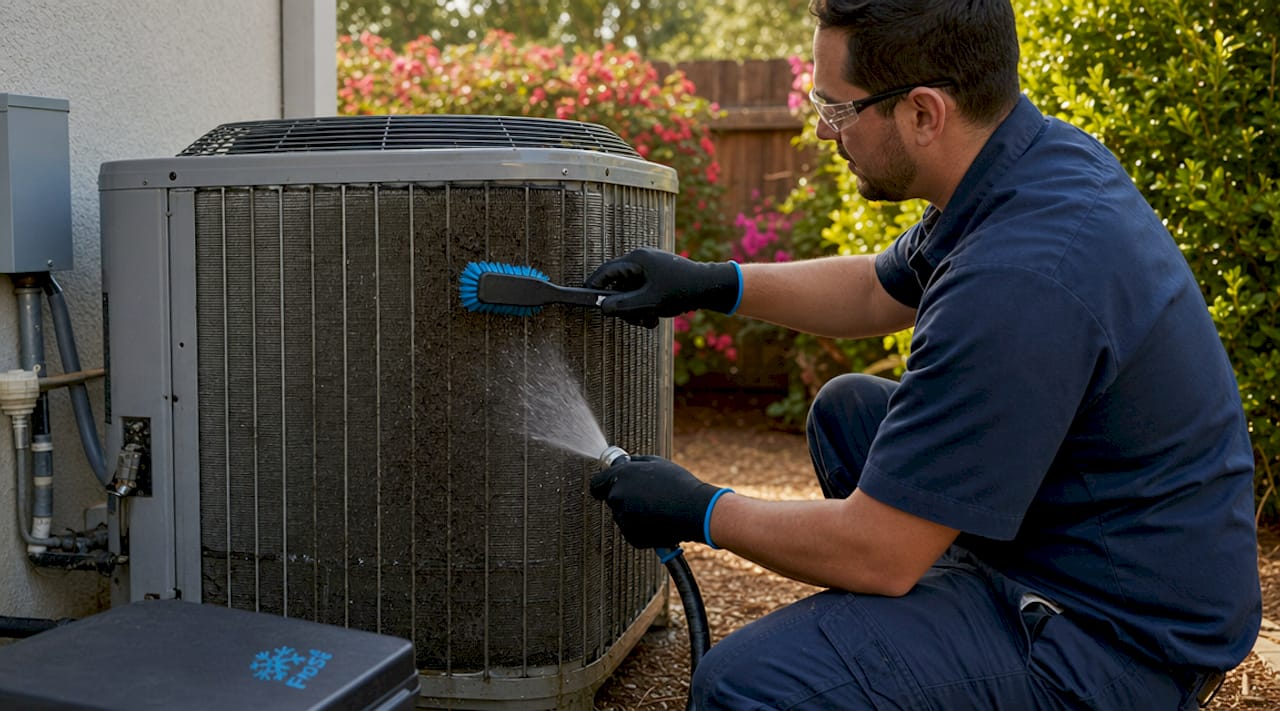
- Condenser coil maintenance. The outdoor condenser unit sits exposed to leaves, grass clippings, and general debris. Clearing the area around the unit and cleaning the coil fins allows heat to escape properly.
- Straightening bent aluminium fins. Fins on both the evaporator and condenser coils bend easily and restrict airflow when damaged. A fin comb, available from most HVAC suppliers, straightens them quickly and costs very little.
- Clearing drain channels. A blocked condensate drain causes water to back up, leading to humidity problems indoors and potential water damage. Pass a stiff wire through the drain channel periodically to keep it clear.
- Replacing minor components. Capacitors and contactors wear out independently of the compressor and refrigerant circuit. Replacing a failed capacitor costs a fraction of a full repair bill and can restore a system that appears completely dead.
Poor airflow from dirty filters or clogged coils is routinely mistaken for refrigerant problems, leading homeowners to pay for refrigerant services that do nothing to address the real cause.
Pro Tip: Always verify airflow paths and cleanliness before authorising any refrigerant adjustment. A technician who reaches for the refrigerant gauges before checking filters and coils is skipping the most important diagnostic step.
Which system features matter most when upgrading air conditioning?
When maintenance alone is no longer enough, choosing the right replacement system determines how much you benefit from the upgrade. Efficiency improvements come more from proper sizing and installation quality than from headline rating numbers alone.
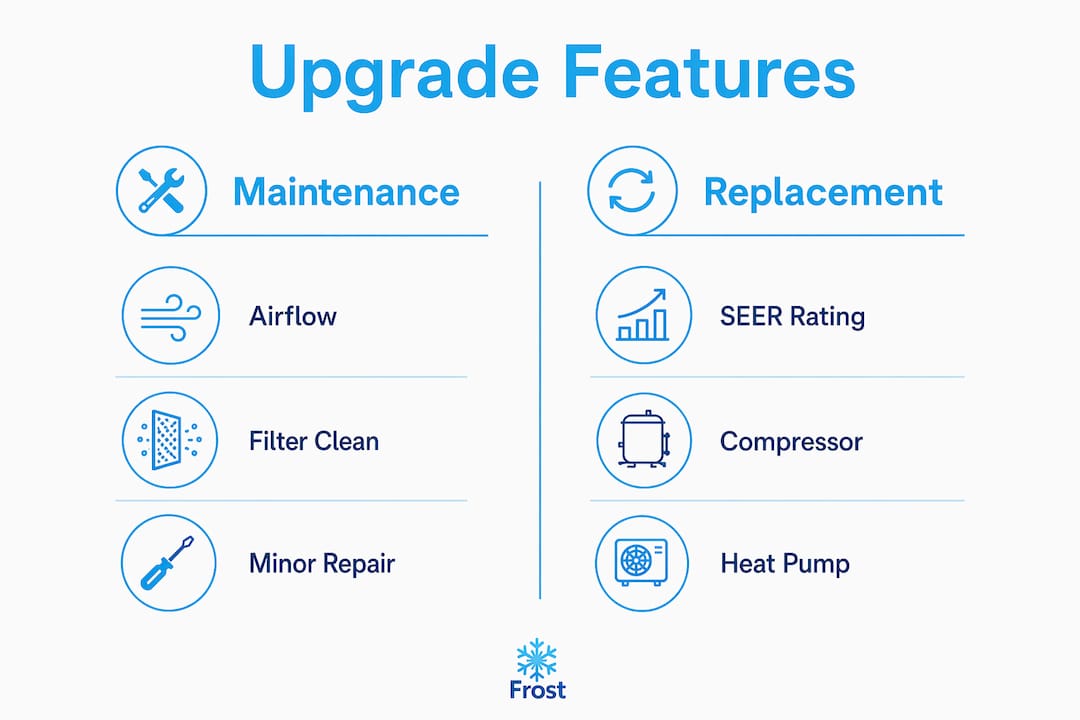
The three features that make the biggest practical difference are SEER rating, compressor type, and system category.
Newer systems achieve SEER ratings of up to 26, compared to the 8 to 10 typical of units installed before 2005. A higher SEER rating means less electricity consumed per unit of cooling delivered. Moving from a SEER 10 system to a SEER 20 system cuts cooling energy use by roughly half.
Variable-speed compressors run at low speed the majority of the time rather than cycling on and off at full power. This produces more consistent temperatures, better dehumidification, and lower running costs. Single-stage units blast at full capacity until the thermostat is satisfied, then stop entirely. The result is temperature swings and higher humidity between cycles.
Heat pumps provide both cooling and heating with SEER ratings ranging from 14 to 26, making them a strong choice for whole-house upgrades in the UK's moderate climate. A heat pump replaces both your air conditioning unit and your heating source, which changes the economics of replacement considerably.
Correct sizing via a Manual J load calculation is non-negotiable. An oversized unit short-cycles, leaving rooms humid and uncomfortable. An undersized unit runs constantly without reaching target temperature. Read more about getting the sizing right before committing to any system.
| System type | SEER range | Best suited for | Relative cost |
|---|---|---|---|
| Single-stage split system | 13 to 16 | Budget upgrades, smaller homes | Lower |
| Multi-stage split system | 16 to 21 | Mid-size homes, mixed climates | Moderate |
| Variable-capacity system | 20 to 26 | Larger homes, humidity control priority | Higher |
| Heat pump | 14 to 26 | Homes needing heating and cooling | Moderate to higher |
Why professional installation and commissioning matter
Choosing the right system accounts for roughly half of the upgrade outcome. The other half is installation and commissioning quality. Skipping or rushing commissioning steps causes uneven cooling, humidity control failure, and repeat service calls that cost more than the commissioning would have.
A proper commissioning process covers:
- Refrigerant charge verification. Overcharged or undercharged systems run inefficiently and wear components faster. Temperature differentials of 15 to 20°F between supply and return air confirm correct charge.
- Airflow measurement. Duct restrictions, incorrect fan speeds, and blocked registers all reduce performance even in a brand-new installation.
- Thermostat calibration. A thermostat reading two degrees high or low causes the system to run longer or shorter than needed, wasting energy and reducing comfort.
In the UK, only F-gas-qualified engineers may handle refrigerants during installation, servicing, and maintenance. Environmental regulators impose civil penalties for non-compliance. This is not a technicality. It is a legal requirement that protects you from liability and guarantees the work is done correctly. Frostairconditioning holds full F-gas certification, which means every installation meets the legal standard from day one.
F-gas certification and documented procedures are legal requirements and the foundation of reliable system operation after any upgrade. Ask your installer for the commissioning report and leak check records before they leave the site. A reputable installer provides these without hesitation.
Pro Tip: Insist on a written commissioning report that includes refrigerant charge readings, airflow measurements, and thermostat calibration results. If an installer cannot or will not provide this, find one who will.
For a detailed breakdown of what correct commissioning involves, the Frostairconditioning guide on commissioning quality and efficiency covers every step.
Key takeaways
Upgrading an old air conditioning system delivers lasting results only when assessment, maintenance, correct system selection, and professional commissioning are treated as a single connected process rather than separate tasks.
| Point | Details |
|---|---|
| Assess before spending | Use the age, cost, and risk framework before committing to repair or replacement. |
| Maintenance first | Filter changes, coil cleaning, and drain clearing restore performance before replacement is needed. |
| Prioritise SEER and compressor type | Variable-capacity systems with high SEER ratings deliver the greatest efficiency and comfort gains. |
| Size correctly | A Manual J load calculation prevents the oversizing and undersizing that undermine any upgrade. |
| Demand commissioning records | Written refrigerant, airflow, and thermostat data confirm the installation was done properly. |
What I have learned from upgrading old aircon systems
After years of assessing and installing air conditioning across the South West, the pattern I see most often is homeowners spending money in the wrong order. They pay for refrigerant top-ups on systems with dirty coils, or they replace units that needed nothing more than a capacitor and a thorough clean.
The diagnostic step that changes everything is separating airflow and cleanliness problems from refrigerant and control issues before touching anything else. A system that cools poorly with clean filters, clear coils, and correct airflow almost certainly has a refrigerant or electrical fault. A system that cools poorly with restricted airflow almost certainly does not need refrigerant work at all.
Commissioning quality is the factor I see undervalued most consistently. Homeowners compare quotes on equipment and price, but rarely ask what the commissioning process involves. Two identical systems installed by different engineers can perform very differently at the end of year one, purely because one was commissioned properly and the other was not.
My honest advice on the repair versus replacement question: do not let a single large repair bill force a panic decision. Run the numbers across three years of likely repair costs, current energy bills, and the operational cost of a new system. The long-term value of replacement often looks very different from the immediate expense when you account for repair frequency and comfort improvements together.
UK compliance is not red tape. It is the quality standard that separates a reliable upgrade from one that causes problems within 18 months. Work with F-gas-certified engineers, get the paperwork, and treat it as evidence that the job was done right.
— James
How Frostairconditioning can help with your upgrade
If you are ready to move from assessment to action, Frostairconditioning covers the full upgrade process for homeowners across Exeter and the South West.

From system assessment and load calculation through to domestic installation by F-gas-certified engineers, every job is handled to the standard this guide describes. Same-day installs are available, and 0% finance means the cost of upgrading does not have to be paid upfront. Frostairconditioning also offers service maintenance packages to keep your upgraded system performing at its best year after year. Request a personalised quote to get accurate costs for your home and system before committing to anything.
FAQ
How do I know when to replace rather than repair my old aircon?
Repair costs exceeding 30 to 40 per cent of the replacement price, combined with a system age of over 12 years or R-22 refrigerant use, are the clearest indicators that replacement is the better investment.
What SEER rating should I look for when upgrading air conditioning?
Modern systems reach SEER ratings of up to 26, with anything above 16 representing a significant efficiency improvement over units installed before 2010. Variable-capacity systems at the higher end of that range offer the best long-term running costs.
Can I upgrade my aircon without replacing the whole system?
Yes. Deep cleaning, filter replacement, coil maintenance, and minor component repairs such as capacitors can restore meaningful performance to an ageing system. The types of air conditioning systems available also include options for partial upgrades such as replacing only the outdoor unit when the indoor unit remains serviceable.
Do I need an F-gas-certified engineer to upgrade my aircon in the UK?
Only F-gas-qualified engineers may legally handle refrigerants during any installation, service, or maintenance work in the UK. Using an uncertified engineer exposes you to civil penalties and voids any manufacturer warranty.
What is commissioning and why does it affect my upgrade?
Commissioning is the process of verifying refrigerant charge, measuring airflow, and calibrating the thermostat after installation. Skipping these checks causes uneven cooling, humidity problems, and repeat service calls that cost far more than the commissioning itself.