

Quiet air conditioning systems are defined by their ability to cool a room while producing noise levels low enough to avoid disturbing sleep, conversation, or concentration. Explaining quiet air conditioning systems properly means going beyond marketing labels and understanding the real technologies behind low noise performance. The best modern units, including inverter-based split systems from manufacturers such as Mitsubishi Electric and Daikin, achieve indoor noise levels as low as 19 dB. That is quieter than a whisper. For UK homeowners, where homes are close together and planning rules apply to outdoor units, choosing the right system and having it correctly installed makes a genuine difference to daily comfort.
How do quiet air conditioning systems work?
The core reason modern AC units are so much quieter than older models comes down to inverter compressor technology. A traditional compressor switches fully on and fully off, creating a sharp acoustic jolt each time it cycles. Inverter compressors modulate speed smoothly, avoiding those sudden noise peaks and reducing energy consumption at the same time. Consumer Reports rates inverter window ACs as the quietest category available for this exact reason.
Beyond the compressor, several other design features work together to reduce noise:
- Sound-insulating cabinet panels absorb vibration before it reaches the room. High-quality units use dense foam lining inside the casing.
- Aerodynamically shaped fan blades reduce the turbulent airflow that causes the familiar whooshing sound at higher speeds.
- Physical separation of components in split systems places the noisy compressor and condenser fan outside, keeping the indoor unit to a quiet evaporator fan only.
- Vibration isolation mounts sit between the compressor and the unit chassis, stopping structure-borne noise from travelling into walls and floors.
- Variable fan speed control allows the system to run at the minimum speed needed, rather than always blasting at full output.
The split system design deserves particular attention. Because the loudest component, the compressor, sits outside the building, indoor noise levels in ductless mini-split systems commonly reach as low as 19–35 dB. That is the range between a whisper and a quiet library.
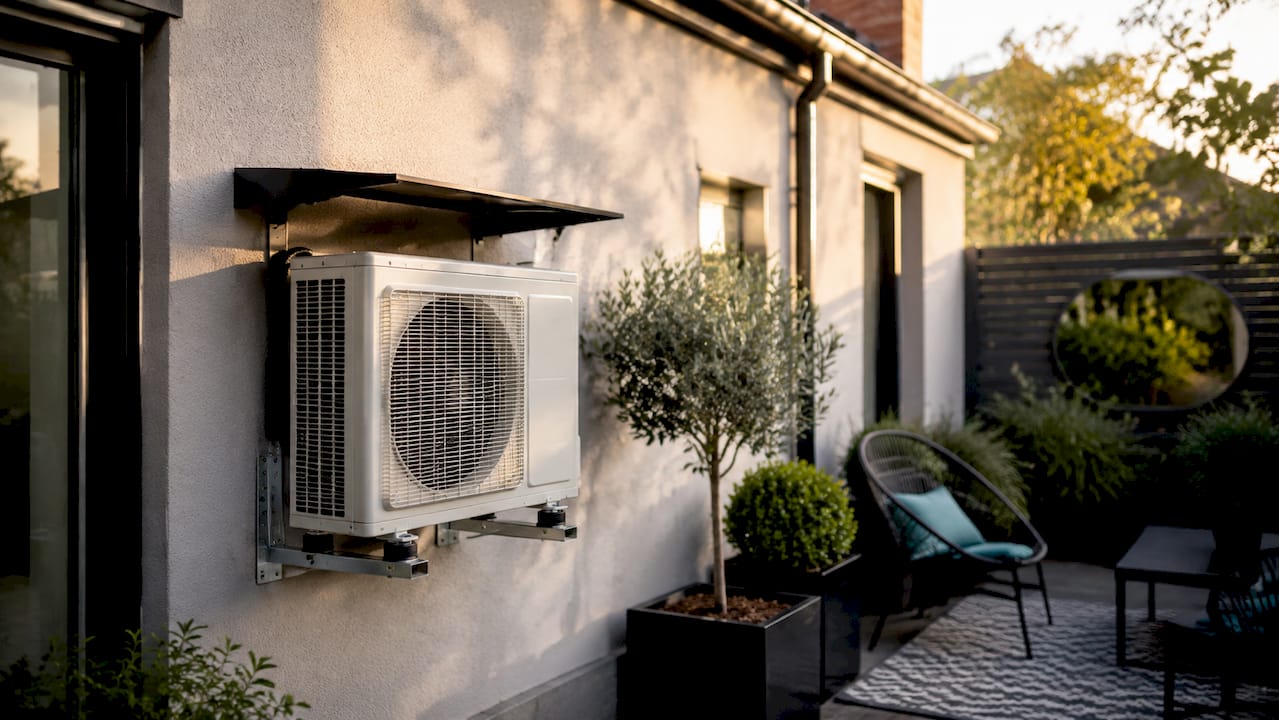
Pro Tip: Ask your installer to fit anti-vibration brackets between the outdoor unit and the wall bracket. This single step prevents low-frequency hum from travelling through the building structure, which is one of the most common complaints homeowners raise after installation.
What noise levels should you expect from a quiet AC unit?
Understanding decibel ratings is the key to comparing systems honestly. The decibel scale is logarithmic, meaning small number differences represent large changes in perceived loudness. Here is a practical reference:
| Noise Level | Real-World Equivalent | AC Context |
|---|---|---|
| 19–20 dB | Whisper | Quietest mini-split indoor heads |
| 30–35 dB | Quiet library | Typical quiet mode for indoor units |
| 40 dB | Library background noise | Standard indoor AC at low fan speed |
| 50–55 dB | Normal conversation | Older or oversized indoor units |
| 60–65 dB | Busy office | Typical outdoor condenser unit |
Noise benchmarks for bedrooms suggest targeting 20–30 dB indoors for comfortable sleep. Some units achieve as low as 19 dB in quiet mode, which is genuinely imperceptible to most people in a furnished room.
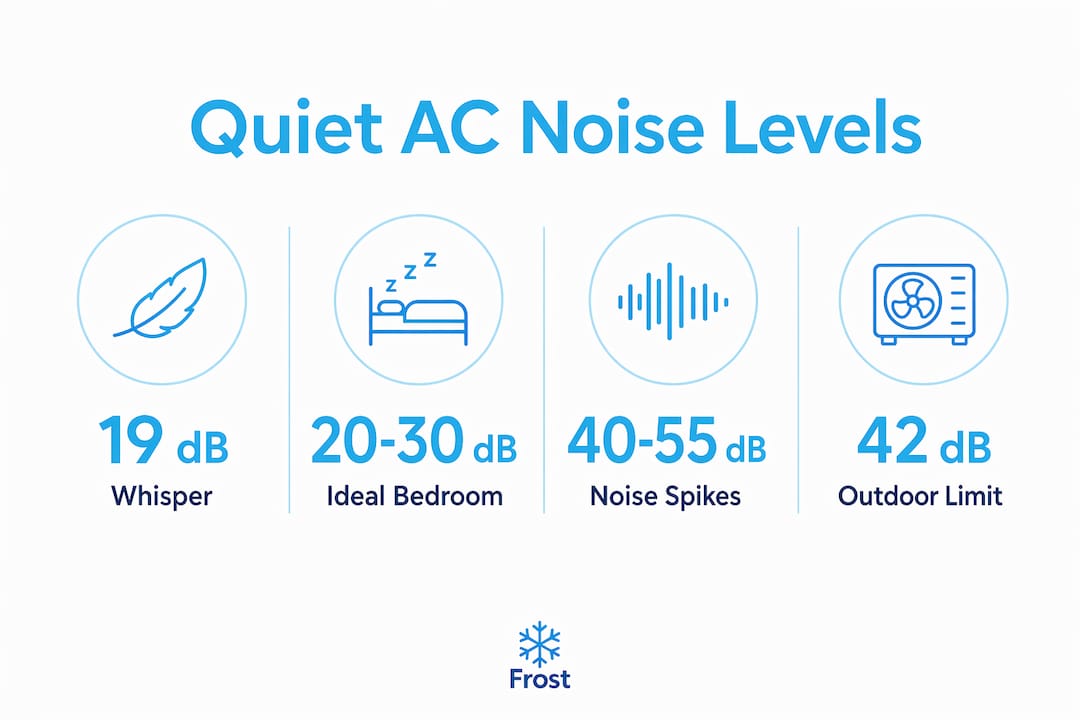
Outdoor units are a separate consideration. In England and Wales, the legal noise limit for external AC units is 42 dB(A) measured at one metre from a neighbour's habitable room, set under the Town and Country Planning (General Permitted Development) (England) Order 2015. Most quality split systems comply with this, but placement and mounting still matter.
Pro Tip: Always ask for the noise rating at the same fan speed setting you plan to use daily. Many manufacturers advertise their lowest possible figure, which is often only achievable in a reduced-output night mode. Comparing ratings at comparable fan speeds gives you a realistic picture.
One important caveat: non-inverter ACs cycle fully on and off, causing indoor noise spikes of 40–55 dB and temperature swings of 3–5°F. Inverter models hold temperature within ±0.5°F and stay consistently quiet throughout operation. The difference in day-to-day comfort is significant.
Which AC system type is quietest for a UK home?
Not all systems perform equally when it comes to low noise operation. The table below compares the main types available to UK homeowners:
| System Type | Typical Indoor Noise | Typical Outdoor Noise | Best For |
|---|---|---|---|
| Ductless mini-split | 19–35 dB | 45–60 dB | Bedrooms, living rooms, extensions |
| Multi-split system | 20–38 dB | 48–62 dB | Whole-home quiet cooling |
| U-shaped window unit | 35–45 dB | N/A (self-contained) | Flats, rental properties |
| Traditional central AC | 40–55 dB | 50–65 dB | Larger homes with existing ductwork |
| Portable unit | 45–60 dB | N/A (self-contained) | Temporary or rental use |
Ductless mini-split systems are the clear choice for most UK homes where quiet operation is the priority. You can read more about AC types for UK homes to understand which layout suits your property.
U-shaped window units deserve a mention as a clever design solution. A glass pane sits between the compressor and the room, significantly reducing indoor noise compared to standard window units. They also allow you to keep the window partially open, which standard window units do not.
Sizing matters more than most homeowners realise. Oversized air conditioners run louder because they cycle harder and more frequently to manage the excess capacity. A correctly sized unit runs longer at lower speed, which is both quieter and more energy efficient. Consumer Reports specifically advises right-sizing as a noise and performance priority.
Air-source heat pumps follow the same noise rules as AC outdoor units under UK planning law. If you are considering a system that provides both heating and cooling, the 42 dB(A) outdoor limit applies equally.
How to choose and install a quiet air conditioning system
Getting the quietest possible result from your new system depends on both the product you choose and how it is fitted. Follow these steps to get it right:
-
Choose an inverter model with a rated indoor noise level below 35 dB. Look for units with a dedicated quiet or night mode. Mitsubishi Electric and Daikin both publish verified noise figures for their residential ranges.
-
Check the outdoor unit noise rating against the 42 dB(A) UK planning limit. If your outdoor unit will be close to a neighbour's window, choose a model rated at or below this threshold to avoid disputes and potential planning issues.
-
Position the outdoor unit away from bedroom windows. Both yours and your neighbours'. Outdoor compressor placement away from bedrooms and vibration paths into the building structure is one of the most effective noise-reduction strategies available.
-
Specify anti-vibration isolation brackets during installation. Vibration isolation and correct mounting can dramatically reduce real-world noise beyond what the manufacturer's quiet mode specification suggests. This is where professional installation earns its cost.
-
Maintain clearance around the outdoor unit. Restricted airflow forces the fan to work harder, increasing noise. Most manufacturers specify minimum clearances in their installation guides. Follow them precisely.
-
Book a professional, F-Gas certified installer. Correct refrigerant charge, pipe routing, and bracket selection all influence how quietly the system runs. An under-charged or over-charged system runs harder and louder than a correctly commissioned one.
For bedroom-specific advice on quiet AC for better sleep, the considerations around unit placement and night mode settings are worth reading in detail before you commit to a position on the wall.
Key takeaways
Quiet air conditioning systems achieve low noise through inverter compressor technology, correct sizing, and professional installation with vibration isolation.
| Point | Details |
|---|---|
| Inverter technology is the foundation | Inverter compressors modulate speed smoothly, avoiding the noise spikes of on/off cycling. |
| Indoor noise targets for bedrooms | Aim for units rated 20–35 dB indoors; some mini-split heads reach as low as 19 dB. |
| UK outdoor noise limit applies | External units must not exceed 42 dB(A) at one metre from a neighbour's habitable room. |
| Installation quality determines real results | Anti-vibration brackets and correct placement matter as much as the product specification. |
| Right-sizing reduces noise and running costs | Oversized units cycle harder and louder; a correctly sized system runs quietly at lower speed. |
What i have learned installing quiet systems across the south west
After fitting hundreds of residential AC systems across Devon and the wider South West, the pattern I see most often is this: homeowners spend time comparing noise specifications online, then lose most of that advantage through poor installation decisions on the day.
The single biggest culprit is mounting the outdoor unit directly onto a rendered wall without isolation brackets. The compressor vibration travels straight into the building fabric and resonates through floors and ceilings. The unit itself might be rated at 45 dB, but the homeowner hears a low hum throughout the house. It is entirely avoidable.
The second thing I would push back on is the idea that a quieter unit means weaker cooling. Inverter technology maintains strong performance while reducing noise peaks. The compressor does not need to shout to do its job. In fact, the modulated approach is more precise and more energy efficient than the old on/off approach.
My honest advice: do not fixate on getting the unit with the lowest possible dB rating if it means compromising on installation quality. A well-installed mid-range inverter split system will outperform a premium unit bolted to a wall without isolation. Spend the money on the right installer, not just the right spec sheet.
— James
Get a quiet AC system installed by Frostairconditioning
If you are ready to move from research to reality, Frostairconditioning installs inverter-based split systems across Exeter and the South West, with same-day installation available and 0% finance options to spread the cost.

Every installation is carried out by F-Gas certified engineers who understand the difference between a system that looks good on paper and one that genuinely stays quiet in your home. From outdoor unit placement to anti-vibration mounting, the details that determine real-world noise performance are built into every job. Visit the domestic installation page to get a quote or call for personalised advice on the right system for your property.
FAQ
What makes an air conditioning system 'quiet'?
A quiet AC system uses an inverter compressor that modulates speed rather than cycling on and off, combined with sound-insulating cabinet design and vibration isolation mounting. Indoor units in this category typically operate at 19–35 dB.
What is a good indoor noise level for a bedroom AC unit?
Targeting 20–30 dB indoors is ideal for bedrooms, with the quietest mini-split heads reaching as low as 19 dB in quiet mode. That is below the level of a whisper in a furnished room.
Is there a legal noise limit for outdoor AC units in the UK?
Yes. In England and Wales, the legal limit for external AC and heat pump units is 42 dB(A) measured at one metre from a neighbour's habitable room, under the Town and Country Planning (General Permitted Development) (England) Order 2015.
Does a quieter AC unit cool less effectively?
No. Inverter AC units maintain consistent temperature control within ±0.5°F while operating quietly. The modulated compressor approach is more precise than traditional on/off cycling, not less powerful.
How much does installation affect real-world noise levels?
Significantly. Vibration isolation and correct mounting can reduce real-world noise far beyond what the manufacturer's specification alone suggests. Poor mounting is the most common reason a quiet-rated unit sounds louder than expected in practice.