
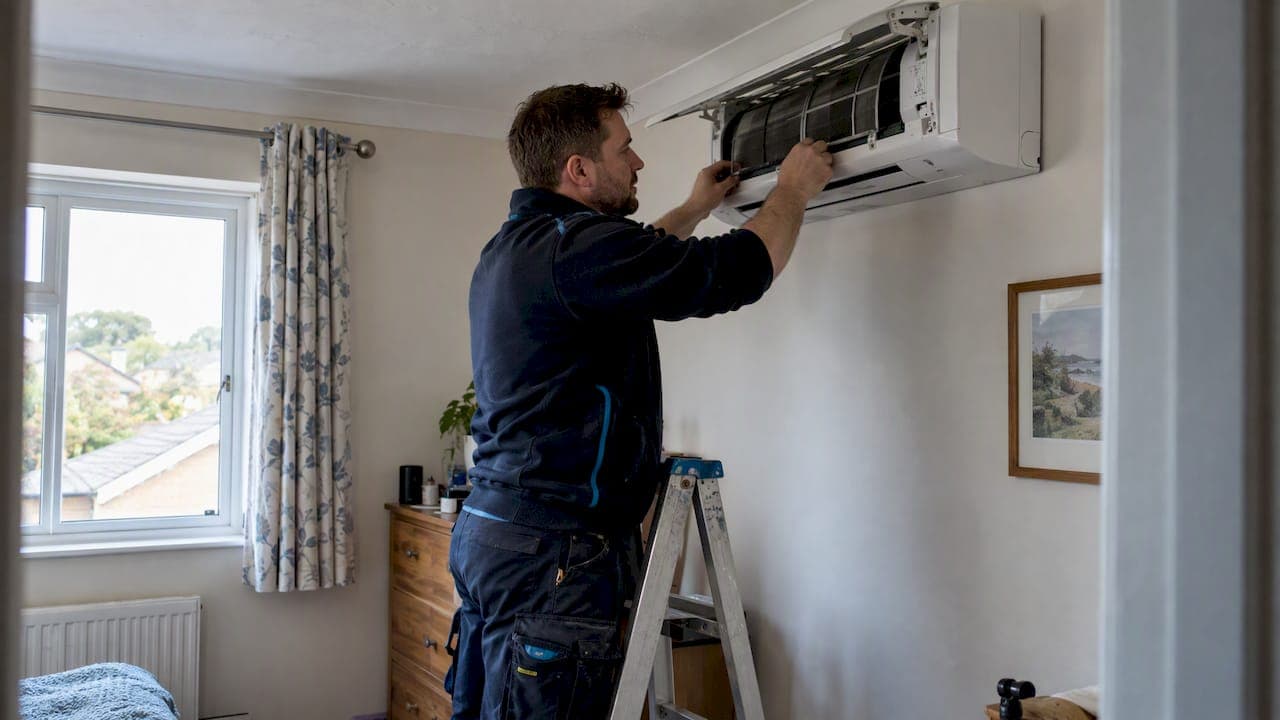
A pre-summer aircon check is a short inspection and basic maintenance routine that keeps your system reliable when the heat arrives. Run the checklist below, and book a professional spring service if your unit has not been serviced recently. Two guideposts matter most: servicing in spring, and the F-Gas legal requirement for anyone handling refrigerant.
TL;DR:
- Wash reusable filters with lukewarm water and dry them fully; replace disposable filters with the same size and type rather than washing them.
- Only certified engineers may handle refrigerant under UK law; never attempt a leak repair or refrigerant top up yourself.
- A spring service typically costs £60 to £120 for a wall mounted split unit, while summer callouts can reach £300 before parts.
- Turn the unit off and call a certified engineer if cooling fades, pipes ice, breakers trip repeatedly, smoke appears, water leaks, or grinding starts.
- Schedule professional maintenance annually and keep dated service records, since manufacturers often require proof of regular maintenance for warranty claims.
Table of Contents
- What should you check before the weather turns hot?
- How do you inspect and fix the basics safely?
- What does a professional spring service include?
- How much does a spring service cost, and when should you book?
- When should you stop and call an engineer?
- How do you get ready for the engineer's visit?
- Why do pre-summer checks make such a difference in the UK?
- Book your spring service with us
- FAQ
- Sources
What should you check before the weather turns hot?
Set aside some time. Switch the unit off at the isolator first, then work through these tasks in order.
- Filter: remove it, look for dust build-up, and wash or replace it as the type requires.
- Condensate drain and drip tray: check for blockages, standing water or a musty smell.
- Outdoor unit: clear leaves and debris, make sure air can move freely around it, and look for visible damage.
- Controls and performance: switch the unit on, confirm it cools, test the thermostat and remote, and listen for rattling or grinding.
- Record keeping: note the date of the last professional service and any warning lights or error codes.
Pro Tip: Take a photo of the model plate and any error codes on your phone. It saves time when you book a service or call us.
How do you inspect and fix the basics safely?
Most of what follows is simple, but know where your limits are. If you want a plain-English refresher on how the parts fit together, our guide to basic air conditioning systems covers the terminology.
- Wash a reusable filter. Slide it out, rinse it under lukewarm tap water, let it dry completely, then refit it. A disposable filter cannot be washed, so replace it with the same size and type.
- Check the condensate trap. If it is accessible, look for slime, mould or debris. Wipe away what you can reach. Persistent dripping indoors or a sour smell suggests a blocked drain, and the UK's damp climate makes winter blockages common.
- Tidy the outdoor unit. Brush away surface debris with a soft brush. Never push anything between the fins. Once the unit is running, check that the fan spins freely.
- Run the basic control checks. Replace the remote's batteries, confirm the thermostat is set to cool, and try a single reset at the isolator. If the fault returns, stop there.
- Leave refrigerant alone. Never attempt any refrigerant work. Under F-Gas rules, only certified engineers may handle it.
Pro Tip: If you clear a mouldy drain, wash nearby soft furnishings too. Deep-cleaning advice for allergy-prone homes explains how to deal with residue and spores.
What does a professional spring service include?
A DIY check catches the obvious problems. An engineer finds the ones you cannot see or are not allowed to touch. A full service typically covers:
- Leak detection on the refrigerant circuit
- Coil cleaning and drain flushing
- Electrical safety checks
- Performance testing against expected temperatures
- Refrigerant handling, carried out only by a certified engineer
Work involving refrigerant must be done by F-Gas certified engineers under retained UK law, according to GOV.UK guidance. That is why we only send F-Gas certified engineers to your property. If you are unsure how to vet someone else, our article on verifying F-Gas compliance before you hire walks through it.
Documented annual servicing also protects you. Manufacturers often expect evidence of regular maintenance before honouring a warranty claim, and a dated service record settles that question quickly.
How much does a spring service cost, and when should you book?
Booking early is the cheaper route, and the gap is easy to see in the figures from Checkatrade's repair cost guide:
- A single wall-mounted split unit typically costs £60–£120 to service in spring.
- Larger or ducted installations typically cost £150–£250.
- A summer emergency callout can exceed £150 or reach £300 before any parts.
A spring service for a split unit costs £60–£120, while a summer callout can reach £300 before parts. Spend a little in spring and you avoid paying a premium when everyone else's system fails at once.
March and April are the sensible months to book. Engineers have space in their diaries, parts are easy to get, and you will not be waiting through a heatwave backlog. Our guide on when UK owners should service their aircon explains how often to repeat the visit.

When should you stop and call an engineer?
Some faults are not worth investigating yourself. Call a certified engineer straight away if you notice any of the following:
- Cooling that drops away quickly, ice forming on the pipes, or a persistent chemical smell, all of which can point to a refrigerant problem
- Repeated tripping of the breaker, warning lights that will not clear, smoke or a burning smell
- Water leaking after you have cleared the drain, heavy vibration, or metal-on-metal grinding
Switch the unit off while you wait. Running it with a suspected fault can turn a modest repair into an expensive one.
How do you get ready for the engineer's visit?
A little preparation shortens the visit and keeps the time on site focused on the work.
- Clear a path to the indoor and outdoor units, and move furniture or stored items away from them.
- Gather the model numbers, previous service records and warranty paperwork.
- Switch off timers and smart schedules, and write down when the fault happens and what it does.
Pro Tip: Keep a simple log with dates and symptoms. Engineers read patterns quickly, and a good note can save diagnostic time.
Why do pre-summer checks make such a difference in the UK?
UK humidity makes condensate problems far more likely than many owners expect. Drains that sat idle all winter often clog, and the first warm week exposes it. From our base in Exeter, we see the same pattern across the South West every spring: units that were checked in March run quietly in July, and units that were ignored produce the emergency calls. I would argue the best-value maintenance you can buy is the dullest one, a scheduled visit before anything breaks.
— James
Book your spring service with us
We install, service and repair air conditioning for homes and businesses across Exeter and the South West. Our service and maintenance team handles spring servicing, annual service contracts and emergency breakdown response, all by F-Gas certified engineers. Our free surveys and finance options are available too, and if your system is beyond economical repair, we can replace it through our domestic installation service. Phone us or request a quote on our site, and we will find you a slot before the summer rush.

FAQ
How often should I service my air conditioner?
Once a year is the usual recommendation, ideally in spring before the cooling season starts. Heavy commercial use may justify more frequent visits.
Can I top up the refrigerant myself?
No. Refrigerant handling must be done by an F-Gas certified engineer under UK rules. Unqualified work is illegal and can void your warranty.
Why does my aircon smell musty?
A musty smell usually points to bacteria or mould building up in the drain or on the filter, rather than a normal aircon odour. Clean the filter first, and call an engineer if the smell returns.
What is the best month to book a pre-summer aircon check?
March or April is ideal. Diaries are open and you avoid the summer backlog, when emergency callouts cost more.