
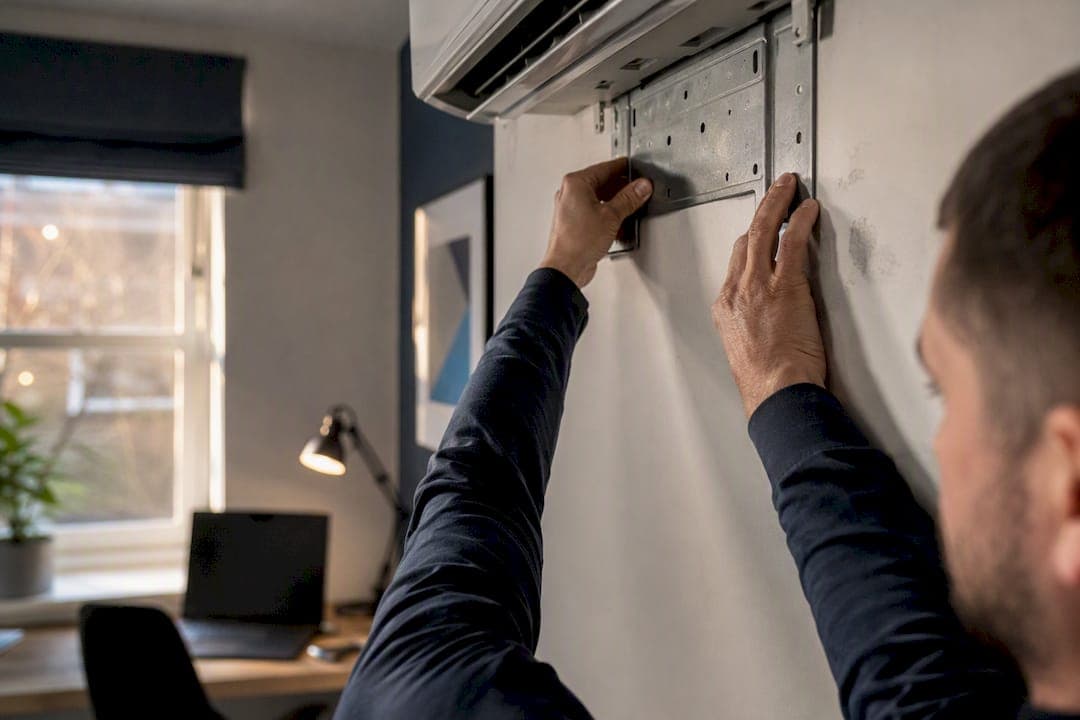
Most home workers need a single-room ductless mini-split or a reversible air-to-air heat pump rather than a portable unit. These systems run quietly, cool efficiently, and can double as winter heating. Portable air conditioners suit renters or short-term needs only. Before assuming a grant covers the cost, check eligibility carefully: the Boiler Upgrade Scheme's £2,500 support has narrow conditions.
TL;DR:
- Portable air conditioners are inexpensive and quick to set up but are noisy and less efficient for long-term use in a dedicated home office.
- Ductless mini-splits offer quiet and cost-effective cooling, making them ideal for daily desk work in a permanent setup.
- Reversible heat pumps provide year-round temperature control and may qualify for government grants, especially if replacing existing primary heating.
- Proper sizing based on room size, equipment, and sunlight exposure is essential to avoid over- or undersizing, which affects efficiency and comfort.
- Installation costs vary from around £1,500 to over £3,000, with annual servicing roughly £70 to £120, and must meet legal safety and certification standards.
Table of Contents
- Home office air conditioning: which system type actually fits your room?
- How do you size an air conditioner for a home office?
- What does home office air conditioning cost in the UK?
- What are the legal and safety checks before installation?
- How do you cut running costs without sacrificing comfort?
- How often does a home office air conditioner need servicing?
- How Frost Air Conditioning handles a home office installation
- A remote worker's case for proper climate control
- Ready for a home office that stays comfortable all year?
- Sources
Home office air conditioning: which system type actually fits your room?
The right choice depends on how permanent your setup is and how much disruption you can tolerate during fitting.
Portable or plug-in units are the fastest fix. You unbox one, run the exhaust hose through a window kit, and you're cooling within the hour. The trade-off is real: they're noisier than fixed systems, they lose efficiency because they draw already-cooled room air back through themselves, and the trailing hose makes them awkward in a room with limited window access.
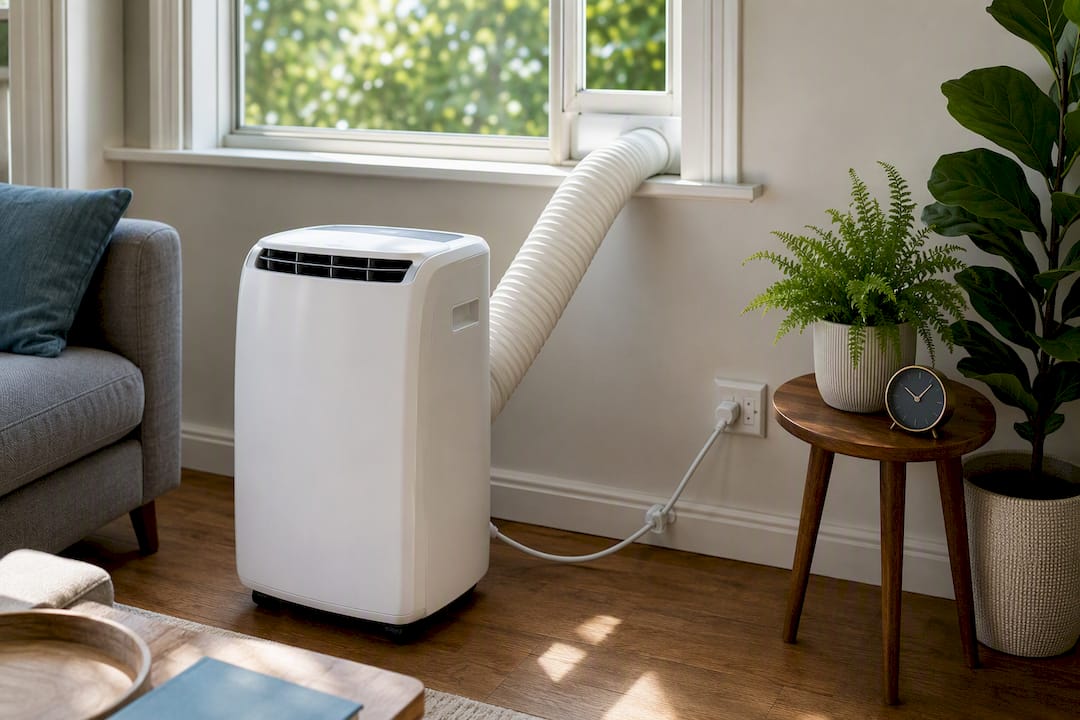
Wall-mounted ductless mini-splits are the standard recommendation for a dedicated home office. A single indoor head paired with an outdoor condenser gives you quiet, precise temperature control without a hose in sight, and running costs are noticeably lower than a portable unit working the same room.
Reversible air-to-air heat pumps do the same job as a mini-split but flip into heating mode for winter, making them a genuine year-round investment rather than a summer-only cost. If one replaces an existing primary heating system, it may qualify for Boiler Upgrade Scheme support, though eligibility is stricter than many homeowners expect.
Central HVAC with zoning rarely makes sense for one room. Only consider it if you're already extending or renovating and the ductwork is going in regardless. For most single-room jobs, a ductless mini-split beats retrofitting a whole-house system on cost alone.
- Portable: cheapest to buy, noisiest, least efficient
- Mini-split: quiet, efficient, best for daily desk-based work
- Air-to-air heat pump: heats and cools, possible grant eligibility
- Central/zoned: only if already renovating
How do you size an air conditioner for a home office?
Undersizing leaves you sweating through video calls in July; oversizing wastes money and can leave the room clammy because the unit short-cycles before it properly dehumidifies. Industry sizing guidance recommends starting from room area and building up, rather than picking a unit off a generic size chart.
- Calculate a baseline using roughly 20 BTU per square foot as your starting point.
- Adjust for ceiling height: anything above the standard 2.4 metres needs extra capacity.
- Add a fixed allowance for equipment, typically 400 to 800 BTU for a desktop PC and dual monitors, plus more for a laser printer.
- Add around 600 BTU per additional occupant beyond yourself.
- Increase the total by 10 to 15% for south or west-facing glazing, or for a poorly insulated loft conversion or garage-turned-office.
A typical 3 by 3.5 metre spare-room office (about 105 square feet) starts near 2,100 BTU, then climbs past 3,000 BTU once you've added a workstation, a second person for meetings, and a west-facing window catching afternoon sun.
Pro Tip: Resist the urge to round up to "be safe". A unit sized correctly for real loads dehumidifies properly; one that's too large blasts cold air, hits the target temperature, then shuts off before it's pulled the moisture out.
What does home office air conditioning cost in the UK?
Budgeting properly means separating four costs: the unit, the fitting, the running, and the annual service.
- Portable units: roughly £250 to £600 to buy, with no professional installation needed.
- Single-zone mini-splits: unit and installation together typically run from around £1,500 up to £3,000+, depending on wall access, pipe run length, and where the outdoor condenser sits.
- Full air-to-air heat pump systems: costs climb further, particularly where they're replacing an existing heating system rather than adding cooling on top.
Installation costs swing on a few factors: how far the indoor and outdoor units sit apart, whether new electrical circuits are needed, and how many indoor heads you're running from one outdoor unit.
Annual servicing typically costs £70 to £120 per unit, a small outlay against the cost of a refrigerant leak or compressor failure caught late.
On running costs, a mini-split working an 8-hour desk day in a well-insulated room will draw a fraction of the electricity a portable unit uses to achieve the same effect, because the compressor sits outside and doesn't recirculate its own heat into the room.
On the grant question: there's no general grant for conventional air conditioning. The Boiler Upgrade Scheme figure applies specifically to air-to-air heat pumps replacing a primary heating system, and as industry reporting notes, it isn't intended as a discount on supplementary cooling. Check current VAT treatment with your installer too, since rates and reliefs shift. For a fuller breakdown, our cost guide covers regional pricing variation in more depth.
What are the legal and safety checks before installation?
Getting this wrong isn't just a compliance headache. It can void your warranty or leave you with an uninsurable installation.
- F-Gas certification: only F-Gas certified engineers can legally handle refrigerant. Ask to see the engineer's certification card before work starts, not after.
- MCS and the Boiler Upgrade Scheme: if you're pursuing heat-pump grant eligibility, the installer must be MCS-certified, and the installation must meet the scheme's technical standards.
- Energy Performance of Buildings inspections: systems rated over 12kW effective output require inspection by an accredited assessor at least every five years. A single-room home office unit will almost always sit well below this, but it matters if you're planning a multi-room system.
- Planning and noise: check local planning restrictions if you're in a conservation area or a listed building, and confirm where the outdoor condenser can legally sit relative to a boundary.
Our guide on professional AC installation covers why skipping a qualified installer tends to cost more in the long run than it saves upfront.
How do you cut running costs without sacrificing comfort?
Efficiency comes down to the compressor technology, how you use the thermostat, and small fixes to the room itself.
- Choose an inverter compressor over a fixed-speed one. Inverters modulate output rather than switching fully on and off, which uses noticeably less electricity across a working day.
- Check the SEER2 rating and part-load performance, not just the headline efficiency figure, since energy use scales directly with how efficiently a unit runs at partial load, which is most of the working day.
- Set a sensible thermostat range, around 22 to 24°C, and use timers or smart scheduling so the unit isn't cooling an empty room before you sit down.
- Close blinds on south or west-facing windows before the sun hits them, draught-proof the door, and keep it shut while you work.
- If you're running a portable unit through every summer month, a heat pump often works out cheaper over a full year once winter heating is factored in.
Pro Tip: A £15 set of blackout blinds on a west-facing window can shave a meaningful chunk off your afternoon cooling load, often more than upgrading a mid-range unit to a slightly more efficient model. Our efficiency guide has more room-level fixes worth trying first.
How often does a home office air conditioner need servicing?
- Monthly: clean or rinse the filter, since a clogged filter is the single biggest cause of lost efficiency.
- Quarterly: check the condensate drain isn't blocked and clear leaves or debris from around the outdoor unit.
- Annually: book a professional service. Engineers check refrigerant levels, clean the coils, and test electrical connections, catching small faults before they become compressor failures.
- Immediately: call a certified engineer if you notice water leaking indoors, unusual grinding or rattling noises, or a sudden drop in cooling performance. These are early warning signs, not things to monitor.
How Frost Air Conditioning handles a home office installation
The process runs survey, bespoke sizing, written quote, installation, then commissioning and handover, so you know the cost and timeline before any work starts.
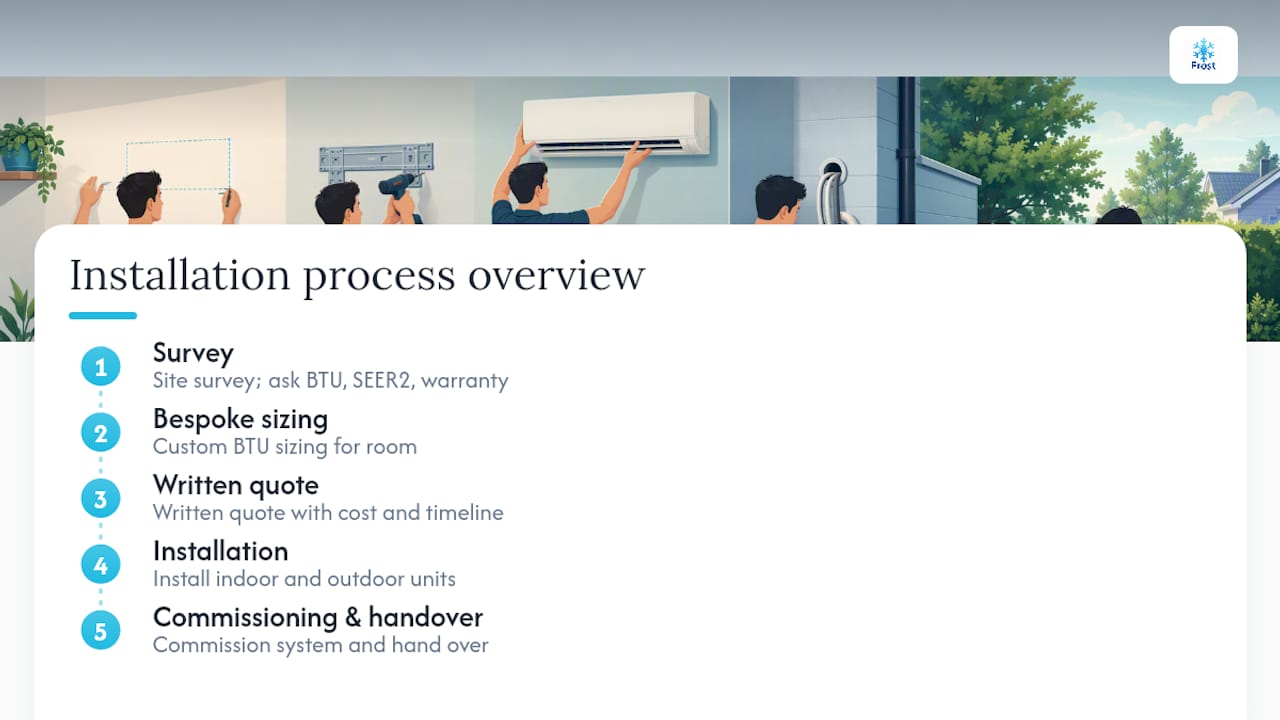
Before hiring any installer, ask three questions: how they've calculated your BTU requirement, what SEER2 rating the proposed unit carries, and what the warranty and servicing terms actually cover. If you're weighing a permanent single-room system, a multi-room job, or a heat-pump installation that might qualify for grant support, a proper survey beats guesswork every time.
A remote worker's case for proper climate control
Get the sizing right and pick a mini-split over a portable unit, and a home office stops being the room you avoid by 3pm. The two mistakes I see most: oversizing "to be safe," and forgetting that a desktop PC and two monitors add real heat to a small room. Book a survey before you buy anything.
— James
Ready for a home office that stays comfortable all year?
Reading up on BTU calculations and F-Gas certification is one thing. Getting a system sized, quoted, and fitted without weeks of back-and-forth is another. Frost Air Conditioning runs domestic installations across Exeter and the South West with F-Gas certified engineers, 0% finance, and same-day fitting where your job allows it, so you're not stuck waiting through another heatwave for a proper solution.
A site survey typically takes under an hour. Have your room dimensions, a rough idea of your equipment (desktop, monitors, printer), and any planning restrictions (listed building, conservation area) ready, and the engineer will confirm sizing and outdoor unit placement on the spot. If you're also considering broader heating efficiency, these upgrade options are worth reviewing alongside any air-to-air heat pump plans. When you're ready to see numbers against your actual room, request a no-obligation quote and get a proper answer instead of another guess.
Sources
- The Energy Performance of Buildings (England and Wales) Regulations 2012 — Part 4: Inspection of air-conditioning systems
- Is air conditioning worth it in the UK?