
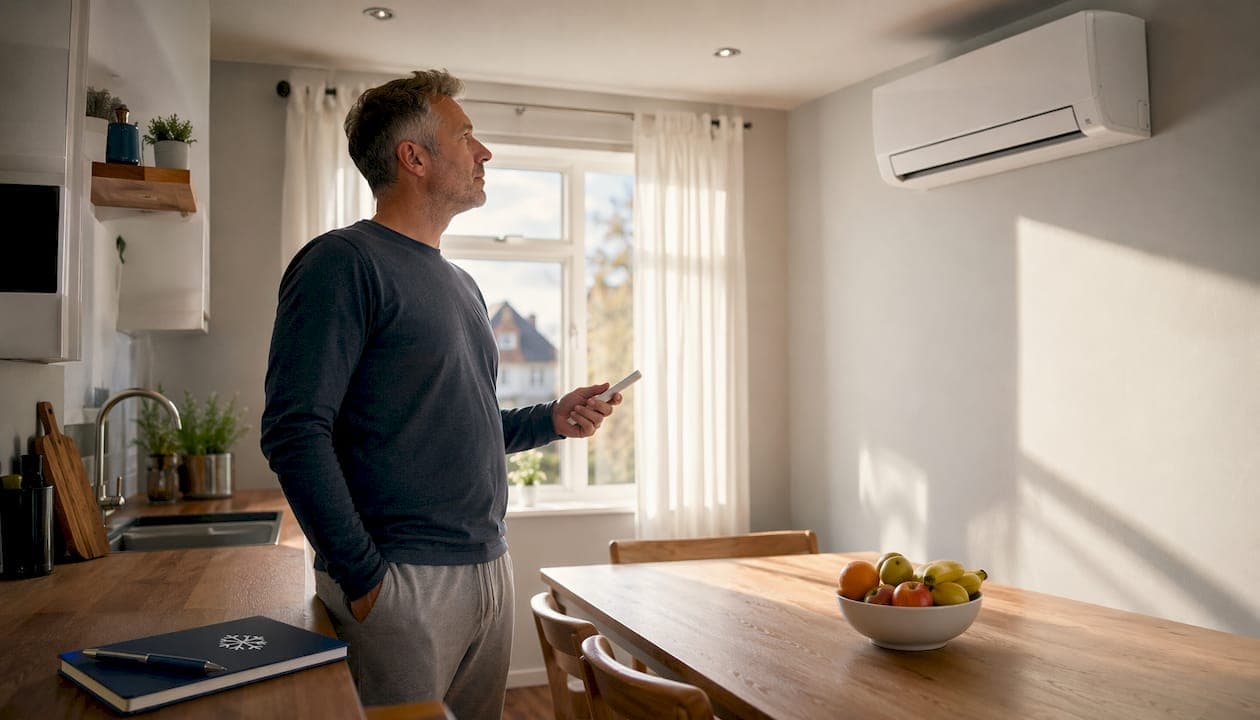
For most small UK homes, a ductless mini-split system is the strongest all-round choice: quiet enough for a bedroom, efficient enough to keep running costs low, and permanent enough to add real value to a property. Portable units work as a stopgap, and inverter window units sit somewhere in between. The right answer depends on whether you rent or own, how much you want to spend upfront, and how much noise you can live with.
Here is a quick orientation before you go deeper:
- Ductless mini-splits place the compressor outside, so indoor noise levels can drop as low as 19–24 dB(A) on low settings. That is quieter than a whisper.
- Inverter window units are compact, self-contained, and easier to fit in a rented flat, though they sit in the 35–45 dB(A) range.
- Portable air conditioners need no installation at all, but most run above 45 dB(A) and are noticeably less efficient than fixed systems.
- Sizing matters more than most people realise. A unit that is too large for the room will short-cycle, leaving the air humid and the noise level higher than it needs to be.
- Frostairconditioning covers the South West with F-Gas certified technicians, same-day installs, and 0% finance options.
Pro Tip: Always match the unit's BTU output to your room's square footage before anything else. An oversized unit cools fast but cycles on and off constantly, which is louder, less efficient, and leaves the room feeling clammy.
Table of Contents
- What types of air conditioning suit a small home?
- What should you look for when choosing an AC for a small room?
- Which portable air conditioners are worth buying in the UK right now?
- Expert advice from Frostairconditioning on sizing, noise, and maintenance
- How long does AC installation take for a small home?
- Key takeaways
- Frostairconditioning: expert installation for small UK homes
What types of air conditioning suit a small home?
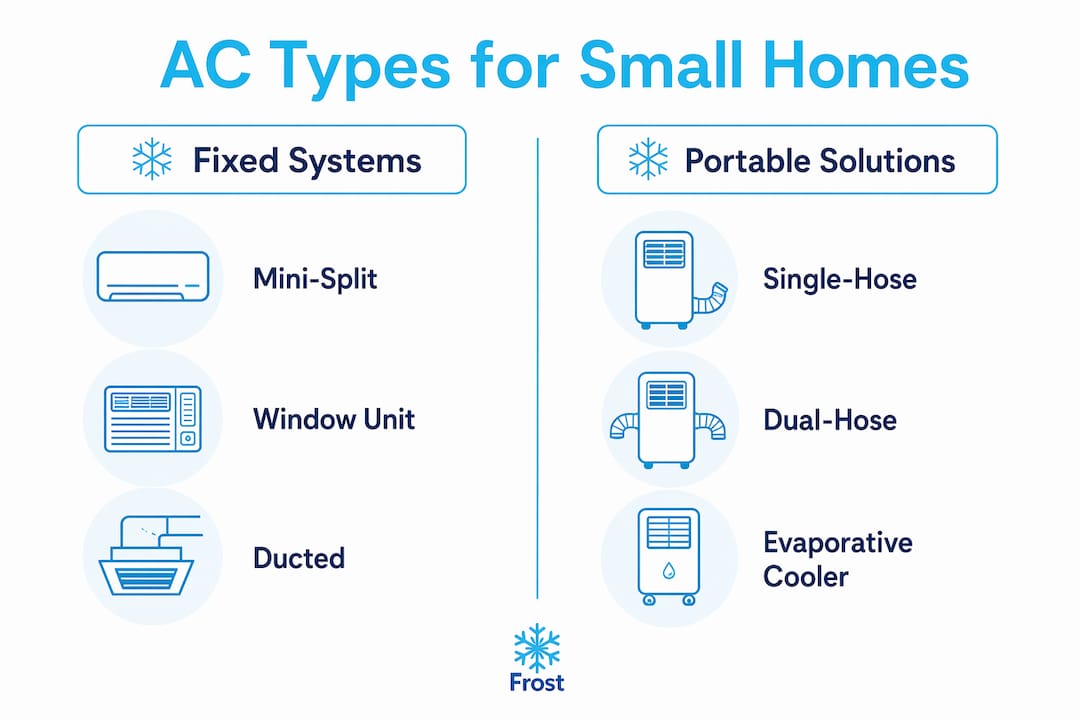
Not every AC system is built for a compact space, and the differences between them go well beyond price. Understanding the three main categories saves you from buying something that technically works but drives you mad within a fortnight.
Ductless mini-split systems

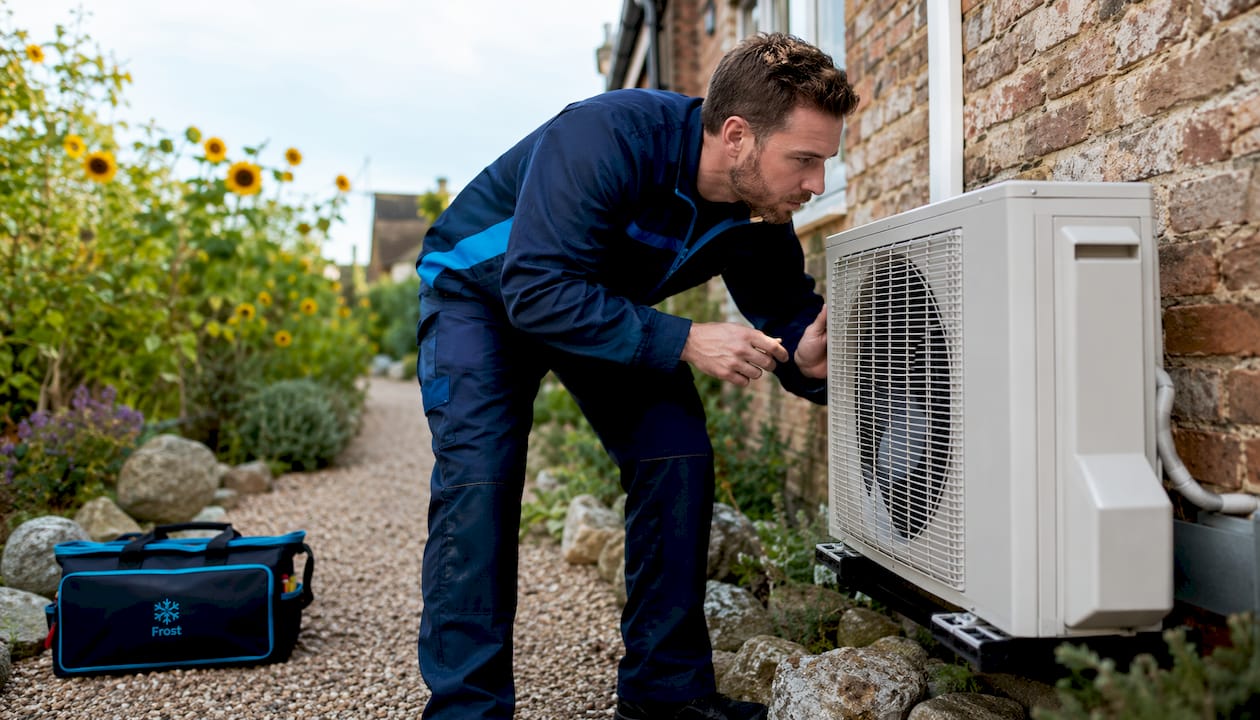
A mini-split has two parts: a slim indoor unit mounted high on the wall and a compressor that sits outside. Because the noisy mechanical work happens outdoors, the indoor unit runs remarkably quietly. Inverter technology lets the compressor vary its speed continuously rather than switching on and off, which keeps temperatures steady and energy use low. For a small home where you want permanent, reliable cooling without the disruption of ductwork, this is the system most installers recommend first. You can read more about UK air conditioning types to see how they compare across different property types.
Inverter window units
These are self-contained units that sit in a window frame or a purpose-cut wall sleeve. Modern inverter versions are considerably quieter and more efficient than the older single-speed models. They suit renters who want something more capable than a portable unit but cannot commit to a permanent installation. The trade-off is that they block part of a window and require a suitable opening.
Portable air conditioners
Portable units roll from room to room and vent through a hose that hangs out of a window or door. No drilling, no engineer. The catch is that single-hose designs pull warm air from the room to cool the condenser, which reduces efficiency. They also tend to be louder than fixed systems. For occasional use or a room you only need to cool a few weeks a year, they are perfectly reasonable. As a primary cooling solution for a small home, they are a compromise.
| System type | Typical noise level | Installation | Approximate cost | Efficiency | Best room size |
|---|---|---|---|---|---|
| Ductless mini-split | 19–24 dB(A) (low) | Professional, half a day | £2,000–£3,500 | High (inverter) | Suitable for small to medium-sized rooms |
| Inverter window unit | 35–45 dB(A) | DIY or light trade | £300 | Medium–high | Suitable for small to medium-sized rooms |
| Portable AC | above 45 dB(A) | None | — | Low–medium | Suitable for smaller rooms or temporary use |
Pros and cons at a glance:
- Mini-splits: ultra-quiet, highly efficient, adds property value — but requires professional installation and a higher upfront cost
- Inverter window units: compact, no outdoor unit needed, reasonable efficiency — but blocks window light and limits airflow
- Portable ACs: no installation, fully flexible — but louder, less efficient, and the hose is awkward to manage
What should you look for when choosing an AC for a small room?
Sizing: get this right first
Oversized units are one of the most common mistakes in small home cooling. When a unit is too powerful for the space, it reaches the target temperature quickly and shuts off before it has had time to remove humidity. The result is a room that feels cold but clammy, and a compressor that cycles on and off more frequently, generating more noise and wearing out faster. For rooms under 250 sq ft, a smaller BTU rating is usually sufficient. Larger rooms up to mid-size typically need a more powerful unit to maintain comfort. Measure the room before you buy anything. For a more detailed breakdown, Frostairconditioning's guide on how to size an air conditioner covers UK-specific room types and heat load factors.
Noise levels
Decibel ratings are printed on most product specs, but the numbers are not always intuitive. Below 30 dB(A) is near-silent. The 30–40 dB(A) range is comfortable for sleeping. Above 45 dB(A) becomes noticeable in a quiet room, and above 50 dB(A) you will hear it clearly over conversation. ENERGY STAR Most Efficient certified units generally operate below 45 dB(A) and tend to pair quieter operation with better energy performance.
Energy efficiency
In the UK, look for units with a high SEER (Seasonal Energy Efficiency Ratio) or EER (Energy Efficiency Ratio) rating. For portable units, CEER (Combined Energy Efficiency Ratio) is the relevant figure. Higher numbers mean lower running costs. An inverter-driven system adjusts its output continuously rather than running at full power until the thermostat trips, which is where the real efficiency gains come from.
Installation cost and timeline
Typical installation costs for a mini-split in a small UK home run between £2,000 and £3,500. Ducted systems for multi-room setups can reach £6,000. Portable units carry no installation cost at all, though their higher running costs offset that over time.
| Factor | What to look for | Why it matters |
|---|---|---|
| BTU rating | Match to room sq footage | Prevents short-cycling and humidity issues |
| Noise (dB(A)) | Under 40 for bedrooms | Comfort during sleep and quiet work |
| SEER / EER / CEER | Higher is better | Lower electricity bills |
| Installation cost | £2,000–£3,500 for mini-splits | Budget planning |
| Running costs | Compare rated wattage | Long-term affordability |
Quick checklist before you buy:
- Measure the room in square feet or square metres
- Check the window or wall for a suitable installation point
- Confirm whether you rent or own (affects which system types are viable)
- Set a realistic budget that includes installation, not just the unit price
- Check the dB(A) rating on the spec sheet, not just the marketing copy
Which portable air conditioners are worth buying in the UK right now?
Portable units are not the most efficient option, but for renters or anyone who needs cooling without structural changes, they are the practical route. Three models stand out in the current UK market.
MeacoCool MC Series
MeacoCool is a British brand, which matters for warranty support and parts availability. The MC Series uses a dual-hose design on some models, which addresses the efficiency problem that plagues single-hose portables by drawing intake air from outside rather than from the cooled room. Noise levels are competitive for the category, and the units include a sleep mode that reduces fan speed overnight.
- Dual-hose option improves efficiency over single-hose rivals
- Sleep mode reduces overnight noise
- British brand with UK-based support
- Available in capacities suited to rooms up to around 400 sq ft
VonHaus portable air conditioner
VonHaus offers a more budget-conscious entry point. The units are straightforward to set up, include a remote control and a timer function, and are widely available through UK retailers. Noise levels sit in the typical portable range, so expect to hear it running. For a spare bedroom or a home office used during the day, that is usually acceptable.
- Lower upfront cost than premium portable models
- Simple controls with remote and timer
- Single-hose design, so efficiency is lower than dual-hose alternatives
- Suitable for rooms up to roughly 250–300 sq ft
Honeywell HX series
Honeywell's HX portable units are a reliable mid-range choice. They include a dehumidifier mode, which is genuinely useful in the UK where humidity can be as much of a problem as heat. The fan-only mode makes them usable year-round rather than just during summer. Build quality is solid, and the brand has a long track record in the UK market.
- Dehumidifier and fan-only modes add year-round utility
- Reliable build quality with established UK presence
- Noise levels are typical for the portable category
- Available in multiple capacities
| Model | Approx. capacity | Noise level | Key feature | Best for |
|---|---|---|---|---|
| MeacoCool MC Series | — | Moderate (sleep mode available) | Dual-hose option, UK brand | Renters wanting efficiency |
| VonHaus portable AC | — | Moderate | Budget-friendly, easy setup | Occasional or secondary use |
| Honeywell HX series | — | Moderate | Dehumidifier + fan-only mode | Year-round versatility |
Pro Tip: If you go portable, choose a dual-hose model where possible. Single-hose units create negative pressure in the room, drawing warm air in through gaps around doors and windows, which forces the unit to work harder and run louder.
Expert advice from Frostairconditioning on sizing, noise, and maintenance
James at Frostairconditioning has installed AC systems across Exeter and the wider South West for years, and the same issues come up repeatedly. Most of them trace back to three things: wrong sizing, poor placement, and neglected maintenance.
Getting the size right
The instinct to buy bigger "just in case" is understandable but counterproductive. An oversized unit reaches the set temperature so quickly that it never runs long enough to pull moisture out of the air. The room cools down but stays humid, which feels uncomfortable regardless of the temperature reading. It also cycles on and off more frequently, and each start-up is the noisiest moment in the operating cycle. Correct sizing, matched to the actual room dimensions and heat load, means the unit runs steadily, dehumidifies properly, and stays quieter throughout. Frostairconditioning's HVAC sizing guidance explains the underlying principles if you want to go deeper before booking a survey.
Managing noise from the start
Inverter technology is the single biggest factor in quiet operation. Because the compressor varies its speed rather than switching fully on or off, there are no sudden noise spikes. Mini-splits achieve bedroom sound levels as low as 19–24 dB(A) on low settings, which is genuinely inaudible to most people. Beyond the technology itself, installation quality makes a significant difference. Vibration isolation pads under the outdoor unit, correctly sized refrigerant lines, and a well-positioned indoor unit all contribute to a quieter result. Frostairconditioning's detailed guide on noise reduction for UK homes covers placement and isolation in practical terms.
Noise threshold to know: Target under 40 dB(A) for a comfortable bedroom environment. Above 45 dB(A) becomes intrusive during sleep or focused work.
Maintenance that actually matters
A clean filter is the simplest thing you can do to keep a unit running quietly and efficiently. A clogged filter forces the fan to work harder, which raises both noise and energy consumption. Coil cleaning, checking that the outdoor unit is clear of debris, and verifying that vibration isolation is still intact are all annual tasks worth doing. Steady runtime from a well-maintained system reduces the on/off cycling that drives up both noise and wear. For ongoing peace of mind, Frostairconditioning's service and maintenance programme covers all of this on a scheduled basis.
Maintenance checklist:
- Clean or replace filters every 4–6 weeks during heavy use
- Check the outdoor unit for leaf debris and obstructions each season
- Inspect vibration isolation pads annually
- Book a professional coil clean once a year for fixed systems
- Check refrigerant levels if cooling performance drops noticeably
How long does AC installation take for a small home?
The timeline varies considerably depending on which system you choose, and it is worth factoring in when you are planning for summer.
Portable units require no installation at all. Unbox, attach the window vent kit, and the unit is ready within 20–30 minutes.
Inverter window units take slightly longer. Fitting the unit into a window frame, sealing the gaps, and testing the electrics typically takes one to two hours. A competent DIYer can manage it; a trade installation takes less than half a day.
Ductless mini-splits are the most involved. A single-room system with one indoor and one outdoor unit typically takes four to six hours for an experienced team. Frostairconditioning offers same-day installations for straightforward single-room setups, which means you can go from booking to a cool home within 24 hours in many cases. Multi-room systems with several indoor units take longer, usually a full day or more depending on the property layout.
One factor that catches people out is the time between booking and the actual installation date. During peak summer demand, lead times can stretch. Booking early, or choosing an installer who offers same-day availability, avoids the situation where you are waiting for a slot during the hottest week of the year.
For new builds or properties where the electrical supply needs upgrading to support a larger system, additional groundwork may be needed before the AC installation itself. Frostairconditioning's team assesses this during the initial survey so there are no surprises on the day.
Key takeaways
The best air conditioning for small homes in the UK combines correct sizing, inverter technology for quiet and efficient operation, and professional installation to get the most from whichever system you choose.
| Point | Details |
|---|---|
| Sizing is the priority | Match BTU output to room size; oversized units short-cycle, leaving rooms humid and noisy. |
| Mini-splits are the quietest fixed option | Indoor units can reach 19–24 dB(A) on low, well below the 40 dB(A) comfort threshold for bedrooms. |
| Portable ACs suit renters with caveats | Most run above 45 dB(A); choose a dual-hose model and treat them as a secondary solution. |
| Maintenance sustains performance | Clean filters every 4–6 weeks during use; annual coil cleaning keeps noise and efficiency in check. |
| Frostairconditioning covers the South West | F-Gas certified, same-day installs available, with 0% finance to spread the cost of a fixed system. |
Frostairconditioning: expert installation for small UK homes
If you have read this far and decided that a properly installed mini-split is the right answer for your home, the next step is straightforward. Frostairconditioning installs domestic air conditioning systems across Exeter and the South West, with F-Gas certified technicians and same-day availability for single-room setups. The difference between a well-installed fixed system and a portable unit you bought online is not just comfort. It is quieter nights, lower electricity bills, and a system that actually removes humidity rather than just moving air around.
0% finance is available, which means the cost of a quality mini-split installation does not have to come out of one lump sum. Spread it over manageable monthly payments and the running cost savings start to offset the outlay sooner than most people expect. Whether you want a single bedroom unit or a system that covers your whole ground floor, Frostairconditioning's team will survey the property, recommend the right capacity, and handle everything from fitting to commissioning. Get a quote or explore the full range of domestic installation options to see what suits your home and budget.