
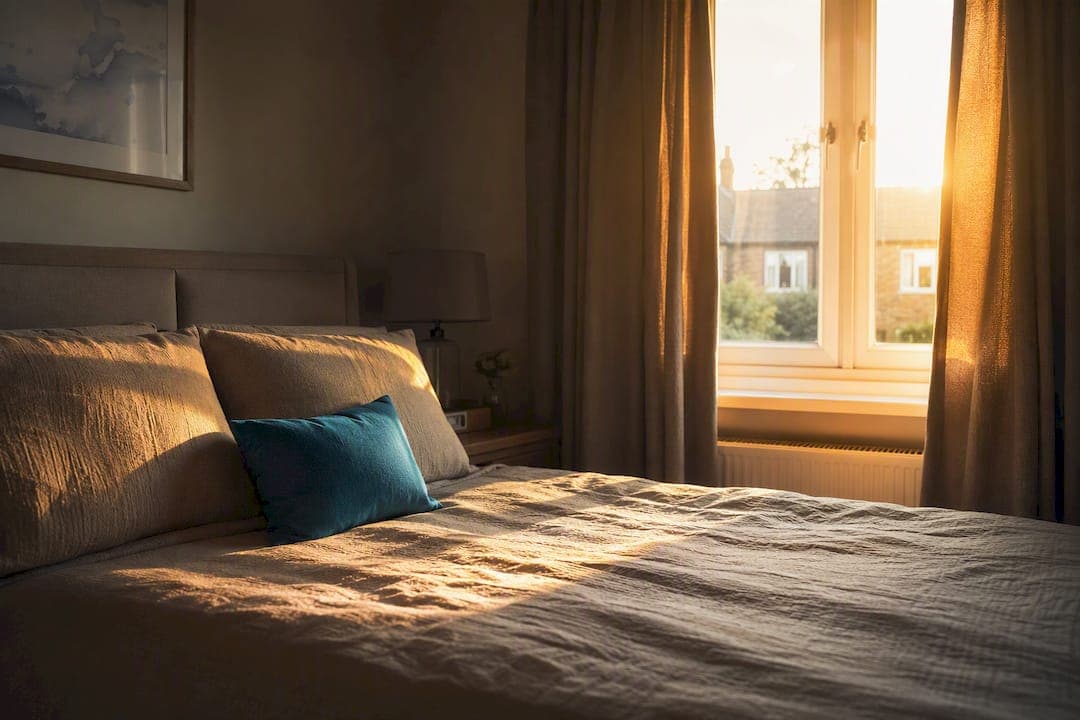
Close the curtains before 11am, open the windows once it cools after dark, and get a fan running cross-flow rather than pointed straight at your face. Swap synthetic bedding for something breathable. If none of that touches the problem after a few nights, the fix that actually works long-term is a professionally fitted split wall air conditioning unit. It runs quieter than a portable box and cools the room properly rather than just moving warm air around.
TL;DR:
- External shading, such as awnings or blinds, significantly reduces solar gain, outperforming internal curtains in lowering bedroom temperatures.
- Structural improvements like loft insulation and proper ventilation are essential for enduring relief, especially in homes with heat-trapping brick and plaster walls.
- Installing a professionally fitted split wall air conditioning unit provides quiet, effective cooling for persistent overheating issues, with costs around £910 to £1,310 plus the unit price.
- Using fans correctly, blocking heat sources, and applying reflective films or damp towels can offer immediate temperature reductions for hot nights.
- Keeping vulnerable groups like babies and the elderly at cooler indoor temperatures is critical, with recommended room ranges between 16 and 20°C to prevent health risks.
Table of Contents
- Why bedrooms get hotter than the rest of the house
- What can you do tonight to cool your bedroom down?
- How should you adjust bedding and routine when it's too warm to sleep?
- What longer-term changes actually stop a bedroom overheating?
- When does a hot bedroom need a professional, not a DIY fix?
- Why does a hot bedroom hurt your sleep and health so much?
- Where to check official heat guidance
- What actually works, in order
- Sources
Why bedrooms get hotter than the rest of the house
Bedrooms trap heat for reasons that have nothing to do with bad luck. South or west facing windows pull in direct sun for hours, and without external shading that heat has nowhere to go once it's inside.
Most UK homes are built with thick brick and plaster, which soaks up daytime heat like a storage heater and releases it slowly overnight. That's useful in January and miserable in July, because UK homes trap heat far more readily than they lose it, and a run of warm days lets that thermal mass build up faster than a single cool night can shed it.
A few other things quietly make bedrooms worse than living rooms:
- Blocked or closed internal vents that stop any air movement between rooms
- Phone chargers, laptops, and TVs left on standby, all adding small amounts of heat
- High humidity, which stops sweat evaporating and makes the same temperature feel far hotter
- Radiators that were never bled or vents painted shut years ago
The physiological problem underneath all this is that your core body temperature needs to drop by roughly 1 to 2 degrees Fahrenheit before you can fall asleep properly. A room stuck above that comfortable range blocks the drop, which is why hot nights feel restless instead of just uncomfortable.
What can you do tonight to cool your bedroom down?
Fixing a bedroom that's too hot follows a rough order of operations. Do these roughly in sequence, starting the moment the sun comes up.
- Shut everything against the sun between 11am and 3pm. UKHSA recommends closing blinds and curtains during peak daylight hours to stop solar gain building up before you even get near the room.
- Open windows once it's cooler outside, usually after 9pm. This is called night purging, and it works because it lets stored daytime heat escape while outside air is finally cooler than inside air.
- Create genuine cross-ventilation. Open a window at one end of the room and another on the opposite side, or prop the bedroom door open with a window cracked elsewhere in the house, so air actually moves through rather than sitting still.
- Set fans up properly. A ceiling fan should spin counter-clockwise in summer to push air straight down. A portable fan works best angled across the room rather than blasting directly onto you, especially with a baby in the room.
- Block heat with what you've got. Reflective film, foil taped to the inside of glass, or a damp towel hung in the window can all cut radiant heat in a pinch.
- Unplug anything you don't need overnight. Chargers and standby electronics generate more heat than people expect over a full night.
Pro Tip: A wet flannel draped over your neck or the back of a fan works faster than most people expect, because evaporating water pulls heat away from your skin almost instantly.
How should you adjust bedding and routine when it's too warm to sleep?
Aim for a bedroom in a cooler overnight range if you can get there. That's the range most sleep guidance points to, and it lines up with the physiological cooling your body needs to properly settle. Humidity matters just as much as temperature: a stuffy 20°C room with poor airflow can feel worse than a drier 22°C one.
Bedding makes a bigger difference than most people assume:
- Cotton or linen sheets breathe far better than polyester or microfibre, which trap heat against skin
- Ventilated or buckwheat pillows stay cooler through the night than standard foam
- A lightweight duvet, or none at all with just a top sheet, beats fighting with a 13.5 tog duvet in July
- Gel-infused or open-cell foam mattress toppers help dissipate body heat rather than holding it
Timing helps too. A warm shower 60 to 90 minutes before bed sounds counterintuitive, but it pulls blood to the skin's surface, and as that heat radiates off you afterwards your core temperature drops faster than it would otherwise.
Babies and older people need extra care in the heat. Keep nursery rooms between 16 and 20°C, dress infants in a single light layer, and check on elderly relatives during hot spells, following the Gov.
What longer-term changes actually stop a bedroom overheating?
Quick fixes buy you a comfortable night. Structural changes stop the problem coming back every summer.
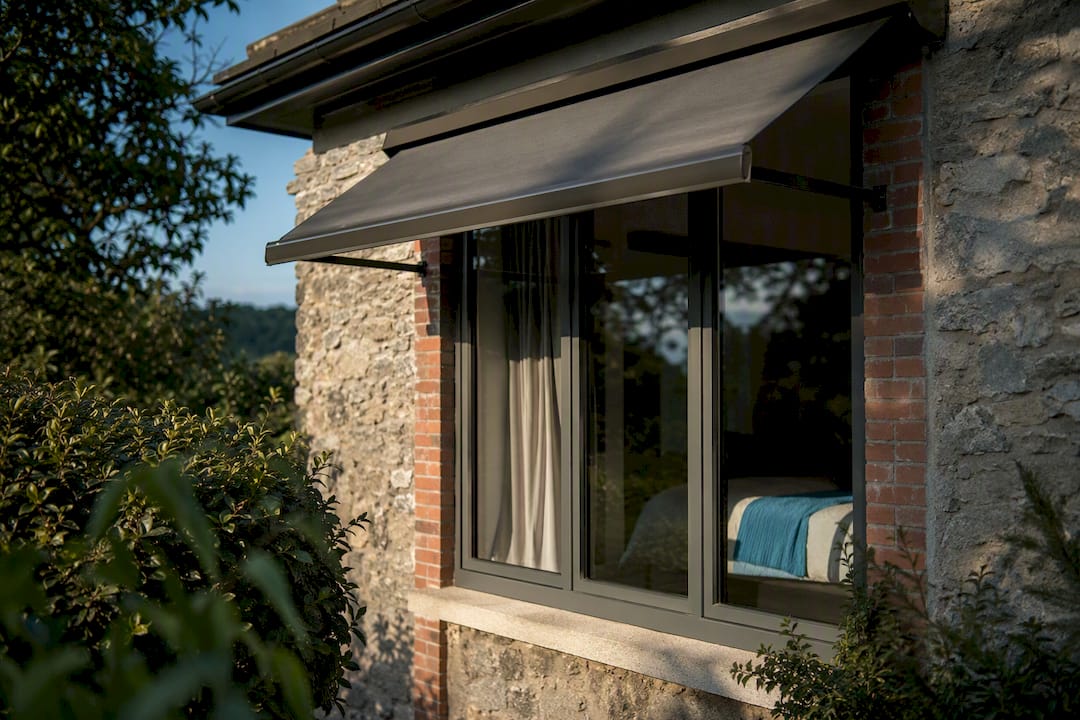
External shading gives the biggest single improvement you can make. Awnings, external blinds, or even a well-placed shrub outside a west-facing window cut solar gain before it ever reaches the glass, and this consistently outperforms fixing the problem from the inside with curtains alone. If external shading isn't practical, upgrading to blackout curtains with a proper thermal lining is the next best thing, and a ceiling track curtain with noise reduction lining does double duty against both heat and street noise.
Loft insulation is worth checking before spending on anything else. A poorly insulated roof lets heat pour down into upstairs bedrooms all afternoon, and topping up loft insulation is usually one of the cheapest, highest-return fixes available to a UK homeowner. Pair that with an extractor fan in the bathroom or en-suite to pull humid air out of the house, and make sure nothing is blocking airflow around the bed itself, including furniture pushed up against radiators or vents.
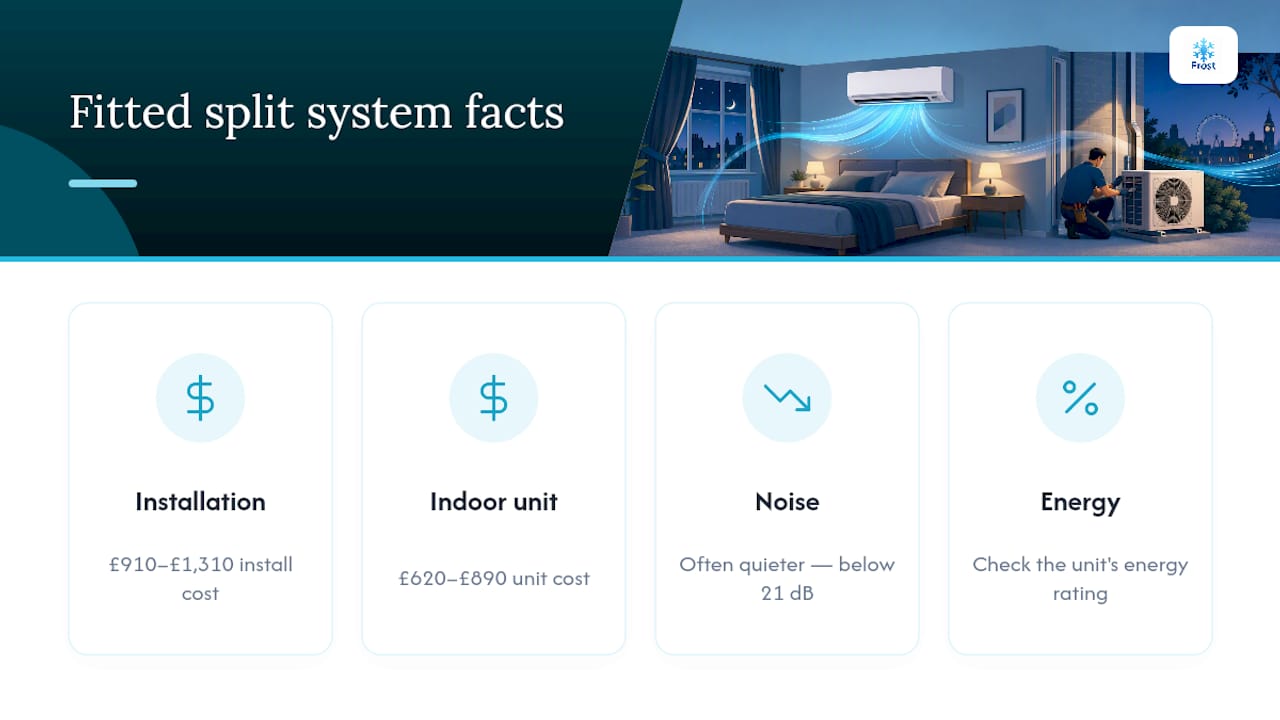
When passive measures aren't enough, active cooling is the honest answer. A professionally fitted split wall unit typically costs £910 to £1,310 to install, plus £620 to £890 for the unit itself, and runs quieter than most portable alternatives, often below 21 decibels, which matters enormously for anyone trying to sleep next to it. Look for a unit's energy rating alongside its noise figure. A quiet, efficient system fitted once beats replacing a noisy portable unit every couple of summers, and Frostairconditioning's guide to bedroom air conditioning costs and comfort breaks down what that trade-off looks like in practice.
When does a hot bedroom need a professional, not a DIY fix?
Some signs mean it's time to stop layering on fans and curtains. If your bedroom stays warm night after night regardless of what you try, if the house has awkward ducting or a loft conversion that traps heat, or if you simply want cooling that doesn't hum and rattle through the night, a proper survey is worth the call.
A qualified installer will typically:
- Survey the room and measure solar exposure, window size, and insulation levels
- Run a heat load calculation to size the unit correctly rather than guessing
- Recommend a system suited to the room, not a generic one-size model
- Complete an F-Gas compliant installation, which is a legal requirement for handling refrigerant in the UK
- Give you a realistic timeline, often same-day or next-day for straightforward domestic jobs
Full details on the process sit on the domestic installation page.
Why does a hot bedroom hurt your sleep and health so much?
Heat doesn't just make you toss and turn. It cuts directly into the sleep stages your body relies on to actually recover. Deep sleep and REM both rely on that overnight core temperature drop, and when the room stays too warm your body spends the night hovering in lighter, more easily disrupted sleep instead.
The knock-on effects show up fast: slower reaction times, a shorter fuse the next day, and weaker concentration at work or school after just one or two disrupted nights. Over a longer heatwave, poor sleep compounds, leaving people more fatigued and less able to cope with the heat itself, which is part of why UKHSA treats sustained high indoor temperatures as a genuine health risk rather than just a comfort issue.
Babies, young children, and older adults face the sharpest end of this. Infants can't regulate their body temperature as efficiently as adults, and elderly people are more vulnerable to heat stress and dehydration overnight without always showing obvious symptoms early on. That's the reasoning behind checking on vulnerable relatives and neighbours during hot spells, not just cracking a window and hoping for the best.
Where to check official heat guidance
For anything beyond a single hot night, lean on official sources rather than guesswork. GOV.UK's beat the heat checklist and UKHSA's hot weather guidance cover household actions and at-risk groups, while the Met Office issues forecasts and heat-health alerts worth tracking during a warm spell.
What actually works, in order
Start with shading and night purging. They cost nothing and solve most ordinary hot nights on their own. Move to bedding changes next, since a cheaper set of cotton sheets often does more than people expect. If the room is still uncomfortable after a week of doing all that properly, the problem is structural, and no amount of fan-shuffling fixes a loft with no insulation or a west-facing window with zero shading.
At that point, get a proper survey done rather than buying another portable unit that'll be dead by next August. A fitted split system costs more upfront than a fan from the supermarket, but it's the only option that reliably solves persistent overheating rather than just taking the edge off it. Frostairconditioning offers same-day quotes across Exeter and the South West if you want a straight answer on what your bedroom actually needs.
— James
Sources
- Air conditioning installation cost — MyBuilder
- Gov
- Is your bedroom too warm? It could be affecting your sleep — National Sleep Foundation
- Why is UK heat so bad? 8 reasons hot weather feels worse — British Red Cross
- How to keep cool and stay well during hot weather — UKHSA