
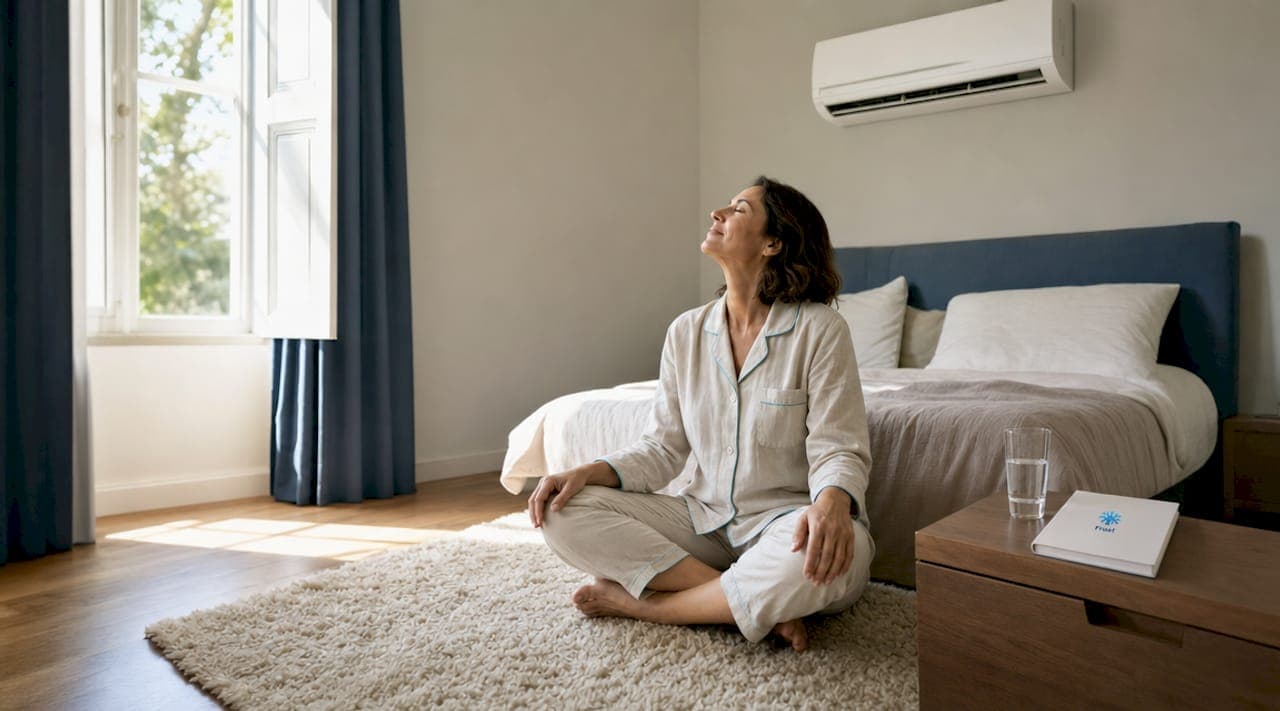
Bedroom air conditioning is the most direct way to protect your sleep quality and physical recovery during warm nights. The core reason to consider AC in bedrooms is physiological: your body cannot complete restorative sleep cycles when the room stays too warm. Research confirms that temperatures above 24°C impair your autonomic nervous system's ability to recover overnight, raising heart rate and reducing the deep sleep your body depends on. Beyond temperature, modern AC units filter particulate matter and control humidity, two factors that directly affect how rested you feel the next morning. If you are weighing up whether to install AC in your bedroom, the evidence points firmly in one direction.
Why consider AC in bedrooms: the sleep science case
The bedroom is where your body does its most important repair work, and temperature is the single biggest environmental variable you can control. Studies monitoring 47 older adults found that elevated nighttime temperatures produced measurable reductions in heart rate variability and increased physiological stress throughout the night. Heart rate variability is the clearest indicator of how well your autonomic nervous system is recovering. When it drops, you wake up feeling unrested even after a full eight hours.
"Bedroom AC benefits derive largely from protecting physiological recovery processes impaired by elevated nocturnal temperatures, underscoring the health importance beyond simple comfort."
The table below shows how temperature bands relate to sleep outcomes, based on current research findings.
| Temperature range | Effect on sleep quality |
|---|---|
| Below 20°C | Can cause discomfort and muscle stiffness, disrupting sleep |
| 20°C to 24°C | Optimal range for deep sleep and autonomic recovery |
| Above 24°C | Impairs heart rate variability, increases awakenings |
| Above 28°C | Significant sleep fragmentation and physiological stress |
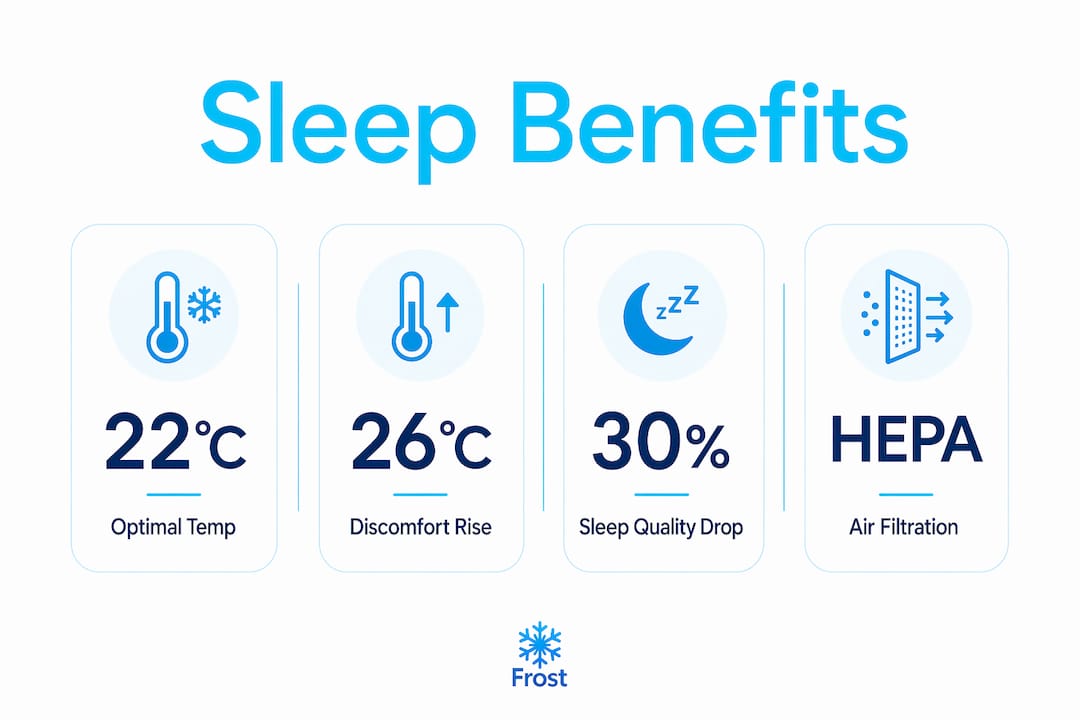
The importance of AC for sleep becomes especially clear during UK heatwaves, when upstairs bedrooms routinely exceed 26°C or 28°C well into the night. Fans circulate warm air without reducing temperature. Open windows introduce noise and security concerns. A correctly sized AC unit is the only solution that reliably brings the room temperature into the optimal band and holds it there throughout the night. For homeowners in the South West, where summer nights have grown noticeably warmer over recent years, this is no longer a luxury consideration.
What are the benefits of AC for bedroom air quality?
Temperature is only part of the story. The advantages of bedroom air conditioning extend to the air itself, specifically to the particulate matter and CO2 that accumulate in a closed sleeping space. A field study of 183 young adults found that higher bedroom PM2.5 exposure correlated with reduced deep sleep and poorer next-day physical performance, particularly when combined with elevated CO2 levels. That finding matters because it means poor air quality does not just make you feel groggy. It measurably reduces your physical capacity the following day.
AC units with quality filtration address this in several ways:
- Particulate filtration: Modern split systems trap PM2.5 particles, pollen, and dust before they circulate through the room.
- Humidity control: AC reduces moisture in the air, which inhibits mould growth and suppresses dust mite populations, both of which trigger allergic responses during sleep.
- CO2 dilution: When combined with controlled ventilation, AC helps prevent the CO2 build-up that occurs in sealed bedrooms overnight.
- Allergen reduction: For hay fever and asthma sufferers, filtered and cooled air can significantly reduce nighttime symptoms.
Pro Tip: If you or anyone in your household suffers from allergies, look for AC units with HEPA-grade or multi-stage filtration. The difference in air quality compared to a standard filter is substantial, and it shows up in how you sleep.
You can read more about how AC improves air quality in a dedicated guide from Frostairconditioning. The connection between cleaner bedroom air and better sleep is one of the most underappreciated reasons to install AC, and it applies year-round, not just during summer.

How to balance comfort, energy efficiency, and cost
One of the most common concerns about running AC in a bedroom is the electricity bill. The good news is that maximising cooling is not the same as maximising benefit. Research from a within-subject study in subtropical bedrooms found that raising the AC set-point from 22°C to 28°C reduced the number of nights requiring cooling from 65% to 23%, delivering up to 95% energy savings while preserving sleep comfort. That is a striking result. It means you do not need to run your unit at full power every night to get the sleep benefits.
Here is a practical approach to getting the balance right:
- Set a moderate target temperature. Aim for 22°C to 24°C as your sleeping set-point. This sits within the optimal range for autonomic recovery without overcooling the room.
- Use a timer or sleep mode. Many modern units allow you to pre-cool the room before bed and then raise the set-point slightly during the night, reducing energy use while you sleep.
- Pre-cool before bedtime. Running the unit for 30 to 45 minutes before you get into bed cools the walls, floor, and bedding, which means the unit works less hard once you are asleep.
- Switch to lower tog bedding. A lighter duvet combined with a cooler room gives better temperature regulation than a heavy duvet in a warm room.
- Adjust airflow direction. Point the vanes toward the ceiling rather than directly at the bed to achieve even cooling without cold spots.
Expert UK advice consistently recommends combining these strategies rather than relying on AC alone. Outdoor shading, such as external awnings, can reduce the heat load entering the bedroom before the AC even switches on, cutting running costs further. Frostairconditioning also covers energy efficiency strategies in detail if you want to go deeper on reducing running costs.
Pro Tip: Running AC all night can cause dryness in the throat and nasal passages. Keep a glass of water by the bed and consider a set-point no lower than 22°C to avoid this. A sleep mode setting on your unit gradually raises the temperature by one or two degrees through the night, which is gentler on both your body and your energy bill.
How to choose and place a bedroom AC unit
Selecting the right system is where many homeowners make avoidable mistakes. The table below compares the two most practical options for bedroom installation.
| System type | Best for | Key consideration |
|---|---|---|
| Wall-mounted split system | Most bedrooms, permanent installation | Requires outdoor unit; quietest operation indoors |
| Portable AC unit | Rental properties or temporary use | Noisier; less efficient; requires window venting |
| Multi-split system | Multiple bedrooms from one outdoor unit | Higher upfront cost; most efficient for whole-home use |
Mini-split systems are the recommended choice for targeted bedroom cooling. They allow precise temperature control for individual rooms without overcooling the rest of the house, which is both more comfortable and more economical. For upstairs bedrooms that accumulate heat throughout the day, a dedicated split system is the most effective solution available.
Placement matters as much as the unit itself. Mount the indoor head unit high on the wall, ideally on the wall opposite the bed rather than directly above it. This prevents cold air from blowing directly onto the sleeper, which causes muscle stiffness and dry throat. Aim the vanes upward so cool air circulates across the ceiling and descends gradually. For a room up to approximately 20 square metres, a 2.5kW unit is typically sufficient. Larger rooms or those with significant south-facing glazing may need a 3.5kW unit.
What to watch out for: downsides and maintenance
The advantages of bedroom air conditioning come with a short list of genuine trade-offs worth knowing before you install.
- Filter maintenance: Regular filter cleaning is non-negotiable. A clogged filter recirculates dust and allergens rather than trapping them, turning the AC from an air quality asset into a liability. Clean or replace filters every four to six weeks during heavy use.
- Noise levels: Split systems are significantly quieter than portable units, but even a low hum can disturb light sleepers. Check the indoor unit's decibel rating before purchase. Anything below 25dB is considered whisper-quiet.
- Pink noise masking: If external noise is also a problem, continuous pink noise has been shown in laboratory studies to reduce sleep fragmentation caused by intermittent traffic noise. A pink noise app or speaker running alongside your AC addresses both thermal and acoustic disruption simultaneously.
- Dryness: AC removes moisture from the air. If you wake with a dry throat or irritated eyes, raise the set-point slightly or run the unit on fan-only mode for the last hour of the night.
- Annual servicing: Have the system professionally serviced once a year to maintain efficiency and catch refrigerant issues early.
Key takeaways
Bedroom air conditioning improves sleep quality and physical recovery by maintaining temperatures within the 20°C to 24°C range and filtering the air you breathe throughout the night.
| Point | Details |
|---|---|
| Temperature above 24°C harms sleep | Elevated nighttime heat impairs heart rate variability and increases physiological stress. |
| Air quality matters as much as temperature | High PM2.5 and CO2 levels reduce deep sleep and next-day physical performance. |
| Moderate set-points save energy | Raising the AC set-point from 22°C to 28°C can cut energy use by up to 95% on cooler nights. |
| Mini-split systems suit most bedrooms | Wall-mounted split units offer the quietest, most precise cooling for individual rooms. |
| Maintenance protects air quality | Cleaning filters every four to six weeks prevents allergen recirculation during sleep. |
The honest case for bedroom AC in the UK
I have spoken with hundreds of homeowners across the South West who held off on bedroom AC for years, assuming it was unnecessary in the UK climate. Almost every one of them says the same thing after installation: they wish they had done it sooner. That is not marketing. It reflects a genuine shift in what UK summers now look like, and what a warm bedroom does to your sleep over weeks and months.
What the research confirms, and what I find most compelling, is that this is not about luxury. It is about protecting a biological process. Your heart rate variability, your deep sleep cycles, your next-day energy and concentration. These are not abstract metrics. They are the difference between functioning well and grinding through the day. A bedroom that stays at 23°C on a hot July night is not an indulgence. It is a controlled environment that lets your body do what it is supposed to do.
My practical advice: do not overcool. The evidence shows that 22°C to 24°C is the sweet spot, and running the unit at 18°C wastes money and dries out the room. Combine AC with breathable bedding, pre-cooling before bed, and good filter maintenance. If noise is a concern, choose a unit rated below 25dB and consider a home cooling approach that layers multiple strategies. The homeowners who get the most from bedroom AC are the ones who treat it as part of a system, not a single fix.
— James
Get your bedroom AC installed by Frostairconditioning

Frostairconditioning installs wall-mounted split systems across Exeter and the wider South West, with same-day installations available for straightforward bedroom setups. All engineers are F-Gas certified, and 0% finance options are available to spread the cost. Whether you need a single bedroom unit or a multi-split system covering several rooms, the team will size and position the unit correctly from the start, so you get the sleep benefits without the common pitfalls. Visit the domestic installation page to explore options, or request a free quote and get a same-day response. Ongoing service and maintenance packages are also available to keep your unit running at peak efficiency year after year.
FAQ
What temperature should a bedroom AC be set to for sleep?
Set your bedroom AC between 20°C and 24°C for the best sleep quality. Research shows that temperatures above 24°C impair heart rate variability and increase physiological stress during the night.
Does running AC all night harm your health?
Running AC all night is safe when the set-point is moderate and the unit is well maintained. The main risks are dryness and allergen recirculation from a dirty filter, both of which are easily managed.
What type of AC unit is best for a bedroom?
A wall-mounted split system is the best choice for most bedrooms. It operates more quietly than portable units, allows precise temperature control, and does not require window venting.
Can bedroom AC help with allergies?
AC units with quality filtration reduce airborne pollen, dust, and PM2.5 particles, which are known to disrupt sleep and trigger allergic responses. Regular filter cleaning is required to maintain this benefit.
How much does it cost to run bedroom AC overnight in the UK?
Running costs depend on the unit's efficiency rating and the set-point used. Raising the set-point from 22°C to 28°C on milder nights can reduce energy consumption substantially, with research suggesting up to 95% savings compared to running at maximum cooling.