
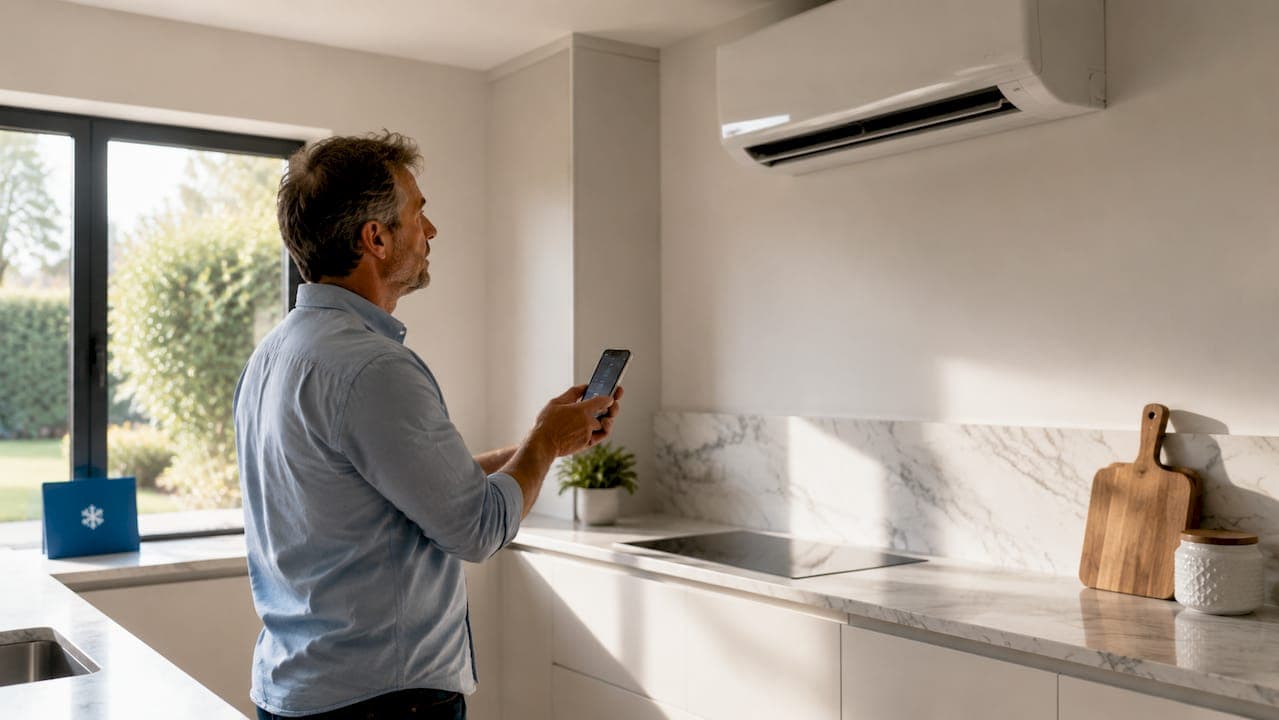
A noisy air conditioner is not just an annoyance. It disrupts sleep, breaks concentration, and signals that something may be wrong with your system. Effective air conditioning noise reduction combines three things: regular maintenance, targeted soundproofing materials, and correct installation. A layered approach that addresses vibration, airflow, and sound barriers consistently outperforms any single fix. Whether your unit rattles, hums, or clicks, the strategies below cover every cause and every budget, from a free re-levelling job to professional acoustic enclosures.
1. What are the main sources of AC noise?
Identifying the source of noise before spending money is the single most important step. A basic decibel metre app on your smartphone can distinguish normal sounds from those that need professional repair, saving you unnecessary call-out fees.
AC noise falls into four main categories:
- Mechanical vibration: Loose screws, unlevel bases, or worn mounts cause the whole unit to rattle against its housing.
- Compressor noise: The compressor is the loudest component on any outdoor unit. A low hum is normal; a grinding or clanking sound is not.
- Fan noise: Dirty or bent fan blades create turbulence and a persistent whooshing or ticking sound.
- Airflow noise: Turbulence through ducts, vents, or grilles produces a rushing or whistling sound, particularly in undersized ductwork.
Pro Tip: Record the noise on your phone and note the time of day it occurs. Noise that appears only on start-up points to a compressor issue. Constant noise during operation usually points to vibration or airflow.
Outdoor units tend to generate more noise than indoor units because they house the compressor and condenser fan. Indoor units produce airflow noise and, if poorly mounted, vibration noise through walls and ceilings. Knowing which unit is the source tells you exactly where to focus your effort.
2. Which maintenance practices reduce AC noise most effectively?
Regular maintenance is the primary strategy to prevent noise from escalating. Most homeowners skip it until the problem becomes serious, which always costs more to fix.
- Change air filters monthly. A clogged filter forces the blower motor to work harder, which causes mechanical whines and turbulent airflow sounds. A clean filter takes two minutes to swap and costs very little.
- Clean fan blades. Dust and debris build up on fan blades and throw them out of balance. An unbalanced blade vibrates at high speed and creates a persistent ticking or wobbling sound.
- Tighten loose screws and panels. Vibration gradually loosens every fastener on an AC unit. Check the access panels, mounting brackets, and any sheet metal covers at least once per season.
- Clear debris from outdoor units. Leaves, twigs, and dirt inside the outdoor unit hit the fan blades and create sudden loud noises. Keep a 60 cm clearance around the unit at all times.
- Book annual professional servicing. A qualified engineer checks refrigerant levels, inspects the compressor, and identifies worn bearings before they fail noisily. Frostairconditioning offers service maintenance packages across the South West that cover exactly this.
Pro Tip: When cleaning the outdoor unit, turn the power off at the isolator switch first. Never spray water directly into the electrical compartment.
Worn bearings in the fan motor are a common cause of a high-pitched squealing sound. This is not a DIY fix. If tightening screws and cleaning blades does not resolve the squeal, book a service call before the bearing seizes entirely.
3. How can soundproofing materials reduce AC noise?
Physical sound barriers are the most direct way to reduce air conditioning noise from outdoor units. The right material depends on the noise type and your budget.
| Solution | Best for | Approximate cost | Key consideration |
|---|---|---|---|
| Compressor sound blanket | Compressor hum | £30–£80 | Must be rated for outdoor use |
| Anti-vibration pads | Mechanical vibration | £15–£40 | Match pad size to unit footprint |
| Acoustic fence or barrier | General outdoor noise | £50–£300+ | Requires 90 cm clearance for airflow |
| Acoustic duct wrap | Duct popping and ticking | £20–£60 | Apply to exposed duct runs in loft spaces |
| Exhaust hose sleeve | Portable unit noise | £15–£30 | Thermal and acoustic combined |
A compressor sound blanket wraps directly around the outdoor compressor housing and can reduce mechanical noise by up to 40% without affecting cooling performance. That is a significant reduction for a product that costs under £80 and takes under an hour to fit.
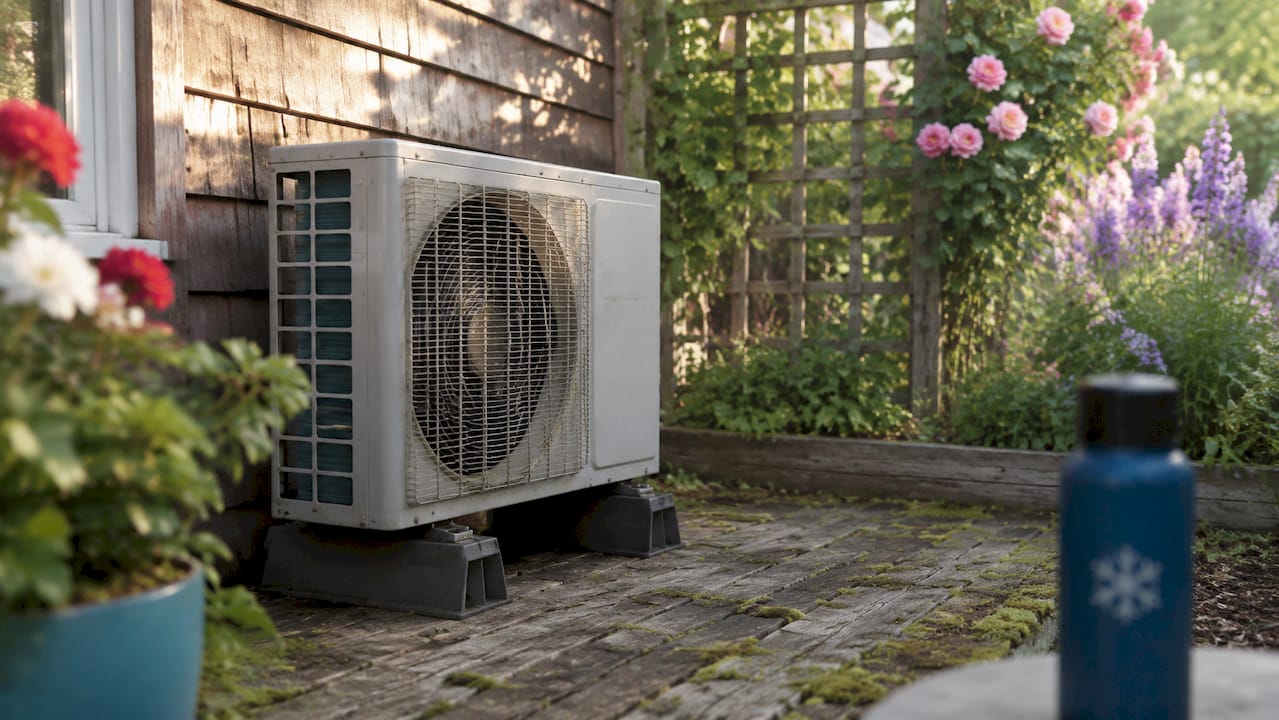
Anti-vibration pads sit beneath the outdoor unit and absorb the mechanical energy before it travels into the concrete pad or decking below. They work best when combined with a sound blanket rather than used alone.
For duct noise, acoustic duct wrap prevents the "oil canning" effect, which is the popping and cracking sound metal ducts make as they expand and contract with temperature changes. Apply it to any exposed duct runs in loft spaces or utility rooms.
Portable air conditioners have one frequently overlooked noise source: the exhaust hose. Covering the exhaust hose with a thermal acoustic sleeve significantly reduces the noise transmitted through it. Most portable unit owners never think to do this.
4. What installation and placement choices minimise AC sound?
Correct installation is the foundation of a quiet system. Poor placement and rushed fitting create noise problems that no soundproofing product can fully correct afterwards.
- Level the outdoor unit. An unlevel unit causes refrigerant pooling and excessive fan motor vibration. Re-levelling the concrete pad beneath the unit is one of the lowest-cost fixes available, often requiring nothing more than a spirit level and some packing shims.
- Maintain clearance around the unit. Restricted airflow forces the fan to work harder and louder. Keep at least 60 cm on all sides and 120 cm above the outdoor unit.
- Use vibration-isolating mounting hardware. Professional installation of rubber-isolated brackets and mounts prevents vibration from travelling through walls into living spaces. Modern high-quality split systems operate as quietly as 19 dB indoors when installed with this hardware. That is quieter than a whisper.
- Choose the right-sized system. An oversized unit short-cycles, meaning it switches on and off aggressively and repeatedly. Each start-up cycle generates a surge of noise. A correctly sized system runs longer, quieter cycles. Frostairconditioning's domestic installation service includes a full sizing assessment before any unit is fitted.
- Use quiet or sleep modes. Most modern split systems include a sleep or quiet mode that reduces fan speed during low-demand periods. This alone can drop indoor noise levels noticeably overnight.
Pro Tip: If your outdoor unit sits on a timber deck rather than a concrete pad, vibration transmission into the house is significantly higher. A concrete pad or purpose-built anti-vibration feet are worth the investment.
Wall-mounted indoor units should be fixed to solid masonry wherever possible. Plasterboard fixings transmit vibration directly into the wall cavity and amplify it. If a masonry fixing is not possible, use anti-vibration brackets rated for the unit's weight.
5. What are cost-effective fixes for older, noisier systems?
Older systems are noisier by design. They were built to lower acoustic standards than modern units. But several low-cost interventions can make a meaningful difference before you commit to a full replacement.
- Build a temporary sound barrier fence. A 3-foot plywood structure placed around the outdoor unit with 3 feet of clearance costs around £15–£20 in materials. Build it first to test whether a permanent fence is worth the investment before spending hundreds of pounds.
- Re-level the concrete pad. If the unit has settled unevenly over the years, re-levelling costs nothing beyond an hour of your time. It removes one of the most common causes of vibration noise in older installations.
- Apply foam tape to rattling panels. Self-adhesive foam weatherstrip tape applied inside loose access panels stops metal-on-metal rattling. A roll costs under £5 and takes ten minutes to apply.
- Add mass loaded vinyl (MLV) sheeting. MLV is a dense, flexible material that blocks airborne sound. Fixing a sheet to a fence or wall adjacent to the outdoor unit adds meaningful sound blocking without requiring construction skills. It is available from acoustic suppliers across the UK.
- Assess whether replacement makes sense. If your unit is over 12 years old, runs loudly despite maintenance, and your energy bills are rising, the noise is often a symptom of declining efficiency. A new, correctly sized system will be quieter and cheaper to run. For quiet air conditioning systems suited to UK homes, Frostairconditioning offers 0% finance options, making the upgrade more accessible.
For homeowners who want to explore further DIY options before calling a professional, a guide to affordable home cooling covers additional practical approaches.
Key takeaways
Effective noise reduction requires combining maintenance, soundproofing materials, and correct installation rather than relying on any single fix.
| Point | Details |
|---|---|
| Audit noise first | Use a decibel metre app to identify the source before spending money on solutions. |
| Maintain regularly | Monthly filter changes and annual servicing prevent most noise problems from developing. |
| Layer your solutions | Combine anti-vibration pads, sound blankets, and acoustic barriers for the best results. |
| Level the outdoor unit | An unlevel base causes vibration and refrigerant issues; re-levelling is a free fix. |
| Match system size to your home | An oversized unit short-cycles noisily; correct sizing at installation prevents this entirely. |
Why I always start with a noise audit
Most homeowners I speak to have already bought a product before they know what is causing the noise. They fit a sound blanket and the rattling continues because the real problem was a loose panel. They build a fence and the hum persists because the unit was never level. Spending money before diagnosing the source is the most common and most avoidable mistake.
My advice is always the same: spend five minutes with a free decibel metre app before you spend a penny on materials. Record the noise, note when it happens, and check whether it changes when you adjust the fan speed or switch modes. That five minutes of noise auditing will tell you more than any product description.
The other thing I have learned is that maintenance prevents more noise problems than soundproofing solves. A unit that is serviced annually, has clean filters, and sits on a level base simply does not generate the noise that a neglected unit does. Soundproofing is for residual noise after the system is running well, not a substitute for keeping it in good condition.
For homeowners with genuinely old or poorly installed systems, the honest answer is sometimes that no amount of foam tape or acoustic fencing will make the unit quiet. A correctly installed modern split system, fitted by an F-Gas certified engineer with proper vibration isolation, will outperform any retrofit solution on an old unit. That is not a sales pitch. It is just physics.
— James
How Frostairconditioning can help with a quieter home

Frostairconditioning installs and services air conditioning systems across Exeter and the wider South West, with F-Gas certification and same-day installs available. Every domestic installation includes a full sizing assessment and professional vibration-isolating mounting, which addresses the two most common causes of AC noise at the source. If your current system is noisy and ageing, a free quote takes minutes and includes finance options at 0% interest. For existing systems, a service maintenance visit will identify and resolve noise causes before they become expensive faults.
FAQ
What is the quickest way to reduce AC noise at home?
Tightening loose panels, changing the air filter, and placing anti-vibration pads beneath the outdoor unit are the fastest low-cost fixes. These three steps address the most common noise causes and take under an hour combined.
Can a sound blanket damage my air conditioner?
A correctly fitted compressor sound blanket does not damage the unit or reduce cooling performance. Choose a blanket rated for outdoor use and sized for your compressor model.
Why does my AC make a popping sound through the ducts?
Duct popping is caused by metal expanding and contracting with temperature changes, a problem known as oil canning. Applying acoustic duct wrap to exposed duct runs stops the flexing and eliminates the sound.
How quiet can a modern split system be?
Modern high-quality split systems can operate at as low as 19 dB indoors when installed with vibration-isolating hardware. That is quieter than a library and significantly quieter than most older units.
When should I replace a noisy AC unit rather than repair it?
If the unit is over 12 years old, requires repeated repairs, and remains loud despite maintenance and soundproofing, replacement is the more cost-effective choice. A new correctly sized system will be quieter and more energy-efficient from day one.