
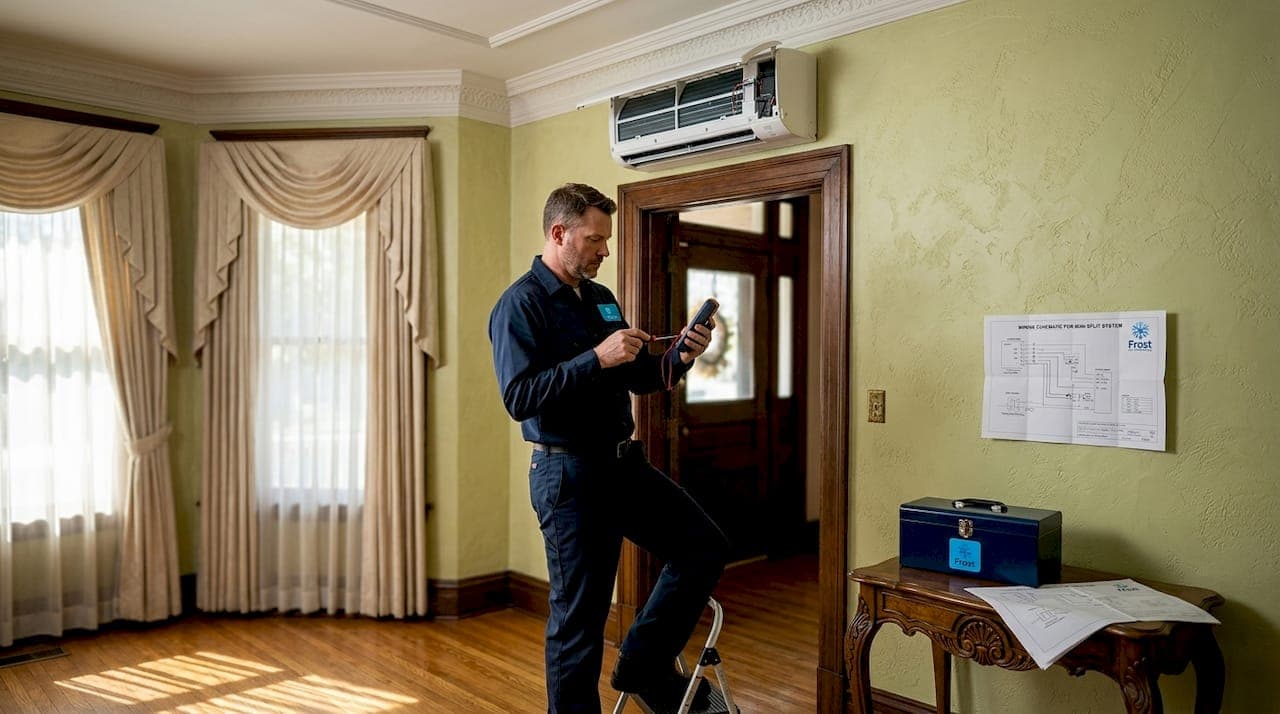
Air conditioning in heritage homes is defined as the integration of climate control systems into historically significant properties using low-impact HVAC methods that protect original materials, manage moisture, and preserve architectural character. This is not a niche problem. Across the south west of England, thousands of Georgian terraces, Victorian villas, and Edwardian semis sit without any mechanical cooling, and their owners are increasingly asking whether modern comfort is achievable without compromising what makes these buildings special. The short answer is yes, but only when the right system is chosen, correctly sized, and installed by someone who understands both the technology and the building. Systems like ductless mini-splits, high-velocity small-duct solutions from brands such as Unico and SpacePak, and variable speed heat pumps have made sensitive installation genuinely possible in 2026.
Explaining air conditioning in heritage homes: which systems work best
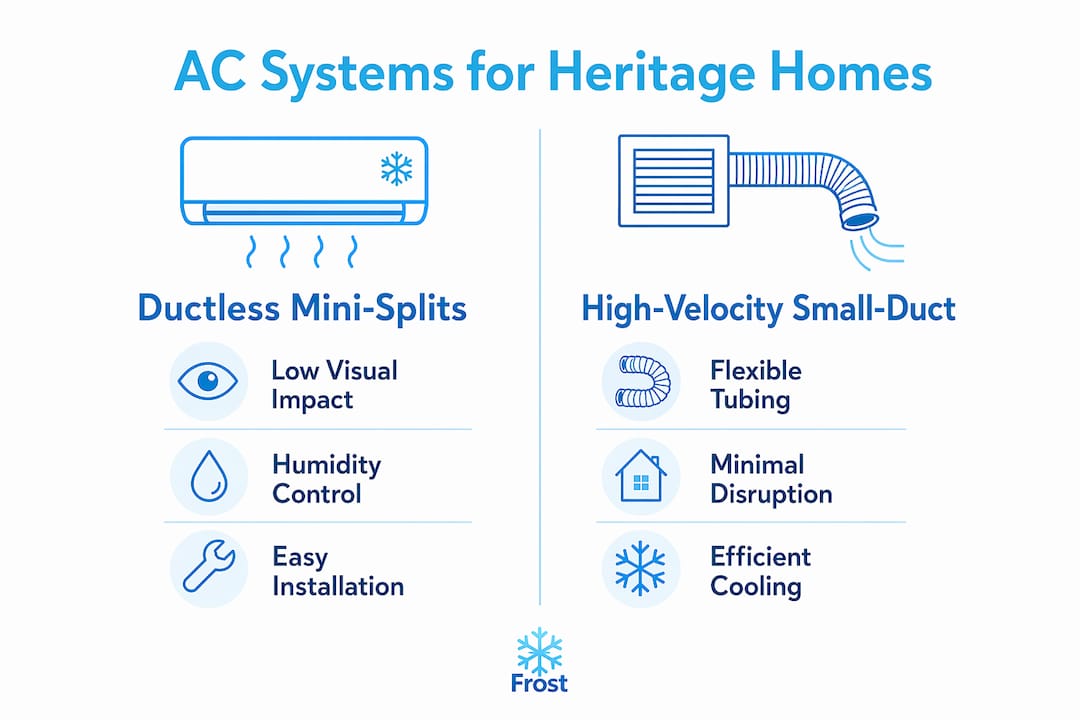
Retrofitting AC systems in heritage homes relies on zoning, careful duct placement, and matching the installation to the building layout. No single system suits every property. The three most practical options for heritage home climate control are ductless mini-splits, high-velocity small-duct systems, and hybrid arrangements that work alongside existing heating infrastructure.
Ductless mini-splits are the most widely used solution for installing AC in vintage properties. The indoor unit mounts on a wall or ceiling, the outdoor compressor sits discreetly outside, and the two are connected by a narrow refrigerant pipe that passes through a small hole in the wall. There is no ductwork to route through original plasterwork or timber floors. Brands such as Mitsubishi Electric, Daikin, and Samsung all produce units with variable speed compressors, which is significant because variable speed operation maintains a steadier temperature and humidity level rather than cycling on and off aggressively.
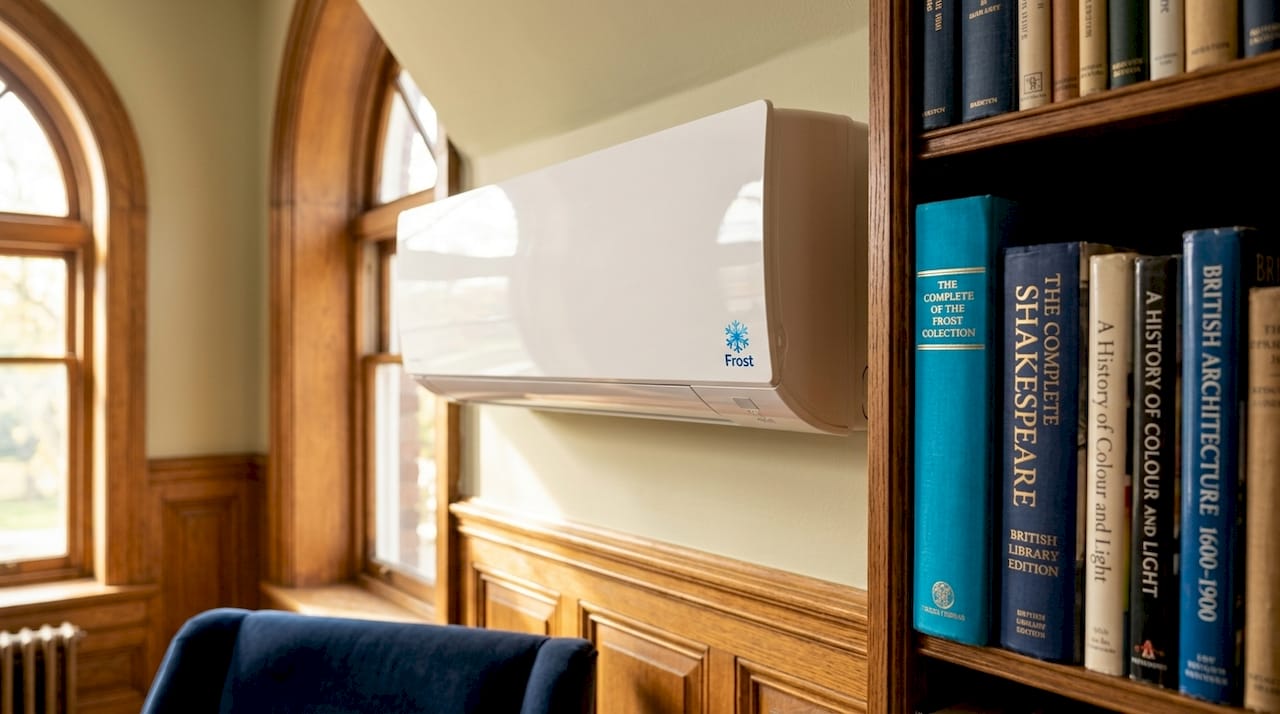
High-velocity small-duct systems, sold under names like Unico and SpacePak, use flexible two-inch diameter tubing that can be threaded through existing wall cavities, under floorboards, and into ceiling voids without major structural work. The supply outlets are small, round, and unobtrusive. This makes them particularly well suited to properties where wall-mounted indoor units would look out of place, such as rooms with elaborate cornicing or panelled walls.
| System type | Visual impact | Humidity control | Best suited to |
|---|---|---|---|
| Ductless mini-split | Low to moderate | Good with variable speed | Most heritage property types |
| High-velocity small-duct | Very low | Good | Rooms with decorative plasterwork |
| Hybrid heat pump | Low | Moderate | Homes with existing wet heating |
| Whole-house fan | None | None | Mild climates, occasional overheating |
Pro Tip: Ask your installer to route refrigerant pipework through an existing service void or chimney breast chase rather than cutting new channels through original masonry. This single decision protects the most character-defining fabric of the building.
HVAC in historic homes must combine temperature and humidity control with envelope considerations to prevent mould, rot, and material deterioration. Oversizing a system is one of the most common mistakes. A unit that is too large cools the air quickly but does not run long enough to remove moisture, leaving a cold, damp interior that is actively harmful to timber joinery, lime plaster, and stone. Proper room-by-room heat loss calculations are not optional. They are the foundation of every successful heritage HVAC installation.
You can explore the types of AC systems available for UK homes in more detail to understand which configuration suits your property before committing to a specification.
What planning permission do you need for heritage AC?
Regulatory requirements for installing AC in heritage buildings are more complex than most homeowners expect, and getting this wrong carries real consequences. Homeowners in conservation areas, listed buildings, and flats face stringent planning permission requirements for external AC equipment that go well beyond standard permitted development rights.
The key distinctions are as follows:
- Listed buildings (Grade I, Grade II, Grade II):* Any external unit, and often any internal work that affects the character of the building, requires listed building consent from your local planning authority. This applies even to reversible installations.
- Conservation areas: External units visible from a public highway are not permitted development. You will need full planning permission, and the local authority will assess visual impact carefully.
- Flats in heritage buildings: You may need both planning permission and freeholder or management company consent. Space for an outdoor unit is often severely restricted, which is why high-wall or rooftop placements require specialist assessment.
- Unlisted properties outside conservation areas: Standard permitted development rights may apply, but always confirm with your local authority before proceeding.
Non-compliance is not a minor administrative issue. Installing equipment without the required consent on a listed building is a criminal offence under the Planning (Listed Buildings and Conservation Areas) Act 1990. Local authorities can require removal at the owner's cost, and the reputational and financial consequences of enforcement action are significant.
Working with an F-Gas certified contractor who has direct experience of heritage planning submissions is the most reliable way to avoid these problems. They will know which positions for outdoor units are likely to gain consent, how to present the application, and whether a pre-application enquiry to the planning authority would save time. For further context on how planning approvals interact with external installations, the guide on AC in new builds covers the legal framework in useful detail.
Should you try alternative cooling before installing AC?
For heritage homes that only overheat occasionally, shading and ventilation should be prioritised before committing to fixed mechanical cooling. This is not a counsel of perfection. It is a practical sequencing decision that can save money and reduce the planning complexity you face.
Consider working through these steps before specifying an AC system:
- Assess glazing and solar gain. South and west-facing rooms with large sash windows or Victorian bay windows are the primary source of overheating in most heritage homes. External shutters, internal blinds, or secondary glazing with solar control film address the root cause directly.
- Improve natural cross-ventilation. Opening windows on opposite sides of the building at night draws cooler air through the structure. Many heritage homes have original ventilation features, such as roof lights and transom windows, that have been sealed over time. Restoring them costs far less than an AC installation.
- Address the building envelope. Weatherproofing upgrades for Victorian and Edwardian homes, including draught-proofing and loft insulation, reduce heat ingress and make the interior more stable before any mechanical system is added.
- Consider a whole-house fan. These units draw outdoor air through open windows and exhaust warm air through the attic. Whole-house fans provide cooling by circulating outdoor air and exhausting warm indoor air, but their effectiveness depends on sufficient attic venting and cooler outdoor temperatures than indoors.
- Evaluate frequency of overheating. If your home exceeds comfortable temperatures on more than 20 to 30 days per year, passive measures alone are unlikely to be sufficient. At that point, mechanical cooling becomes the rational choice.
Pro Tip: Whole-house fans are sometimes mistaken for air conditioning, but they rely entirely on airflow and temperature differences. They do not dehumidify or filter air, which makes them unsuitable during humid periods or for anyone with respiratory sensitivities.
How do you maintain a heritage home's fabric after AC installation?
Installing the system is only the beginning. Ongoing management of moisture, temperature, and the building fabric determines whether your investment protects or gradually harms the property.
Monitor humidity continuously. Lime plaster, timber panelling, and original floorboards are all hygroscopic. They absorb and release moisture in response to the air around them. A relative humidity level between 45% and 60% is the target range for most heritage interiors. Wireless humidity monitors placed in key rooms, including basements and cellars, give you the data to act before damage occurs. Dedicated dehumidification zones in below-ground spaces are worth specifying separately from the main cooling system.
Service the system annually. An AC unit that is not serviced loses efficiency and, more critically, can develop refrigerant leaks or blocked drainage that introduce moisture into the building fabric. Annual servicing by an F-Gas certified engineer is a legal requirement for systems containing fluorinated gases, and it protects the building as much as the equipment. Frostairconditioning offers service and maintenance plans designed specifically for domestic installations.
Use access panels strategically. When the system is installed, agree with your contractor on the placement of access panels for any concealed pipework or ductwork. Retrofitting access later means disturbing original fabric. A well-placed panel in a cupboard or under a staircase costs almost nothing at installation and saves significant disruption over the life of the system.
Set temperature differentials carefully. Running an AC system at a very low setpoint in a hot summer creates a large temperature differential between the cooled interior and the warm exterior. This drives condensation into the building fabric from outside. A setpoint of 21 to 23 degrees Celsius is generally appropriate for heritage interiors. Avoid the temptation to cool aggressively.
Key takeaways
Air conditioning in heritage homes is achievable without compromising historic fabric, provided the system is correctly specified, sized to actual heat loss, and installed with planning compliance from the outset.
| Point | Details |
|---|---|
| System choice matters | Mini-splits and small-duct systems like Unico cause the least disruption to original fabric. |
| Sizing is critical | Oversized units fail to dehumidify, causing moisture damage to lime plaster and timber. |
| Planning compliance is non-negotiable | Listed buildings and conservation areas require formal consent before any external unit is installed. |
| Passive measures come first | Shading, ventilation, and draught-proofing reduce cooling demand before mechanical systems are needed. |
| Ongoing maintenance protects the building | Annual servicing and humidity monitoring prevent moisture damage after installation. |
What I have learned from heritage AC installations
The most common misconception I encounter is that air conditioning and heritage preservation are fundamentally in conflict. They are not. The conflict arises from poor specification, not from the technology itself. A mini-split installed by someone who has never worked in a listed building will almost certainly be positioned, sized, and commissioned in a way that causes problems. The same technology, handled by someone who understands the building, produces a result that is both comfortable and respectful.
What I have found actually matters is the heat-loss assessment. Most installers skip it or approximate it. In a heritage home with solid walls, original single glazing, and a complex floor plan, the thermal behaviour of each room is genuinely different. A room-by-room calculation changes the specification significantly, and getting it right means the system runs at the right capacity, maintains humidity properly, and does not stress the fabric.
I also think homeowners underestimate how much the position of the outdoor unit matters, not just aesthetically but practically. A unit tucked behind a hedge on the north elevation of a Georgian terrace is a very different planning proposition from one mounted on a front elevation visible from the street. The best installations I have seen treat the outdoor unit location as the first design decision, not an afterthought.
The technology available in 2026 is genuinely good enough to cool a heritage home without major compromise. Variable speed compressors, inverter-driven fans, and smart humidity controls mean the system can be tuned to the building rather than forcing the building to accommodate the system. That shift in thinking, from fitting a standard product to designing a bespoke solution, is what separates a successful heritage installation from a damaging one.
— James
How Frostairconditioning helps heritage homeowners

Frostairconditioning works with homeowners across the south west, including properties in Exeter, Devon, and Cornwall, on AC installations that respect the character and planning status of historic buildings. Every project starts with a proper heat-loss assessment and a conversation about planning requirements before any equipment is specified. Frostairconditioning is F-Gas certified, offers 0% finance, and can accommodate same-day installs for straightforward projects. For heritage properties, a measured approach is always taken, with outdoor unit positioning agreed before any application is submitted. To discuss your property and get a tailored recommendation, visit the domestic installation page or request a quote directly.
FAQ
Can you install air conditioning in a listed building?
Yes, but listed building consent is required from your local planning authority before any work begins. Both external units and internal modifications that affect the character of the building are subject to approval.
What is the least intrusive AC system for a heritage home?
Ductless mini-splits and high-velocity small-duct systems from brands like Unico cause the least physical disruption. They require only a small penetration through the wall and avoid the need to route ductwork through original plasterwork or floors.
Does air conditioning damage old buildings?
An incorrectly sized or poorly commissioned system can cause condensation and moisture damage to lime plaster and timber. A correctly sized system with variable speed operation and humidity monitoring actively protects the building fabric by maintaining stable conditions.
Do you need planning permission for AC in a conservation area?
External units visible from a public highway are not permitted development in a conservation area. Full planning permission is required, and the local authority will assess the visual impact of the installation.
How often should AC be serviced in a heritage property?
Annual servicing by an F-Gas certified engineer is both a legal requirement and good practice for heritage buildings. Regular maintenance prevents refrigerant leaks and drainage issues that could introduce moisture into the building fabric.