
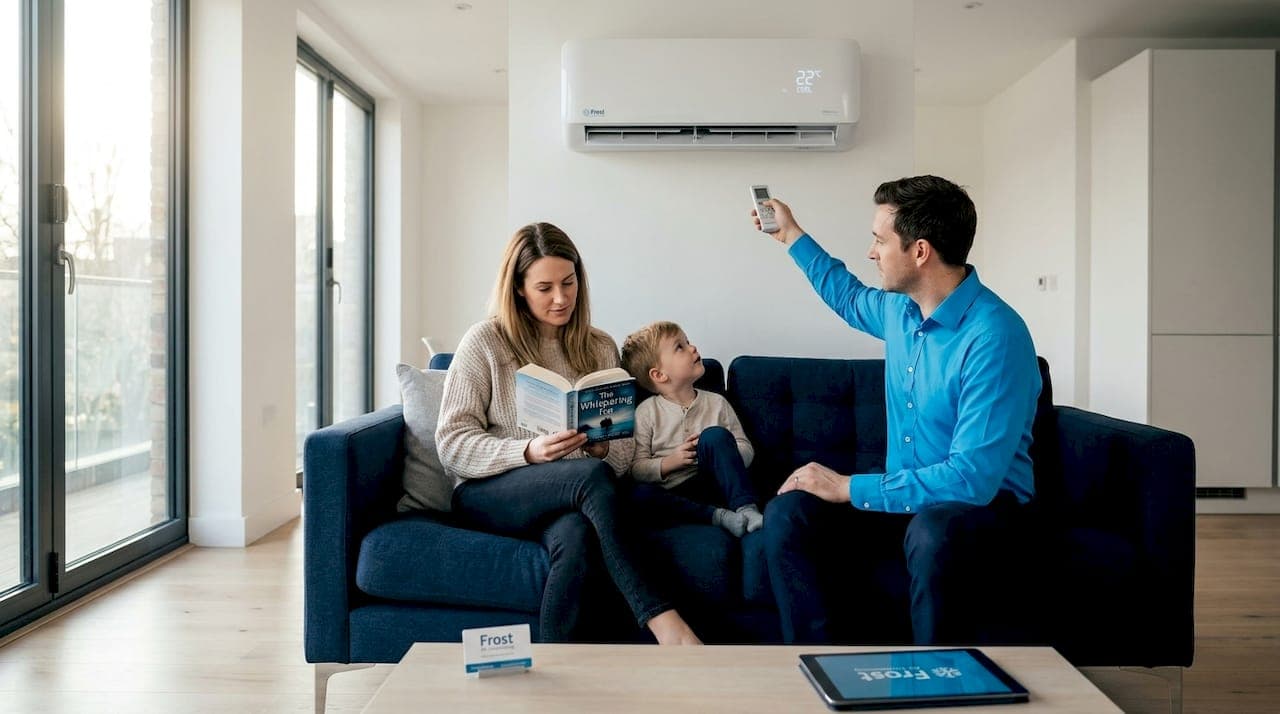
If you suffer from allergies, what happens inside your home can matter just as much as what's happening outside. The air conditioning benefits for allergies go well beyond simply cooling a room. A properly specified and maintained AC system actively filters airborne particles, controls humidity, and circulates cleaner air throughout your living space. Whether you react to pollen, dust mites, pet dander, or mould spores, how AC helps with allergies is something worth understanding properly before you make any decisions about your home.
Table of Contents
- Key takeaways
- 1. Humidity control that stops mould and dust mites
- 2. Air filtration that actually traps allergens
- 3. Proper maintenance prevents AC from spreading allergens
- 4. Better ventilation reduces allergen stagnation
- 5. Advanced features that take allergy relief further
- Comparing the benefits at a glance
- My honest take on AC and allergies
- How Frostairconditioning can help you breathe easier
- FAQ
Key takeaways
| Point | Details |
|---|---|
| Humidity control matters most | Keeping indoor humidity between 30 and 50% prevents mould and dust mites from thriving. |
| Filter quality is critical | MERV 13 filters with independent allergy certification outperform cheaper alternatives significantly. |
| Maintenance is non-negotiable | A dirty AC system spreads allergens rather than removing them. |
| Ventilation reduces allergen build-up | Consistent air circulation stops particles from settling and accumulating indoors. |
| Advanced features add real value | UV germicidal lamps and sealed ducts can meaningfully improve allergy relief beyond basic filtration. |
1. Humidity control that stops mould and dust mites
This is the single most underappreciated air conditioning benefit for allergy sufferers. Most people think of AC as a cooling tool. What it is also doing, constantly and quietly, is pulling moisture out of the air.
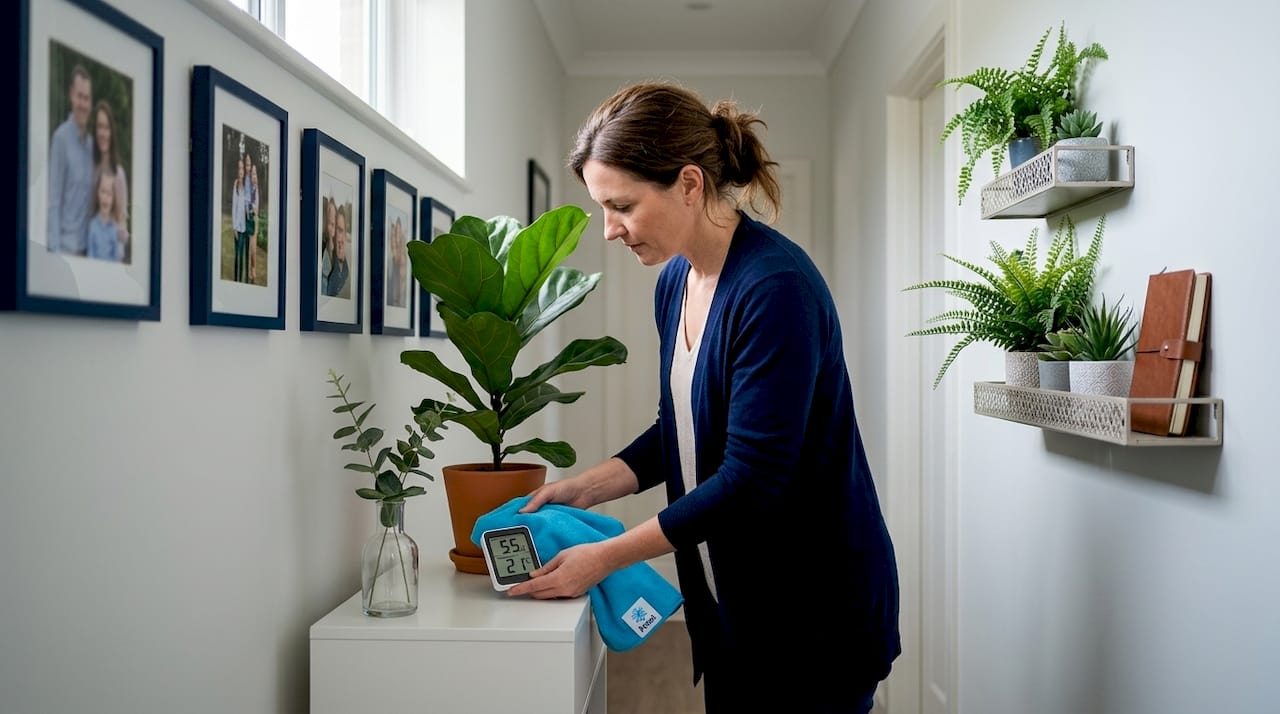
Indoor humidity below 60% prevents mould growth that directly worsens allergy symptoms, with the EPA recommending a target range of 30 to 50%. Dust mites, which trigger reactions in millions of people across the UK, also struggle to survive below 50% relative humidity. Your AC system is working to keep both threats under control every time it runs.
Key signs your humidity may be too high indoors:
- Condensation on windows, particularly in the morning
- A musty or damp smell in any room
- Visible mould spots on ceilings, grout, or window frames
- Worsening symptoms at home despite avoiding outdoor triggers
Pro Tip: Pick up an inexpensive hygrometer to monitor your indoor humidity in real time. If it regularly sits above 55%, your current ventilation is not doing enough.
2. Air filtration that actually traps allergens
Not all filters are equal, and this is where a lot of people get caught out. The packaging might say "anti-allergen" or "air purifying," but without an independent certification, those claims mean very little in practice.
MERV 13 rated filters with Asthma & Allergy Friendly certification are proven to capture airborne allergens including pollen, dust mites, and pet dander, and critically, they maintain that performance even as the filter loads up with trapped particles. That last point matters because many budget filters lose efficiency quickly.
The MERV rating system runs from 1 to 16. For allergy sufferers, the guidance from HVAC specialists is to use the highest MERV rating compatible with your specific system, typically 11 to 13. Going higher than your system is rated for can actually restrict airflow and reduce the overall effectiveness of your filtration.
What to look for when choosing a filter:
- An independently verified MERV rating of 11 or above
- Asthma & Allergy Friendly® certification from ECARF or equivalent body
- A stated replacement interval, usually every 90 days
- Compatibility with your existing unit before purchasing
For homes that are tightly sealed and well insulated, this point is especially important. Filtration in energy-efficient homes is crucial because allergens that enter have fewer opportunities to escape, so what your filter catches stays caught.
3. Proper maintenance prevents AC from spreading allergens
This is the part that trips people up. An AC unit you have not serviced in two or three years is not helping your allergies. It may well be making them worse.
Dirty air conditioning systems harbour dust, mould, and dust mites that get distributed around your home every time the system runs. Return ducts are a particular problem. Improperly maintained HVAC systems spread allergens via return ducts, picking up dust and mould and depositing them throughout your living space.
Signs your AC system may be worsening your allergies rather than helping:
- Symptoms that are noticeably worse at home than when you are outdoors
- Dust visible around supply vents or registers
- A stale or musty smell when the system runs
- You cannot remember the last time filters were replaced
Recommended maintenance practices include:
- Filter replacement every 60 to 90 days for allergy sufferers (not every six months)
- Annual professional service including coil cleaning and duct inspection
- Checking for and sealing any visible gaps around ductwork connections
Pro Tip: Book your annual AC service and maintenance in early spring, before pollen season starts. That way your system is clean and ready before your worst allergy months begin.
4. Better ventilation reduces allergen stagnation
Still air is bad air for allergy sufferers. When particles settle, they accumulate on surfaces and get disturbed back into the breathing zone every time someone walks past or sits down. Consistent air movement prevents that cycle.
AC circulation prevents allergen settling by keeping particles suspended and moving them towards your filter, where they are captured and removed from the indoor environment. This is the role of air conditioning in allergy control that most people never think about. It is not just filtering. It is actively reducing the concentration of allergens throughout the room.
One of the biggest practical benefits here is that it gives you a reason to keep your windows closed during high pollen days. Opening windows feels refreshing, but during peak pollen periods in the UK, typically May through to August, doing so floods your indoor space with the exact particles you are trying to avoid. Running your AC with windows closed and letting the system handle your ventilation is a straightforward way to protect your indoor environment.
Tips to make the most of ventilation benefits:
- Keep windows and external doors closed on high pollen count days
- Use your AC's fan mode to maintain circulation even when cooling is not needed
- Make sure furniture and soft furnishings are not blocking supply or return vents
5. Advanced features that take allergy relief further
Once your core system is sorted, there are a few additions worth knowing about that can make a meaningful difference, particularly for those with more severe allergies or asthma.
UV germicidal lights installed in AC systems kill mould and bacteria at the source, targeting microbial growth directly on the evaporator coil where moisture accumulates. This is not a gimmick. It is a straightforward way to reduce the biological load inside your system before air is distributed around your home.
Duct sealing is another upgrade that delivers real results. Leaky ducts allow dust ingress from crawl spaces and wall cavities, and that contamination bypasses your filter entirely. Sealing with mastic or specialist tape addresses the problem at its source.
| Add-on feature | What it does | Best suited for |
|---|---|---|
| UV germicidal lamp | Kills mould and bacteria on coils | Homes with damp or mould history |
| Duct sealing | Prevents unfiltered dust entering system | Older properties with original ductwork |
| Whole-home air purifier | Additional filtration beyond AC filter | Severe allergy or asthma sufferers |
| Smart humidity control | Automates dehumidification to target range | Homes with consistently high humidity |
Pro Tip: When discussing upgrades with an installer, ask specifically about their experience with allergy-related installs. A good installer will ask about your specific triggers before recommending anything.
Comparing the benefits at a glance
Understanding which benefits matter most to you depends on your specific triggers and the conditions in your home. Here is a clear summary.
| Benefit | Maintenance required | Impact on allergy symptoms | Priority level |
|---|---|---|---|
| Humidity control | Regular filter and coil checks | High, reduces mould and dust mites | Critical |
| Air filtration | Filter replacement every 60 to 90 days | High, captures pollen, dander, dust | Critical |
| System cleanliness | Annual professional service | High, prevents allergen redistribution | Critical |
| Ventilation and circulation | Ensure vents are clear and unobstructed | Moderate, reduces particle settling | Important |
| Advanced add-ons (UV, duct sealing) | One-off installation plus periodic checks | Moderate to high depending on home | Beneficial |
If you have not had your system serviced recently, that is your first priority. The filtration and humidity benefits are only available to you if the system is clean and running correctly. Learning how to choose an air conditioner from the start helps you avoid these problems altogether.
My honest take on AC and allergies
I've spoken with a lot of people over the years who bought an AC unit expecting their symptoms to improve, and then found they felt just as bad, or worse, at home. Almost every single time, the problem was not the technology. It was how the system was set up and looked after.
Running any AC unit does not automatically give you allergy relief. I've seen brand new systems fail to help because they were installed with cheap filters, or because no one had explained that the filter needs replacing every couple of months, not once a year. And I've seen older systems that were kept properly serviced perform brilliantly for people with serious sensitivities.
What I've learned is that three things genuinely matter: humidity control, certified filtration, and consistent maintenance. Get those right and most people notice a real improvement. Skip any one of them and you are leaving significant benefits on the table. The technology works. The maintenance is what makes it work for you specifically.
The other thing worth saying is that the benefits of AC for asthma are also real and meaningful. Asthma and allergies often go together, and keeping indoor air clean, cool, and at the right humidity level supports both conditions. If anyone in your household has asthma, that raises the stakes on getting this right.
— James
How Frostairconditioning can help you breathe easier
If you are in the South West and want an AC system that genuinely supports your allergy management, Frostairconditioning is worth a conversation. Based in Exeter, the team covers the wider South West region and brings real expertise in selecting and installing systems suited to your home and health needs.

Frostairconditioning is F-Gas certified, offers same-day installations for many properties, and has 0% finance options available if you want to spread the cost. Getting the right system specified from the start means you avoid the common maintenance and filtration mistakes that undermine allergy relief. Whether you need a new installation or a proper service on your existing unit, visit Frostairconditioning to find out more or request a personalised quote tailored to your home and budget.
FAQ
Does air conditioning actually help with allergies?
Yes. A well-maintained AC system filters airborne allergens, controls indoor humidity, and circulates clean air continuously, all of which reduce your exposure to common allergy triggers like pollen, dust mites, and mould spores.
What type of filter is best for allergy sufferers?
Look for filters rated MERV 11 to 13 with an independent certification such as Asthma & Allergy Friendly®. Replace them every 60 to 90 days rather than waiting for the annual service.
Can AC make allergies worse?
Yes, if the system is dirty or poorly maintained. Unclean HVAC systems distribute dust, mould, and allergens throughout your home. Regular cleaning and filter changes prevent this.
What indoor humidity level is best for allergies?
The ideal range is 30 to 50% relative humidity. This level inhibits mould growth and makes conditions too dry for dust mite survival. A hygrometer lets you monitor this accurately.
Are there AC features specifically for asthma sufferers?
UV germicidal lamps, high-grade MERV filters, and duct sealing all improve air quality in ways that benefit both allergy and asthma sufferers. The benefits of AC for asthma are particularly strong when combined with professional installation and regular maintenance.