
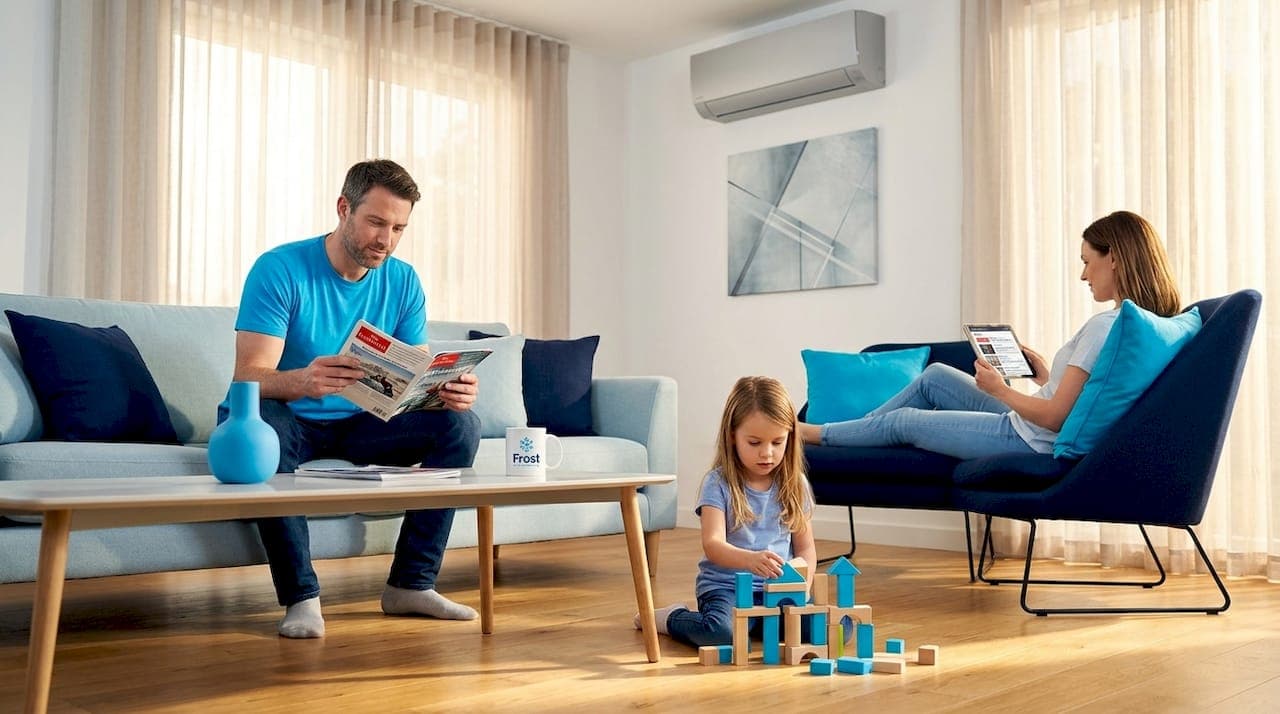
Most homeowners think of air conditioning as a glorified fan. You press a button, the room gets cooler, job done. But why air conditioning helps in summer goes far deeper than dropping the temperature by a few degrees. The real story involves humidity, air quality, sleep, and genuine health protection during heat events that can turn dangerous faster than you'd expect. This article breaks down what's actually happening when your AC runs, why it matters for your family's wellbeing, and how to make smart choices about the system in your home.
Table of Contents
- Key takeaways
- Why air conditioning helps in summer: cooling and dehumidification
- Health benefits of AC during summer heat
- Energy efficiency and running costs
- Choosing, installing, and maintaining your AC
- Beyond cooling: sleep, allergies, and air quality
- My honest take on what most homeowners get wrong
- Get the right system installed for your home
- FAQ
Key takeaways
| Point | Details |
|---|---|
| AC controls humidity as well as temperature | Keeping indoor humidity between 30 and 50% is just as important as lowering the temperature for real comfort. |
| Correct sizing changes everything | An oversized unit short-cycles and fails to dehumidify properly, leaving rooms feeling clammy despite cool air. |
| AC actively protects health | Proactive cooling during heat events reduces the risk of heat exhaustion, particularly for the elderly and those with health conditions. |
| Filters reduce indoor allergens | Domestic AC filters capture dust, pollen, and pet dander, improving air quality for allergy sufferers over time. |
| Smart usage cuts running costs | Correct sizing, regular servicing, and sensible thermostat settings deliver comfort without unnecessary energy bills. |
Why air conditioning helps in summer: cooling and dehumidification
Temperature is only half the story. The way air conditioning cools a room is through a refrigerant cycle: warm indoor air passes over a cold evaporator coil, heat is absorbed, and the now-cooled air is pushed back into the room. At the same time, moisture in the air condenses on that coil and drains away. That second part, dehumidification, is what separates an air conditioner from a simple cooling fan.
Humidity is the hidden villain of summer discomfort. When the air is saturated with moisture, sweat cannot evaporate from your skin efficiently, so your body's natural cooling mechanism stalls. You feel hotter than the thermometer suggests. A well-functioning AC system tackles both the temperature and the moisture simultaneously, which is why a properly cooled room feels genuinely comfortable rather than just slightly less awful.
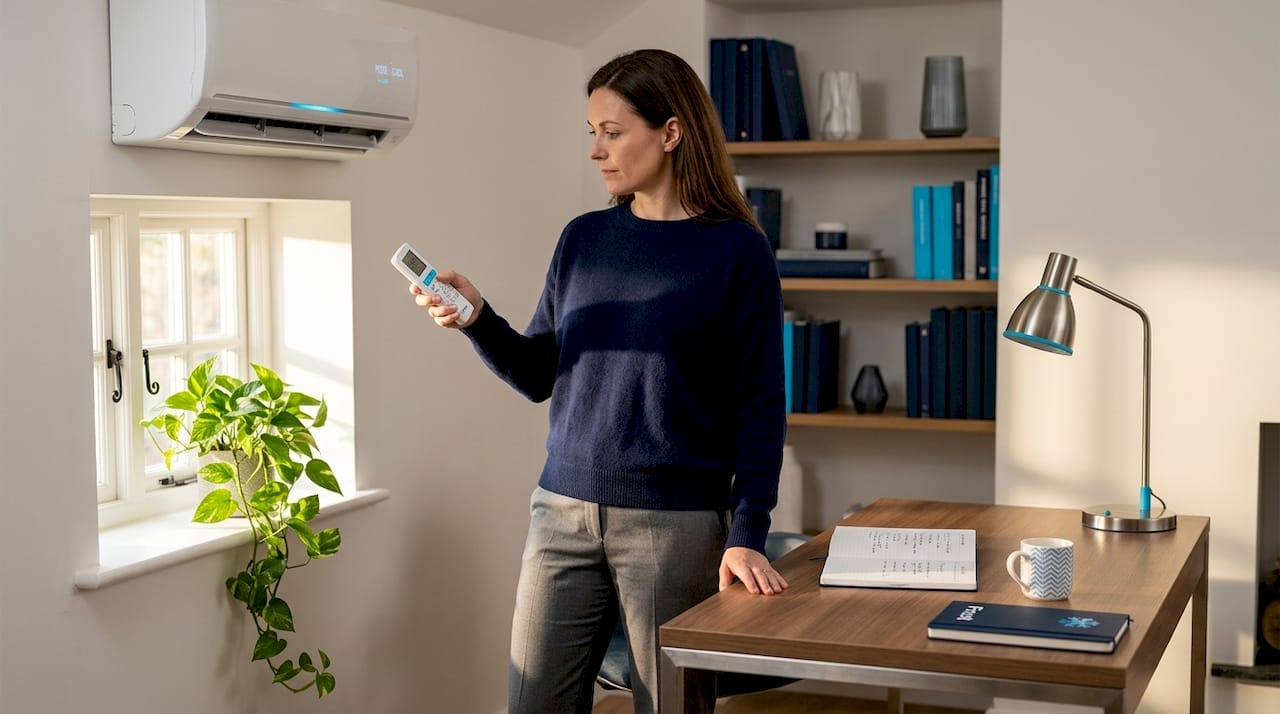
Sizing matters more than most homeowners realise. A unit that is too large for the room will reach the set temperature quickly and switch off before it has had time to pull adequate moisture from the air. The result is cool but clammy air, which is deeply uncomfortable and encourages mould growth. The general rule of thumb is approximately 20 BTU per square foot, adjusted for factors like ceiling height, sun exposure, and how many people regularly occupy the space. You can read more about getting this right in the homeowner's guide to sizing.
Key factors that affect how effectively your AC cools and dehumidifies:
- Room dimensions and ceiling height. Higher ceilings mean more air volume to cool.
- Sun exposure. South-facing rooms with large windows gain heat far more quickly.
- Insulation quality. Poorly insulated homes lose cooled air rapidly, forcing the unit to work harder.
- Occupancy. People generate heat and moisture. A room used by four people needs more capacity than one person's home office.
- Local climate. In the South West of the UK, summer humidity can be particularly high, so dehumidification capacity is especially worth considering.
Pro Tip: Set your thermostat to a consistent temperature rather than cranking it as low as possible when you first switch on. Overshooting the target means the unit cycles off and on repeatedly, reducing its ability to dehumidify and increasing wear on the compressor.
Health benefits of AC during summer heat
The importance of AC in summer becomes starkly clear when you look at what heat actually does to the body. Heat exhaustion occurs when the body cannot dissipate heat fast enough. Symptoms include dizziness, nausea, heavy sweating, and a rapid pulse. Left untreated, it progresses to heat stroke, which is a medical emergency. Keeping indoor temperatures manageable is not comfort-seeking. It is prevention.
Vulnerable groups face the most serious risk. The elderly have reduced capacity to regulate body temperature and are often slower to perceive how hot they are getting. Children's thermoregulation is also less efficient than adults. People managing conditions like cardiovascular disease, diabetes, or respiratory illness face compounded risks during heat events. Research in Brazil studying a decade of heat-related mortality found that expanding access to air conditioning in vulnerable households meaningfully reduced heat-related deaths during extreme temperature events.
"Access to air conditioning is increasingly recognised as a critical health metric, not a luxury. Communities without reliable cooling access face measurably greater risk during heatwaves, which is why understanding where households lack AC has become part of emergency planning."
Beyond acute heat illness, air quality improves when AC is running. The filtration built into most domestic systems captures airborne particles including dust, pollen, and pet dander. For households with asthma sufferers or hay fever, this is a tangible, daily benefit that persists whether or not there is a heatwave outside. It is worth noting that domestic filters are not medical-grade, but they do make a real difference to the quality of the air you and your family breathe.
The key principle here is proactive use. Cooling proactively during a heat event is far more effective at protecting health than waiting until someone feels unwell and then trying to bring their temperature down. If you know a heatwave is forecast, start cooling your home early.
Energy efficiency and running costs
The benefits of air conditioning are most attractive when they do not come with a frightening electricity bill. The good news is that modern systems are substantially more efficient than units from even ten years ago.
- Choose a system with a strong energy rating. The EER2 (Energy Efficiency Ratio 2) rating, introduced in January 2023, gives a standardised way to compare units. A higher EER2 means more cooling output per unit of electricity consumed. Whenever possible, select ENERGY STAR-labelled or equivalent high-efficiency products.
- Get the sizing right from the start. As covered above, an oversized unit short-cycles, wastes electricity, and under-delivers on humidity control. An undersized unit runs continuously trying to meet a target it cannot reach. Both situations cost more to run than a correctly sized system.
- Service the unit regularly. A system running with clogged filters or low refrigerant works harder to achieve the same output, driving up energy use. Annual maintenance is not optional if you want the system to run at its rated efficiency.
- Use programmable or smart controls. Setting the AC to cool your home before you arrive, rather than leaving it running all day, reduces run hours without sacrificing comfort.
- Keep windows and doors closed when the AC is running. Bringing warm, humid air in from outside forces the unit to work significantly harder.
Pro Tip: Avoid setting the thermostat below 20°C in the hope that the room will cool faster. AC units cool at a fixed rate regardless of the temperature set. A lower setting just means the unit runs longer, not quicker, so you use more energy for no speed benefit.
You can find more detail on cutting costs without cutting comfort in our guide on AC energy efficiency.
Choosing, installing, and maintaining your AC
Getting the right system is as much about what happens before and after installation as it is about the unit itself.
When choosing a system, consider whether you need cooling in a single room or multiple areas of the home. A single split unit handles one space well. Multi-split systems use one external compressor connected to several internal units, which is often the most cost-effective solution for whole-home cooling.
| Type | Best for | Approximate coverage |
|---|---|---|
| Single split | One room or open-plan space | Up to 50 sq metres |
| Multi-split | Multiple rooms from one outdoor unit | Two to five indoor units |
| Portable unit | Temporary or rental situations | Single room, lower efficiency |
| Ducted system | Whole-home cooling, concealed installation | Entire property |
Installation quality makes a significant difference to long-term performance. A poorly positioned indoor unit with restricted airflow will never cool as effectively as an identical unit installed correctly. External units need space for heat dispersal and should not be positioned in enclosed areas or under direct sunlight if avoidable.
Key maintenance tasks that keep your system running well:
- Clean or replace filters every four to six weeks during heavy summer use. Blocked filters reduce airflow dramatically and force the system to strain.
- Check the external unit for debris such as leaves or grass clippings that block airflow around the coils.
- Book an annual service with a qualified engineer. This covers refrigerant levels, electrical connections, and overall system health.
- Clear the condensate drain periodically to prevent blockages that can cause water damage inside the home.
Detailed guidance on keeping your system in peak condition is available in the AC maintenance tips guide.
Beyond cooling: sleep, allergies, and air quality
The cooling effects of air conditioning produce benefits that homeowners often do not connect directly to their AC unit. Better sleep is one of the most significant. Core body temperature needs to drop slightly for the body to enter deep, restorative sleep. On hot summer nights without cooling, that process is disrupted, leading to lighter sleep, more frequent waking, and daytime fatigue. Research shows that cooled rooms improve not just sleep duration but cognitive performance and reaction times the following day.
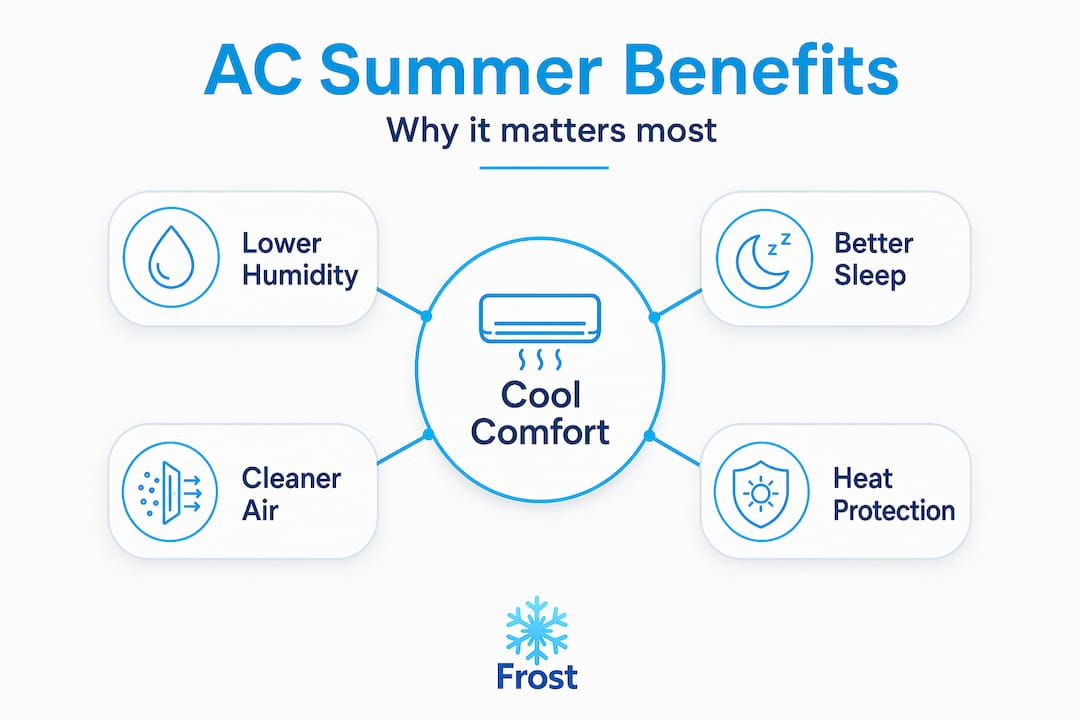
Allergen control is another advantage that accumulates quietly over time. AC filters reduce circulating dust, pollen, and pet dander, which benefits anyone with allergies or asthma. Running the AC also means windows stay closed, which limits the amount of outdoor pollen entering the home during high-count days. For families with children who have sensitivities, this is a meaningful day-to-day quality-of-life improvement.
| Benefit | Mechanism | Impact |
|---|---|---|
| Improved sleep | Lower ambient temperature reduces core body heat | Deeper sleep cycles, better daytime focus |
| Reduced allergens | Filters capture dust, pollen, dander | Fewer allergy symptoms indoors |
| Mould prevention | Humidity kept below 50% limits mould and dust mites | Healthier indoor environment |
| Reduced outdoor pollutants | Closed windows when AC runs | Lower pollen and traffic pollution indoors |
For more on how your system affects indoor air quality, the Frostairconditioning blog covers this in detail.
My honest take on what most homeowners get wrong
In my experience, the biggest mistake I see is homeowners focusing entirely on the temperature number and ignoring everything else. Someone buys the largest unit they can find, sets it to 16°C, and then wonders why the room still feels uncomfortable after an hour. The answer is almost always humidity. The unit cooled the air rapidly, short-cycled, and never had time to pull the moisture out.
The second thing I have learned is that people underestimate the health dimension. They treat AC as a comfort appliance and only switch it on when they are already feeling hot and bothered. But by that point, especially in older family members, the body has already been under heat stress for some time. The smarter approach is to start cooling the home before the peak heat of the day, not after.
What I tell every homeowner I speak to is this: the right system, correctly sized and properly serviced, does not just make your house feel nicer. It genuinely protects the people living in it. That shift in perspective changes how you think about the investment entirely.
— James
Get the right system installed for your home
If you have been putting off making a decision about air conditioning, this summer is worth taking seriously. Frostairconditioning installs domestic air conditioning systems across Exeter and the wider South West, with F-Gas certified engineers and same-day installs available for straightforward jobs.

Whether you need a single-room split unit or a multi-room solution, the team at Frostairconditioning can advise on the right system for your home layout and budget. 0% finance options are available, making it easier to get the system you need without upfront cost pressure. Visit the domestic installation page to find out more, or request a quote for a personalised recommendation. If you already have a system that needs attention, the service and maintenance team is ready to help keep it running at its best.
FAQ
Why does air conditioning help more than a fan in summer?
A fan moves air but does not reduce temperature or remove humidity. Air conditioning actively cools the air and removes moisture, addressing both the temperature and the clammy feeling that makes hot days so uncomfortable.
Is air conditioning necessary for health during UK summers?
For elderly people, young children, and those with existing health conditions, indoor cooling during heatwaves is a genuine health protection measure, not simply a comfort preference. UK summers are becoming hotter, and heat-related illness is a real risk.
How does AC improve sleep quality in summer?
Cooled rooms support the natural drop in core body temperature that the body needs to enter deep sleep. Hot nights interrupt this process, leading to poorer sleep quality and reduced cognitive performance the next day.
What size air conditioner do I need for my room?
A general starting point is 20 BTU per square foot of floor space, but ceiling height, sun exposure, insulation, and occupancy all affect the final figure. Consulting a qualified installer will give you a more accurate recommendation for your specific home.
Does running AC help with indoor allergies?
Yes. Domestic AC filters capture dust, pollen, and pet dander, reducing allergen levels over time. Keeping windows closed while the AC runs also limits incoming outdoor pollen, which is particularly useful during high pollen season.