
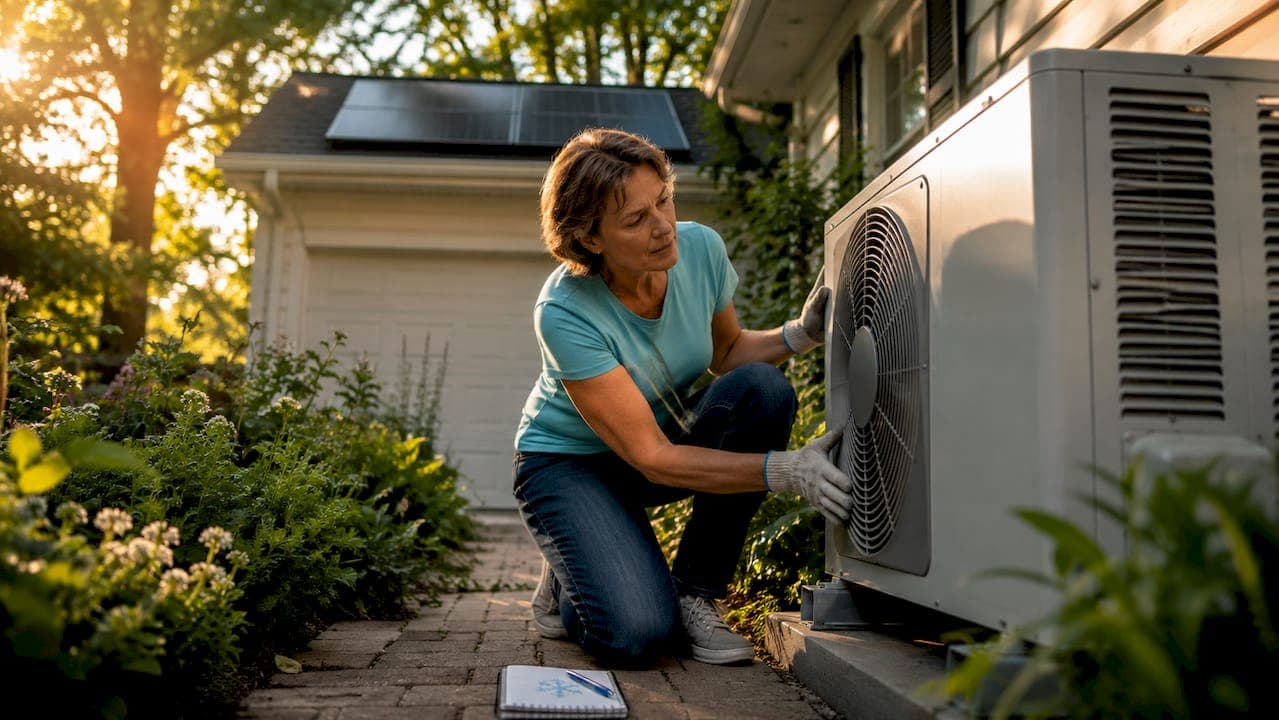
Air conditioning is sustainable when it combines energy-efficient technology, low-GWP refrigerants, and renewable energy integration to cool your home with minimal environmental impact. The UK recorded over 2,000 heat-related deaths in 2023, which makes sustainable cooling a public health necessity, not a luxury. Modern inverter-driven systems, refrigerants like R-32, and solar-compatible units have fundamentally changed why air conditioning is sustainable in ways that older systems simply could not achieve. This guide explains exactly how those advances work, what they mean for your carbon footprint, and what you can do right now to make your home cooling greener.
Why air conditioning is sustainable with modern technology
The sustainability of any air conditioning system rests on three pillars: how much electricity it consumes, which refrigerant it uses, and where that electricity comes from. Improve any one of those three factors and you reduce your environmental impact. Improve all three and you have a genuinely eco-friendly air conditioning system that competes favourably with almost any other home comfort technology.
Traditional fixed-speed compressors run at full power until the target temperature is reached, then switch off entirely. Inverter-driven compressors, used in systems like Rinnai's PX Series, modulate their speed continuously to match the actual cooling demand in the room. The result is far less energy wasted on repeated start-up cycles, steadier temperatures, and quieter operation.
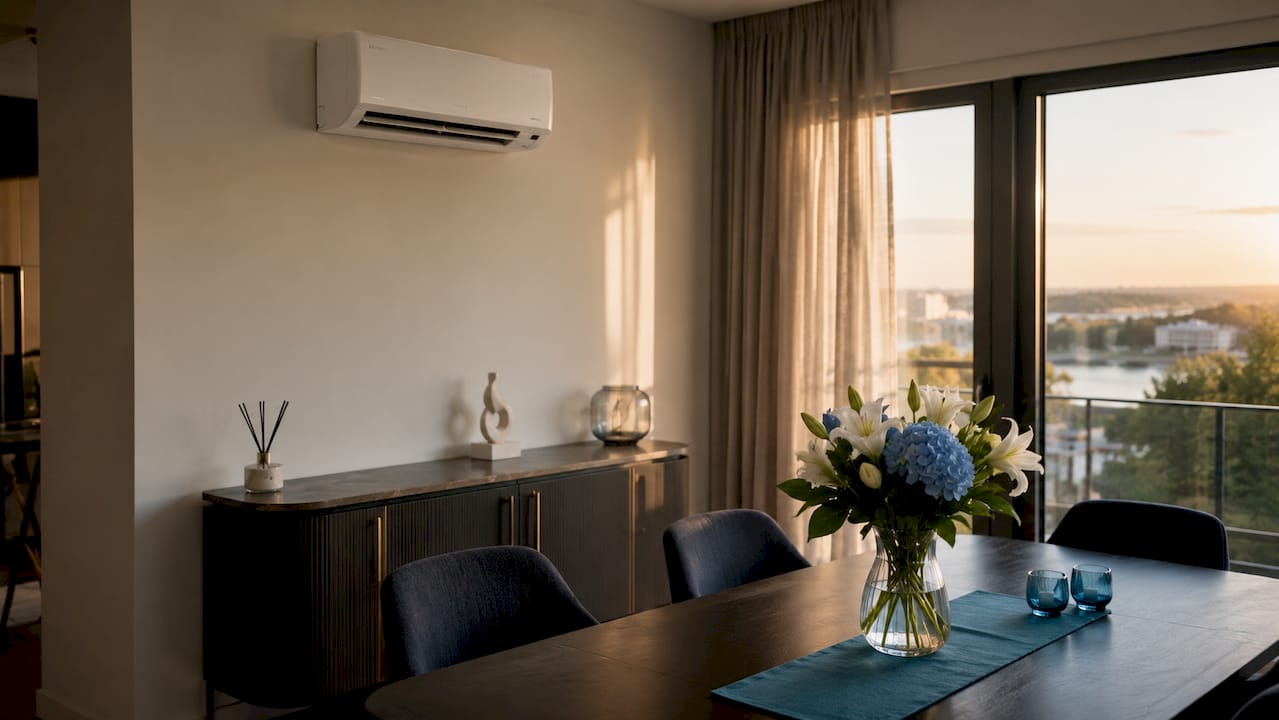
A newer development comes from companies like Transaera, which uses Metal-Organic Frameworks (MOFs) to separate humidity control from temperature control. Conventional systems overcool a room to wring moisture out of the air, which wastes energy. MOF-based dehumidification handles humidity independently, so the compressor only does the work of cooling, not drying. That distinction matters more than it sounds.
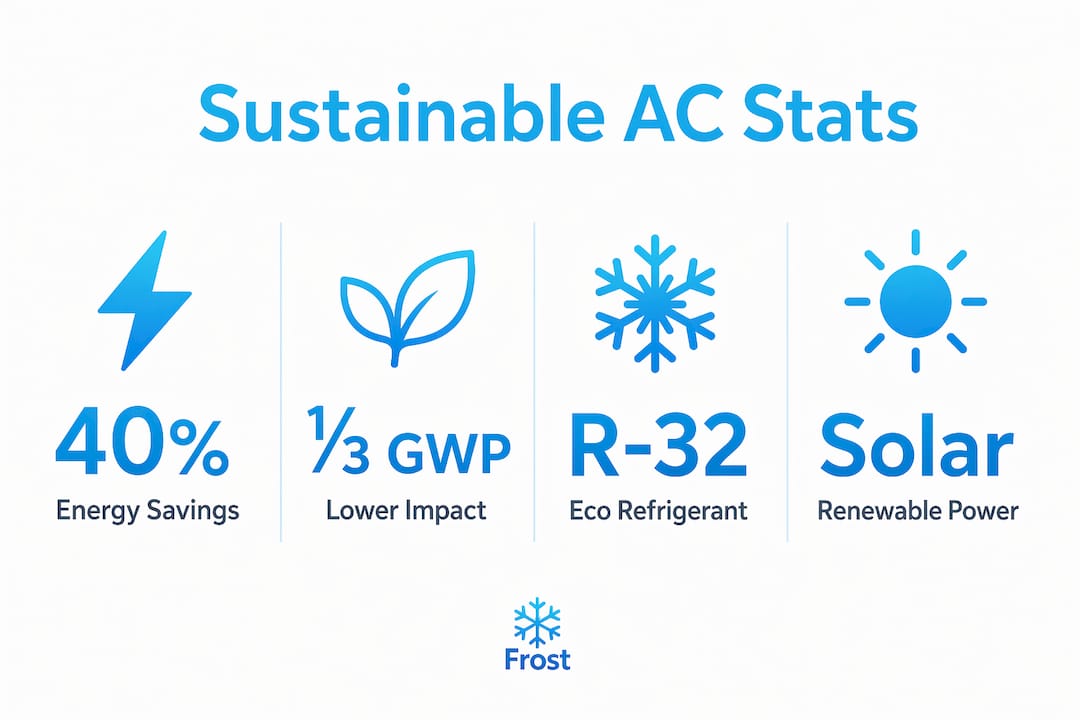
High-efficiency systems can reduce energy consumption by up to 40% compared with standard units. Systems using advanced technology recover their 20% price premium in energy savings within two years, with over 13 years of net savings on a 15-year lifecycle. That is not a marginal gain. It is a structural financial and environmental advantage.
| Technology | Energy use vs. standard | Key benefit |
|---|---|---|
| Fixed-speed compressor | Baseline | Simple, low upfront cost |
| Inverter-driven compressor | Up to 40% less | Adapts to demand, reduces cycling |
| MOF dehumidification | Significant reduction | Separates humidity from cooling load |
| AI and occupancy sensors (e.g. Rinnai PX Series) | Variable, typically 15–25% less | Responds to real-time occupancy |
Pro Tip: Always size your system to the actual room load, calculated by a qualified installer. An oversized unit short-cycles, which wastes energy and creates poor humidity control. An undersized unit runs continuously and achieves neither comfort nor efficiency.
Why is refrigerant choice critical for sustainable cooling?
Refrigerant is the substance that actually moves heat out of your home. Choose the wrong one and even the most efficient compressor becomes an environmental liability. Hydrofluorocarbons (HFCs), the refrigerants used in older systems, are thousands of times more potent than CO2 as greenhouse gases. Refrigerant leaks cause environmental damage equivalent to the emissions of 2 million cars annually in Australia alone. The UK picture is proportionally similar.
The industry has moved decisively towards R-32, a refrigerant with a global warming potential roughly one-third that of the older R-410A it replaces. Rinnai's PX Series uses R-32 as standard, and most reputable manufacturers now do the same. Natural refrigerants such as R-290 (propane) and R-744 (CO2) go further still, with near-zero global warming potential, though they require specialist handling.
The critical point for homeowners is this: the refrigerant inside your system only causes harm if it escapes. Leak prevention and proper servicing are therefore as important as the refrigerant choice itself. Releasing refrigerants is illegal because they are thousands of times more potent than CO2. Servicing must always be carried out by a licensed, F-Gas certified technician.
Here is what to look for when choosing and maintaining a sustainable system:
- Choose R-32 or lower GWP refrigerants as a minimum standard when buying a new unit
- Check for robust seals and quality pipework during installation to reduce leak risk from day one
- Book annual servicing with an F-Gas certified engineer who can check for leaks and top up refrigerant legally
- Avoid cheap, uncertified installers whose poor workmanship is the leading cause of refrigerant leaks in domestic systems
- Ask your installer for a commissioning certificate confirming the system was charged correctly and leak-tested
Pro Tip: When comparing systems, ask specifically about the refrigerant type and the manufacturer's stated leak rate. A system with excellent seals and R-32 refrigerant is far greener than a poorly installed unit using a lower-GWP gas.
How does solar power make air conditioning greener?
The electricity source powering your AC unit determines a large part of its carbon footprint. A highly efficient inverter system running on coal-generated electricity still produces significant emissions. The same system running on solar power produces almost none during daylight hours.
Solar-powered hybrid AC/DC units connect directly to a solar PV array without requiring a battery or a separate inverter. During the day, when solar generation is highest and cooling demand peaks, the unit draws power directly from the panels. When solar output drops, it switches seamlessly to the grid. The practical result is near-zero fossil fuel use during the hours you need cooling most.
For homeowners in the South West of England, where solar irradiance is among the highest in the UK, this combination is particularly effective. A 24,000 BTU hybrid mini-split paired with a modest 3kW solar array can cover the majority of its daytime cooling load from renewable generation alone.
The benefits of integrating solar with your AC system include:
- Reduced grid electricity bills, often significantly during summer months
- Lower carbon emissions proportional to the share of solar generation used
- Off-grid cooling capability during power outages if a battery storage system is also installed
- Increased energy independence from fluctuating grid tariffs
- Long-term cost certainty as solar generation costs nothing once the panels are installed
Decarbonising electricity grids also increases AC sustainability without any hardware changes. As the UK grid becomes greener through more wind and solar generation, every AC unit connected to it automatically becomes less carbon-intensive. You do not need to change your system to benefit from that trend.
What practical steps make your AC system more sustainable?
Owning a sustainable cooling system is not a one-time purchase decision. It is an ongoing practice that involves maintenance, smart controls, and complementary measures that reduce how hard your system has to work in the first place.
Maintenance is the foundation. Dirty filters force the compressor to work harder, increasing energy use and wear. Blocked coils reduce heat transfer efficiency. A well-maintained system uses less electricity, lasts longer, and keeps its refrigerant contained. Frostairconditioning recommends annual servicing as a minimum, with filter checks every three months during heavy use periods.
Smart thermostats and occupancy sensors are among the most cost-effective upgrades available. A thermostat like Google Nest or Hive learns your schedule and avoids cooling empty rooms. Zoning controls go further by directing cooling only to occupied areas of the house, which can cut runtime significantly in larger homes. These are the kinds of efficiency upgrades that compound over time.
Oversized AC units cause short-cycling, which wastes energy and creates poor humidity control that can lead to mould growth. Proper sizing by a qualified installer is the single most important decision you make before installation. It determines efficiency, comfort, and longevity from day one.
| Upgrade | Environmental impact | Approximate payback |
|---|---|---|
| Annual professional servicing | Prevents refrigerant leaks, maintains efficiency | Immediate (avoids fines and energy waste) |
| Smart thermostat (e.g. Google Nest, Hive) | Reduces runtime by avoiding empty-room cooling | 1 to 2 years |
| Loft and wall insulation | Reduces cooling load, less runtime needed | 3 to 5 years |
| External shading or blinds | Reduces solar heat gain, lowers peak demand | Under 1 year |
| Solar PV integration | Displaces grid electricity with renewable generation | 5 to 8 years |
Insulation and shading deserve particular mention because they reduce the cooling load before it reaches your AC unit. A well-insulated home in Devon or Cornwall needs far less cooling capacity than a poorly insulated one of the same size. External blinds, reflective roof coatings, and strategic planting all reduce solar heat gain and directly lower how much work your system needs to do.
Key takeaways
Sustainable air conditioning depends on inverter technology, low-GWP refrigerants like R-32, and renewable energy integration working together to minimise both energy consumption and direct emissions.
| Point | Details |
|---|---|
| Inverter technology cuts energy use | Advanced systems use up to 40% less energy than standard units, paying back their premium within two years. |
| Refrigerant choice and leak prevention matter | R-32 has one-third the global warming potential of R-410A; leaks must be prevented and servicing done by F-Gas certified engineers. |
| Solar integration reduces carbon footprint | Hybrid AC/DC units connected to solar PV arrays can achieve near-zero fossil fuel use during daylight hours. |
| Proper sizing is non-negotiable | Oversized units short-cycle, wasting energy and causing humidity problems; always use a qualified installer for load calculations. |
| Maintenance sustains performance | Annual servicing, clean filters, and smart controls keep efficiency high and refrigerant contained throughout the system's life. |
The case for getting this right, not just getting it done
I have spoken with a lot of homeowners who feel guilty about running air conditioning. They have read that AC is bad for the environment and they carry that assumption without questioning it. What I have found, working in this industry, is that the guilt is often misplaced. The problem was never cooling itself. It was inefficient cooling, leaking refrigerants, and electricity generated from fossil fuels.
The technology available today is genuinely different. A properly sized inverter system using R-32, installed by an F-Gas certified engineer, serviced annually, and powered partly by solar panels is not an environmental compromise. It is a reasonable, responsible choice for a warming climate. The UK's heat-related deaths in 2023 are a reminder that refusing to cool your home is not a neutral act either.
What I would push back on is the idea that any AC unit is automatically sustainable just because it carries an energy rating label. The label tells you about the compressor. It tells you nothing about the refrigerant integrity, the installation quality, or the electricity source. Those three factors are where the real environmental story lives, and they are entirely within your control as a homeowner.
The direction of travel is encouraging. Grids are getting greener, refrigerants are getting cleaner, and compressor technology keeps improving. The homeowners who will benefit most are the ones who make informed choices now rather than waiting for a perfect solution that does not yet exist.
— James
How Frostairconditioning supports sustainable home cooling
Frostairconditioning installs high-efficiency air conditioning systems across Exeter and the South West, using R-32 refrigerant as standard and holding full F-Gas certification. Every installation includes a proper load calculation to avoid the oversizing problems that waste energy and create humidity issues. Same-day installs are available, and 0% finance means the upfront cost does not have to be a barrier to choosing a greener system. If you are ready to explore your options, visit the domestic installation page to find out what is available for your home. For existing systems, Frostairconditioning's service and maintenance programme keeps refrigerant contained, efficiency high, and your system running as cleanly as the day it was installed.
FAQ
Is air conditioning bad for the environment?
Modern air conditioning is not inherently bad for the environment. Systems using inverter technology, R-32 refrigerant, and renewable electricity sources produce significantly lower emissions than older units and can be a net positive for public health during heatwaves.
What is the most eco-friendly refrigerant for home AC?
R-32 is the current standard for eco-friendly home air conditioning, with roughly one-third the global warming potential of the older R-410A. Natural refrigerants like R-290 have even lower GWP but require specialist installation.
How much energy does an efficient AC system save?
High-efficiency systems using inverter technology and advanced dehumidification can reduce energy consumption by up to 40% compared with standard units, recovering their higher purchase price within approximately two years.
Can I run air conditioning on solar power?
Yes. Hybrid AC/DC mini-split units connect directly to a solar PV array and draw power from the panels during daylight hours, reducing or eliminating grid electricity use for cooling when solar generation is at its peak.
How often should I service my AC for sustainability?
Annual servicing by an F-Gas certified technician is the minimum recommended frequency. Regular servicing prevents refrigerant leaks, maintains efficiency, and keeps the system legally compliant, since releasing refrigerants into the atmosphere is illegal in the UK.