

HVAC is defined as the integrated system of Heating, Ventilation, and Air Conditioning that regulates indoor temperature, humidity, and air quality in residential and commercial buildings. The acronym stands for exactly those three functions, and each one plays a distinct role in keeping your home comfortable and healthy. ASHRAE, the global authority on building environment standards, identifies HVAC as the primary determinant of indoor environmental quality. Understanding what HVAC means is the first step to making informed decisions about your home's climate control. Frostairconditioning installs and services these systems across the South West of England, and this guide covers everything you need to know.
What is HVAC and what does it include?
HVAC is an integrated climate control system combining heating, ventilation, and air conditioning into one coordinated setup. Each function handles a different aspect of your indoor environment, but they share components and work together constantly. The result is a home that stays comfortable in winter, cool in summer, and breathable all year round.
The three functions break down like this:
- Heating uses furnaces, boilers, or heat pumps to raise indoor temperature during cold months. A gas furnace burns fuel to produce warm air; a heat pump extracts warmth from outside air even in cool conditions.
- Ventilation controls the exchange of indoor and outdoor air, removing stale air, moisture, and contaminants. It includes mechanical fans, air handlers, ducts, and vents that move air through the building.
- Air conditioning cools and dehumidifies indoor air during warm periods. It works by transferring heat from inside the building to the outside, leaving cooler, drier air behind.
Together, these three functions share ductwork, controls, and often the same air handler unit. That shared infrastructure is what makes HVAC a system rather than three separate appliances.
Pro Tip: If your home already has a gas boiler and radiators, you may only need to add a split air conditioning unit to complete a basic HVAC setup. You do not always need to replace everything at once.
How does an HVAC system work?
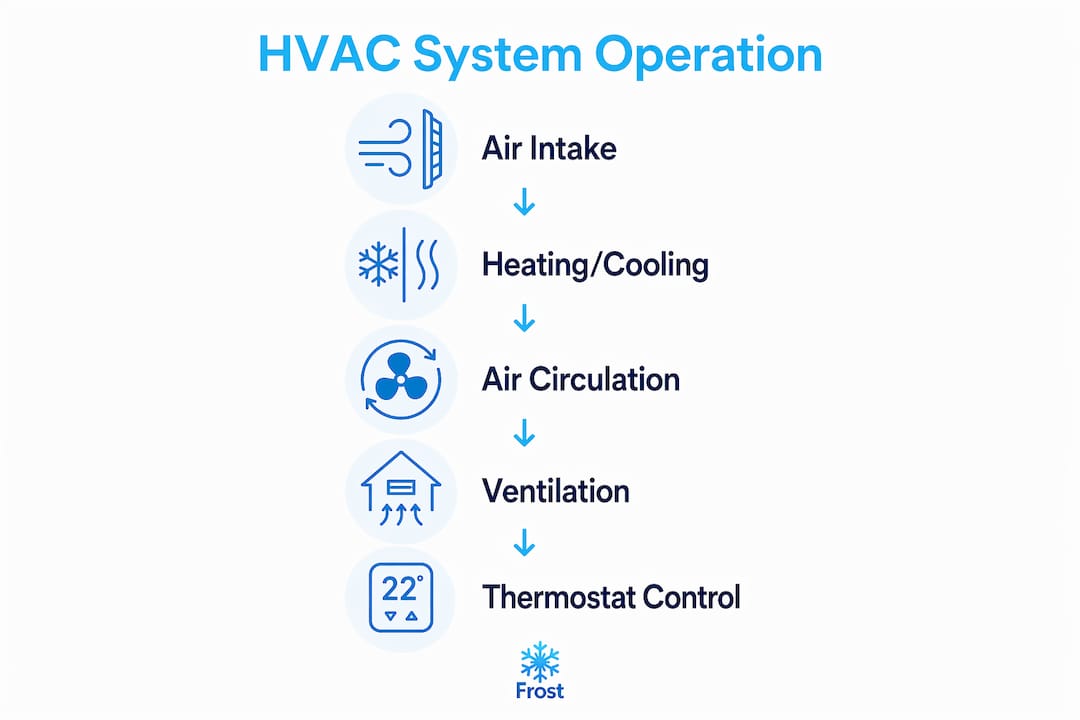
An HVAC system works through heat transfer, air circulation, and automatic control via a thermostat. When the thermostat detects that indoor temperature has dropped below your set point, it signals the heating component to activate. When the temperature rises above the set point, the cooling cycle begins. The system constantly adjusts to maintain the conditions you choose.
The air circulation process follows these steps:
- Return air is drawn in. Air from inside your home enters the system through return vents and passes through a filter that removes dust, pollen, and other particles.
- Air is conditioned. Depending on the mode, the air handler heats or cools the air using the active component, whether that is a furnace heat exchanger or an evaporator coil.
- Conditioned air is distributed. The air handler pushes treated air through supply ducts and out through vents into each room.
- Fresh air is introduced. A small portion of outdoor air enters the system to maintain air quality. Most HVAC systems intake around 10% fresh outdoor air, recirculating the remaining filtered indoor air. That ratio keeps energy use low while still refreshing the air supply.
- The cycle repeats. The thermostat monitors conditions and restarts the cycle as needed.
One detail that surprises many homeowners: opening windows while your HVAC system runs often forces the system to work harder and compromises humidity control. The system is designed to manage conditions with minimal fresh air intake, so letting in uncontrolled outdoor air disrupts that balance.
Modern HVAC systems focus on energy efficiency by using heat transfer to move energy rather than generate it from scratch. A heat pump, for example, moves existing warmth rather than burning fuel to create it. That approach can deliver significantly more energy output than the electricity it consumes.
What are the benefits of an HVAC system at home?
A properly installed HVAC system delivers four clear benefits: comfort, air quality, energy savings, and regulatory compliance. Each one has a direct impact on daily life and long-term costs.
- Consistent comfort. The system maintains your chosen temperature automatically, without manual adjustment throughout the day. You set it and forget it.
- Better air quality. Filtration removes dust, allergens, and airborne contaminants on every cycle. HVAC systems are the primary tool for controlling indoor air pollutants, which matter especially for households with asthma or allergies. You can read more about how air conditioning affects home health for a detailed breakdown.
- Humidity control. The air conditioning function removes excess moisture in summer, reducing the risk of mould and condensation. In winter, some systems add humidity to prevent dry air problems.
- Energy savings. Efficient HVAC design reduces energy bills compared to running separate heating and cooling appliances. HVAC systems have evolved into critical building infrastructure for energy codes and sustainability goals. Pairing your system with energy-efficient window blinds reduces heat gain in summer and heat loss in winter, cutting the load on your system further.
- Compliance. UK building regulations and energy performance standards require adequate ventilation and heating in residential properties. A correctly specified HVAC system meets those requirements by design.
Pro Tip: Change your system's air filter every three months. A clogged filter forces the fan to work harder, raises energy consumption, and reduces air quality. It is the single cheapest maintenance task with the highest return.
Practical energy-saving steps beyond filter changes include setting the thermostat two degrees closer to the outdoor temperature when you leave the house, and using programmable controls to avoid heating or cooling an empty home. For more detail, the guide on boosting energy efficiency at home covers these steps thoroughly.
What is an HVAC engineer, and how do they differ from a technician?
The terms "HVAC engineer" and "HVAC technician" describe two distinct roles, and confusing them leads to hiring the wrong person for the job.
| Role | Primary focus | Typical qualifications | What they do on site |
|---|---|---|---|
| HVAC engineer | Design and specification | Mechanical engineering degree, CAD software | Calculates heating and cooling loads, specifies equipment, produces drawings |
| HVAC technician | Installation and maintenance | Trade qualification, F-Gas certification | Fits equipment, commissions systems, carries out servicing and repairs |
HVAC engineers design systems by calculating loads and equipment sizing using thermodynamics and fluid mechanics. They produce specifications and drawings that technicians then follow on site. Engineers typically hold mechanical engineering degrees and use CAD software to model system performance before a single component is ordered.
HVAC technicians perform the hands-on work: fitting units, running pipework, commissioning controls, and carrying out routine maintenance. In the UK, technicians working with refrigerants must hold F-Gas certification, a legal requirement under UK F-Gas regulations. Frostairconditioning is F-Gas certified, which means every installation meets the legal standard for refrigerant handling.
For most homeowners fitting a domestic split system or heat pump, you need a qualified technician, not an engineer. Engineers become relevant for larger or more complex projects, such as new builds or commercial fit-outs, where bespoke system design is required. Understanding this distinction saves time and money when you are getting quotes.
Key takeaways
An HVAC system is the single most effective tool for controlling indoor temperature, air quality, and humidity in a home, and professional installation determines whether it delivers on that promise.
| Point | Details |
|---|---|
| HVAC meaning | Stands for Heating, Ventilation, and Air Conditioning, three functions in one coordinated system. |
| How it works | A thermostat triggers heat transfer and air circulation cycles, recirculating around 90% of indoor air for efficiency. |
| Key benefits | Delivers consistent comfort, cleaner air, humidity control, and compliance with UK building standards. |
| Engineer vs technician | Engineers design systems; technicians install and maintain them. F-Gas certification is legally required for refrigerant work. |
| Maintenance priority | Replacing the air filter every three months is the highest-return, lowest-cost maintenance task available. |
Why getting the sizing right matters more than the brand
Most homeowners focus on brand names when choosing an HVAC system. In my experience, the brand is almost irrelevant compared to whether the system is correctly sized for the space.
An oversized unit short-cycles, meaning it switches on and off too frequently to reach the set temperature. That wears out components faster and leaves the air feeling clammy because the system never runs long enough to dehumidify properly. An undersized unit runs constantly, drives up energy bills, and still fails to reach the set temperature on the coldest or hottest days.
Correct sizing requires a proper heat load calculation based on the room's volume, insulation, window area, and orientation. I have seen homeowners buy a unit based on a rough square-metre estimate and spend years wondering why their bills are high and their home is never quite comfortable. The calculation takes twenty minutes and changes the outcome entirely.
The other thing I would stress is maintenance. A well-maintained system from five years ago will outperform a neglected new one. Annual servicing, clean filters, and clear outdoor units are not optional extras. They are what keep the system running at the efficiency it was designed for. If you want to understand what standards apply to your installation, that guide is worth reading before you commit to any installer.
— James
Frostairconditioning: domestic HVAC installation in the South West
Frostairconditioning installs domestic HVAC systems across Exeter and the wider South West, with same-day installs available for straightforward jobs. Every installation is carried out by F-Gas certified engineers, meeting UK legal requirements for refrigerant handling from day one.

Whether you need a single room unit or a full domestic installation covering your whole home, Frostairconditioning offers 0% finance options to spread the cost. Once your system is in, the service maintenance programme keeps it running efficiently year after year. Getting started is straightforward: request a free quote and receive a clear, no-obligation price based on your specific home and requirements.
FAQ
What does HVAC stand for?
HVAC stands for Heating, Ventilation, and Air Conditioning. These three functions work together in one integrated system to control indoor temperature, humidity, and air quality.
Is HVAC the same as air conditioning?
Air conditioning is one component of an HVAC system, focused on cooling and dehumidification. HVAC encompasses heating and ventilation as well, making it a broader climate control system than air conditioning alone.
How often should an HVAC system be serviced?
Annual professional servicing is the standard recommendation for domestic HVAC systems. Filter changes every three months maintain air quality and efficiency between service visits.
Do I need an HVAC engineer or a technician for a home installation?
For most domestic installations, you need a qualified technician with F-Gas certification, not an engineer. Engineers are typically required for complex or large-scale projects that need bespoke system design.
Does opening windows affect my HVAC system?
Opening windows while your HVAC system is running forces the system to work harder and disrupts humidity control. The system is designed to manage indoor conditions with a controlled, minimal intake of fresh outdoor air.